When planning to set up a molded fiber food packaging facility, one of the most common challenges investors face is making sense of equipment quotes. Why does the price of pulp molding tableware equipment vary so drastically from one manufacturer to another?
The reality is that “pulp molding equipment” is a broad category. The final cost is heavily influenced by the machine’s mechanical structure, true capacity conversion, automation level, and whether you are buying a single machine or a comprehensive turnkey solution. To make an informed purchasing decision, it is essential to look beyond the initial price tag and understand exactly what these configuration differences mean for your production line.
What Drives the Price Gap in Pulp Molding Tableware Equipment?
1. Drive Systems and Mechanical Structure
The core engineering of the machine dictates its stability, precision, and manufacturing cost. Wet press pulp molding machines generally feature two main types of drive structures:
-
Pneumatic-Hydraulic Boosting Systems: This traditional approach is highly mature and often favored for its cost-effectiveness. For instance, the Hanson Pulp Molding ZCE-1111 pulp molding tableware machine utilizes metered pulp feeding, in-machine mold transfer, and a pneumatic-hydraulic boosting structure. It is an excellent choice for projects focusing on controlling initial equipment investment while relying on proven processes.
-
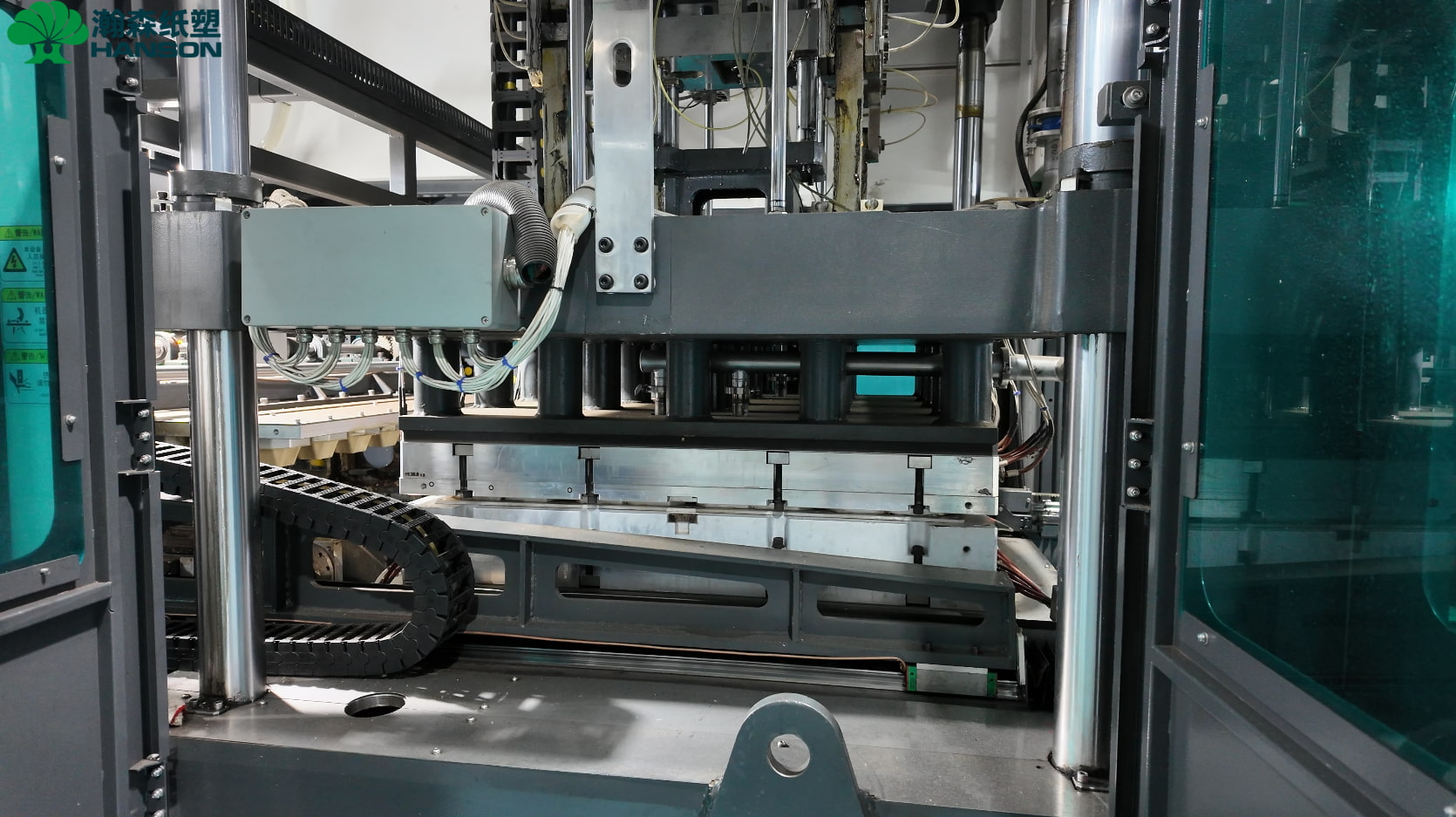
Full-Servo Drive Systems: Full-servo configurations offer superior motion control and precision during forming and hot pressing. The Hanson ZBG-1111 is a prime example of a full-servo pulp molding tableware machine, featuring a one forming station and two hot-press stations configuration. Hanson was an early adopter of full-servo technology for mass production tableware equipment, offering enhanced process control tailored for large-scale operations.
2. Actual Production Capacity vs. Theoretical Cycle Time
A common mistake in equipment evaluation is equating a fast theoretical cycle time with high daily output. The actual production capacity is a systemic result influenced by product weight, mold cavity count, dewatering efficiency, hot pressing time, and the machine’s effective uptime.
Efficient dewatering at the forming stage means less moisture enters the hot press mold, reducing the energy and time required to evaporate the remaining water. High-end configurations are designed to maximize this efficiency. Under appropriate production conditions, the Hanson ZFG-1111 can achieve a single-machine daily output of over 1.8 tons, and depending on the product, up to approximately 2 tons per day. Evaluating output in terms of actual tonnage per day is critical for calculating ROI accurately.
3. Automation and Post-Processing Integration
In a pulp molding plant, if the forming machine is incredibly fast but the trimming and stacking processes rely on manual labor, post-processing quickly becomes a production bottleneck.
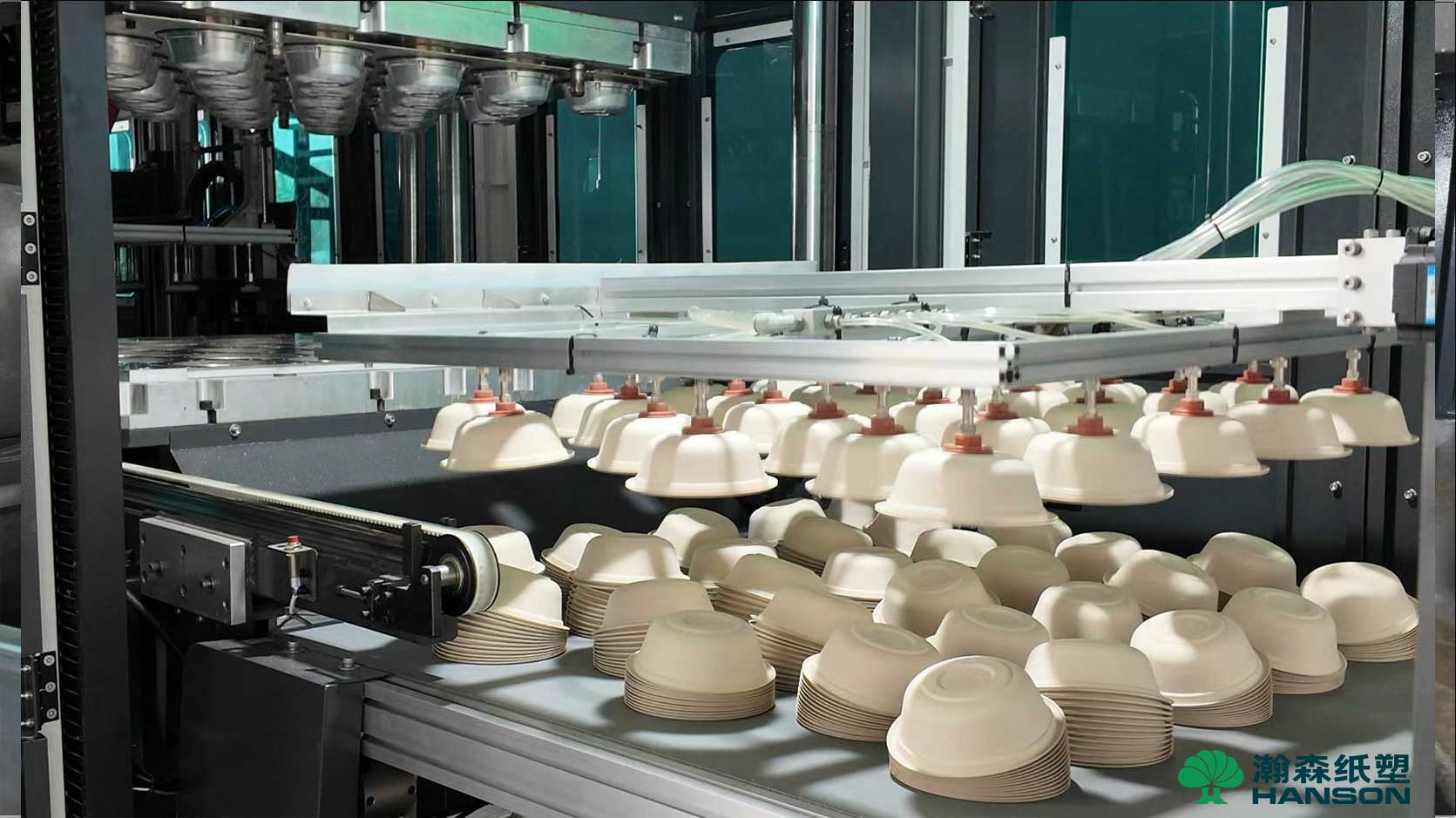
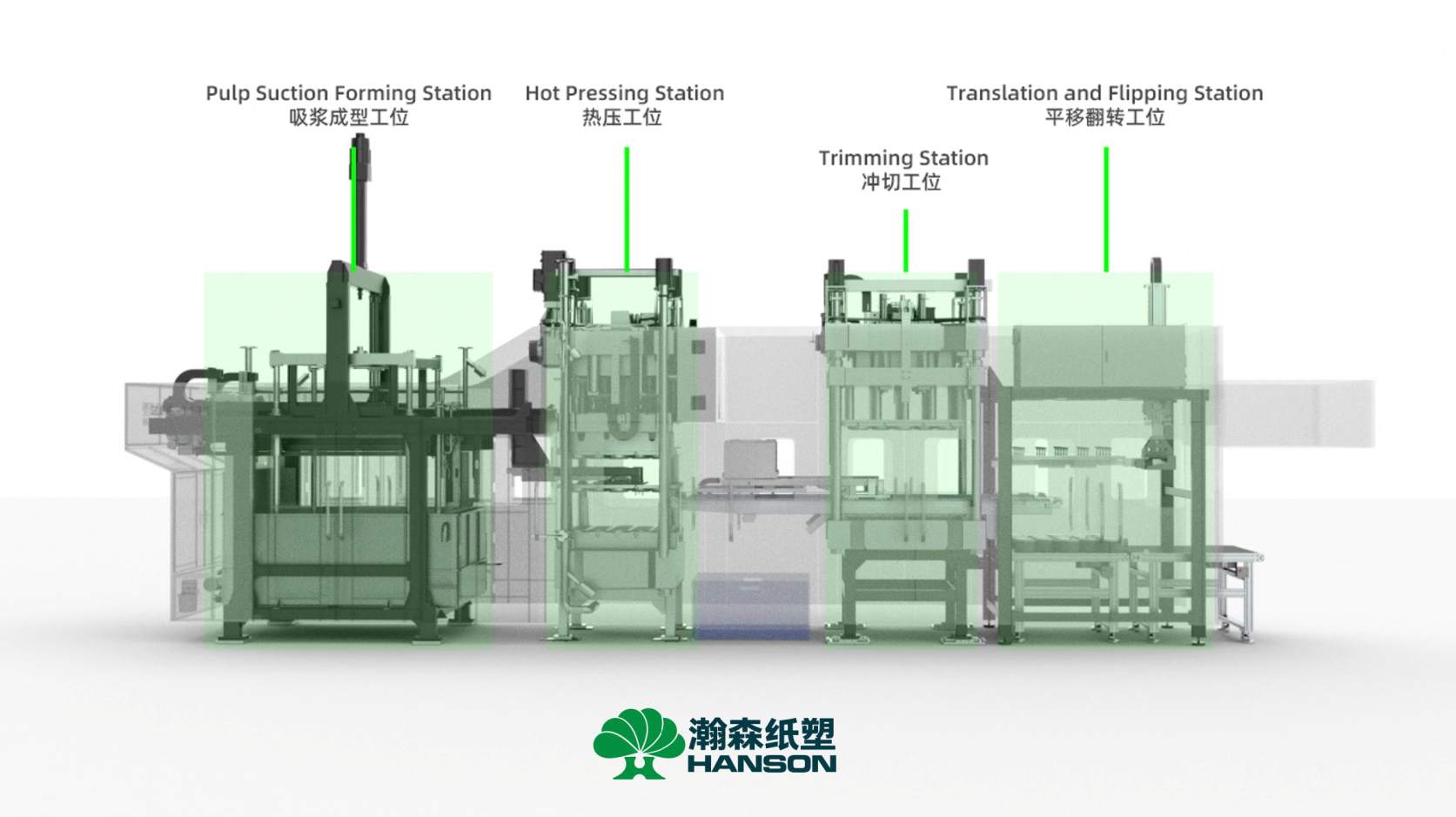
The price of advanced molded fiber tableware equipment often reflects integrated automation. Standard machines might only cover forming and hot pressing, whereas fully integrated models like the Hanson ZFG-1111 handle forming, hot pressing, trimming, and stacking all within the machine. This seamless in-line automation reduces labor costs, ensures production consistency, and justifies the higher initial investment.
4. Scope of Supply: Single Machine vs. Turnkey Plant
Finally, price gaps often stem from the scope of the project boundary. Some quotes are strictly for a standalone forming machine. However, stable mass production requires an intelligent pulping system, specialized tooling (molds), vacuum and air utilities, and post-processing automation.
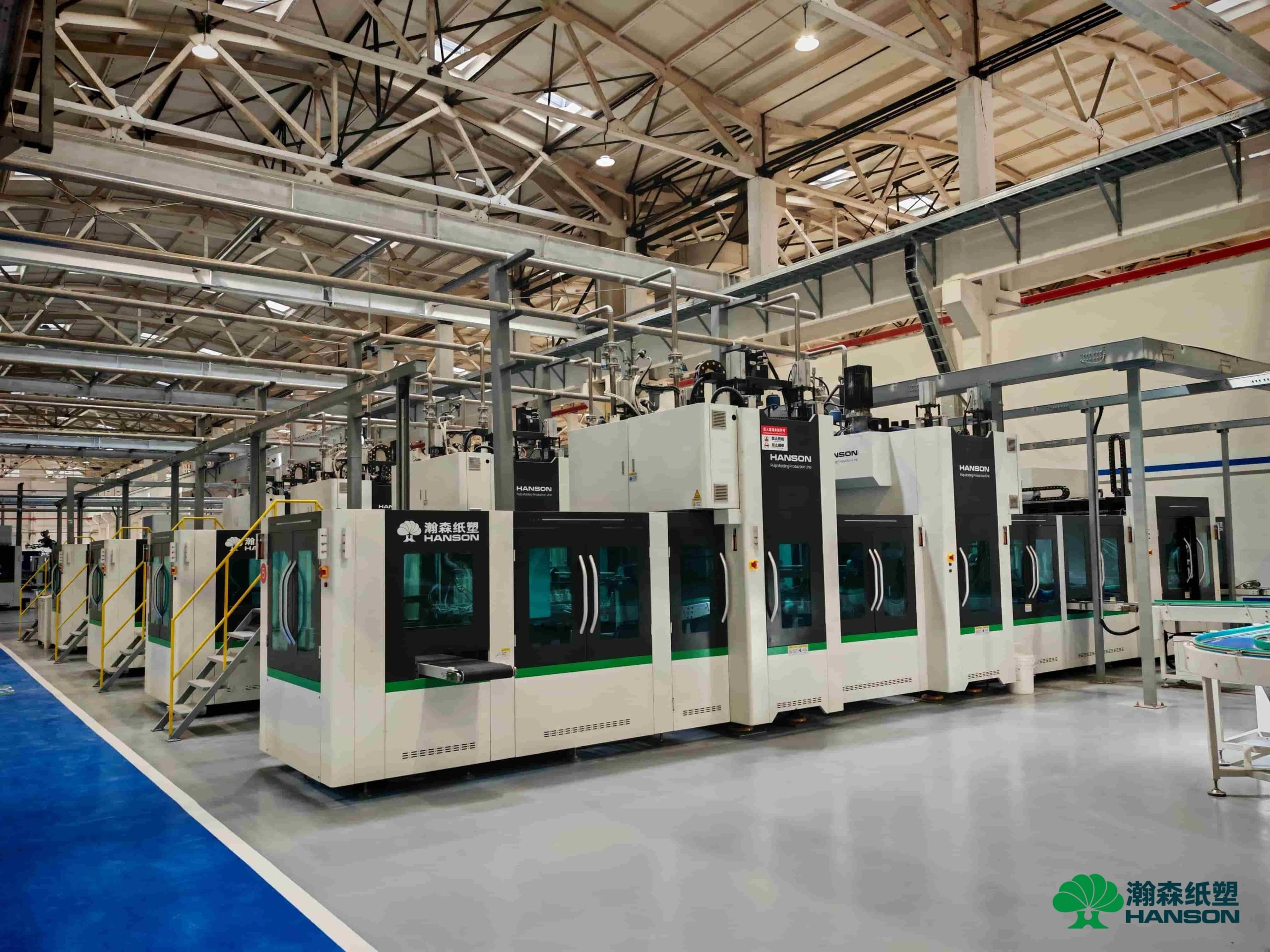
As a specialist in turnkey pulp molding solutions, Hanson integrates product development, plant planning, pulping, forming equipment, tooling, post-processing automation, and production ramp-up support into a single logical framework. Comparing a single machine quote against a comprehensive turnkey pulp molding project quote will naturally reveal a significant price difference.
FAQ
1. How many products can a pulp molding tableware machine produce in a day? There is no fixed answer, as daily output depends on product weight, size, mold cavities, forming/hot pressing time, and machine uptime. For example, under the right conditions, the Hanson ZFG-1111 can produce over 1.8 tons per day, but this must be evaluated based on your specific mold and product requirements.
2. Can I produce both plates and clamshells on the same equipment? It is possible, but it requires evaluation. Changing products doesn’t just mean swapping molds; it often requires adjusting the pulp formulation, vacuum levels, hot pressing temperatures, and trimming settings due to differences in product depth and weight.
3. Is buying the forming machine enough to start a pulp molding factory? No. A complete production line requires an integrated system including pulping, molds, vacuum systems, air compressors, heat sources, and post-processing equipment. For new investors, a turnkey plant approach is highly recommended to ensure all systems are perfectly matched.
Conclusion
The price differences in pulp molding tableware equipment are a direct reflection of structural design, capacity conversion capabilities, automation levels, and the breadth of the supplier’s services. Before comparing prices, investors should first define their target products, expected daily capacity, and automation goals. By working backward from the final product, you can ensure that you select a configuration that aligns perfectly with your commercial objectives.
CTA
If you already have a product sample, 3D drawing, product dimensions, or target daily capacity, Hanson Pulp Molding can help evaluate the molding process, tooling, and equipment configuration for your project—whether you need the cost-effective ZCE-1111, the full-servo ZBG-1111, or the highly integrated ZFG-1111.
WhatsApp: +86 15920604830
Email: linchuangcheng@hspulpmolding.com