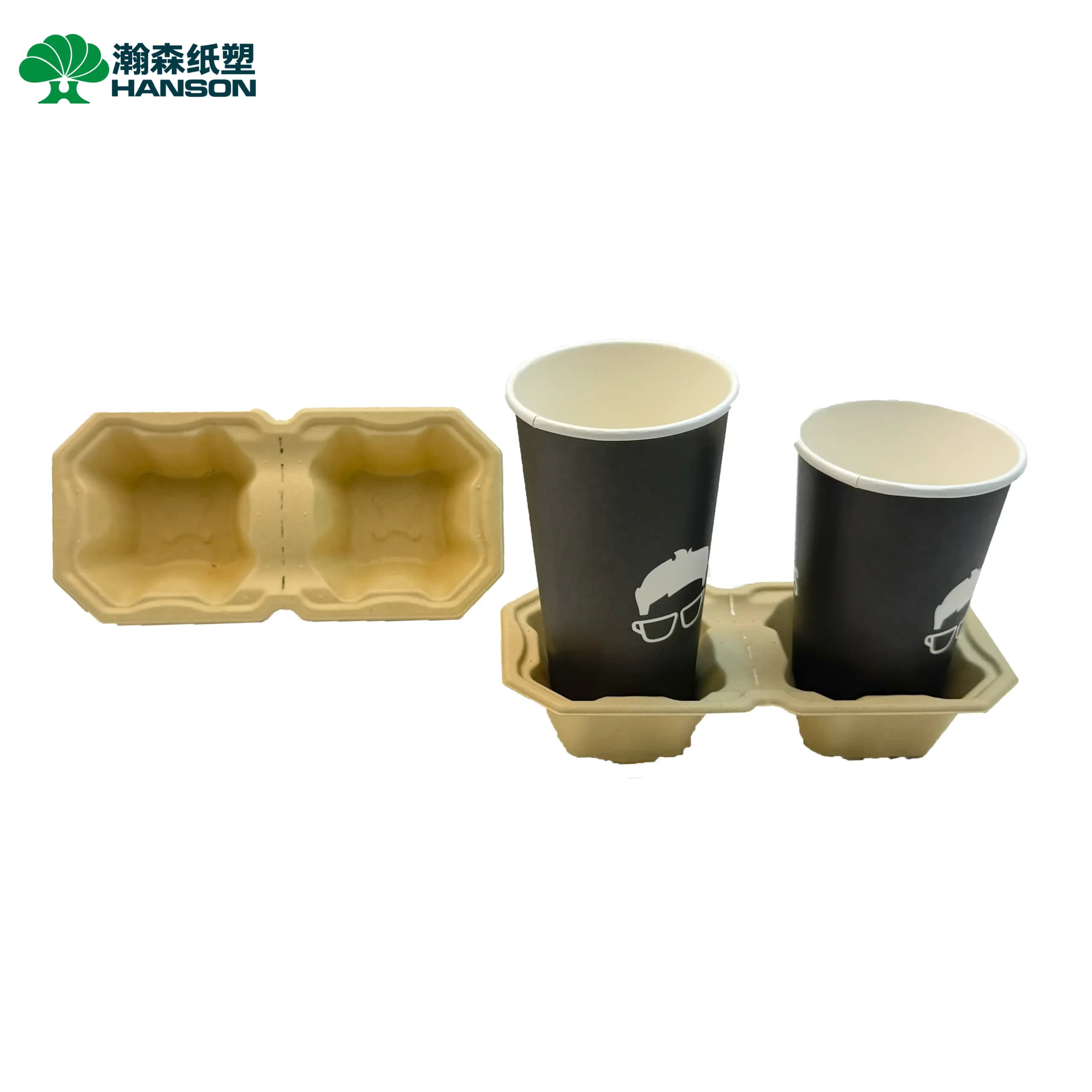
With the continuous expansion of the global coffee, beverage, and takeout industries, the demand for molded fiber cup carriers (also known as cup holder trays) has surged. For investors looking to set up a new molded fiber plant or expand an existing packaging line, the most common initial question is: “How much does a cup carrier machine cost?”
However, the standard logic for any pulp molding project should always be: Product → Material → Process → Tooling → Equipment → Plant. Selecting a molded fiber cup carrier machine is not just about looking at theoretical cycle times; it is about matching the equipment parameters to the actual functional requirements of the product.
Step 1: Align Process with Product Requirements
In molded fiber classifications, cup carriers typically fall under dry press or semi-dry press protective packaging. The primary functions of a cup carrier are load-bearing, stability, fixing the cup body, and stackability during transit. High-end surface smoothness is generally not the main objective.
This functional requirement means cup carriers are usually produced using dry press or semi-dry press processes:
-
Traditional Dry Press: The wet preform undergoes forming and initial dewatering, and is then transferred to an independent drying system (such as a drying tunnel) to remove the remaining moisture. This process is highly suited for large-volume, cost-effective production.
-
Semi-Dry Press: The wet preform is partially dewatered and enters a pressing/drying phase before it is completely dry. This helps strike a balance between surface finish, energy efficiency, and equipment investment.
Therefore, the first step in equipment configuration is determining the correct drying and forming logic for your specific cup carrier design.
Step 2: Core Parameters for Cup Carrier Machine Configuration
Once the product and process route are defined, you must evaluate the following core parameters:
-
Mold Area and Number of Cavities: Production capacity is not determined solely by machine speed. A larger mold area allows for more cavities (e.g., 2-cup or 4-cup layouts), which increases output per cycle. However, the number of cavities must align with the machine’s vacuum capacity, dewatering efficiency, and structural limits.
-
Wet Preform Moisture Content: The essence of molded fiber manufacturing is water removal. The more water the forming equipment removes (achieving a lower moisture content after forming), the less moisture needs to be evaporated by thermal energy later. High dewatering efficiency directly impacts the energy consumption of the entire dry press line.
-
Drying System Synchronization: In dry press production, the drying system often becomes the bottleneck. If the forming machine operates faster than the drying tunnel can handle, the actual output is restricted. Equipment configuration must view forming and drying as a unified system.
Hanson Pulp Molding: Turnkey Solutions for Cup Carriers
A forming machine cannot produce cup carriers on its own. As a turnkey specialist in pulp molding, Hanson Pulp Molding goes beyond providing single machines to focus on comprehensive plant synergy. For dry press and semi-dry press cup carrier projects, Hanson Pulp Molding integrates pulping, forming, drying, and post-processing:
-
Pulp Preparation: Cup carriers often require specific additives for moisture resistance and strength. Hanson Pulp Molding’s intelligent pulping system ensures stable slurry consistency, which is vital for maintaining uniform product weight during forming.
-
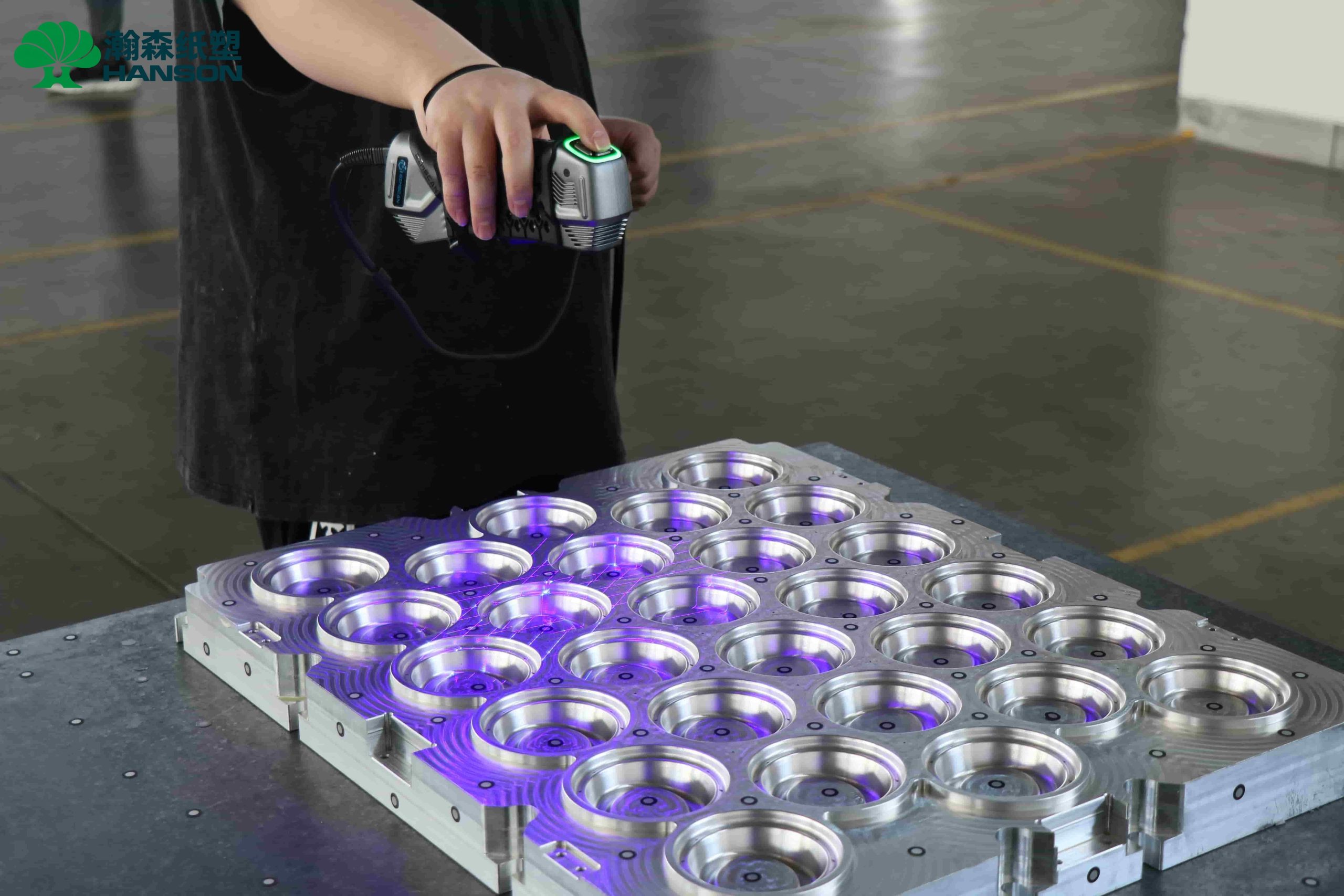
Tooling Synergy: Hanson Pulp Molding coordinates the machine parameters with the mold’s drainage structure to optimize the slurry distribution—especially critical for the deep cavities of cup carriers to maintain structural integrity.
-
Plant-Level Planning: Through turnkey plant planning, Hanson Pulp Molding synchronizes the forming cycle time with the drying system, utility capacities, and post-processing automation (such as stacking), ensuring that no single step limits your production capacity.
FAQ
1. How many cup carriers can one machine produce in a day? Actual daily capacity is influenced by the product weight, size (e.g., 2-cup vs. 4-cup), number of mold cavities, forming time, and the efficiency of the drying system. Theoretical cycle time alone cannot provide an accurate daily output.
2. Can I use a tableware machine to produce cup carriers? It is generally not recommended. Tableware machines are typically designed for wet press processes, focusing on high surface quality and in-mold drying. Cup carriers are best produced on dry press or semi-dry press lines optimized for load-bearing and mass-volume drying. Selecting equipment based strictly on the specific product is always the best approach.
3. Why does tooling affect production capacity? Tooling (the mold) does not just shape the product. Its mesh and drainage design directly impact forming time, vacuum efficiency, and moisture removal. Optimized tooling accelerates the dewatering process, thereby improving the overall production cycle.
Conclusion
Setting up an efficient molded fiber cup carrier production line requires far more than just purchasing a forming machine. Investors must start with the product’s load-bearing requirements, decide between dry press and semi-dry press processes, and carefully match the forming equipment with tooling, drying systems, and post-processing automation. Ensuring all components work seamlessly together is the only way to achieve stable commercial production and a solid return on investment.
CTA
If you already have a product sample, 3D drawing, product dimensions, or target daily capacity, Hanson Pulp Molding can help evaluate the molding process, tooling, and equipment configuration for your cup carrier project.
WhatsApp: +86 15920604830
Email: linchuangcheng@hspulpmolding.com