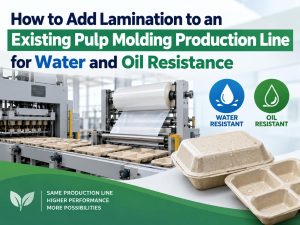
As the demand for eco-friendly food packaging grows, molded pulp manufacturers face a critical challenge: achieving reliable waterproof and oil-proof performance. While molded fiber is highly sustainable, the natural plant fibers are prone to absorbing liquids and greases without proper treatment.
For food service applications requiring superior barrier properties—such as soup bowls, heavy-grease takeout containers, or extended shelf-life packaging—relying solely on internal sizing additives may not always suffice. This is where lamination emerges as a highly effective post-processing solution.

Why Choose Lamination for Molded Pulp Lunch Boxes?
Lamination provides a complete physical barrier. By applying a thin polymer film to the surface of the molded fiber product, it entirely isolates the substrate from moisture and oil.
-
Versatile Film Compatibility: Depending on your market’s regulatory requirements and functionality needs, modern automatic pulp molding laminating lines are highly adaptable. They can process various film types, including PE, PET, PP, and EVOH for strong barriers, as well as PLA and PBAT for manufacturers targeting compostable packaging markets.
-
Enhanced Structural Integrity: Beyond barrier performance, the lamination process significantly improves the surface smoothness, rigidity, and overall durability of the tableware.
Choosing the Right Pulp Molding Laminating Machine
If you are evaluating the addition of a lamination process to your existing production line or a new project, selecting the right equipment is vital for operational efficiency. Here are the key technical aspects to consider:
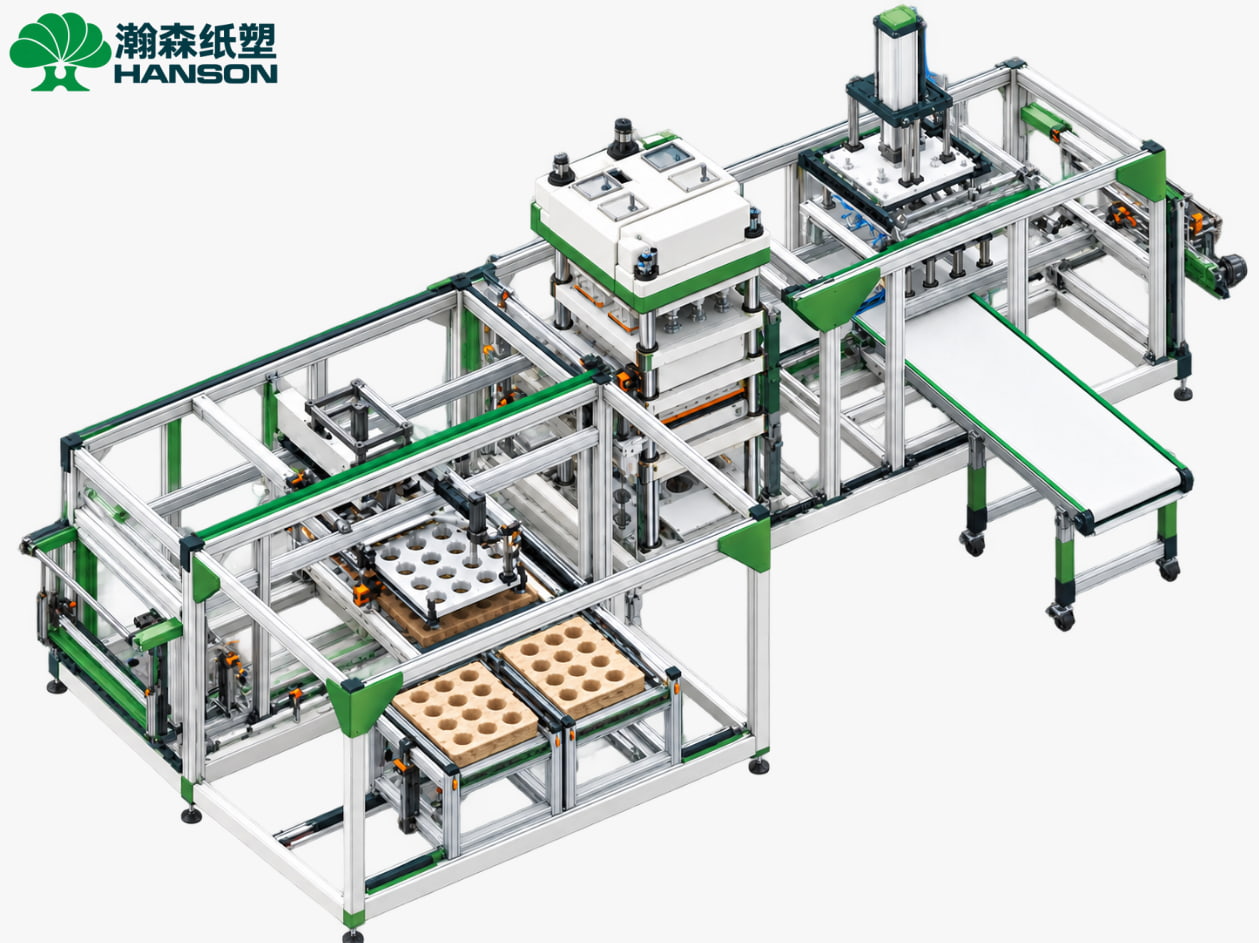
1. Platen Size and Product Dimensions The working area of the machine determines your multi-cavity layout potential. The Hanson Pulp Molding Automatic Laminating Line features a large mold platen size of 1100 × 1100 mm. Additionally, it accommodates a maximum product height of 80 mm, making it perfectly suited for deep clamshells, multi-compartment lunch boxes, and large serving trays.
2. Mechanical Stability and Pressure Distribution Consistent lamination across a large platen requires precise pressure control. The Hanson equipment utilizes a servo-driven motion structure characterized by direct vertical movement. Combined with a servo linkage mechanism, this ensures uniform pressure distribution, maintaining strict platen flatness and parallelism. This stability prevents air bubbles and ensures secure film adhesion on every single product in the mold.
3. Workflow Integration and Automation In high-volume tableware production, manual handling between processes reduces efficiency and increases contamination risks. The Hanson Pulp Molding Laminating Line is designed for continuous, automated production. It seamlessly integrates the entire post-processing workflow: Film unwinding → Lamination → Trimming → Product stacking.
The system features an 80-ton trimming force, and both the lamination and trimming stations are servo-driven, ensuring precise coordination and reducing intermediate waiting times.
4. Understanding True Production Capacity While evaluating machinery, it is important to calculate capacity accurately. The equipment operates at a highly efficient cycle time of 15 seconds per mold. However, actual production capacity is product-dependent. The total output per hour will be calculated by multiplying the machine’s cycle rate by the number of specific lunch box cavities that can be engineered into the 1100 × 1100 mm mold area.
Next Steps for Your Project
If you are evaluating lamination for a molded pulp product, send Hanson Pulp Molding your product photos, dimensions, specific film requirements, and target barrier performance. Our technical team can help evaluate the viability of the process and recommend the most suitable equipment configuration for your production goals.