When molded fiber packaging requires enhanced waterproof, oil-proof, or absolute barrier performance, standard forming processes or simple wet-end additives may not always meet the stringent demands of the final application. For manufacturers with an existing pulp molding production line, receiving orders for such high-barrier products raises an immediate question: Can the existing equipment still be used, and how should the process be adjusted?
In-Pulp Sizing vs. Physical Barrier Coating
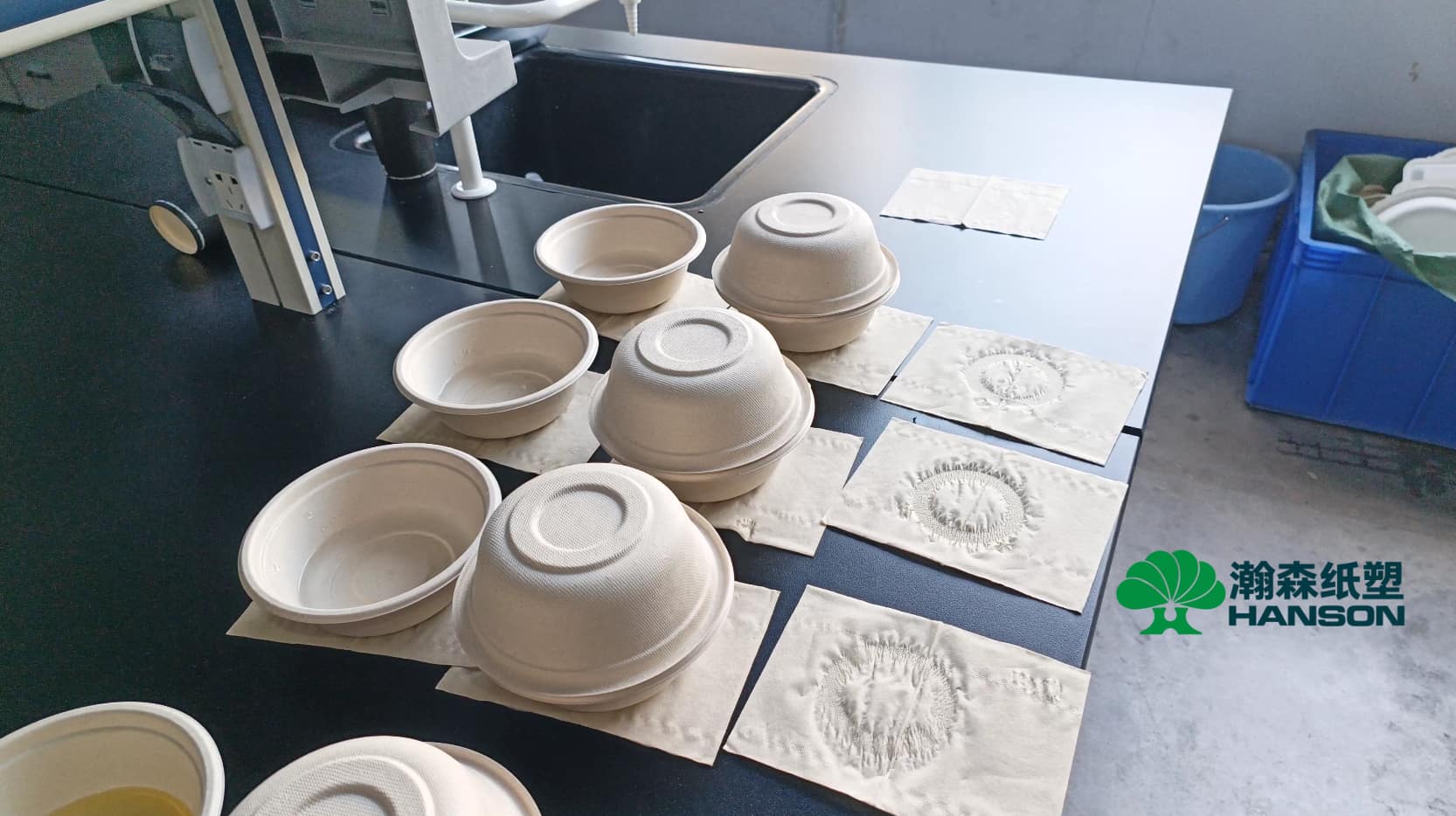
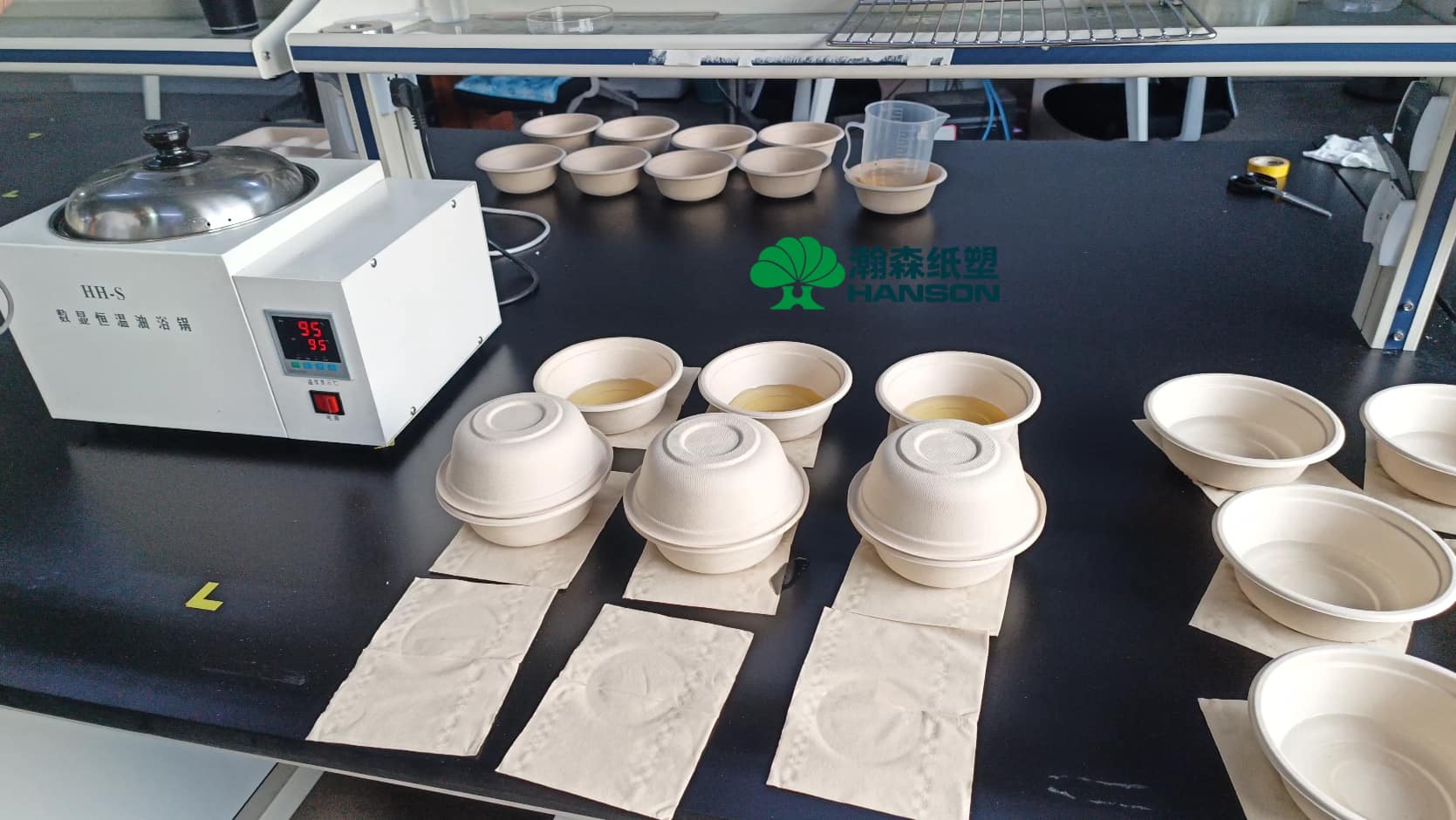
Currently, there are two primary approaches to improving the liquid and grease resistance of molded pulp products: adding chemical sizing agents during pulp preparation, or applying a physical barrier in post-processing. While additives can handle standard requirements, post-processing such as lamination is often a more reliable choice when the product faces severe conditions (e.g., hot liquids, heavy grease) or requires strict gas barriers. Lamination not only provides an excellent protective layer but also enhances the surface smoothness and structural integrity of the final product.
Integrating Lamination Without Replacing Your Forming Machine
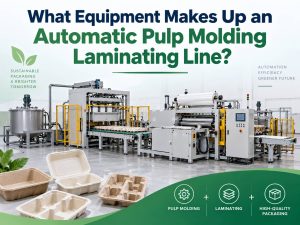
Adding a lamination process does not require replacing your existing forming machines. As long as the unlaminated molded products maintain consistent dimensional accuracy and appropriate moisture levels, you can simply integrate an independent Automatic Pulp Molding Laminating Line downstream. This approach maximizes the ROI of your current production setup while expanding your product capabilities.
Choosing the Right Pulp Molding Laminating Machine
When pairing a laminating machine with an existing production line, manufacturers must evaluate platen size compatibility, automation continuity, and operational stability.
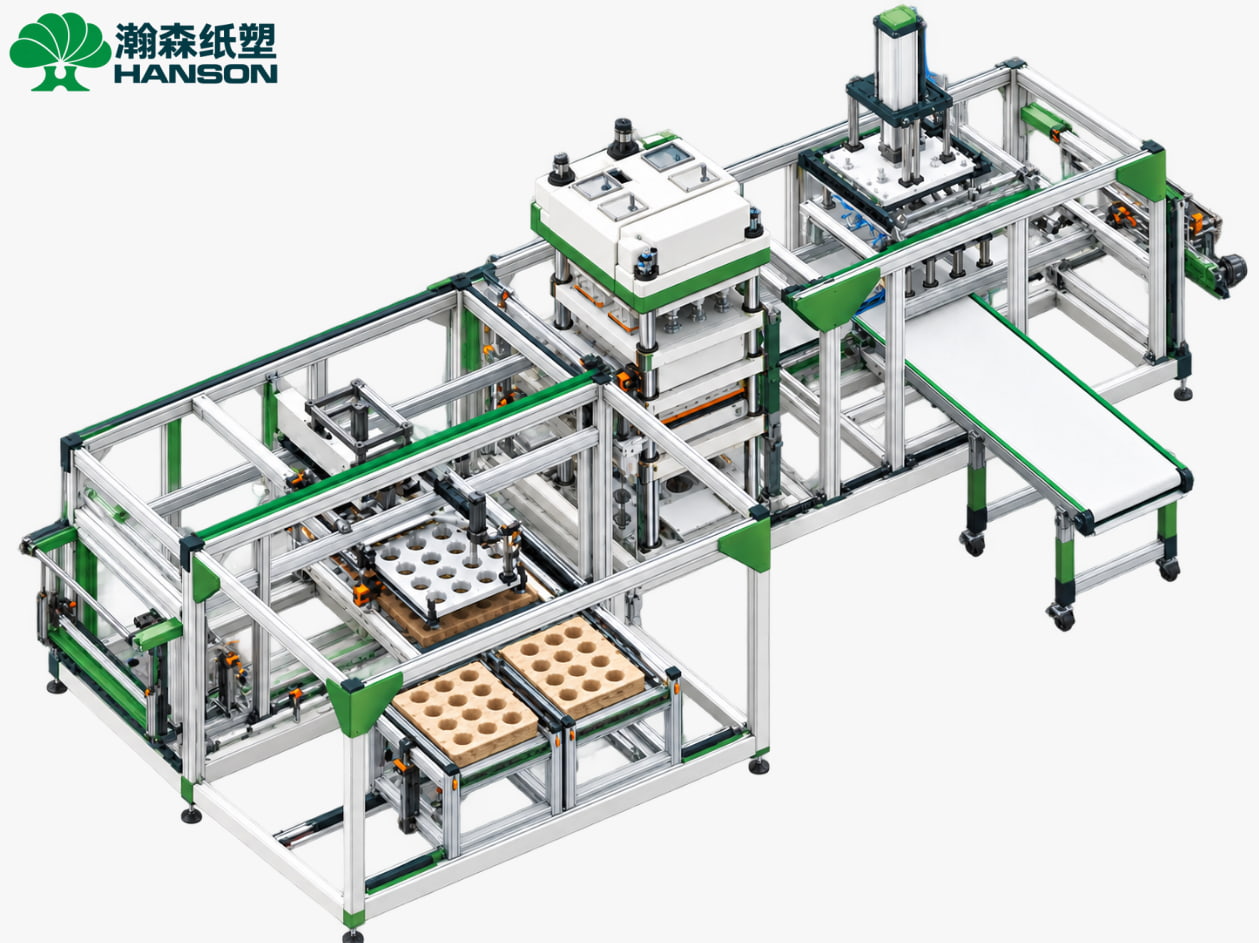
Hanson Pulp Molding provides an Automatic Pulp Molding Laminating Line specifically engineered for this type of post-processing upgrade. The equipment is compatible with various films, including PE, PET, PLA, PBAT, PP, and EVOH, allowing manufacturers to adapt to different performance requirements and environmental standards.
Key technical features of the Hanson Pulp Molding equipment include:
-
Optimized Specifications: The machine features a mold platen size of 1100 × 1100 mm and can accommodate a maximum product height of 80 mm. With a lamination cycle of 15 s/mold (actual capacity is product-dependent), it is easy to align the lamination output with the rhythm of your existing forming operations.
-
Automated Workflow: The line integrates film unwinding, lamination, trimming, and product stacking into a single continuous process. This coordinated lamination and trimming configuration minimizes intermediate handling and significantly reduces labor requirements in the post-press stage.
-
Structural Precision: Both the lamination and trimming stations are servo-driven to maintain stable and precise operation. The thermal pressing platen utilizes a direct up-and-down motion coupled with a servo-linkage structure, which ensures even pressure distribution and excellent platen parallelism. The trimming station provides 80 tons of force, ensuring clean and accurate edges.
If you are evaluating lamination for a molded pulp product, send Hanson Pulp Molding your product photos, dimensions, film requirements, and target performance. Our team can help evaluate the process and suitable equipment configuration based on your existing production setup.