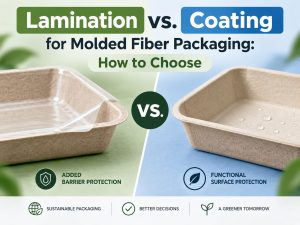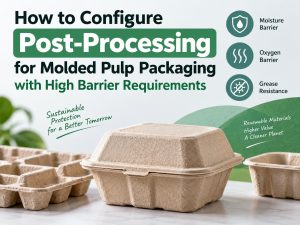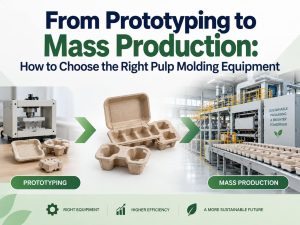
As molded fiber packaging expands into high-end food service, medical applications, and premium retail, standard cushioning properties are no longer sufficient. When products require strict waterproof, oil-proof, or advanced gas-barrier performance, manufacturers must upgrade their production by introducing functional post-press processes.
For many manufacturers, transitioning from standard molded pulp to high-barrier packaging involves evaluating surface treatment options. While in-mold sizing or surface coating can offer basic resistance, film lamination is often the most reliable method for achieving complete physical barriers.
Why Choose a Pulp Molding Laminating Machine?
Lamination involves applying a functional film directly onto the surface of the molded fiber substrate. Using a molded fiber laminating machine, manufacturers can thermal-press various films—such as PE, PET, PLA, PBAT, PP, or EVOH—onto the packaging. This process not only provides excellent liquid and grease resistance but also enhances the structural integrity and surface finish of the final product.
Key Configurations of an Automatic Lamination Line
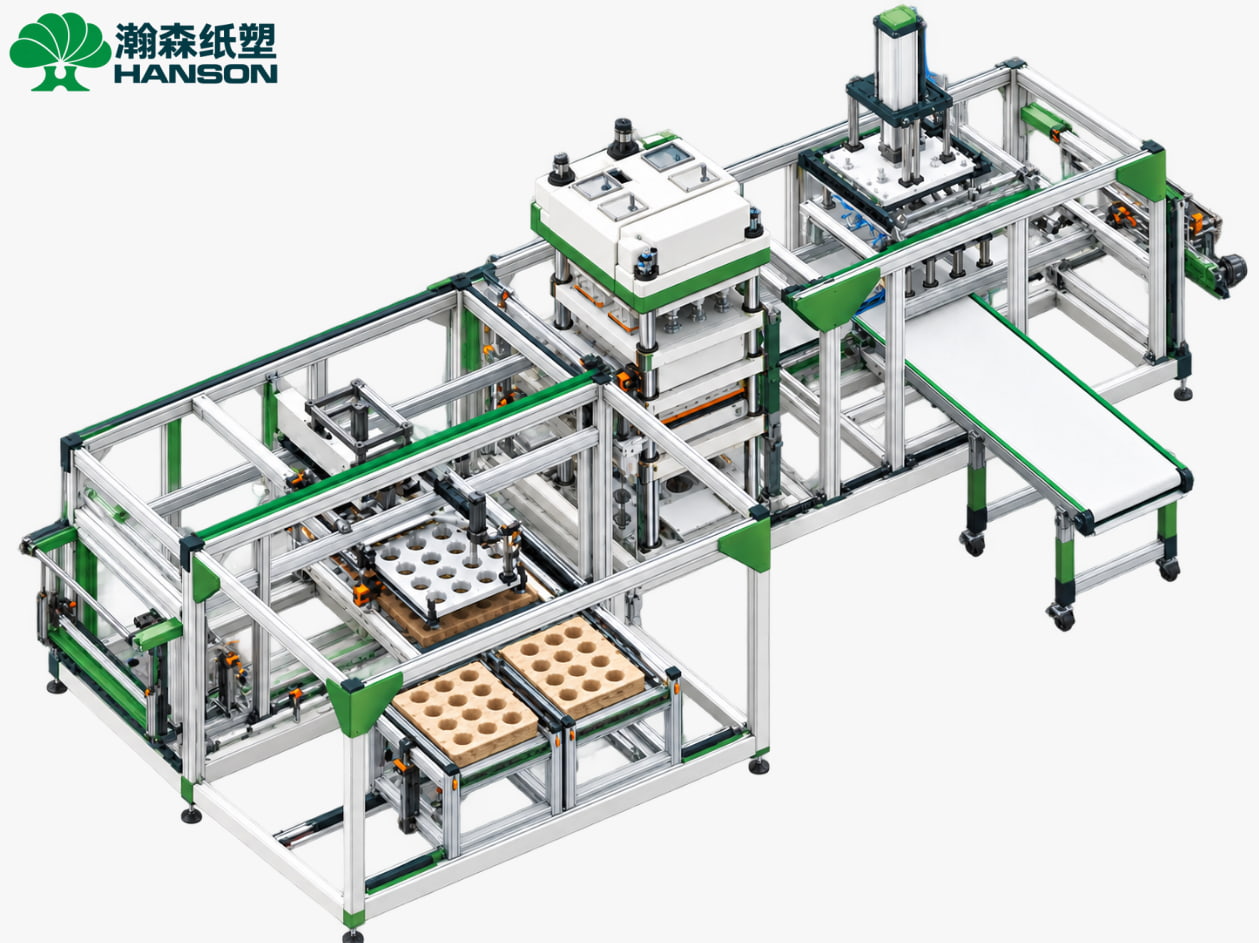
Integrating lamination into your workflow requires more than a simple heat press; it requires a coordinated, automated system to maintain production efficiency. An advanced Automatic Pulp Molding Laminating Line typically integrates four continuous steps:
-
Film Unwinding: Controlled tension to accommodate different film materials and thicknesses.
-
Lamination Station: The core of the process. Servo-driven, up-and-down motion platen designs (rather than complex lateral movements) help maintain stable and precise operation. The servo linkage structure ensures even pressure distribution and excellent platen parallelism, which is critical for consistent film adhesion during electric heating.
-
Trimming Station: After lamination, the excess film must be removed. A coordinated “one lamination, one trimming” configuration eliminates the need for manual transfer between stations.
-
Product Stacking: Automated collection of the finished functional packaging.
Selecting the Right Equipment Specifications
When evaluating a molded pulp laminating machine for your facility, ensure the physical specifications match your product portfolio. For instance, Hanson Pulp Molding equipment features:
-
Mold Platen Size: 1100 × 1100 mm, offering substantial space for multi-cavity layouts.
-
Product Accommodation: Capable of handling products with a maximum height of 80 mm.
-
Trimming Force: 80 tons, ensuring clean cuts for heavy-duty or multi-cavity molds.
-
Cycle Time: A lamination cycle of approximately 15 seconds per mold (actual production capacity is product-dependent).
-
Control System: PLC + HMI for precise adjustment and monitoring of the fully servo-controlled stations.
Adding lamination capabilities allows manufacturers to tap into new, high-margin markets demanding functional packaging. If you are evaluating lamination for a molded pulp product, send Hanson Pulp Molding your product photos, dimensions, film requirements, and target performance. Our team can help evaluate the process and suitable equipment configuration.