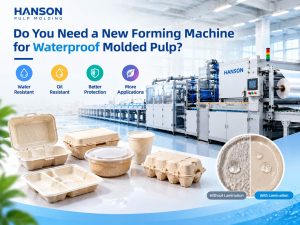
When molded fiber packaging requires enhanced water, oil, or barrier resistance, lamination is often the required post-press solution. For manufacturers with existing operations, a common question arises: Do we need to invest in an entirely new forming line to produce laminated products?
In most cases, the existing forming equipment can still be utilized. By adding a dedicated automatic pulp molding laminating line, manufacturers can expand their capabilities without discarding their current machinery. Here is how to evaluate and implement this process upgrade.
1. Evaluate Existing Forming Capabilities
The first step is to confirm whether your current forming machine can produce the base molded fiber product. If the new product’s dimensions and depth fall within your existing machine’s limits, you only need to invest in new forming molds for the base structure. Once the base product is formed and dried, it can be transferred to the independent lamination line.
2. Match Product Specifications with Lamination Equipment To ensure seamless integration, the new product must fit the working parameters of the laminating machine. The Hanson Pulp Molding laminating line features a mold platen size of 1100 × 1100 mm and accommodates a maximum product height of 80 mm. You must verify that your tooling layout and product depth align with these specifications.
3. Define Film Requirements Barrier requirements dictate the type of film used. The equipment is compatible with a wide range of materials, including PE, PET, PLA, PBAT, PP, and EVOH. Identifying the correct film early ensures that the electric heating methods and processing parameters can be properly optimized for secure adhesion.
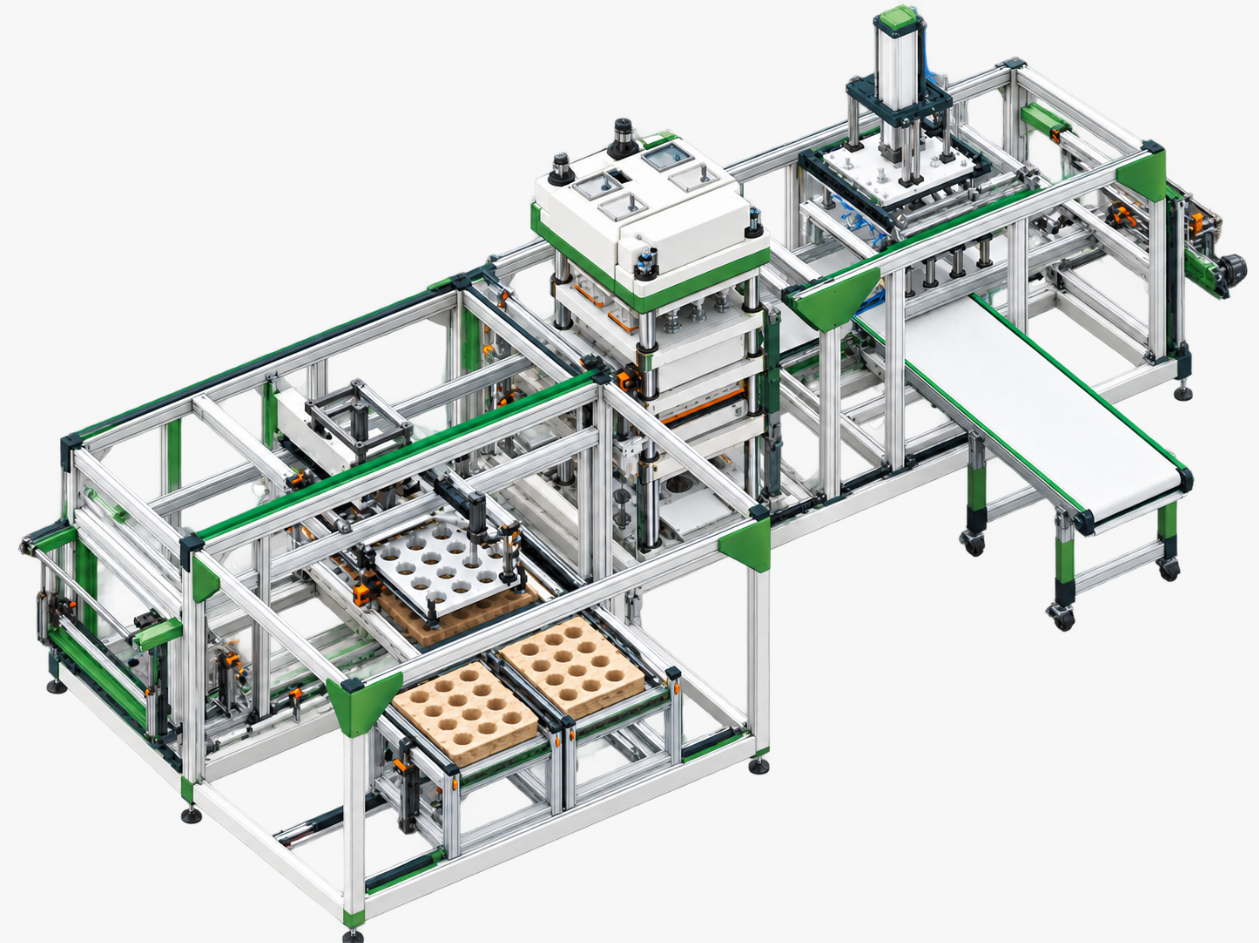
4. Integrate Post-Press Automation Manual transfer between lamination and trimming significantly reduces efficiency. To maintain a balanced production rhythm with your forming machines, a fully automated continuous line is recommended. The Hanson automated lamination line integrates four typical processes: Film unwinding → Lamination → Trimming → Product stacking.
-
Stable Operation: Both the lamination and trimming stations are servo-driven, utilizing a mechanical structure that ensures uniform pressure and maintains platen parallelism during the thermal pressing phase.
-
Efficiency: The system operates with a lamination cycle of 15 s/mold and applies 80 tons of trimming force. Note that the actual daily capacity is product-dependent and should be calculated based on your specific product configuration and film characteristics.
Next Steps for Equipment Selection
If you are evaluating lamination for a molded pulp product and want to utilize your existing forming lines, send Hanson Pulp Molding your product photos, dimensions, film requirements, and target performance. Our team can help evaluate the process feasibility and recommend the suitable pulp molding laminating machine configuration.