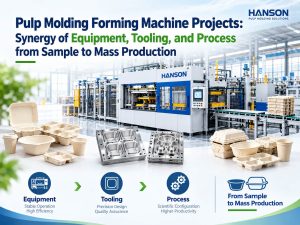
In many pulp molding projects, investors often encounter a frustrating scenario: the pulp molding equipment is fully installed and powered on, but it requires months of process adjustments and fails to reach the target daily production capacity.
Molded fiber production is a complex manufacturing system, not a plug-and-play process. From fiber preparation and tooling structure to dewatering efficiency and hot pressing, every variable directly impacts the yield rate and actual capacity of the pulp molding equipment. As a specialist in turnkey pulp molding solutions, Hanson Pulp Molding has reviewed numerous large-scale projects and found that the efficiency of turnkey delivery is often determined by the verification steps taken before the equipment is even purchased.
Based on real industrial cases, this article breaks down the three critical verifications that must be completed before investing in mass production equipment.
Verification 1: Matching Product Structure with the Molding Process
Many companies entering the molded fiber industry from the plastic packaging sector tend to use standard 3D drawings to procure large-scale equipment immediately. However, a 3D drawing only illustrates the design. Whether the structure can be smoothly formed, whether the draft angles are sufficient for demolding, and how the fibers will shrink during drying must be verified through actual process testing.
If there is no mature equipment solution available for a specific product, forcing standard machines into the project often leads to mass production failure.
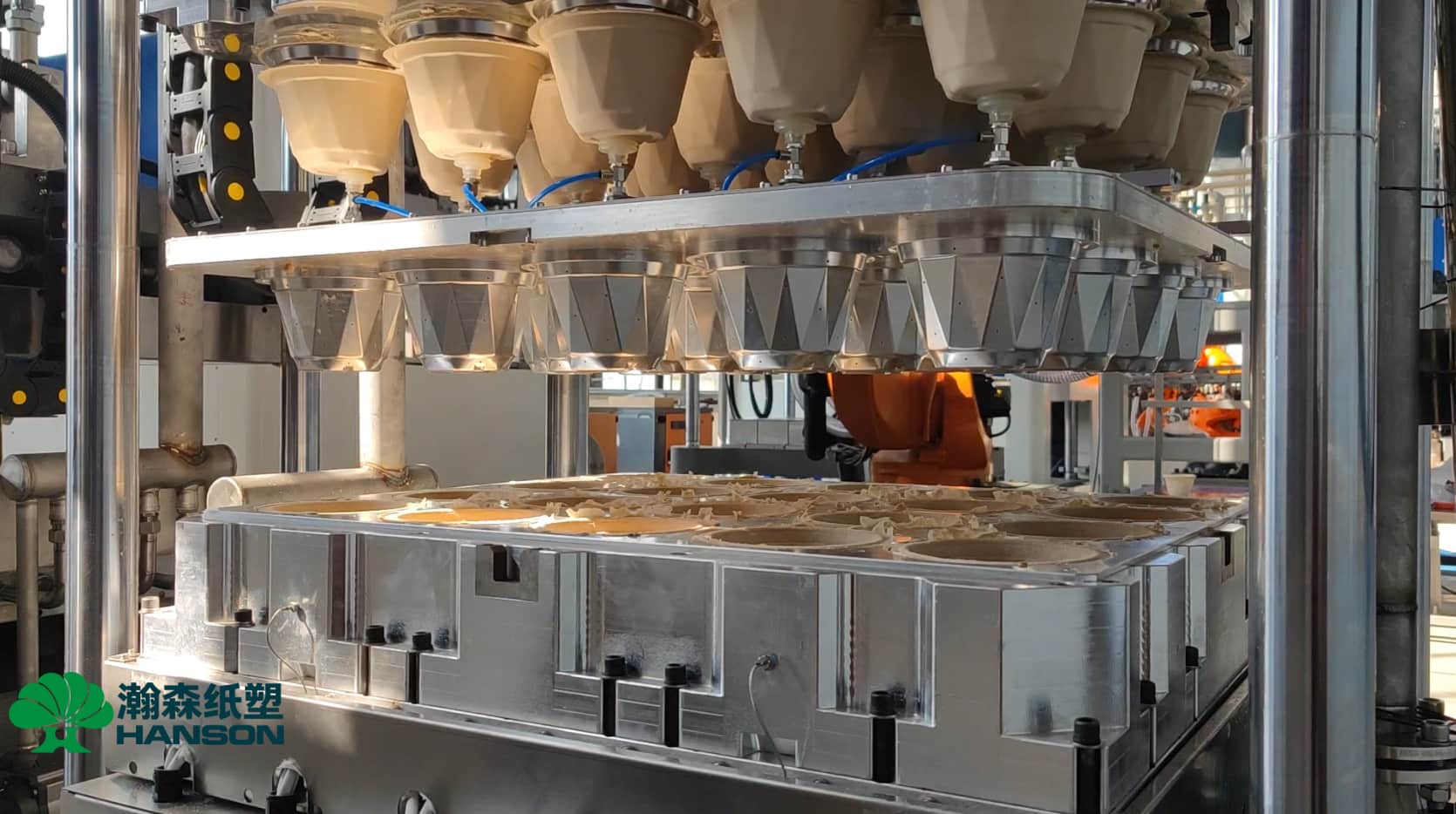
Case Study: Shengquan’s Diamond Bowl Project When Shengquan initiated a special-sized diamond bowl project, there was no readily available equipment solution in the market. Instead of rushing to deliver unverified production lines, Hanson Pulp Molding took a “verify first, scale later” approach.
-
Custom R&D and Pilot Production: Hanson conducted custom R&D and utilized its own facility to perform about 7 months of pilot production, completely validating the forming and hot-pressing processes for this specific product.
-
Prototyping Equipment: Shengquan’s Jinan facility then purchased a prototyping line for small-scale validation.
-
Commercial Production: Only after the product and process were fully verified did Shengquan’s Daqing plant proceed with large-scale equipment configuration, deploying Hanson Pulp Molding’s ZBG-1111 full-servo tableware machines.
This rigorous pre-verification minimizes technical risks once large capital is deployed for the turnkey plant.

Verification 2: Equipment Stability in Real Production Environments
When selecting pulp molding equipment, theoretical cycle times are often misused to calculate daily capacity directly. In reality, the actual daily output depends heavily on product weight, number of mold cavities, forming time, hot pressing time, downtime, and the equipment’s consistent yield rate.
The most reliable way to confirm high capacity and stability is through extended testing in a real manufacturing environment.
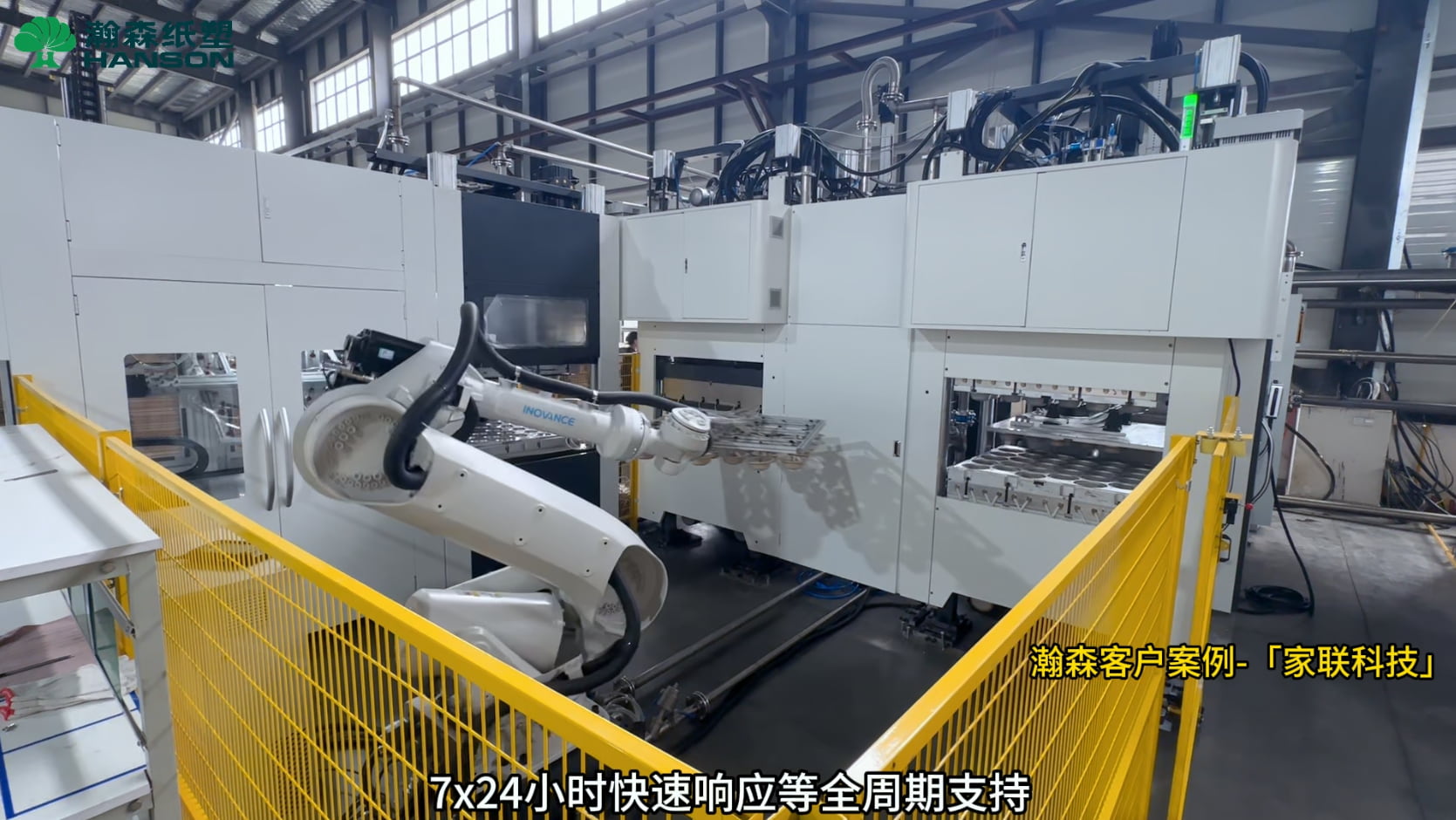
Case Study: Jialian Technology’s Overseas Expansion Before launching a massive overseas factory in Thailand, Jialian Technology did not rely solely on theoretical parameters. Instead, they conducted approximately 4 months of actual production testing on the Hanson Pulp Molding equipment. Through these four months, they verified the machine’s operational stability under continuous heavy loads, the actual product yield, and the true capacity output. Based on these solid verification results, Jialian Technology confidently purchased over 100 pulp molding machines in the first phase for their Thailand facility. The extended upfront testing ensured a highly efficient delivery and a smooth production ramp-up overseas.
Verification 3: System Synergy Across the Turnkey Plant
The efficiency of a pulp molding production line is not determined solely by the forming machine; it is limited by the slowest bottleneck in the plant.
If the intelligent pulping system fails to maintain consistent pulp concentration, the weight of the wet preforms will fluctuate. If the mold’s drainage structure is poorly designed, the wet preforms will carry excess moisture into the hot press mold, extending heating times and driving up energy consumption. If post-processing trimming and packaging cannot keep up, the high-speed forming machine will be forced to stop and wait.
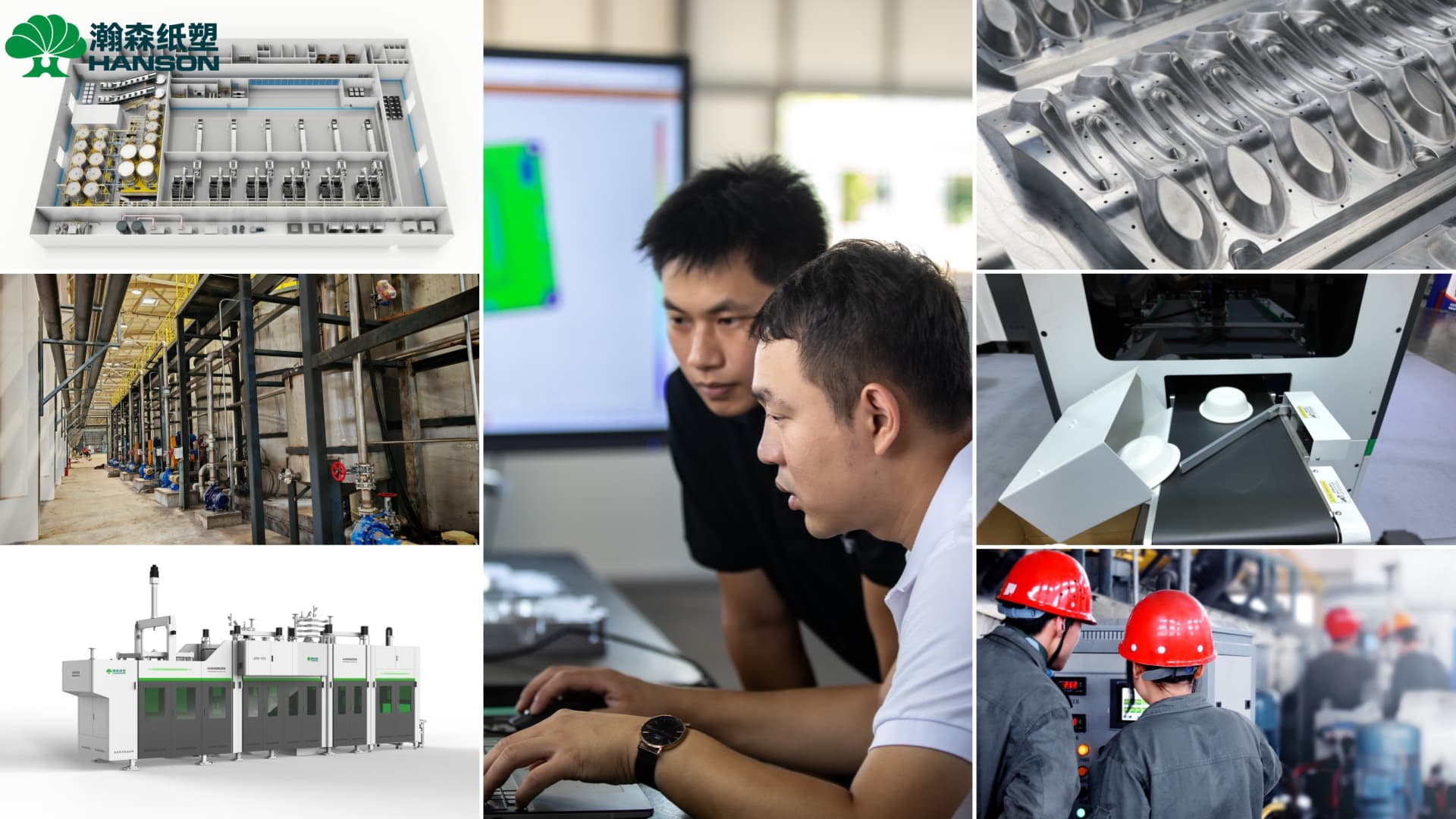
Therefore, during the plant planning phase, pulping, forming equipment, tooling, and post-processing automation must be evaluated under a unified process logic. Hanson’s 6+1 turnkey service system is designed precisely to eliminate interface friction between different production modules, ensuring seamless operation from fiber preparation to final product stacking.
FAQ
1. Why shouldn’t we buy mass production equipment directly for a new product design? New materials or complex structures lack verified process parameters. Moving directly to mass production lines can lead to demolding failures, uneven wall thickness, or weak structural integrity. Hanson Pulp Molding recommends utilizing prototyping machines (such as the ZAMS-6047) to test materials and optimize molded fiber tooling before scaling up.
2. How should the actual capacity of pulp molding equipment be calculated? Theoretical cycle times alone do not equal actual capacity. Buyers must factor in the product’s weight, the mold’s cavity layout, hot pressing times, equipment uptime, and the final yield rate to calculate true commercial output.
3. Does purchasing more expensive equipment guarantee faster delivery and ROI? Not necessarily. What truly impacts delivery and ramp-up efficiency is the supplier’s turnkey capability. If the equipment price does not include integrated tooling design, pulping adaptation, and on-site production ramp-up support, the factory will still waste considerable time troubleshooting the process on its own.
Conclusion
The success of a turnkey pulp molding project depends not just on choosing the right machine, but on conducting rigorous process validation and stability testing before the purchase is made. From Shengquan’s pilot production to Jialian Technology’s 4-month testing phase, thorough upfront verification guarantees more efficient equipment installation, smoother commissioning, and faster stable mass production.
CTA
If you already have a product sample, 3D drawing, product dimensions, or target daily capacity, Hanson Pulp Molding can help evaluate the molding process, tooling, and equipment configuration for your project. From product prototyping to turnkey plant delivery, we are ready to support your next manufacturing investment.
WhatsApp: +86 15920604830
Email: linchuangcheng@hspulpmolding.com