When investing in pulp molding equipment, many buyers focus solely on the mechanical tolerances listed on a machine’s specification sheet. However, the dimensional accuracy, surface smoothness, and batch-to-batch consistency of a molded fiber product are not determined by a single machine parameter.
The manufacturing of molded fiber is a complex physical process involving water extraction, fiber distribution, and thermoforming. Evaluating the precision of pulp molding equipment requires looking at the entire system: from the product structure and the pulping process to tooling design, hot pressing stability, and post-processing automation.
Core Factors Determining Molded Fiber Precision
1. The Choice Between Wet Press and Dry Press Processes
The ceiling for product precision is established by the manufacturing process you choose.
-
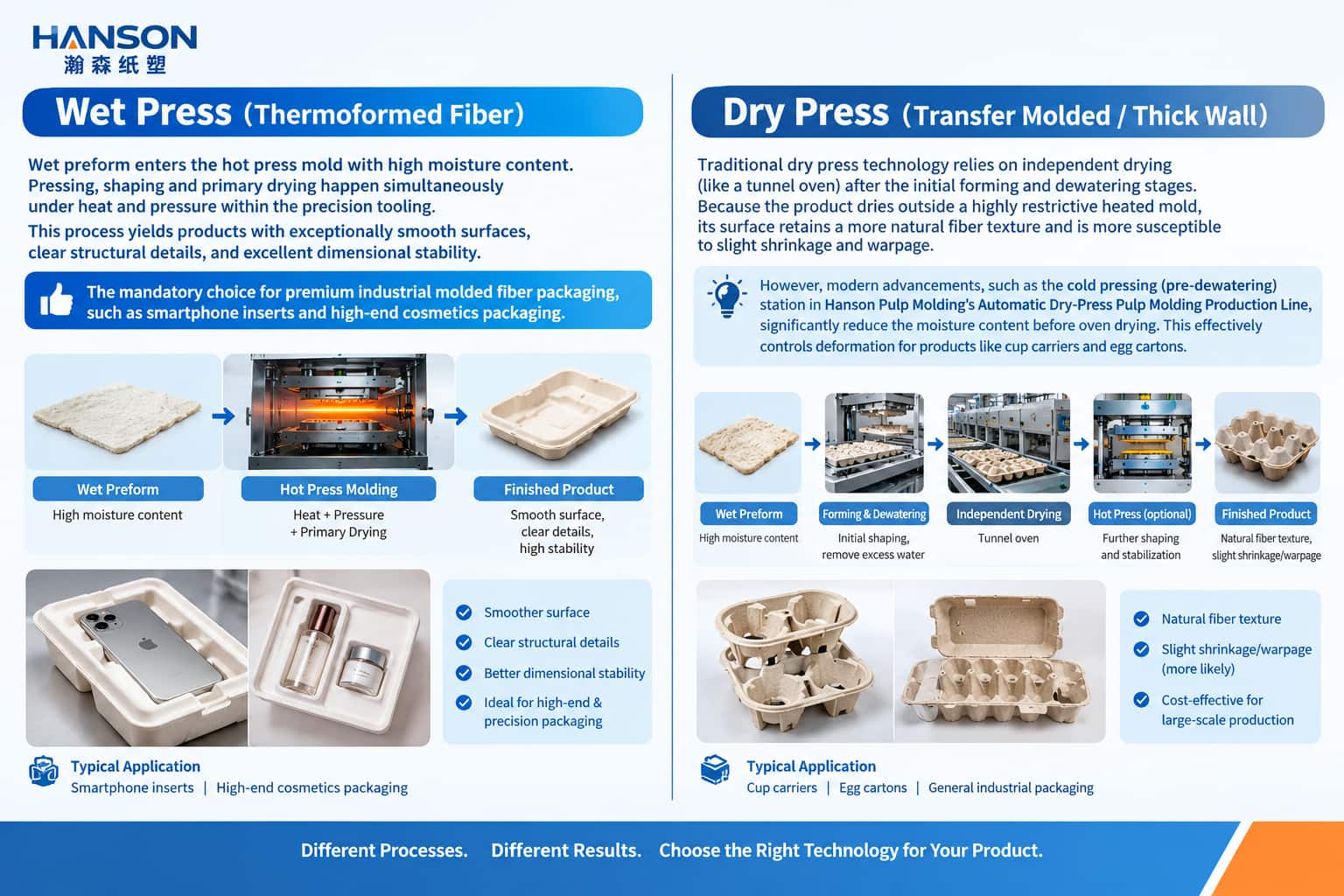
Wet Press (Thermoformed Fiber): In the wet press process, the wet preform enters the hot press mold while still retaining a high moisture content. The pressing, shaping, and primary drying all happen simultaneously under heat and pressure within the precision tooling. This process yields products with exceptionally smooth surfaces, clear structural details, and excellent dimensional stability. It is the mandatory choice for premium industrial molded fiber packaging, such as smartphone inserts and high-end cosmetics packaging.
-
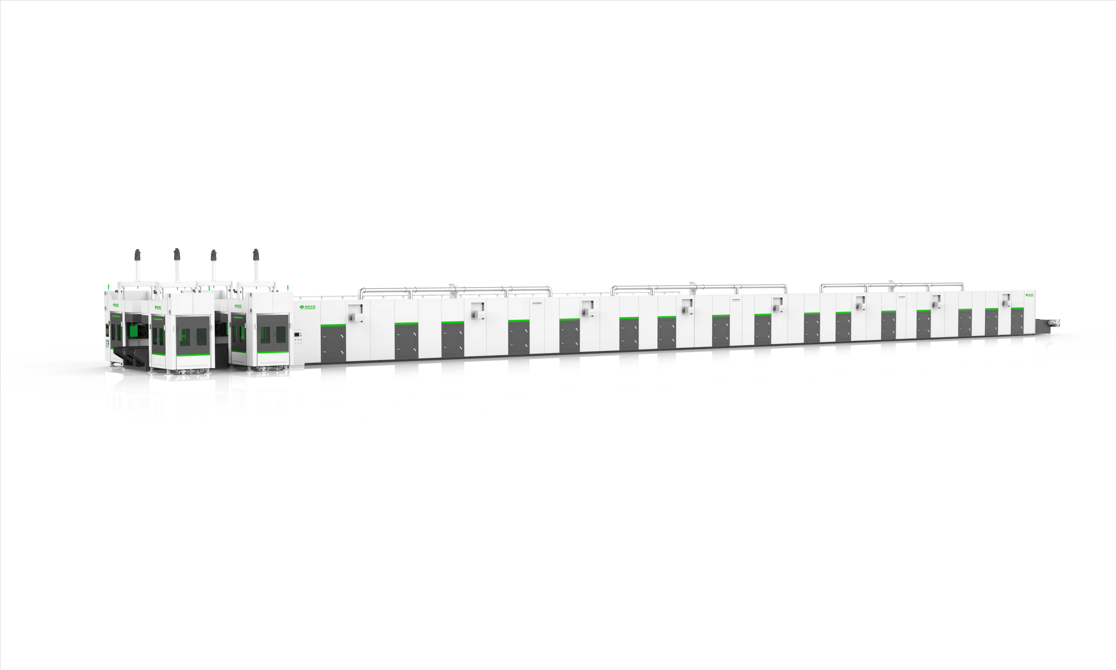
Dry Press (Transfer Molded / Thick Wall): Traditional dry press technology relies on independent drying (like a tunnel oven) after the initial forming and dewatering stages. Because the product dries outside a highly restrictive heated mold, its surface retains a more natural fiber texture and is more susceptible to slight shrinkage and warpage. However, modern advancements, such as the cold pressing (pre-dewatering) station in Hanson Pulp Molding’s Automatic Dry-Press Pulp Molding Production Line, significantly reduce the moisture content before oven drying. This effectively controls deformation for products like cup carriers and egg cartons.
2. Tooling Design and Dewatering Efficiency
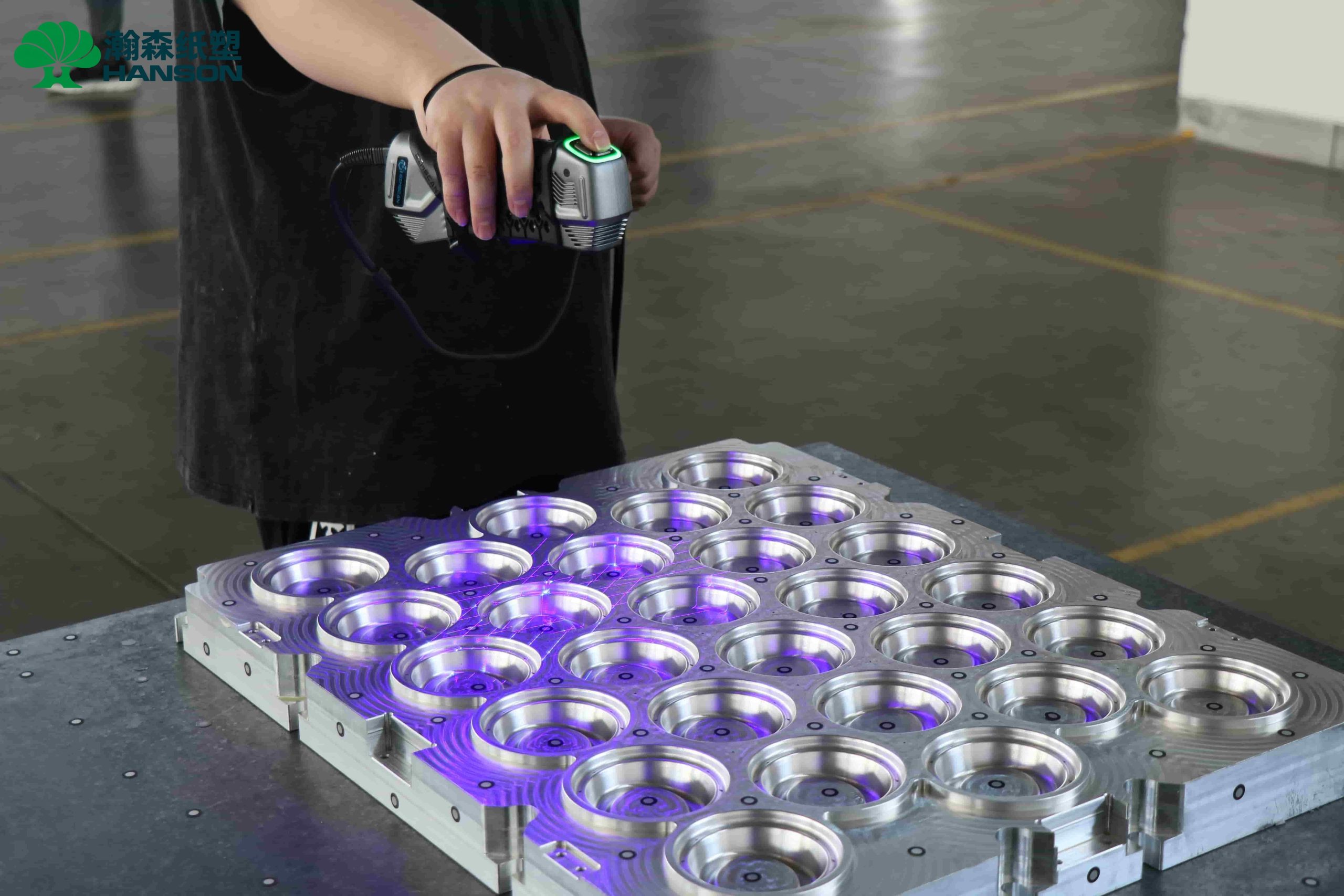
Pulp molding molds (tooling) are at the frontline of precision control. They are actively involved in forming, dewatering, transferring, and hot pressing.
-
Mesh and Drainage: The wire mesh on the forming tool influences drainage efficiency and fiber retention. Uneven drainage causes uneven wall thickness, which directly leads to inconsistent shrinkage during the drying phase, destroying dimensional accuracy.
-
Hot Press Mold Constraints: The hot press mold is responsible for the final shaping. The machining accuracy of the mold and its vapor exhaust channels determine whether the product can achieve minimal draft angles and sharp, precise edges. Therefore, tooling cannot be treated merely as a machine accessory; it must be co-designed with the equipment process.
3. Hot Pressing and Wet Preform Transfer Control
The operational stability of the equipment translates the tooling’s precision into the final product.
-
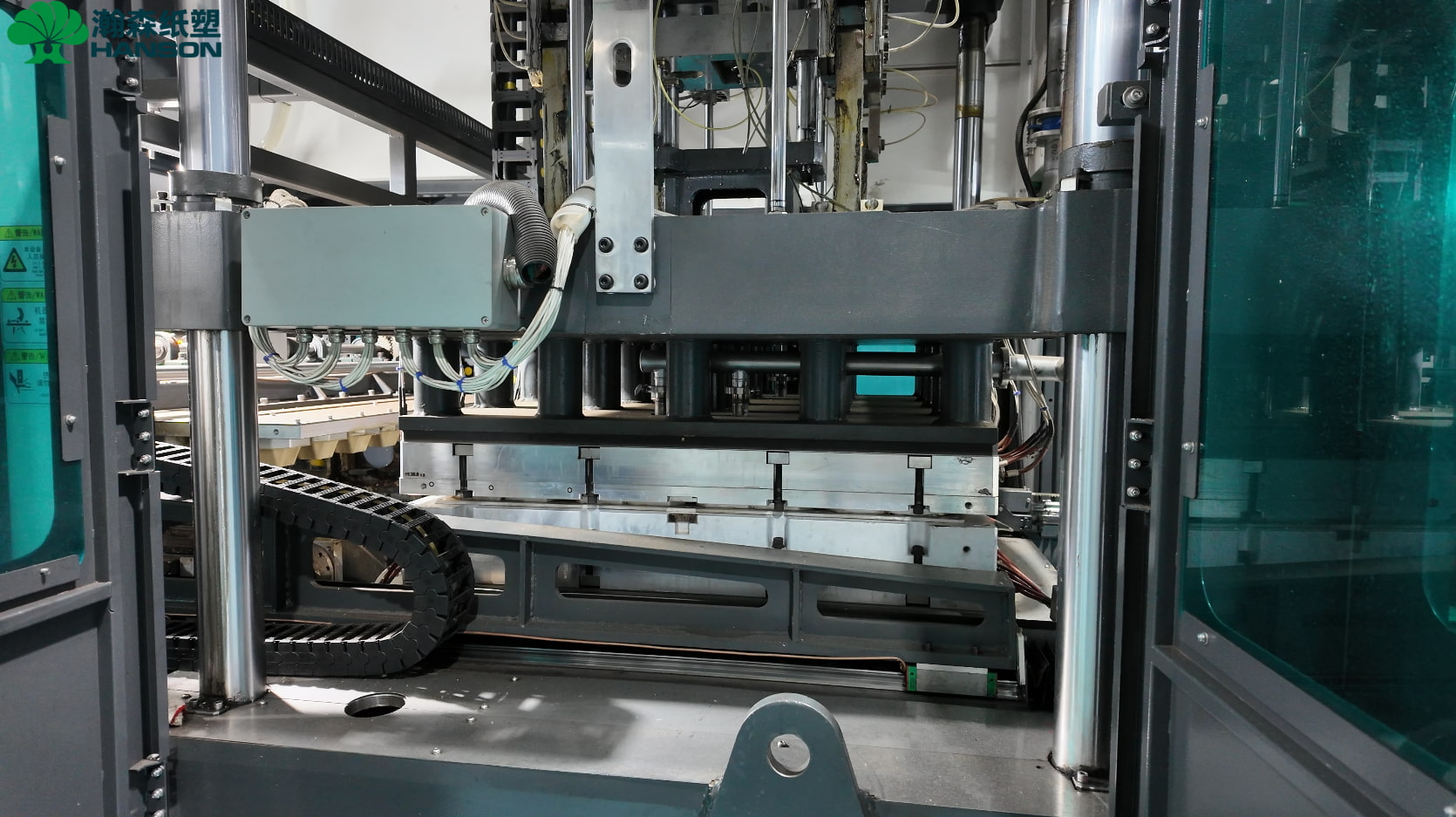
Stable Transfer: The wet preform is extremely fragile when it is transferred from the forming mold to the hot press mold. Equipment utilizing in-machine mold-to-mold transfer minimizes human handling and ensures positioning stability, preventing distortion.
-
Pressure and Temperature Stability: Excessive or uneven hot pressing parameters can cause local warping or internal structural damage. High-end industrial packaging machines rely on precise servo-driven systems and dynamic pulp replenishment to ensure forming consistency and process control across long production runs.
4. Post-Processing Automation for Final Corrections
For products requiring extremely tight tolerances, forming and hot pressing alone might not be enough.
-
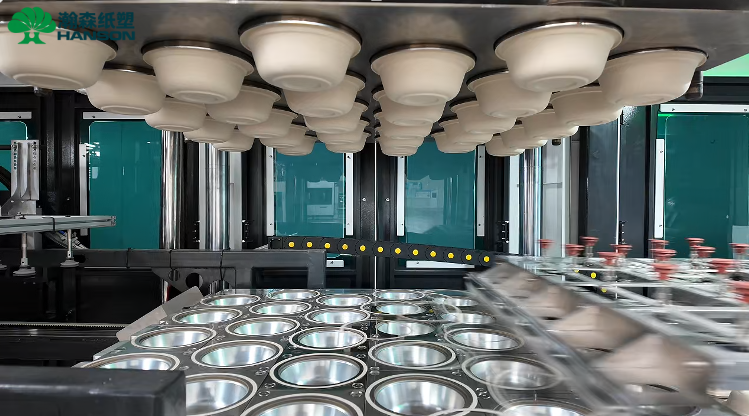
Trimming System: Products like molded fiber cup lids require exact rim dimensions to snap securely onto a cup. High-precision servo-driven punch cutting is essential to remove rough edges and achieve the final, perfect shape.
-
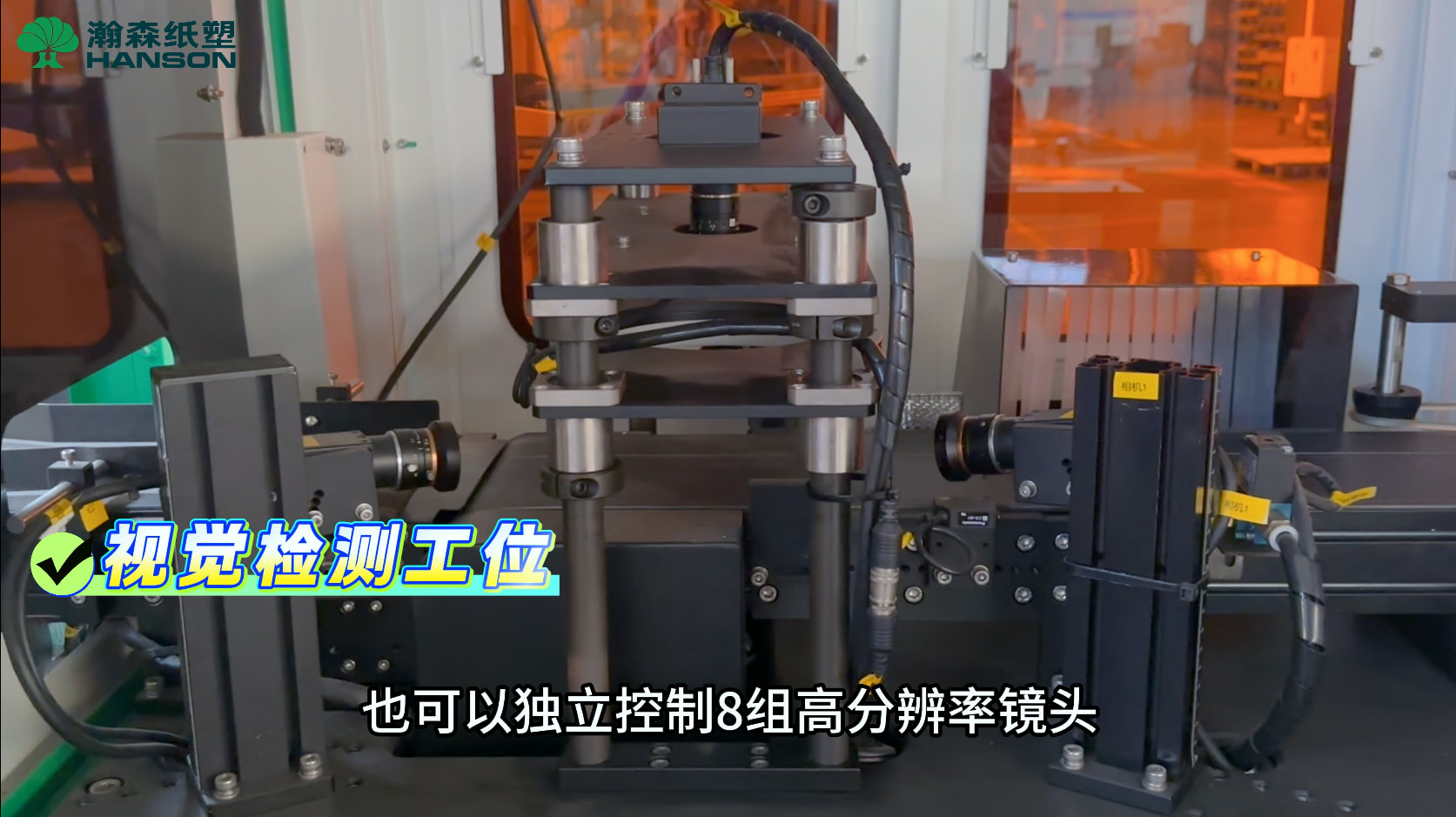
Vision Inspection: In high-speed, high-volume production, integrating machine vision inspection helps identify visual defects and dimensional deviations, ensuring that out-of-tolerance products never reach the packaging stage.
Hanson’s Equipment Mapping for Different Precision Needs
Different applications demand different levels of precision. As a specialist in turnkey pulp molding solutions, Hanson Pulp Molding matches the right equipment configuration to your specific product requirements.
-
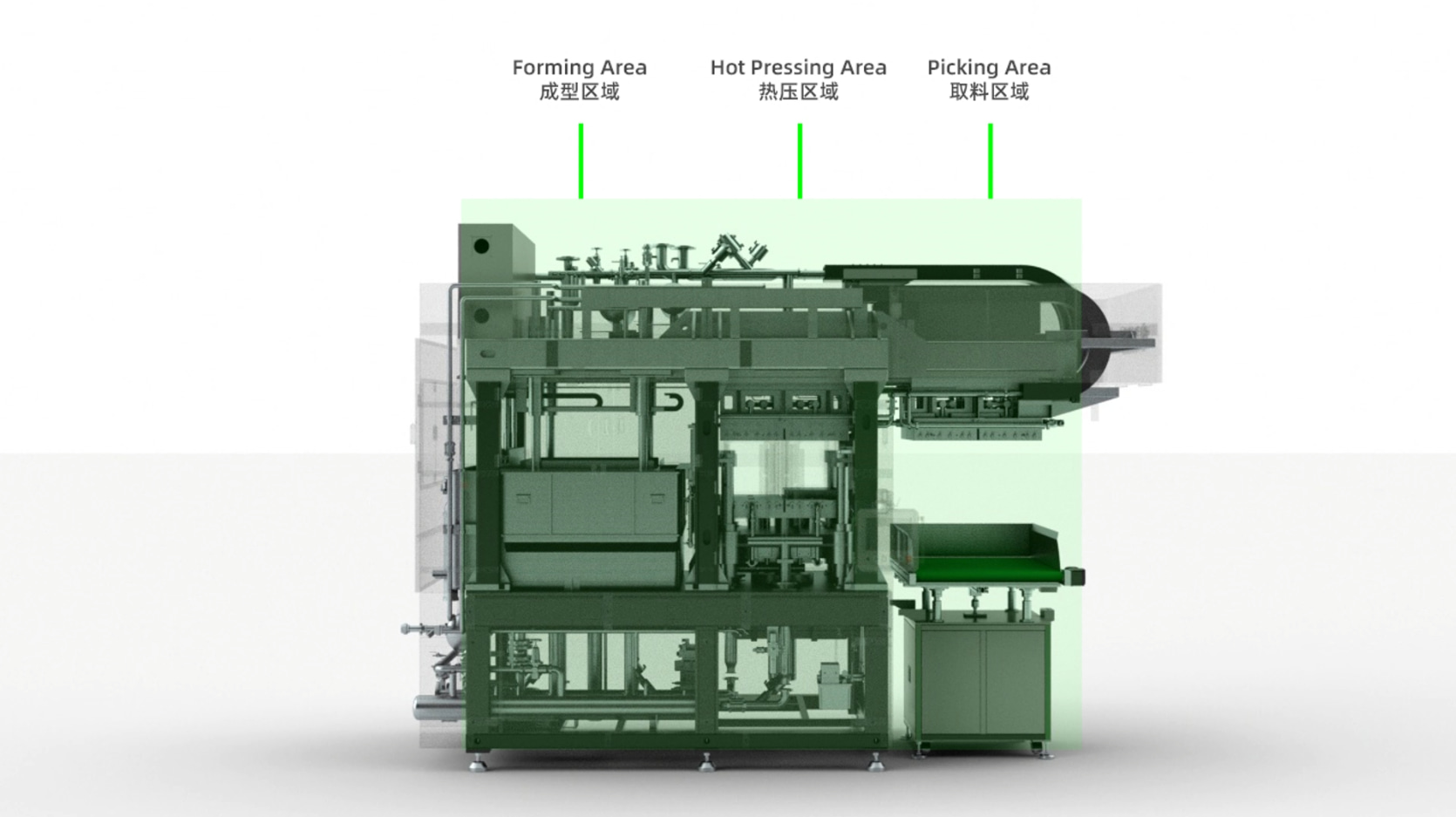
Premium Industrial Packaging: For 3C electronics and high-end inserts that demand ultimate surface quality and dimensional accuracy, the Hanson ZAP-9585 and ZAD series provide advanced hot pressing control, dynamic pulp replenishment, and exceptional product consistency.
-
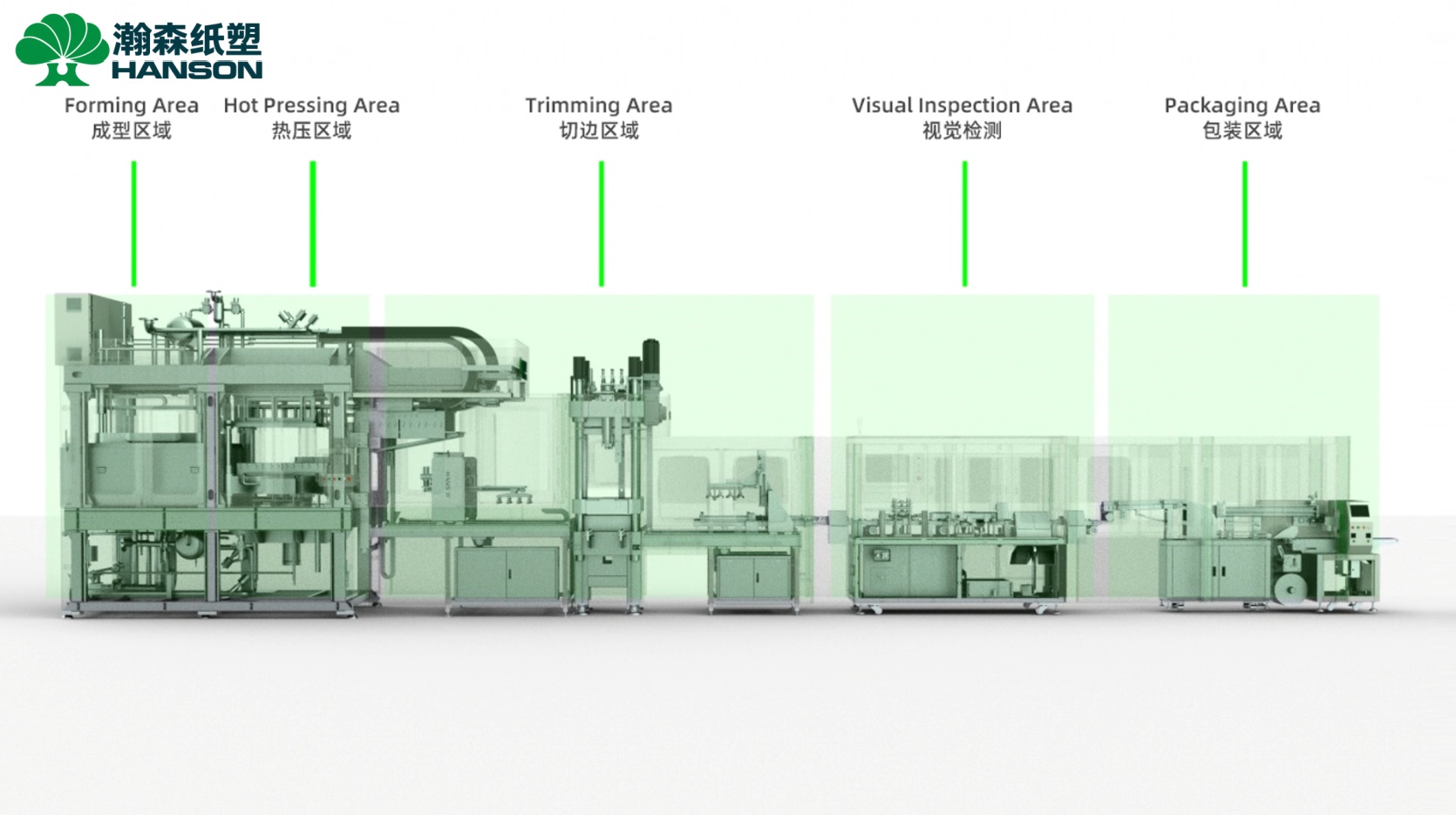
Molded Fiber Cup Lids: Cup lids require minimal tolerances for secure fits. The Hanson ZAKS-9595 automated production line integrates forming, hot pressing, servo die cutting, vision inspection, and packaging. Under appropriate conditions, it offers a daily capacity of 100,000–120,000 pieces (24H) without sacrificing precision.
-
Wet Press Tableware: For plates and clamshell containers, where high capacity must balance with structural precision (like hinges and locking tabs), machines like the ZFG-1111 and the full-servo ZBG-1111 offer robust performance and stable precision.
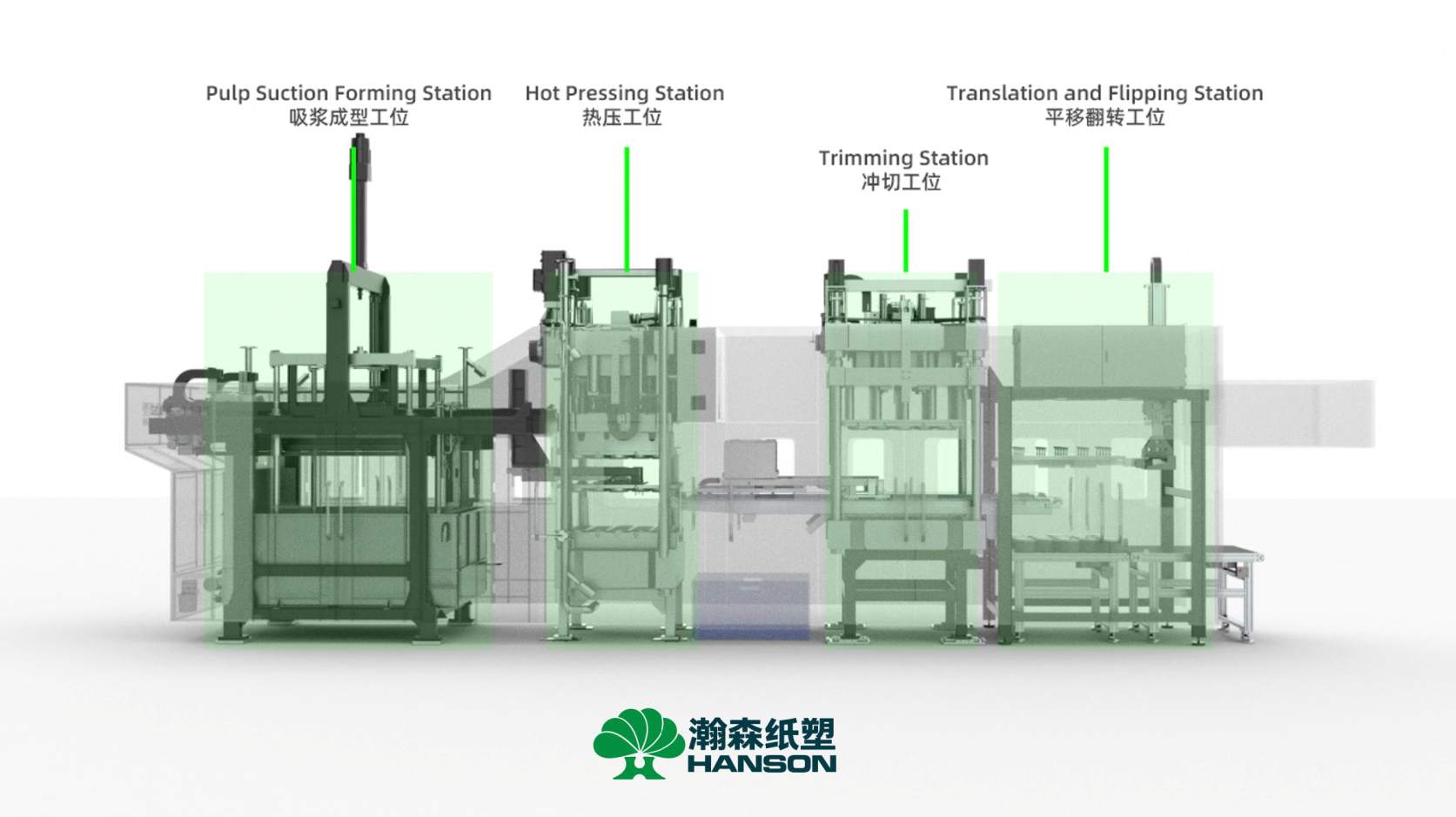
-
Protective Dry Press Packaging: For items like cup carriers (drink carriers), the Hanson Automatic Dry-Press Pulp Molding Production Line utilizes a 120T cold pressing station to reduce moisture content prior to drying, actively minimizing product deformation while maintaining high output.
FAQ
Why does product precision drop when I change the mold on the same machine? Product precision is a combined result of the equipment and the mold. Different products have different thickness distributions and dewatering needs. If the new mold’s drainage mesh or exhaust channels are poorly designed, it causes uneven moisture content in the wet preform, leading to inconsistent shrinkage and deformation during drying or hot pressing.
Should I buy a mass-production machine immediately for a brand-new, high-precision product design? No. For innovative or complex products without a mature market reference, it is highly recommended to start with a prototyping machine (such as the Hanson ZAMS-6047). Prototyping allows you to validate the product structure, mold design, and process parameters before scaling up, significantly reducing the investment risk of large-scale equipment.
Can cup carriers and cup lids be manufactured on the same machine since they both require precision? No, they serve completely different functions and require different processes. A cup lid (Molded Fiber Cup Lid) requires extremely tight tolerances for sealing and snaps, making the ZAKS-9595 wet press and trimming line the standard choice. A cup carrier (Drink Carrier) focuses on weight-bearing and buffering multiple cups, making the Automatic Dry-Press Pulp Molding Production Line far more suitable and cost-effective. They cannot be produced on the same equipment.
Evaluating the precision of pulp molding equipment goes far beyond looking at metal machining tolerances. It is about assessing how well the pulping, forming, tooling, hot pressing, and post-processing systems work together. Hanson Pulp Molding engages from the product development and plant planning stages, ensuring that equipment, molds, and process parameters are perfectly aligned to turn your high-precision product ideas into stable, commercial production realities.
If you already have a product sample, 3D drawing, product dimensions, or target daily capacity, Hanson Pulp Molding can help evaluate the molding process, tooling, and equipment configuration for your project.
WhatsApp: +86 15920604830
Email: linchuangcheng@hspulpmolding.com