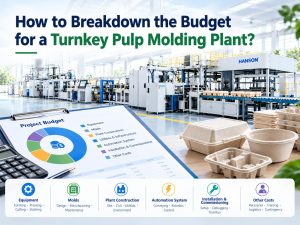
When investing in a pulp molding project, visiting a supplier’s facility is a critical step in making an informed purchasing decision. However, many buyers fall into the trap of only watching a machine run empty at high speeds or judging based on its exterior finish. Pulp molding is a complex physical process that involves pulp preparation, vacuum forming, dewatering, hot pressing, and secondary processing.
The primary goal of an on-site inspection should be to verify the actual stability of the equipment under mass commercial production and to assess whether the manufacturer has the systemic capability to support an entire factory over the long term. To make an accurate purchasing decision, it is highly recommended to focus on verifying the following five key areas.
1. Verify the “Product-Process-Equipment” Matching Logic
A single type of pulp molding equipment cannot optimally produce every possible molded fiber product. During the inspection, first verify if the supplier follows the core logic: the product determines the process, and the process determines the equipment configuration.
Different end-use applications require fundamentally different manufacturing routes. For example, if you plan to produce wet-press molded fiber foodservice packaging like plates or clamshells, you should focus on the equipment’s continuous production stability and energy consumption. If your target is premium industrial molded fiber packaging (such as smartphone inserts), the focus must shift to surface quality, dimensional accuracy, and hot pressing process control. Conversely, protective packaging like egg cartons or cup carriers should be evaluated on the dewatering efficiency and drying system integration within a dry press or semi-dry press production line.
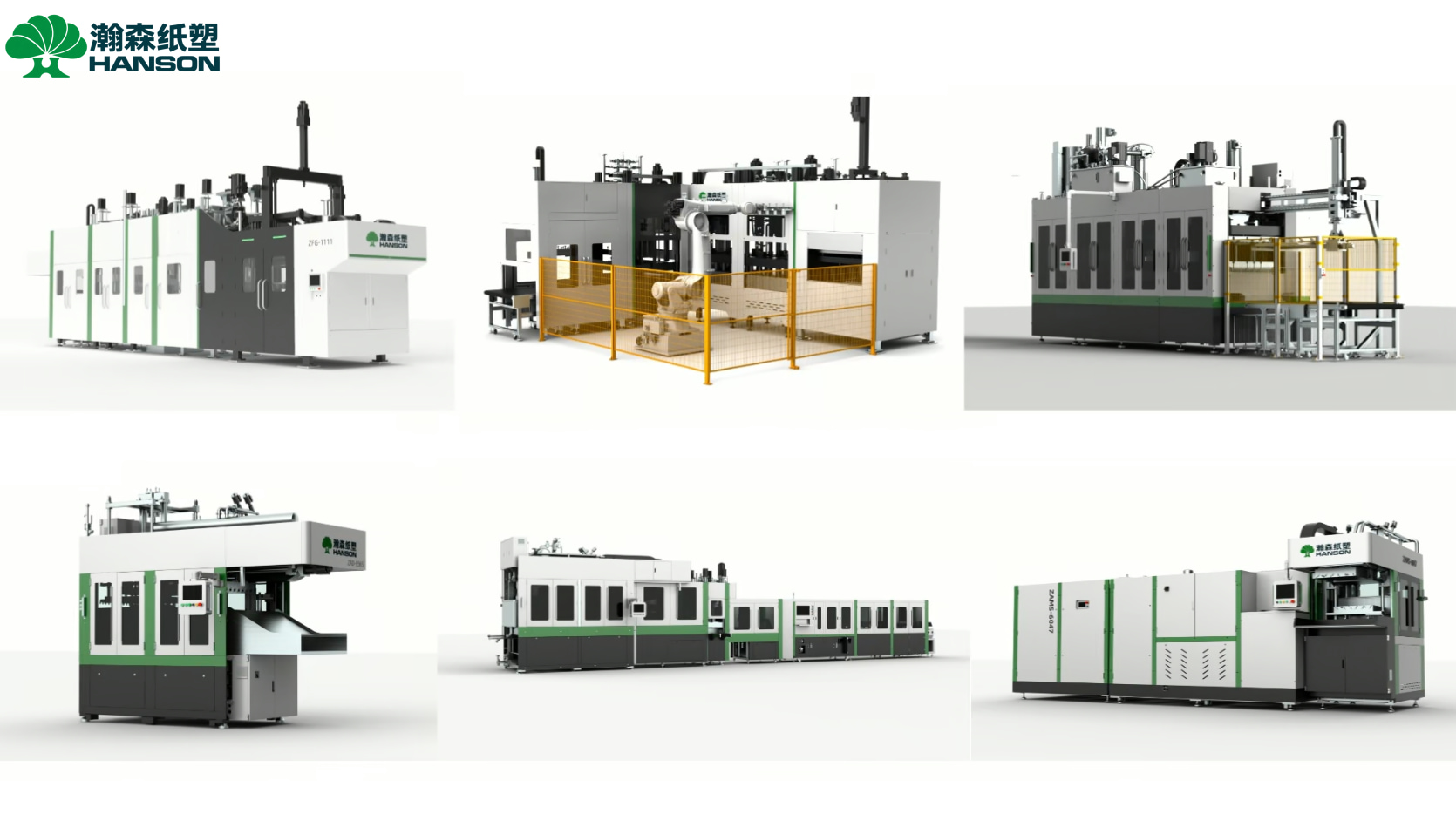
As a specialist in turnkey pulp molding solutions, Hanson Pulp Molding provides a comprehensive equipment matrix. From the ZFG-1111 and ZBG-1111 for tableware, the ZAP-9585 for premium industrial packaging, to automatic dry-press pulp molding production lines for cup carriers, Hanson Pulp Molding configures the exact technology route based on your product geometry and process requirements, avoiding the compromises of a “one-size-fits-all” approach.
2. Verify Actual Daily Capacity, Not Just Theoretical Cycle Time
It is common to see a machine completing a single cycle very rapidly on the factory floor. However, theoretical cycle time does not equal the actual daily production capacity.
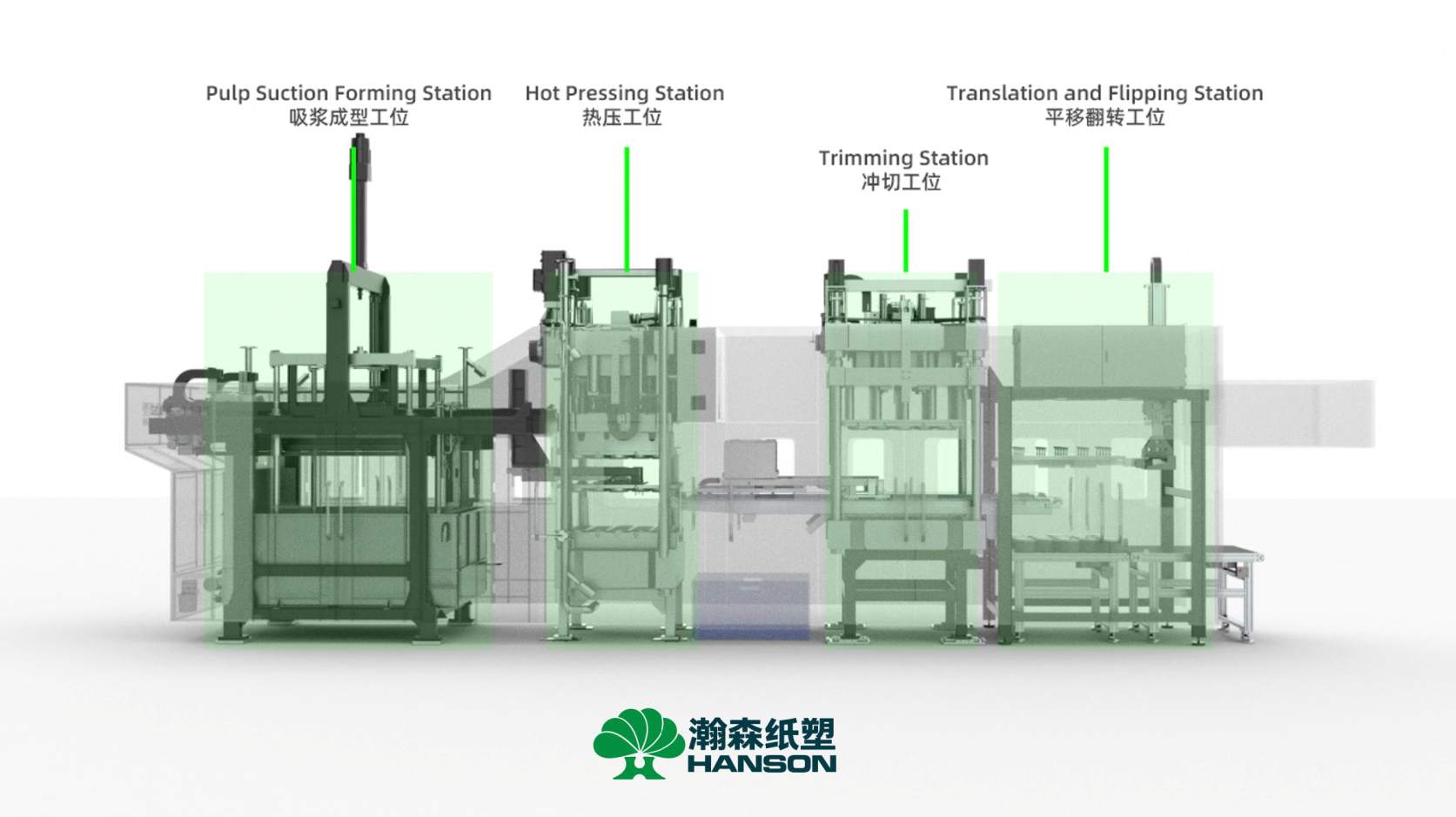
The real output of a pulp molding production line is heavily influenced by the product’s weight, the number of cavities in the mold, forming time, hot-pressing duration, actual equipment uptime, yield rate, and mold changeover frequency. When producing products of different weights and structures on the same equipment, both the daily piece count and tonnage will fluctuate significantly. Therefore, do not just ask for the cycle time; ask the supplier to demonstrate how they calculate capacity based on your specific product.
Under appropriate production conditions, the Hanson Pulp Molding ZFG-1111 can achieve a daily capacity of over 1.8 tons. For cup carriers and buffer packaging, the automatic dry-press production line demonstrates an output of approximately 18 tons per 23 hours (based on a 40g 4-cup carrier configuration). These metrics are grounded in specific production conditions, ensuring you evaluate realistic mass production data.
3. Verify the Synergy Between Tooling and the Forming Process
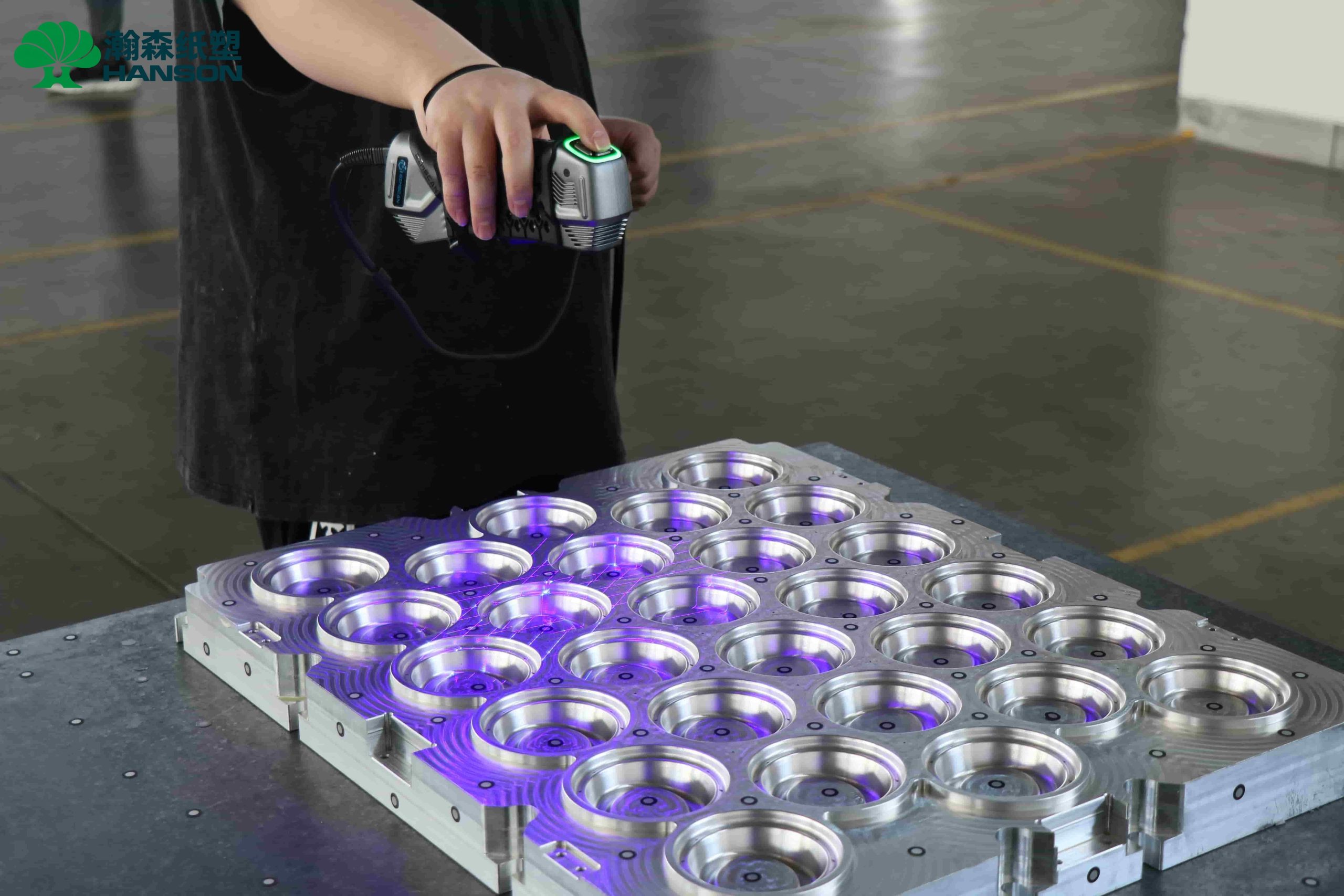
Tooling does more than just shape the product. Molded fiber tooling directly impacts drainage efficiency, wet preform transfer, hot pressing effectiveness, and batch-to-batch product consistency. Two pulp molding machines with identical specifications can yield vastly different output and quality if equipped with different mold designs.
During your visit, observe the supplier’s depth of expertise in tooling. Verify if they possess in-house mold design and manufacturing capabilities, and whether the mesh and drainage structures are perfectly synchronized with the equipment’s mechanical movements. Hanson Pulp Molding integrates mold manufacturing into its 6+1 turnkey service system, ensuring that the machine, the process, and the tooling are engineered collaboratively for optimal moisture content control and smooth demolding.
4. Verify Post-Processing Automation and Line Continuity
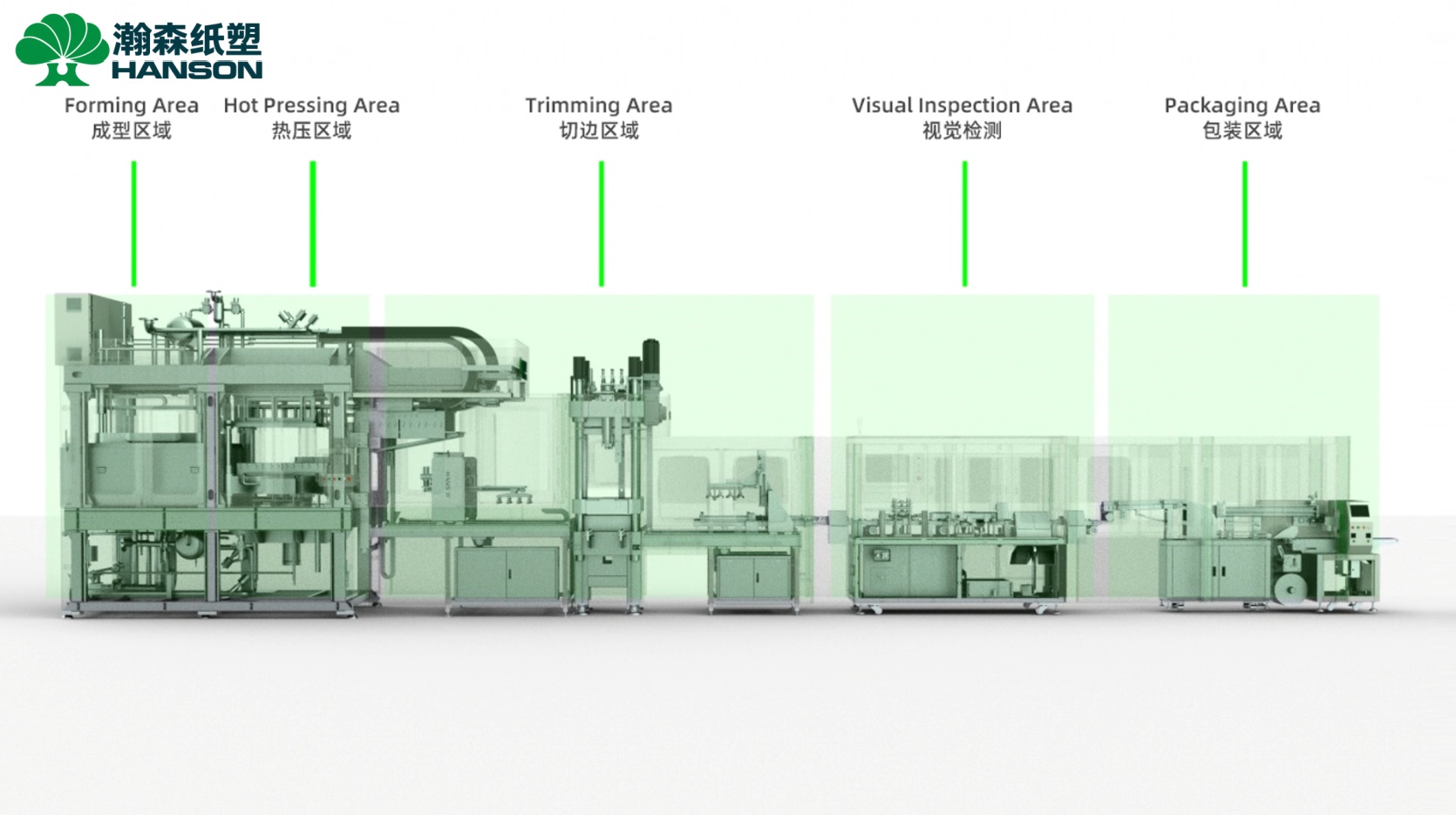
The manufacturing process does not stop once the product is formed and dried. Many molded fiber products require secondary processes such as trimming, vision inspection, coating, lamination, or automated packaging. If the forming equipment operates at high speed but the post-processing relies on manual labor, trimming bottlenecks will occur, and the actual capacity of the entire plant will be limited by its slowest process.
Automation in post-processing must be a key evaluation criterion. For high-volume items like molded fiber cup lids, the Hanson Pulp Molding ZAKS-9595 integrates forming, hot pressing, servo-driven punch cutting, machine vision inspection, and packaging, achieving up to 100,000–120,000 pcs/day (24H). For products requiring functional surfaces, Hanson Pulp Molding also provides the HXT-24 automatic rotary spray coating line and molded fiber lamination machines, systematically eliminating back-end bottlenecks.
5. Verify Turnkey and Production Ramp-Up Capabilities
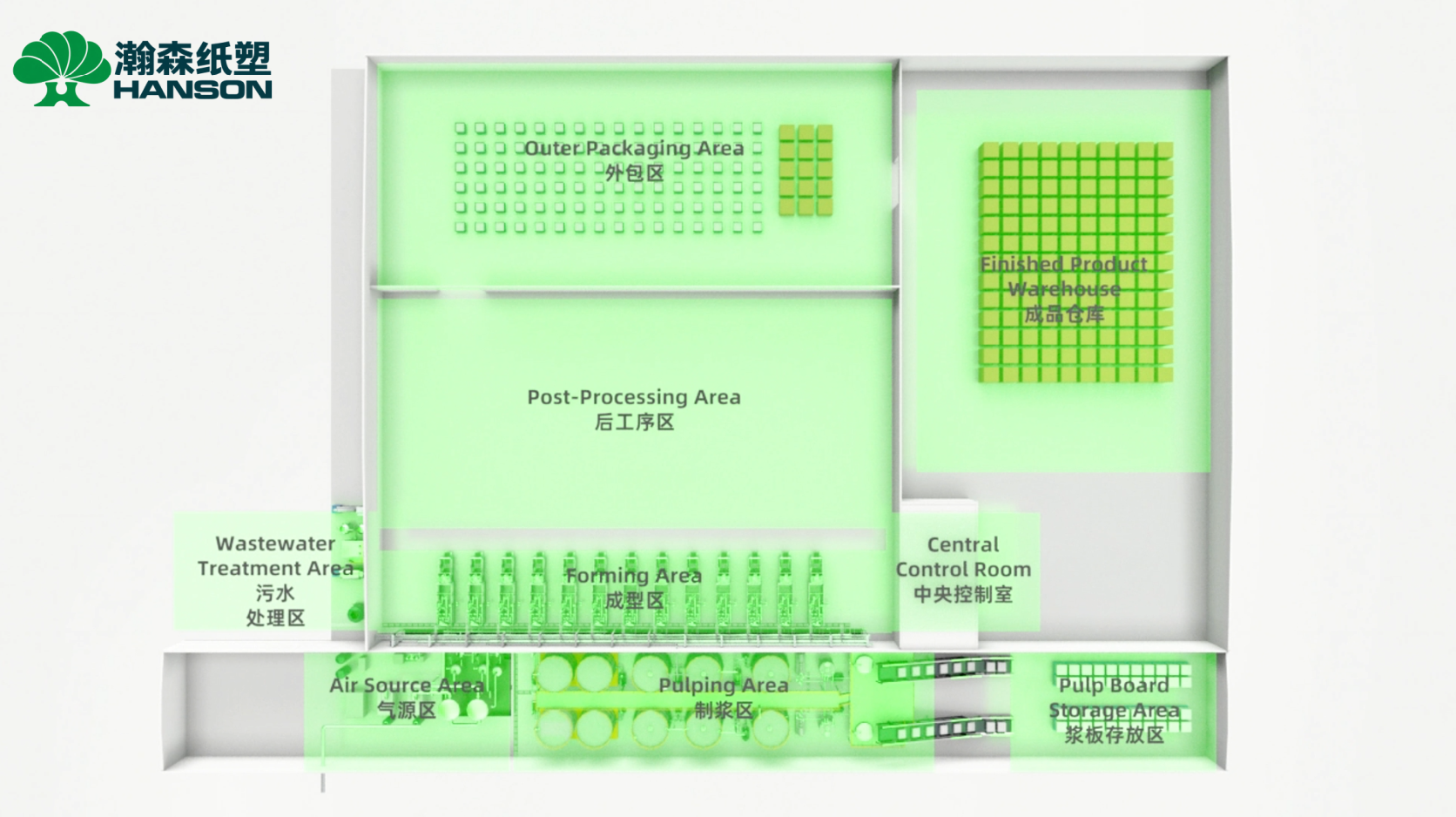
Building a molded fiber factory involves much more than connecting a few forming machines. Inadequate pulping capacity, poorly designed plant utilities, or inefficient logistics will directly derail a project.
A reliable pulp molding equipment manufacturer must possess complete plant planning and engineering execution capabilities. Evaluate the supplier’s expertise in intelligent pulping systems, DCS/MCC control architecture, and whether they have a dedicated engineering team for installation, training, and production ramp-up support. Starting from product development, Hanson Pulp Molding delivers turnkey solutions encompassing pulping, forming equipment, tooling, and post-processing, ensuring your project moves seamlessly from concept to stable commercial production.
FAQ
Why does the daily capacity of the same pulp molding machine change for different products? Different products vary in weight, dimensions, mold cavities, structural complexity, and hot pressing time. Heavier or more complex products require greater dewatering and thermal loads. Therefore, when switching products, both the production piece rate and total tonnage will fluctuate accordingly.
Can I use the same machine to produce both cup carriers and cup lids? No. Cup carriers are protective packaging prioritizing load-bearing and transportation, typically manufactured via dry press or semi-dry press routes. Molded fiber cup lids demand extreme dimensional stability and precise edge matching, requiring dedicated automated equipment like the ZAKS-9595, which features continuous trimming and vision inspection.
Is buying a pulp molding machine enough to start production immediately? Not necessarily. A complete pulp molding operation requires more than just the forming machine; it also demands an intelligent pulping system, tooling, a vacuum system, heating sources, compressed air, and post-processing automation. When inspecting a supplier for a new factory setup, it is crucial to verify their comprehensive plant planning capabilities to ensure all systems are perfectly matched.
Conclusion
An on-site inspection for pulp molding equipment is a comprehensive test of a supplier’s systemic engineering capabilities. From product formulation to tooling design, from theoretical cycle times to actual equipment uptime, and from individual machine operations to post-processing automation, any disconnect can become a serious risk during mass production. By establishing rigorous verification standards, you can ensure that your equipment investment translates into long-term, stable manufacturing competitiveness.
If you already have a product sample, 3D drawing, or target daily capacity, these details can be used to evaluate the precise molding process, tooling, and equipment configuration for your project. If you are planning a new pulp molding plant, Hanson Pulp Molding can evaluate your project from product development and plant planning to pulping, forming equipment, post-processing, and production ramp-up.
WhatsApp: +86 15920604830
Email: linchuangcheng@hspulpmolding.com