When launching a new molded fiber project, many investors focus primarily on theoretical cycle times and the initial price of the pulp molding equipment. However, producing high-quality molded fiber is not as standardized as traditional plastic injection molding. The actual output and quality depend on a systemic integration of pulp preparation, forming technology, dewatering efficiency, molded fiber tooling, and post-processing automation.
To ensure an efficient production line that hits target capacities, equipment configuration must be firmly anchored to the end product’s specifications. As a turnkey specialist in pulp molding, Hanson Pulp Molding recommends that manufacturers clarify the following critical conditions before moving from product prototyping to commercial mass production.
1. Define the End Product: Dimensions, Weight, and Surface Quality
The golden rule of equipment selection is: the product dictates the equipment, not the other way around. Before evaluating any machinery, verify:
-
Geometry and Dimensions: A deep-cavity bowl, a complex smartphone insert, or an industrial protective tray with large height variations require entirely different mold drafts, slurry flow dynamics, and forming mechanisms.
-
Product Weight and Cavities: Heavier products consume more fiber per cycle and require significantly more dewatering and thermal energy to dry. This factor shifts both the daily tonnage and the piece count output of the machine.
-
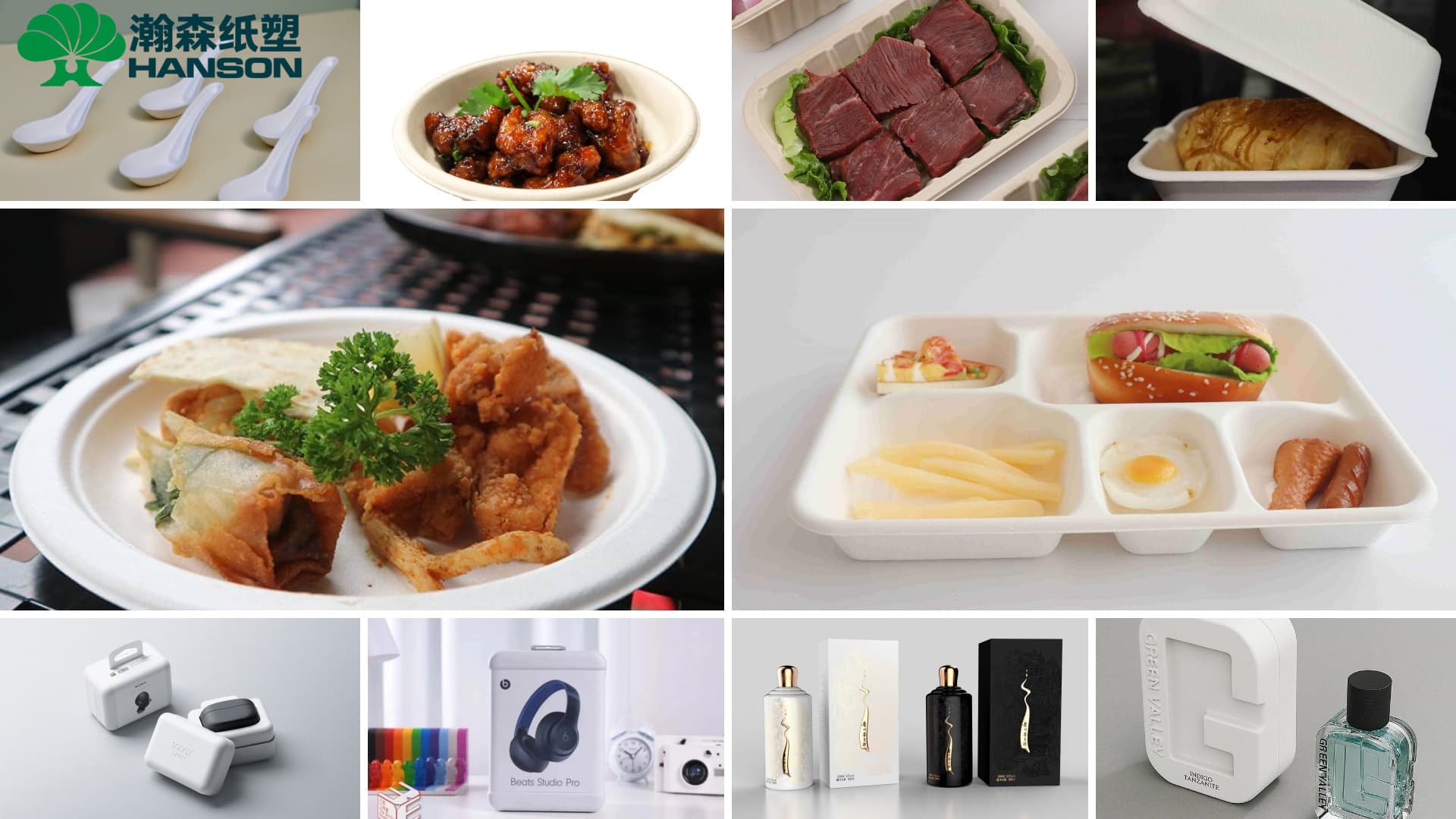
Precision and Aesthetic Needs: Premium consumer electronics packaging demands meticulous surface smoothness and tight dimensional accuracy, while heavy-duty cup carriers prioritize structural strength and cushioning.
For new concepts, specialized materials, or non-standard structures without existing production data, Hanson Pulp Molding advises utilizing a prototyping machine (such as the ZAMS-6047). Prototyping verifies the material formulation, tooling design, and process parameters before you commit to large-scale manufacturing equipment.
2. Match the Production Process: Wet Press vs. Dry/Semi-Dry Press
Once the product profile is established, the next step is determining the optimal manufacturing process. This choice dictates how moisture is removed and defines the core architecture of your pulp molding equipment.
-
Wet Press Process: In this route, the wet preform is transferred directly into heated press tools where it undergoes simultaneous pressure and drying. This process yields a smoother, denser surface with precise structural details, making it the standard for premium industrial molded fiber packaging and high-end tableware.
-
Dry/Semi-Dry Press Process: After forming, the preform enters an independent drying system (such as a tunnel oven) to evaporate the bulk of its moisture before any final pressing. The Automatic Dry-Press Pulp Molding Production Line from Hanson Pulp Molding incorporates a cold pressing (pre-dewatering) station right after forming. This step significantly reduces the preform’s moisture content before baking, minimizing warping, lowering energy consumption, and improving overall line efficiency. This process is highly suited for products like egg boxes, cup carriers, and protective industrial packaging.
3. Dedicated Equipment Configuration: The Hanson Pulp Molding Matrix
Attempting to produce every type of molded fiber product on a single machine often leads to compromised efficiency, higher scrap rates, and awkward automation transitions. Hanson Pulp Molding configures purpose-built equipment tailored to specific product categories to maximize stable commercial production.
-
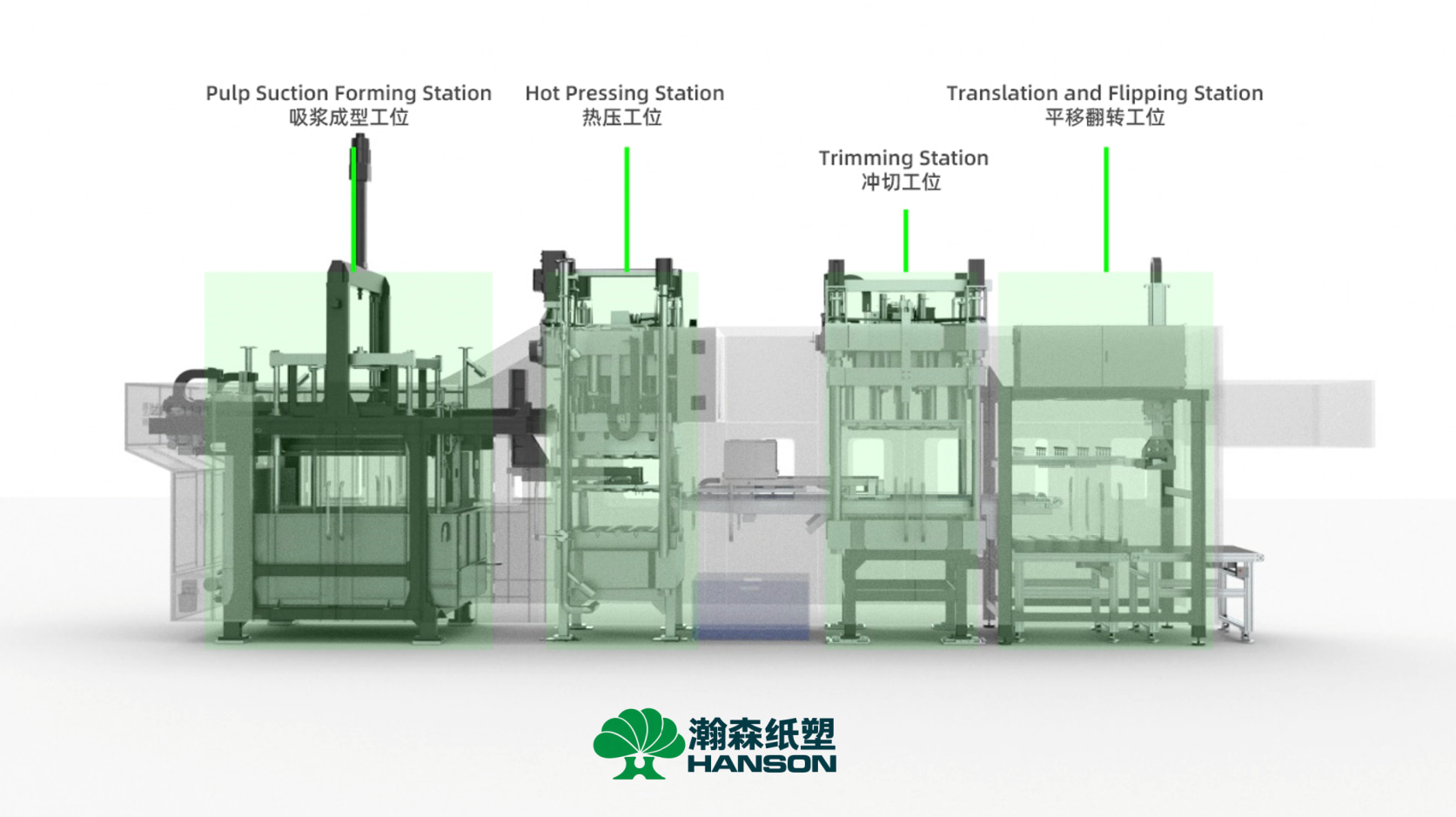
Tableware Production: Foodservice packaging requires massive output and strict energy management. For instance, the Hanson Pulp Molding ZFG-1111 integrates forming, hot pressing, trimming, and stacking. Under appropriate production conditions, its output can exceed 1.8 tons per day, fulfilling the rigorous demands of tableware manufacturing.
-
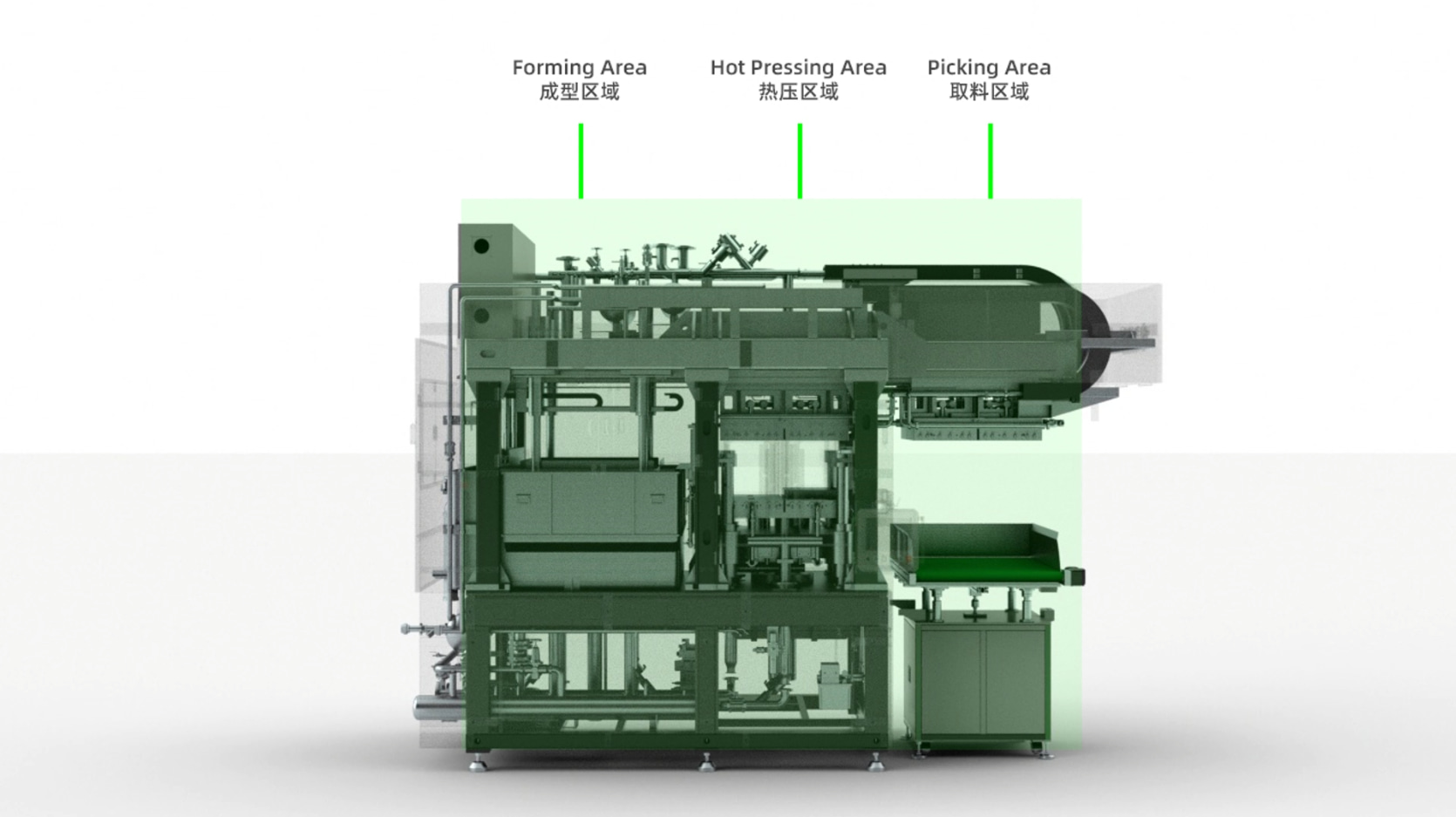
Premium Industrial Packaging: For precision inserts, dimensional stability is paramount. Equipment like the ZAP-9585 utilizes dynamic pulp replenishment to ensure consistent thickness, precise edge definition, and superior surface quality across production batches.
-
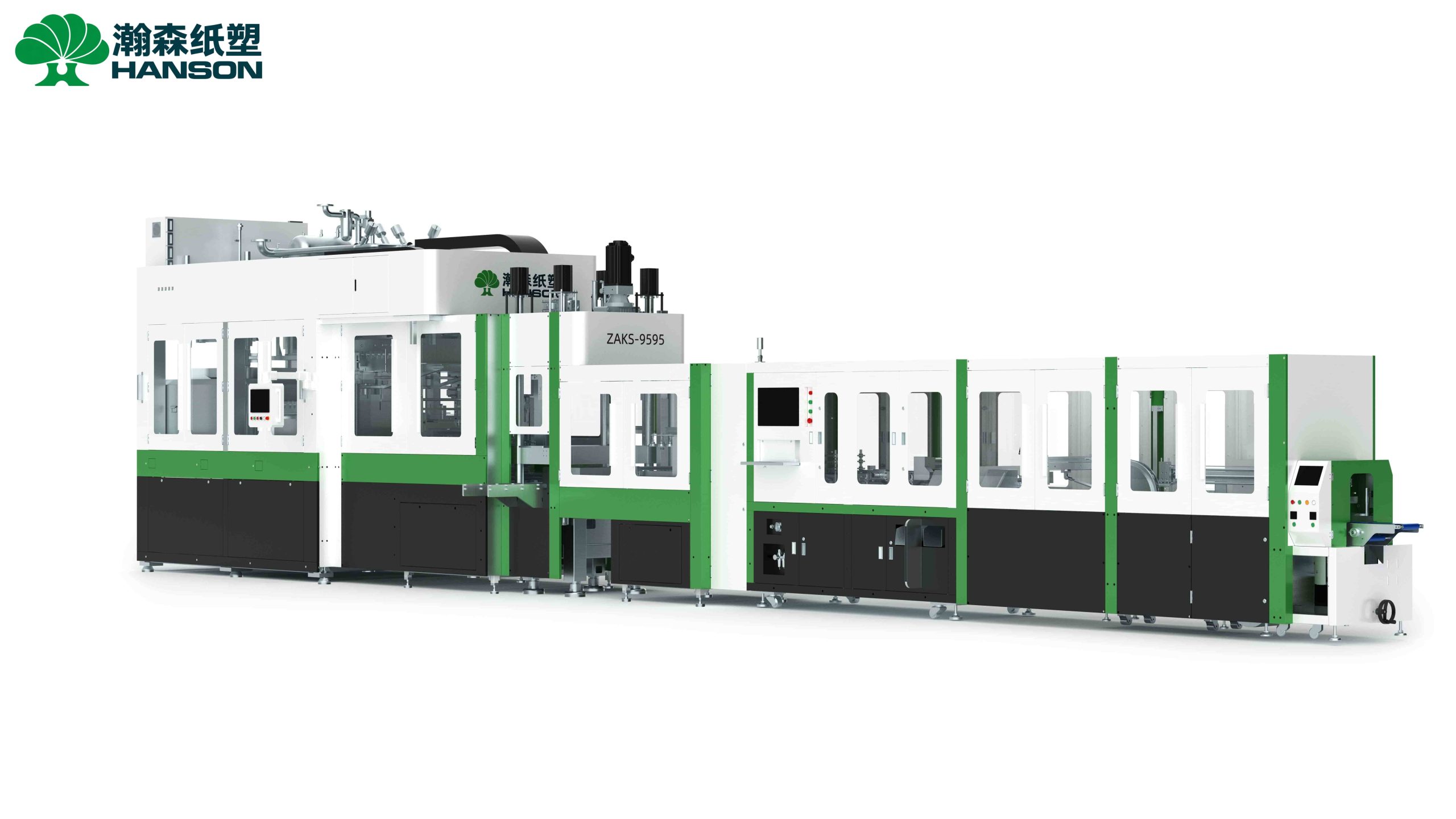
Molded Fiber Cup Lids: Cup lids are high-volume, small-footprint items that require flawless dimensional accuracy for lid-to-cup matching. The ZAKS-9595 automated production line seamlessly connects forming, hot pressing, servo-driven punch cutting, machine vision inspection, and packaging. Operating 24 hours, it delivers an output of 100,000–120,000 cup lids, completely eliminating manual handling bottlenecks.
4. Turnkey Integration: Aligning Pulping, Tooling, and Automation
Finally, scaling to mass production requires more than purchasing forming machines. A highly functional plant is an ecosystem.
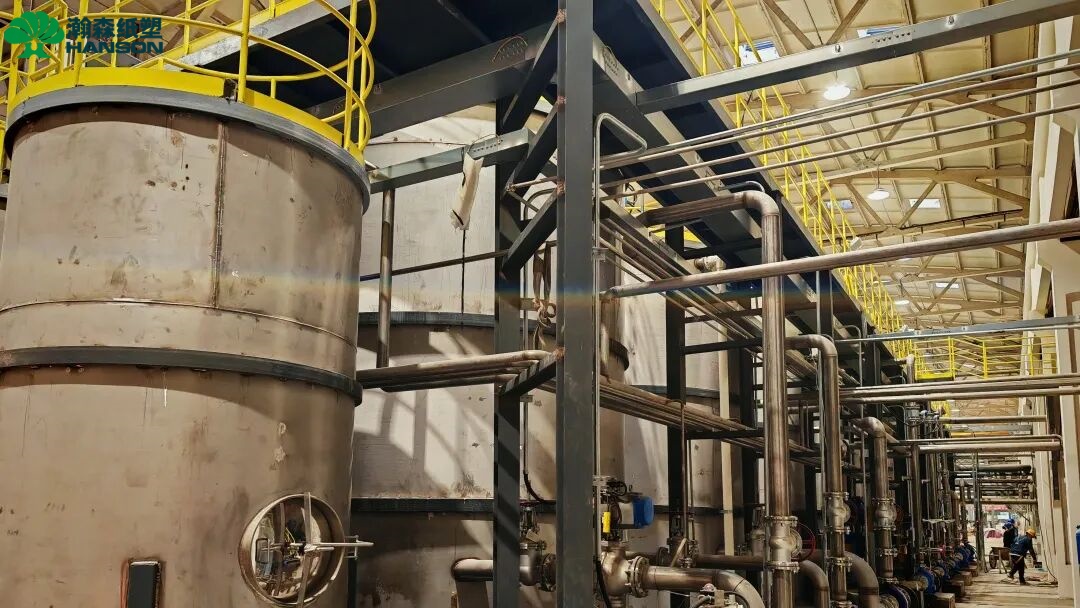
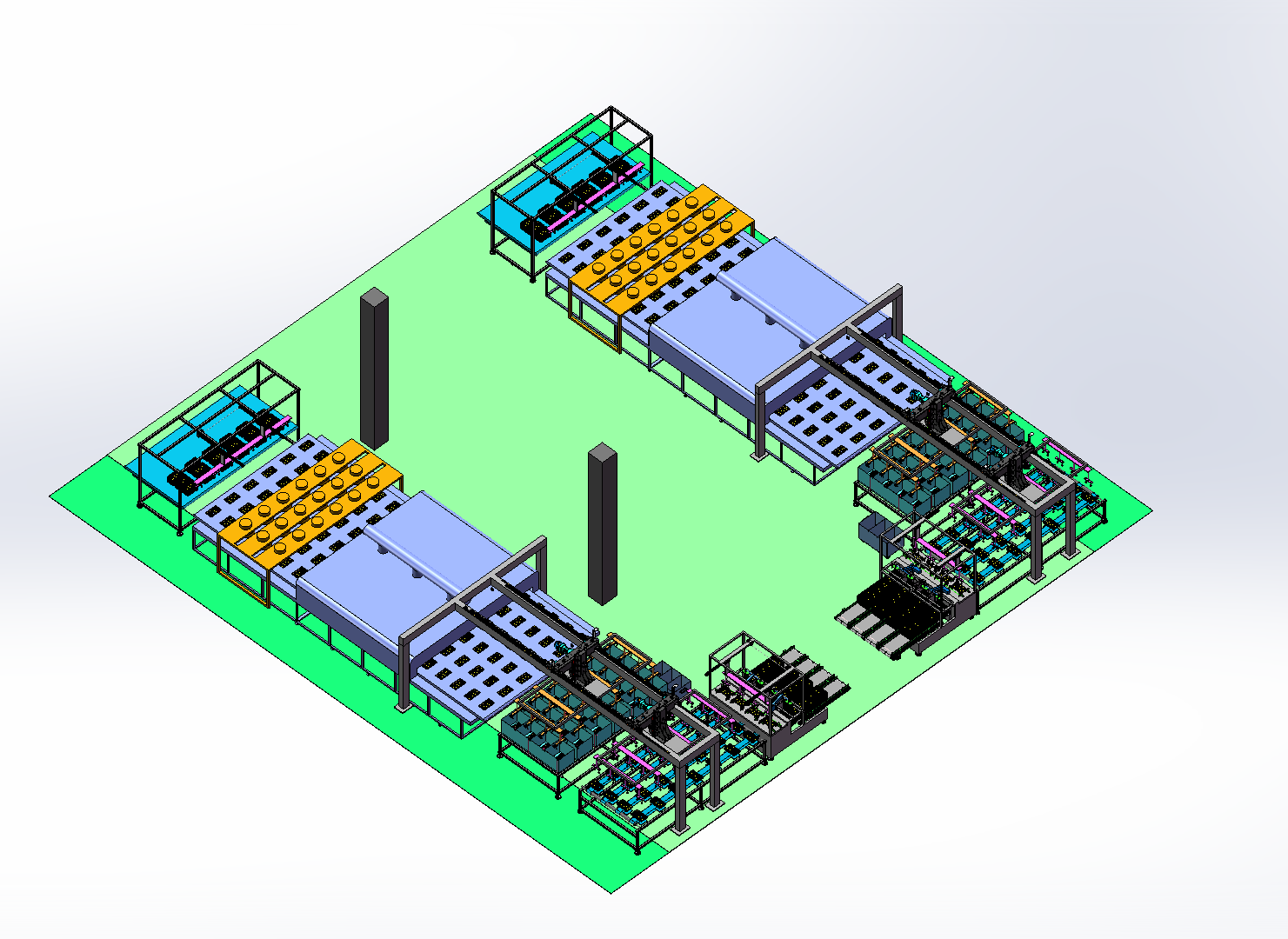
An intelligent pulping system guarantees consistent slurry concentration, directly impacting the final product’s strength and weight. High-quality tooling ensures rapid drainage and efficient heat transfer during pressing. Furthermore, if products demand advanced water or oil resistance, post-processing automation—such as the Hanson Pulp Molding HXT-24 automatic rotary spray coating line or advanced lamination equipment—must be designed into the initial plant layout. A turnkey pulp molding plant seamlessly integrates all these variables, ensuring every stage from fiber preparation to final stacking performs synchronously.
FAQ
1. How is the actual production capacity of a pulp molding machine calculated? Actual capacity cannot be calculated using theoretical cycle times alone. It is heavily influenced by the product’s weight, the number of cavities on the mold, dewatering and hot pressing duration, tooling changes, and the equipment’s overall operational uptime.
2. Why do I need a prototyping machine before buying mass production equipment? A prototyping machine allows manufacturers to validate new material blends, refine product structures, and optimize processing parameters. This mitigates the financial and operational risks associated with launching unverified designs directly on high-volume production lines.
3. What is the difference between cup carrier equipment and cup lid equipment? Cup carriers (drink carriers) are protective, load-bearing products typically manufactured via dry or semi-dry press lines that utilize tunnel drying for efficiency. Conversely, cup lids require strict dimensional precision for sealing and are manufactured using highly automated wet-press equipment (like the ZAKS-9595) that integrates precision trimming and vision inspection.
Conclusion
Transitioning a molded fiber product from the prototyping stage to commercial scale involves much more than selecting a machine off a catalog. It requires a comprehensive evaluation of the raw material, the specific wet or dry press process, the tooling architecture, and post-processing automation. By aligning pulp molding equipment configurations precisely with end-product demands, manufacturers can build robust, energy-efficient production plants capable of thriving in a competitive global market.