
When packaging manufacturers plan to enter the market for smartphone inserts, wearable device packaging, or high-end cosmetic boxes, one of the most common mistakes is evaluating equipment using the same criteria as basic protective packaging (like egg trays or simple transit buffers).
While standard protective packaging prioritizes cost and bulk production, premium industrial molded fiber packaging demands exceptional surface smoothness, strict dimensional accuracy, and consistent repetition of complex structural details (such as precise draft angles and fine ribs).
Therefore, configuring a premium industrial molded fiber packaging machine requires looking far beyond basic cycle times or motor power. As a specialist in turnkey pulp molding solutions, Hanson Pulp Molding recommends evaluating your equipment configuration starting with the following core parameters.
Why Cycle Time Isn’t the Only Metric for Premium Inserts
In high-end packaging, producing a defect-filled product rapidly offers no commercial value. Premium inserts typically rely on the wet press (or thermoformed fiber) process. In this method, the wet preform is transferred directly into a heated mold, where it undergoes simultaneous dewatering, pressing, and drying. The precision of this process determines the final look, feel, and structural integrity of the packaging.
Parameter 1: Forming and Hot Pressing Control
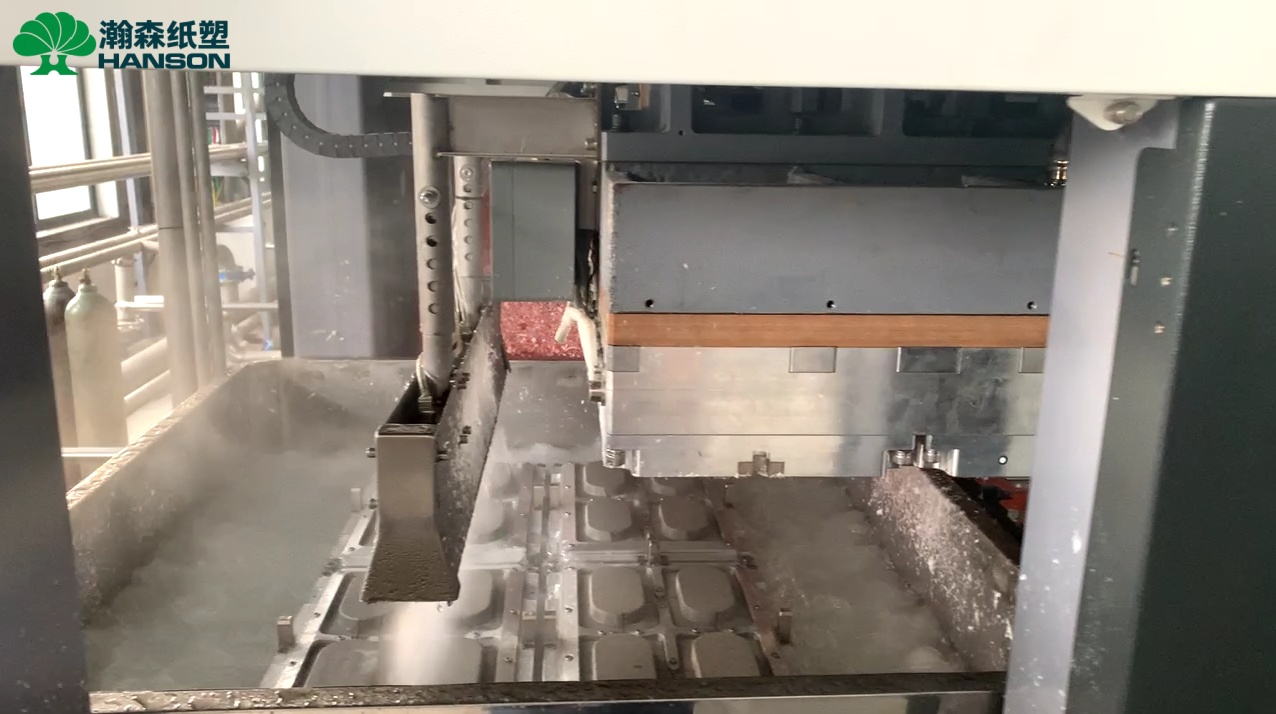
For complex consumer electronics packaging, achieving a uniform thickness across varying depths is highly challenging. If the pulp slurry is unevenly distributed during the forming stage, the subsequent hot pressing phase will result in inconsistent density or localized weak points.
When evaluating equipment, buyers must assess the machine’s ability to control the forming environment. For example, Hanson Pulp Molding’s ZAP-9585 industrial molded fiber packaging machine features dynamic pulp replenishment. This capability optimizes the slurry distribution during the forming process, ensuring uniform thickness and high consistency—laying the foundation for flawless hot pressing.
Parameter 2: Mold (Tooling) Precision and Synergy
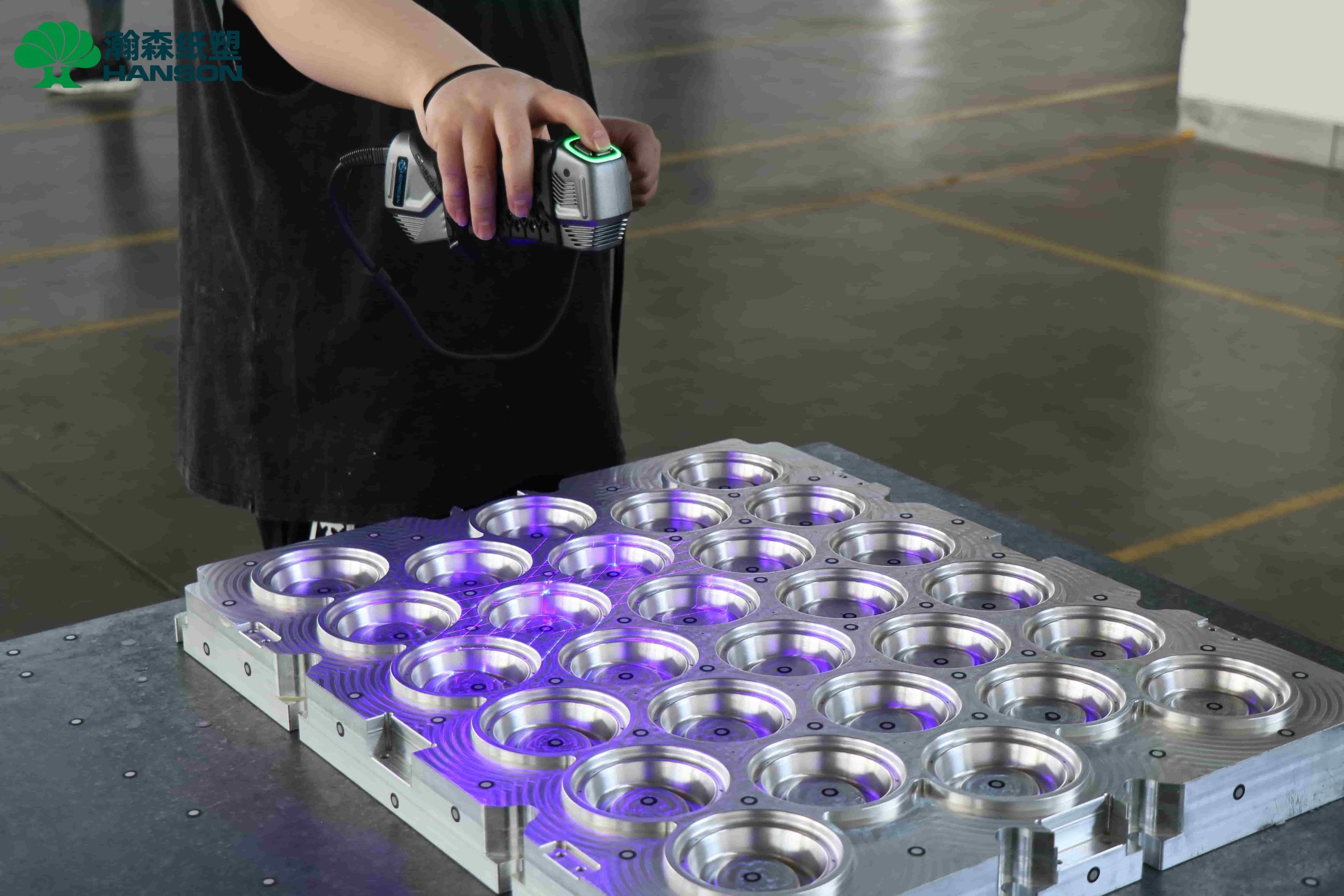
Two machines with identical mechanical specifications can produce vastly different product qualities if their molds are not up to standard. In premium packaging, the mold is not just an accessory; it is the core of the process.
The forming tool’s mesh design affects drainage efficiency and fiber retention, while the hot press mold’s surface finish directly dictates the final product’s smoothness. Furthermore, the transfer process between stations requires extremely tight tolerances to prevent the wet preform from warping. Consequently, choosing a supplier requires evaluating their comprehensive mold manufacturing and process synergy capabilities, ensuring that the machine, tooling, and process are designed as a unified system.
Parameter 3: Prototyping and Process Validation
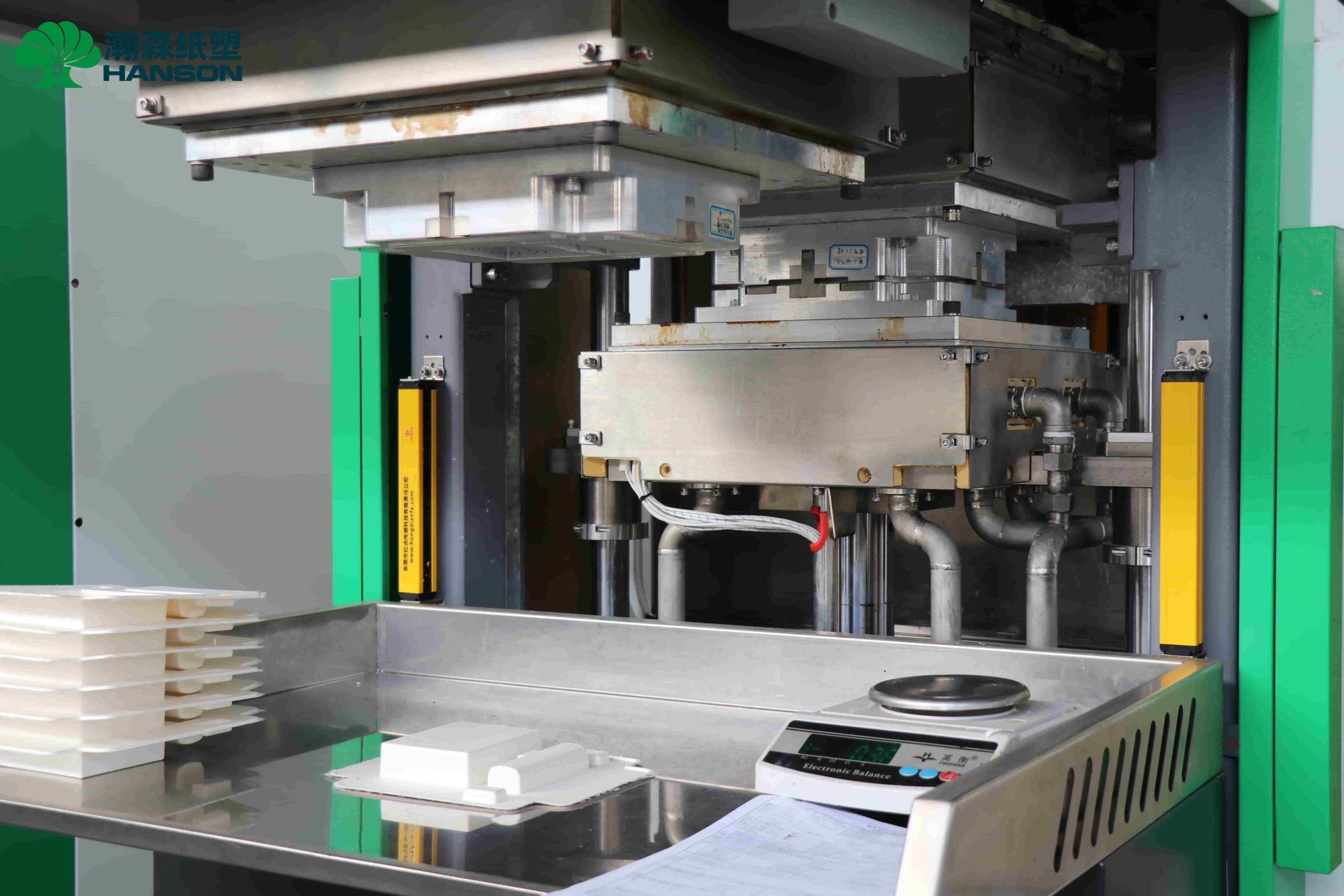
Premium packaging projects often involve new structural designs, specialized fibers, or customized color requirements. Jumping straight into purchasing mass-production equipment based merely on 3D drawings carries significant risk.
The scientific approach is to validate the product and process first. Utilizing prototyping equipment, such as the ZAMS-6047 molded fiber R&D machine, allows manufacturers to test slurry formulations, optimize mold drafts, and validate forming parameters on a small scale. Once the process is proven stable, the data can be seamlessly transferred to scale-up production equipment.
Parameter 4: Post-Processing Automation Integration
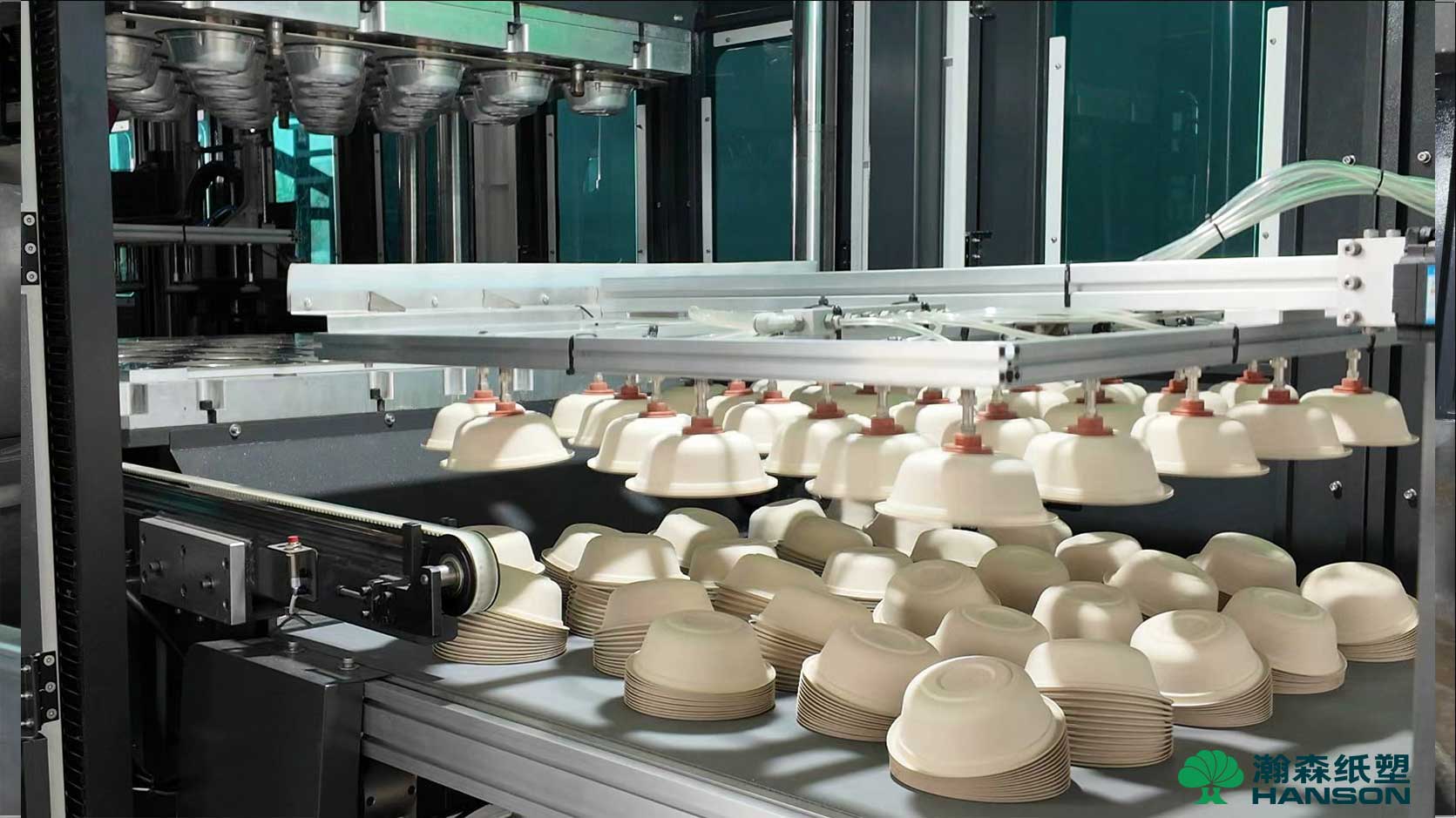
Achieving a high-quality molded fiber insert doesn’t end at hot pressing. Premium products require clean, precise trimming (often via servo-driven punch cutting) and strict visual defect inspection. If your forming machine is highly advanced but trimming and quality control rely on manual labor, product consistency will suffer, and post-processing will quickly become the factory bottleneck. Automated trimming and vision inspection modules should be integrated into the initial plant planning phase.

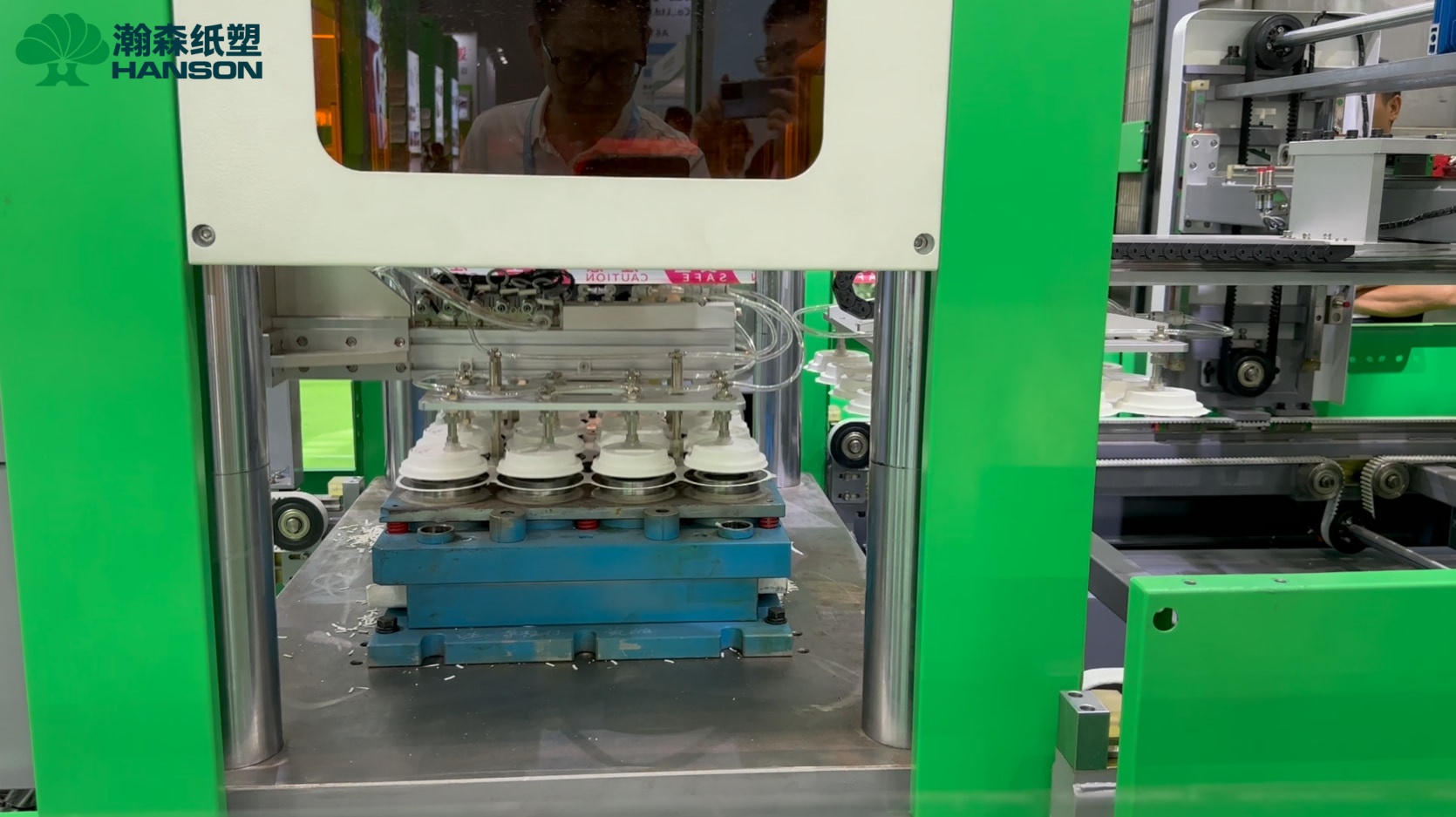
Hanson Pulp Molding: Turnkey Solutions for Premium Packaging
For high-end industrial packaging, Hanson Pulp Molding provides specialized solutions tailored to precision and aesthetics. Our ZAP-9585 and ZAD Series equipment are engineered specifically to meet the rigorous demands of premium consumer electronics and luxury packaging, combining integrated forming and hot pressing with advanced process control.
FAQ
Why are smartphone inserts better suited for the wet press process? Smartphone inserts require extremely tight dimensional tolerances to fit perfectly within the outer box, alongside a smooth, premium tactile finish. The wet press (thermoformed fiber) process provides high-pressure mold constraint during drying, delivering sharper structural details, better dimensional stability, and a denser, smoother surface compared to independent drying methods.
What is the difference between industrial packaging machines and tableware equipment? While both utilize pulp molding technology, they serve different operational goals. Tableware equipment typically focuses on high-volume output and energy efficiency for simpler, standardized shapes. Premium industrial packaging machines prioritize surface quality, mold capability, dynamic pulp control, and dimensional consistency for highly complex, customized structures.
Can one machine produce inserts for multiple different electronic products? Technically, yes, by changing the molds. However, switching products involves more than just swapping tooling. It requires recalibrating the slurry consistency, vacuum levels, hot pressing temperatures, and post-processing trimming fixtures. For high-volume premium packaging, frequent product changeovers can lower the effective production rate, so dedicated lines are often recommended.
Conclusion
Configuring equipment for premium industrial molded fiber packaging must always start with the product itself. By thoroughly analyzing the product’s dimensional tolerances, structural complexity, and surface requirements, you can determine the necessary mold precision, wet press control, and post-processing automation. A machine’s true value lies in its ability to consistently reproduce high-quality packaging at scale.
CTA
If you already have a product sample, 3D drawing, or specific dimensional requirements for a premium molded fiber insert, these details can be used to evaluate the molding process, mold configuration, and equipment setup. Hanson Pulp Molding can assist you in validating the process and selecting the optimal ZAP-9585 or ZAD series configuration for your project.
WhatsApp: +86 15920604830 Email: linchuangcheng@hspulpmolding.com