When investing in a molded fiber project, “full-servo driven” is increasingly becoming a highly sought-after technical specification. Servo technology offers significant advantages in motion control, precision, operational speed, and overall system stability.
However, the first step in selecting a pulp molding machine is never just comparing equipment parameters. The correct technical route should always be: determine the product first. The geometry, weight, dimensional accuracy, and target capacity of your product will dictate whether you need a wet-press, dry-press, or semi-dry process—and ultimately, what type of full-servo machine configuration is required. As a specialist in turnkey pulp molding solutions, Hanson Pulp Molding advises investors to carefully match full-servo capabilities with specific manufacturing applications.
How to Determine if Your Project Needs a Full-Servo Pulp Molding Machine
Before upgrading to or investing in full-servo equipment, consider the following commercial and technical factors:
-
Surface Quality and Dimensional Accuracy Requirements: For premium industrial packaging (like consumer electronics inserts) or molded fiber cup lids, dimensional stability is non-negotiable. Full-servo structures provide uniform clamping pressure and exceptional parallelism, which are critical for precise wet preform transfer and hot-pressing.
-
Continuous Automation Needs: If your production line integrates advanced post-processing—such as automatic trimming, machine vision inspection, or automatic lamination/coating—the superior positioning accuracy of a servo-driven machine ensures seamless transition between stations, reducing defect rates.
-
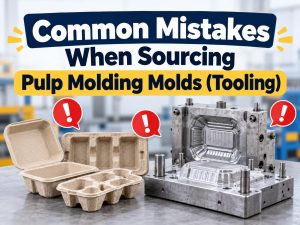
Tooling and Process Synergy: A fast full-servo machine requires equally efficient molded fiber tooling. If the mold’s drainage design is poor, extending the necessary hot-pressing time, the speed advantages of the servo motors will be entirely bottlenecked by the tooling.
Matching Full-Servo Equipment to Different Molded Fiber Products
Based on actual project requirements, Hanson Pulp Molding integrates full-servo technology into specific equipment lines tailored for distinct product categories:
1. Wet-Press Molded Fiber Tableware
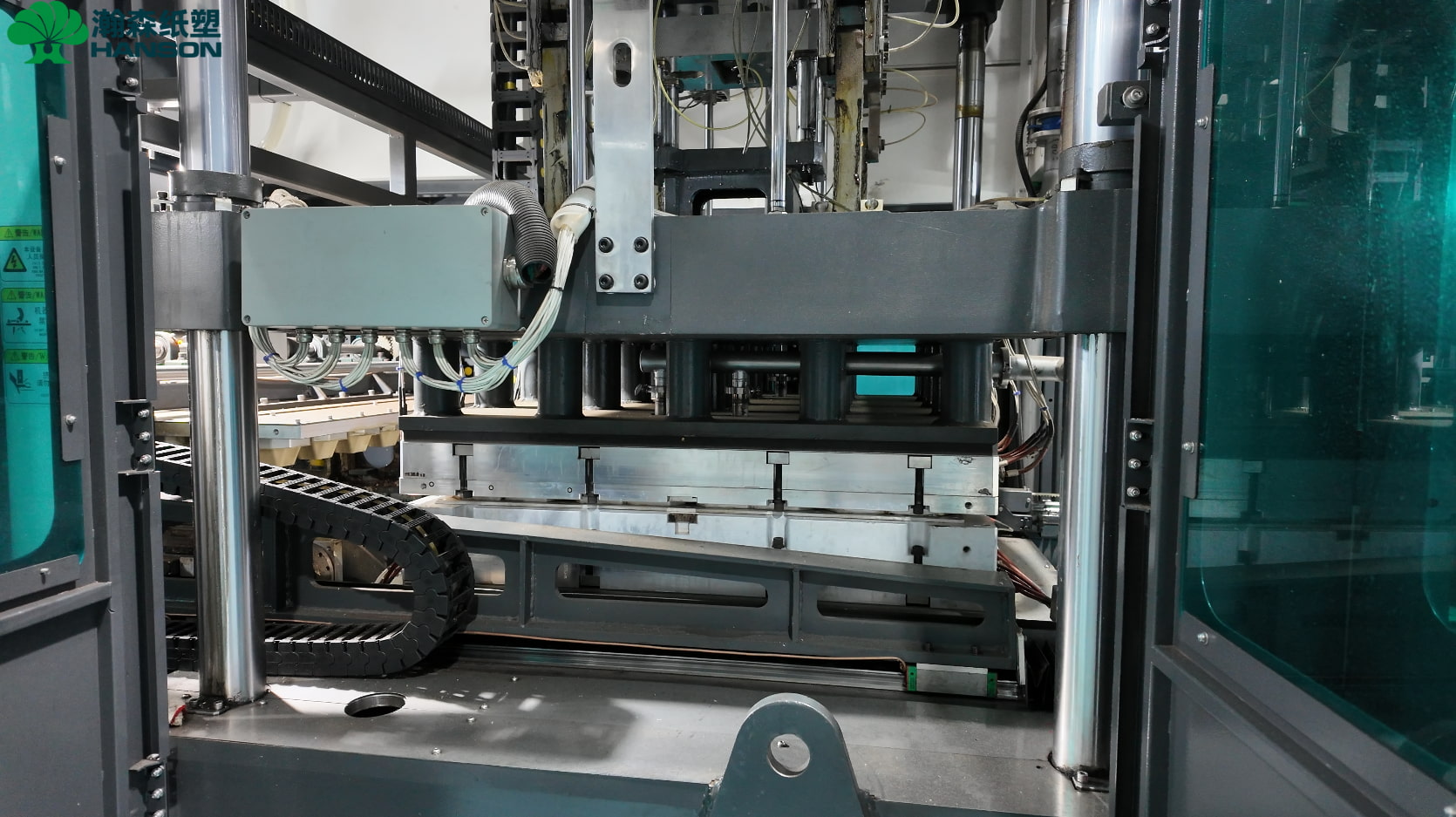
For products like bagasse plates, clamshells, and food trays, the primary goals are stable mass production and energy efficiency. The Hanson Pulp Molding ZBG-1111 Full-Servo Pulp Molding Tableware Machine is designed exactly for this environment. Utilizing a configuration with one forming station and two hot-press stations entirely driven by servo motors, it accelerates cycle transitions. In customized product development projects (such as those executed with Shengquan Group), this full-servo equipment demonstrated exceptional adaptability from prototyping to commercial production.

2. Premium Industrial Molded Fiber Packaging
Insert packaging for smartphones, cosmetics, and high-end consumer electronics requires pristine surface smoothness, intricate draft angles, and extreme consistency. For these applications, Hanson’s ZAP-9585 and ZAD Series are engineered with integrated forming and hot-pressing capabilities. Features like dynamic pulp replenishment, combined with servo-driven precision, minimize uneven thickness and product warping. In practical applications with clients like Tonglibo—who completed five subsequent capacity expansions over two years—the equipment proved its long-term stability in high-end manufacturing.

3. Molded Fiber Cup Lids
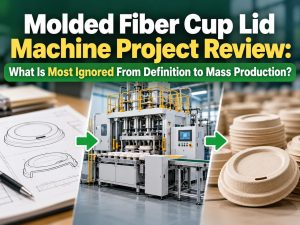
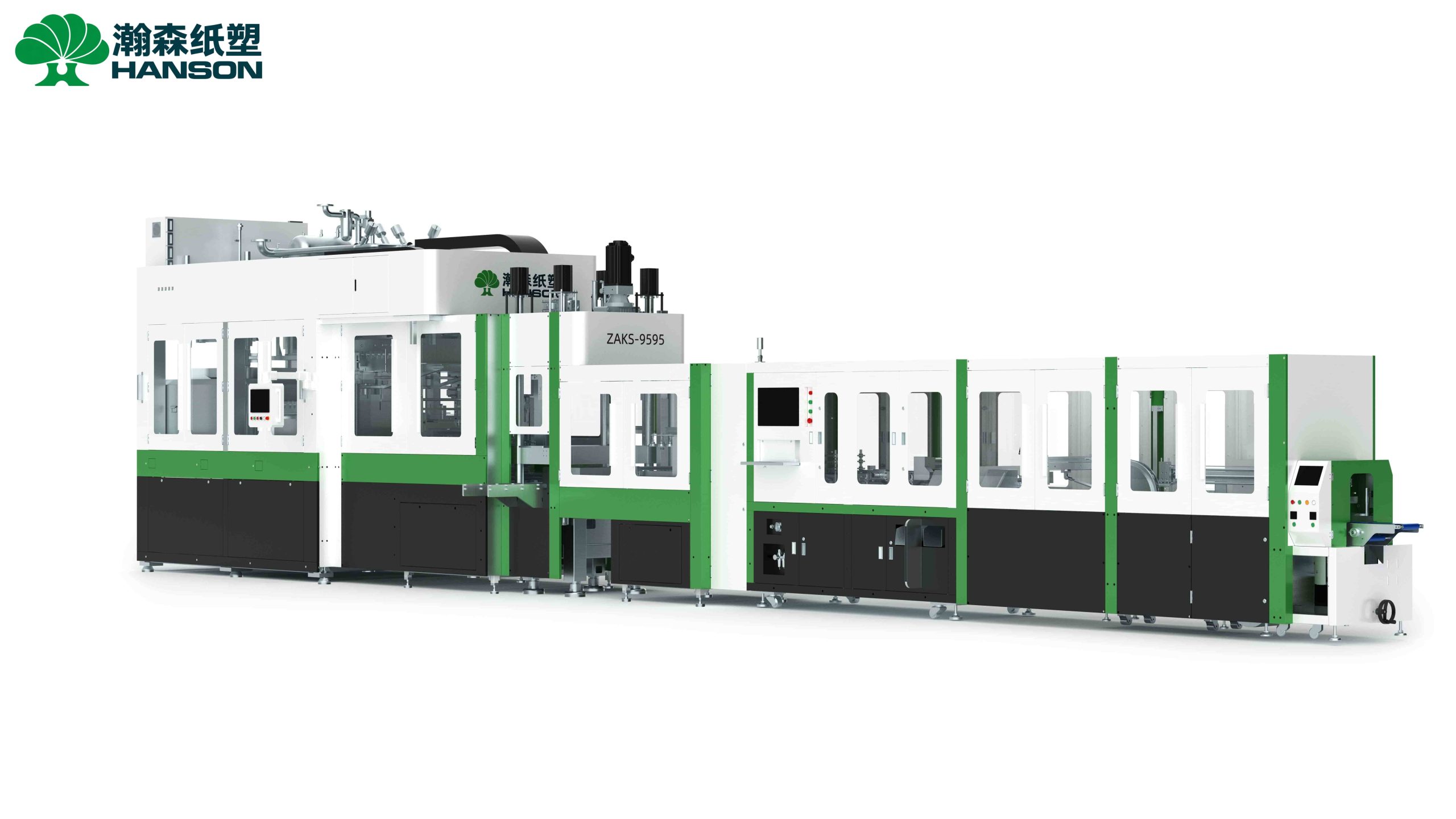
Cup lids represent a high-volume, small-item production challenge where edge sealing and structural integrity are paramount. The Hanson Pulp Molding ZAKS-9595 Molded Fiber Cup Lid Machine forms an automatic production line integrating forming, hot pressing, servo-driven punch cutting, vision inspection, and packaging. Under appropriate production conditions, it can output up to approximately 100,000–120,000 cup lids per 24 hours. The servo-driven cutting ensures the lid’s rim is flawlessly trimmed, which is essential for spill prevention.
4. Dry-Press and Semi-Dry Protective Packaging
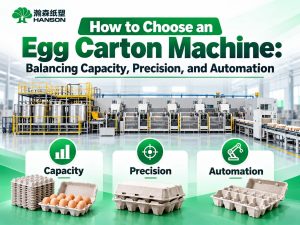
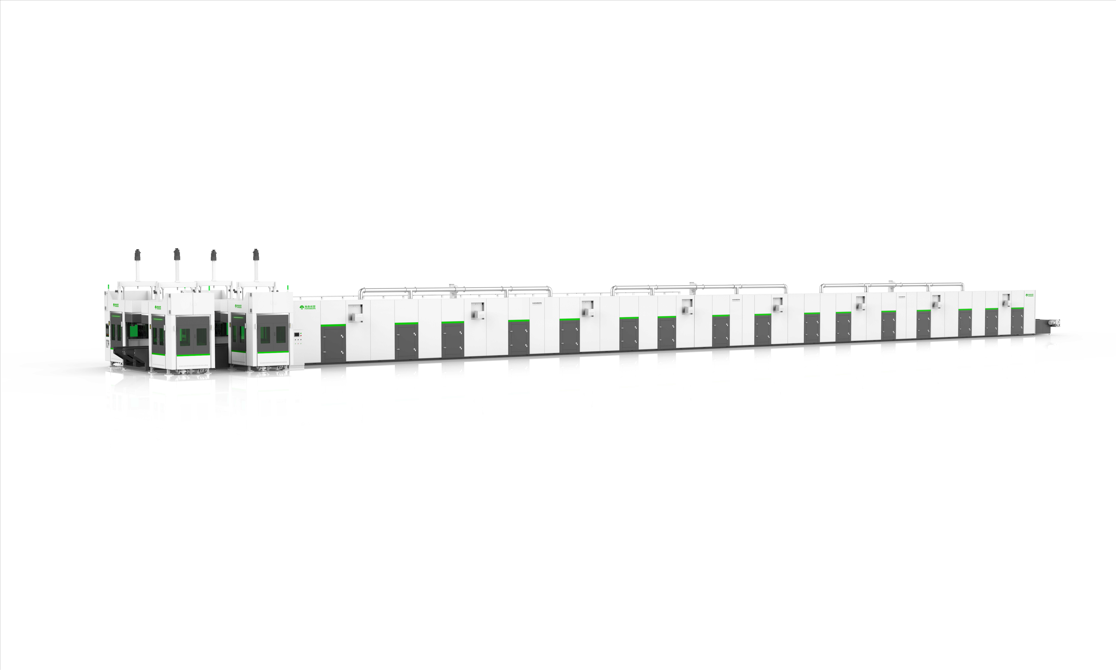
For heavier, structural applications like drink carriers (cup carriers), egg cartons, and heavy-duty industrial protective packaging, the dry-press or semi-dry route is usually preferred. Hanson’s Automatic Dry-Press Pulp Molding Production Line incorporates servo-driven forming, cold pressing, and transfer mechanisms. Notably, the servo-driven cold pressing station acts as a pre-dewatering stage. By reducing the moisture content of the wet preform before it enters the tunnel dryer, it minimizes product deformation and significantly lowers the thermal energy load. Based on a 40g 4-cup carrier, this production line can achieve an output of 18 tons per 23 hours.
Why a Full-Servo Machine Requires a Turnkey Plant Approach
Buying the most advanced full-servo forming machine does not automatically guarantee high factory output.
If your pulping system delivers inconsistent pulp slurry, or if your factory utilities (vacuum, compressed air, heat source) cannot keep up with the machine’s faster cycles, your overall production efficiency will suffer. A successful molded fiber project relies on system synergy. From material development and prototyping (using the ZAMS-6047 R&D machine) to plant planning, intelligent pulping, precision tooling, post-processing automation, and on-site production ramp-up support, Hanson Pulp Molding helps investors build comprehensive turnkey plants where every system matches the speed and precision of the full-servo forming equipment.
FAQ
Q: Can a full-servo tableware machine be used to make premium industrial packaging? A: While technically possible with mold changes, it is not recommended for optimal efficiency. Tableware machines (like the ZBG-1111) are optimized for high-capacity foodservice packaging, whereas premium industrial packaging machines (like the ZAP-9585) focus heavily on surface finish, dimension control, and complex geometries. Hanson Pulp Molding advises configuring dedicated equipment based on the product type.
Q: What is the difference between cup lids and cup carriers in terms of equipment? A: They require entirely different processes. Molded fiber cup lids demand extreme edge precision and are produced on specialized wet-press automated lines like the ZAKS-9595. Cup carriers (or drink carriers) are meant for buffering and transport; they are typically manufactured using dry-press or semi-dry production lines equipped with cold pressing and tunnel drying systems.
Q: Does a faster cycle time on a full-servo machine mean higher daily capacity? A: Not necessarily. Theoretical cycle time is only one factor. Actual daily production capacity also depends on the product weight, the number of mold cavities, forming and hot-pressing times, equipment utilization rate (uptime), and how well the post-processing automation keeps up.
Conclusion
Full-servo pulp molding machines offer undeniable benefits in precision, speed, and automation compatibility. However, to maximize your return on investment, the choice of equipment must be fundamentally rooted in your specific product design, desired surface quality, and target capacity. By aligning your tooling, pulping, and post-processing with your servo-driven forming equipment, you can establish a highly efficient, stable commercial production line.
If you already have a product sample, 3D drawing, product dimensions, or a target daily capacity, Hanson Pulp Molding can help evaluate the appropriate molding process, tooling design, and full-servo equipment configuration for your project.
WhatsApp: +86 15920604830
Email: linchuangcheng@hspulpmolding.com