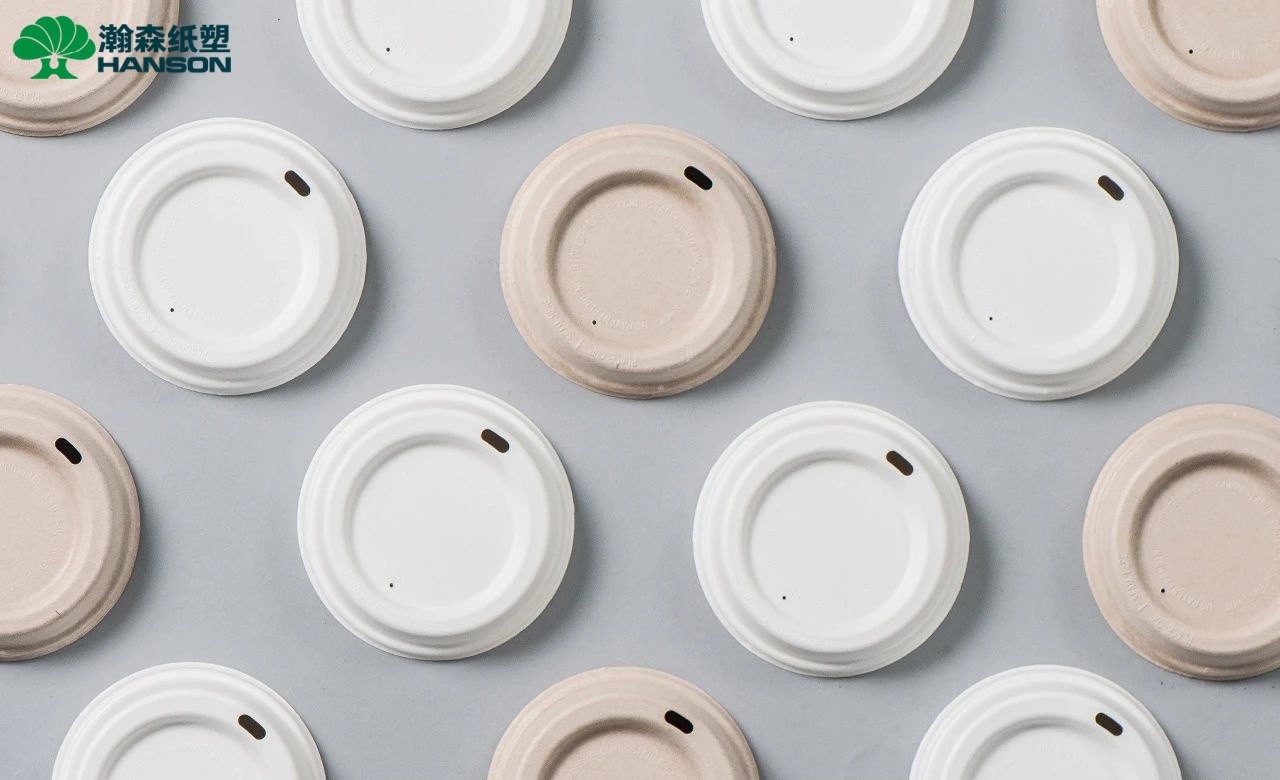
Molded fiber cup lids are rapidly replacing traditional plastic lids in the foodservice packaging industry. However, for investors and manufacturers, a cup lid project represents one of the most technically demanding applications in the molded fiber sector. During the early planning stages, it is common to focus solely on the theoretical cycle time of the forming equipment. Yet, once production begins, issues like dimensional instability, poor lid fit, and severe bottlenecks in post-processing often prevent the factory from reaching its target output.
From product definition to stable mass production, what are the most easily ignored critical factors in a molded fiber cup lid project?
The Unique Precision of Cup Lids: Dimensional and Snap-Fit Consistency
Unlike standard protective packaging or simple molded fiber plates, a molded fiber cup lid must create a strict physical seal with the paper cup rim. This means that dimensional tolerances, edge thickness, and the integrity of the snap-fit structure require extreme consistency.
If the hot press mold lacks precision, or if process parameters fluctuate during dewatering and hot pressing, the wet preform can experience uneven shrinkage or micro-deformation. While visually undetectable, this deformation will result in leaks or loose fits when applied to a cup. Therefore, evaluating a molded fiber cup lid machine requires looking far beyond its theoretical speed; one must assess its ability to precisely control temperature, pressure, and tooling stability.
The Most Ignored Bottleneck: Trimming, Vision Inspection, and Packaging Automation
This is arguably the most underestimated aspect of a cup lid project. Because cup lids are small products produced in exceptionally high volumes, a fast forming speed will completely crash the actual factory output if the subsequent stages rely on manual labor.
-
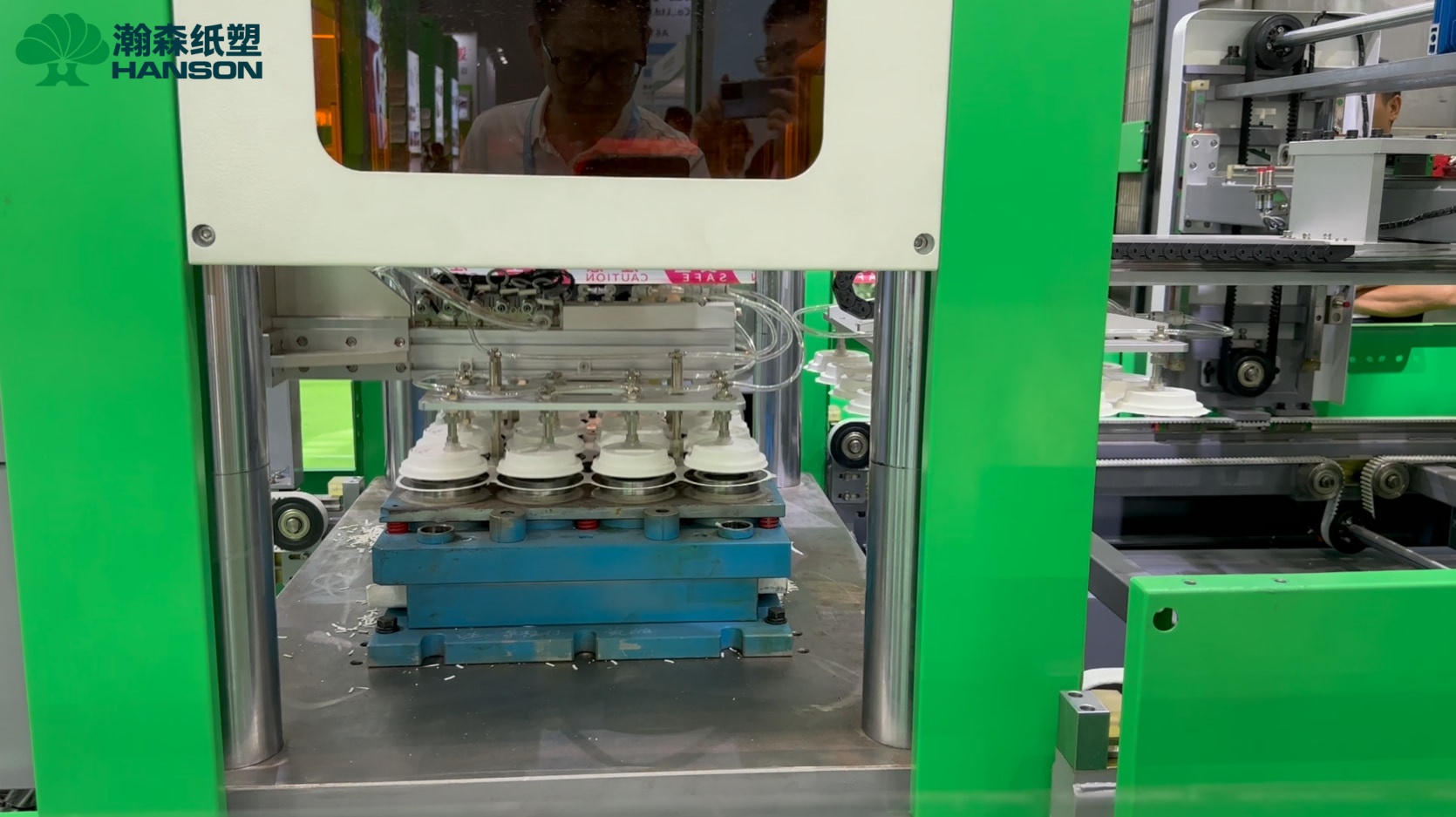
Trimming Accuracy: The smoothness of the cup lid’s edge directly affects its sealing performance. Hanson Pulp Molding utilizes servo-driven punch cutting to prevent burrs or misaligned edges.
-
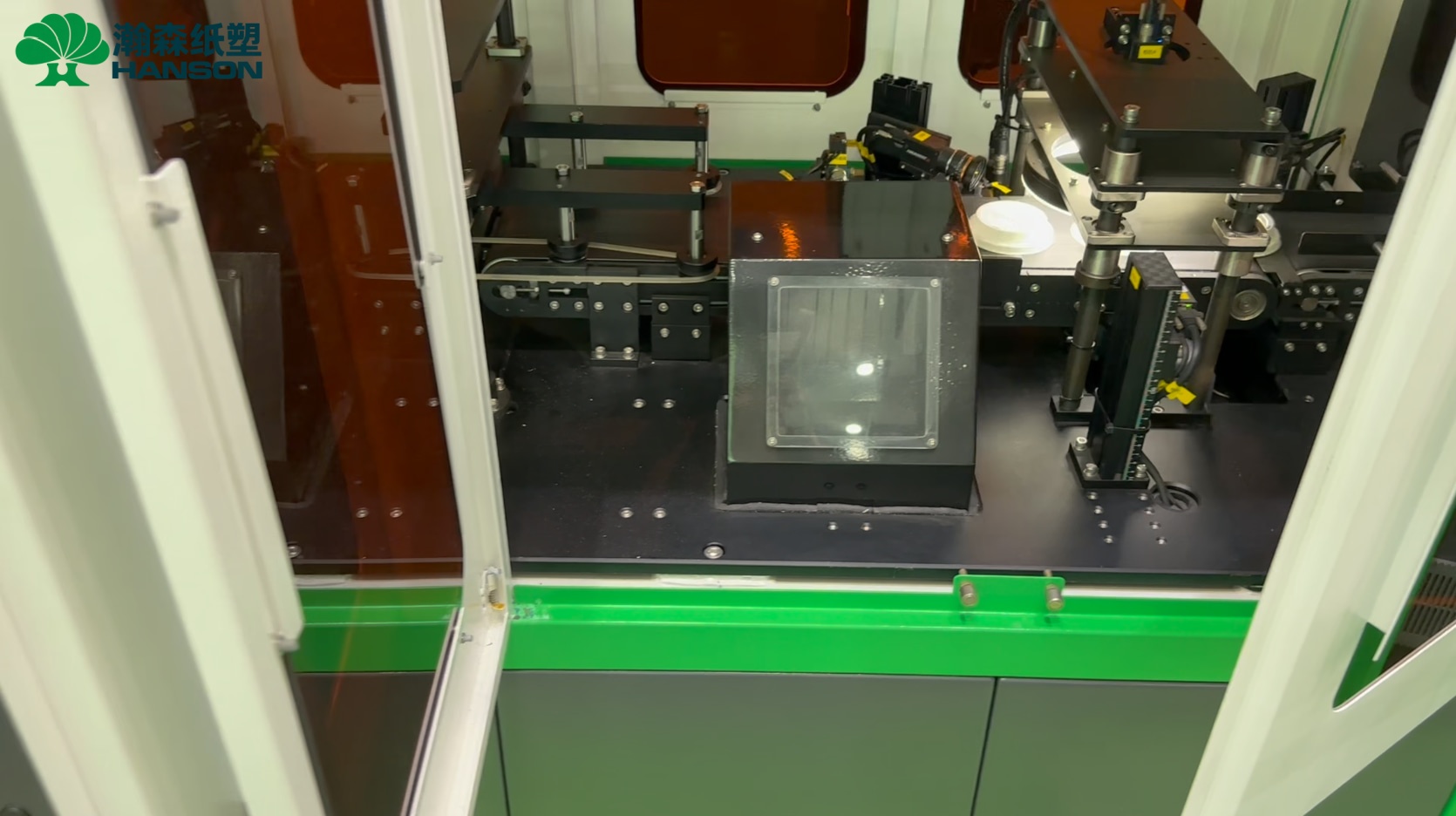
Machine Vision Inspection: With daily production outputs exceeding a hundred thousand units per machine, manual visual inspection for minor defects or dimensional deviations is entirely unreliable.
-
Continuous Automation: Only by seamlessly connecting these processes can the equipment’s capacity be fully realized.
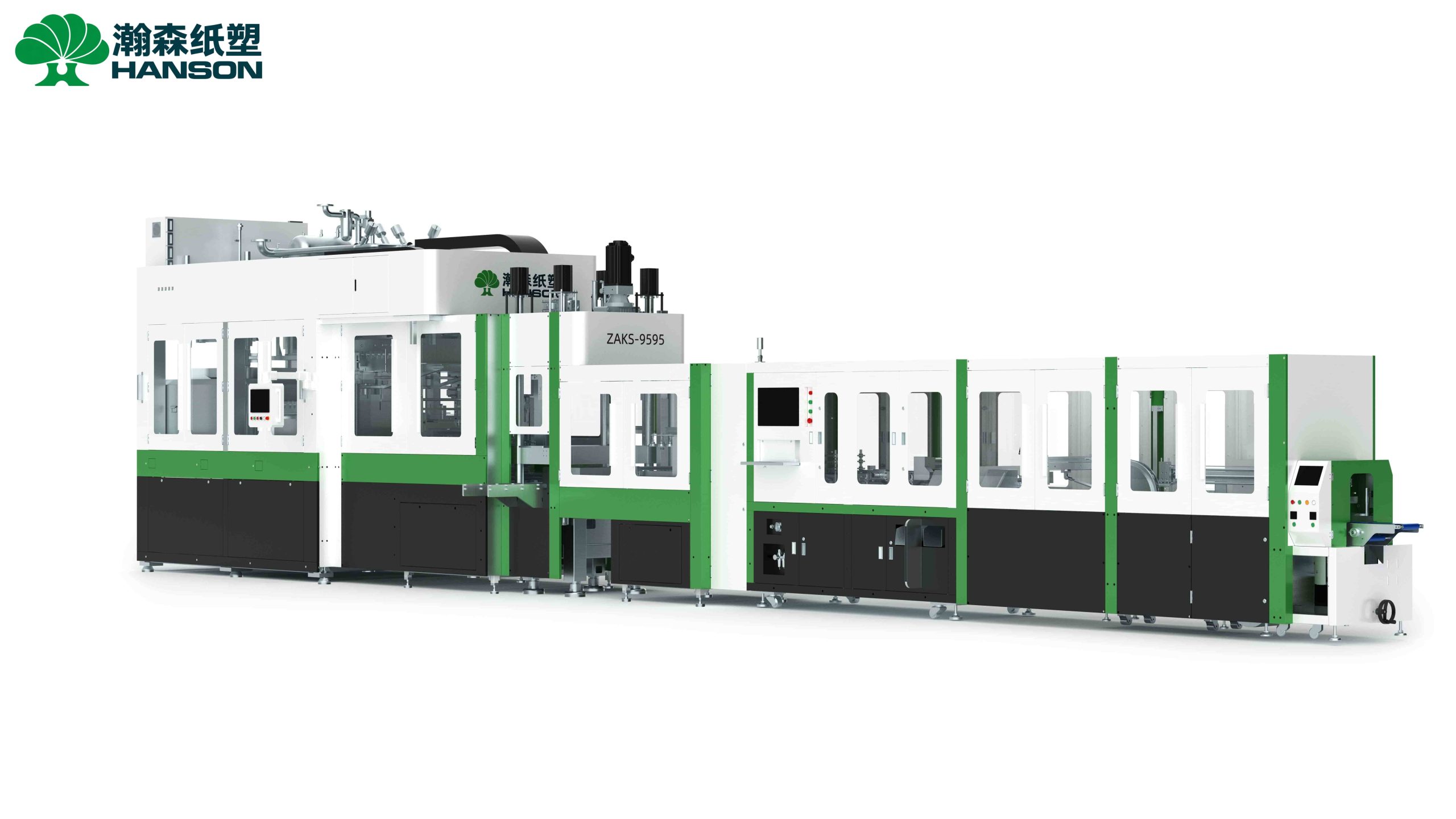
As a specialist in turnkey pulp molding solutions, Hanson Pulp Molding integrates forming, hot pressing, servo-driven punch cutting, machine vision inspection, and automatic packaging into the ZAKS-9595 molded fiber cup lid machine to ensure continuous, high-speed automated production.
Theoretical Cycle Time vs. Actual Daily Output
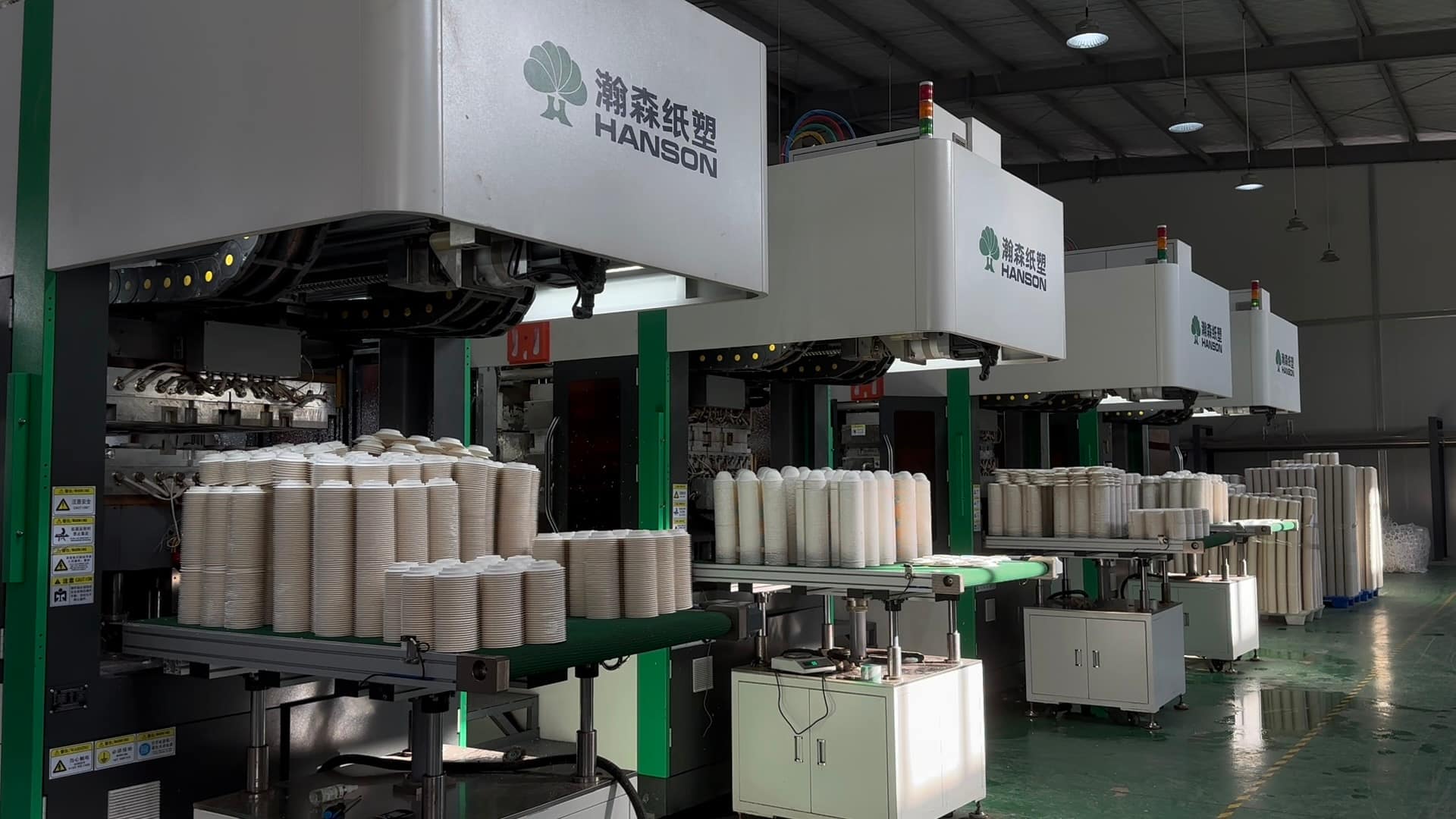
When calculating capacity, a common mistake is multiplying the number of cavities by the theoretical cycle time. However, this is not the actual daily output of a factory. The stable mass production of molded fiber cup lids is constrained by mold changing times, equipment yield rates, trimming stability, and the speed of inspection and packaging.
Under appropriate production conditions and with the correct tooling configuration, the ZAKS-9595 standard capacity can reach up to approximately 100,000–120,000 cup lids per 24 hours. Achieving this figure relies heavily on the perfect synchronization between the forming unit and the automated post-processing system.

Real-World Case Study: Qingganlan Cup Lid Automation Project
In the molded fiber cup lid project developed by Hanson Pulp Molding and Qingganlan, the customer’s core requirements included not only capacity expansion but also superior forming precision, equipment stability, and scientific energy management.
For this project, Hanson Pulp Molding provided customized cup lid equipment and engaged deeply in mold standardization to guarantee consistency across different production batches. By implementing digital energy management systems alongside efficient installation and process adaptation, Hanson supported the customer in achieving high-volume automated production. This case study demonstrates that scaling cup lid production is not just about buying a machine; it is about building a cohesive manufacturing system that aligns tooling, energy control, and automation.
Critical Distinction: Cup Lids vs. Cup Carriers
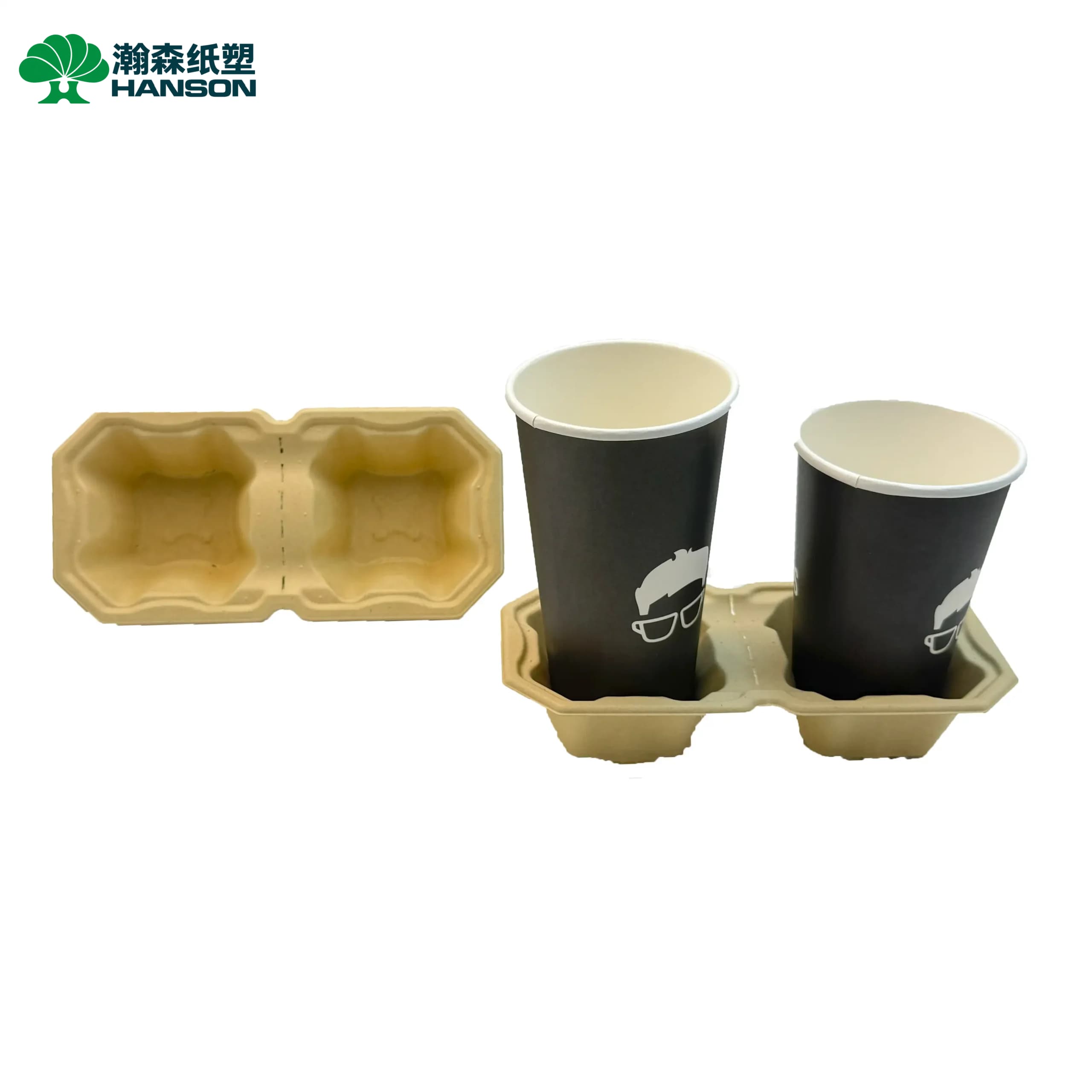
During plant planning, investors often confuse “cup lids” with “cup carriers” (or drink carriers). Although both relate to cups, their manufacturing processes and equipment configurations are fundamentally different:
-
Molded Fiber Cup Lid: Placed on top of the cup, emphasizing sealing, surface quality, dimensional precision, and high automation. This requires a dedicated high-precision machine like the ZAKS-9595.

-
Cup Carrier / Drink Carrier: Used for supporting, fixing, and cushioning multiple cups (e.g., a 4-cup carrier). This product focuses on load-bearing and protection, and its production should prioritize an automatic dry-press pulp molding production line. A cup carrier should never be mistakenly matched with dedicated cup lid equipment.
FAQ
How many cup lids can the equipment produce daily? Under appropriate production conditions, the Hanson Pulp Molding ZAKS-9595 machine can produce up to approximately 100,000–120,000 cup lids per 24 hours. Actual output depends on the specific cup lid dimensions, mold configuration, and effective equipment uptime.
Why is machine vision inspection necessary for cup lids? Cup lids require strict sealing capabilities. Minor deformations, edge defects, or contamination can lead to leaks and consumer complaints. With a daily output exceeding 100,000 units, manual inspection cannot maintain efficiency and consistency, making machine vision inspection essential for identifying dimensional and cosmetic defects.
How does trimming affect molded fiber cup lid quality? The edge of the cup lid directly engages with the rim of the paper cup. If the trimming process is unstable, resulting in burrs or uneven edge thickness, the sealing performance will fail. Servo-driven punch cutting is a critical configuration for ensuring the consistent mass production of high-quality cup lids.
Conclusion
The success of a molded fiber cup lid project relies on meticulous attention to product details and scientific planning of full-line automation. From precision forming and hot pressing to servo-driven punch cutting, machine vision inspection, and automatic packaging, any disconnect will severely limit actual production capacity. To achieve stable mass production, investors must adopt a turnkey approach that synchronizes the equipment, tooling, process, and post-processing automation.
CTA
If you already have a product sample, 3D drawing, or target daily capacity for your molded fiber cup lid project, Hanson Pulp Molding can help evaluate the molding process, tooling, and ZAKS-9595 equipment configuration for your project.
WhatsApp: +86 15920604830
Email: linchuangcheng@hspulpmolding.com