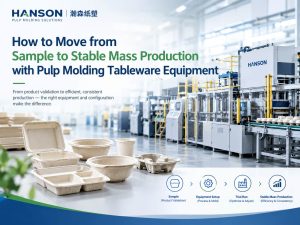
For many investors entering the premium industrial packaging sector, purchasing high-end equipment often feels like the final hurdle. However, producing a high-precision molded fiber insert—such as a smartphone tray or consumer electronics packaging—requires far more than simply pressing a button.
These products demand flawless surface quality, strict dimensional accuracy, and complex structural details. Bridging the gap between the initial equipment installation and achieving stable, highly profitable commercial production involves a critical phase known as production ramp-up. As a turnkey specialist in pulp molding, Hanson Pulp Molding reviews the essential stages every facility must navigate to achieve consistent mass production.
Stage 1: Aligning Molded Fiber Tooling with the Process
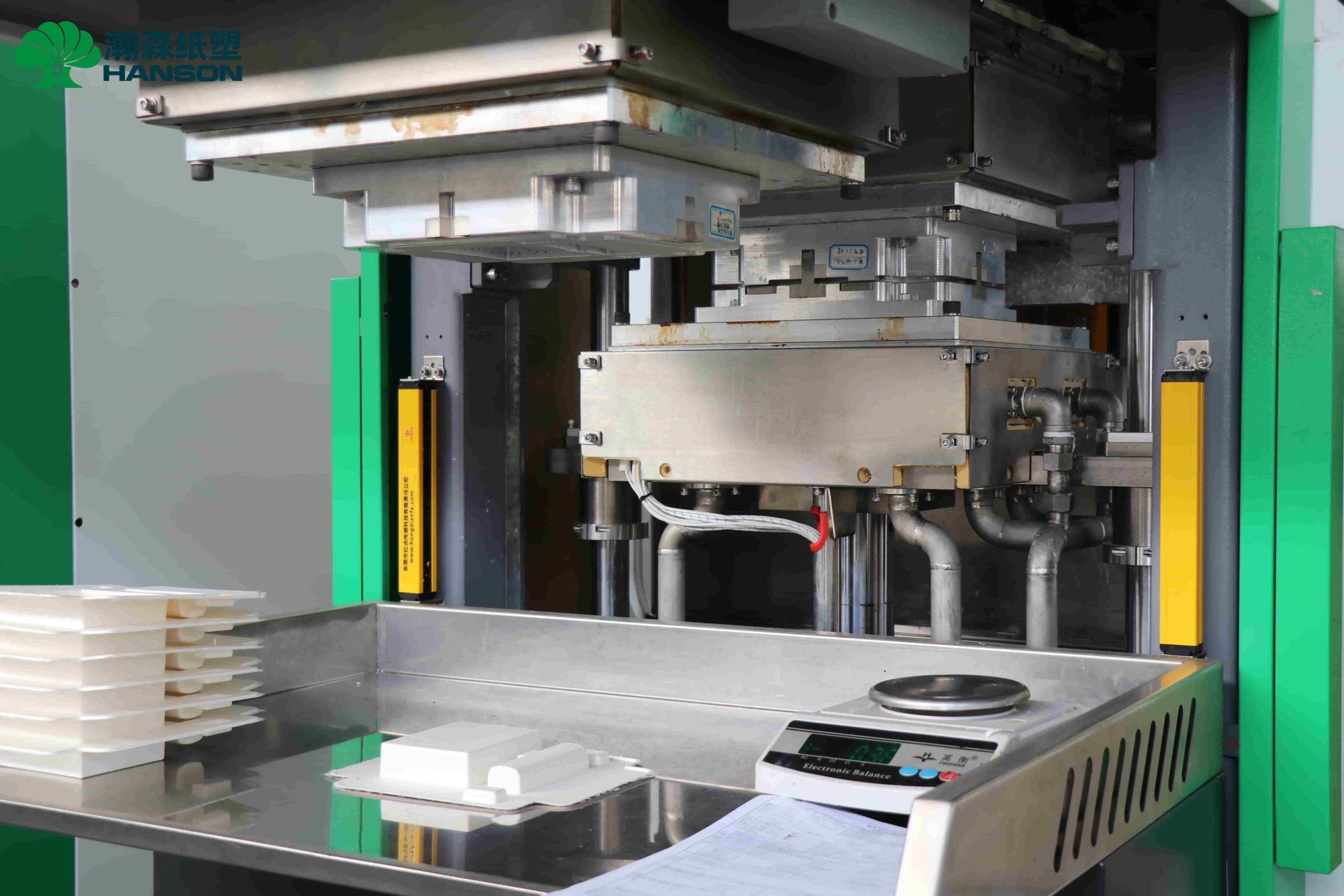
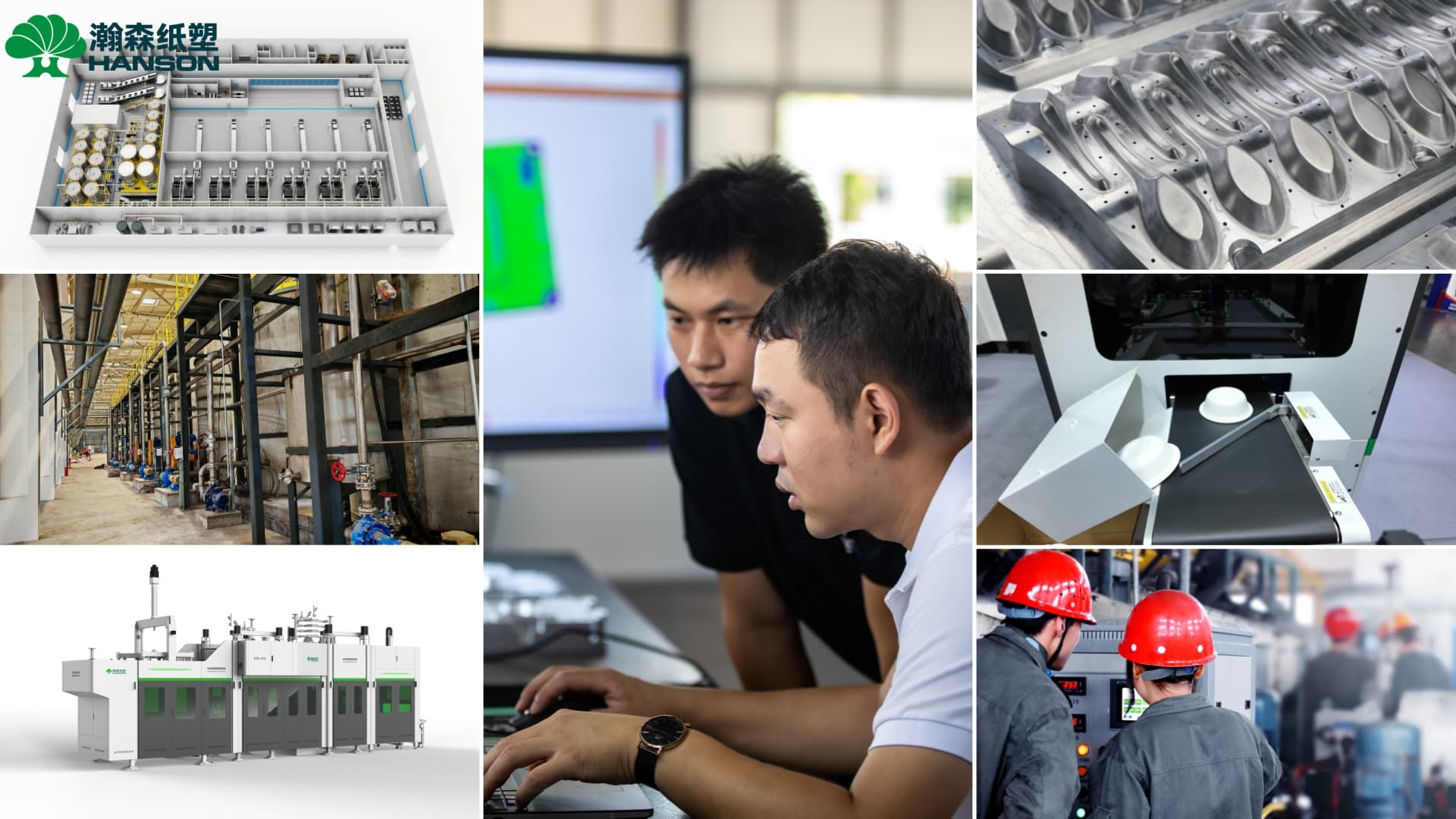
In wet press manufacturing, the forming tool and hot press mold are not merely accessories that shape the product; they are active components dictating drainage efficiency, wet preform transfer, and final structural integrity. Even with top-tier equipment, poorly designed mesh or inadequate venting in the hot press tool can lead to localized deformation or inconsistent wall thickness.
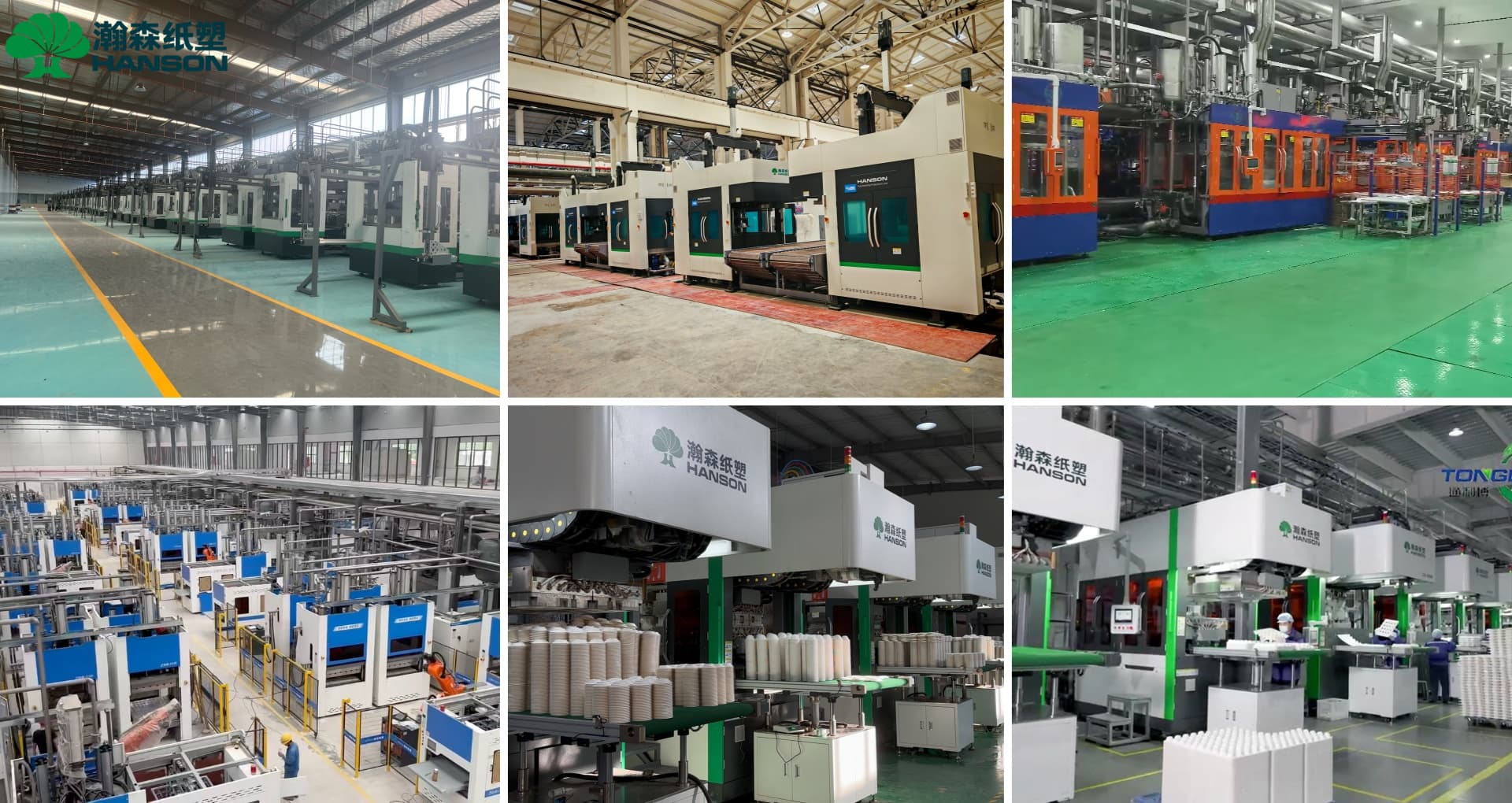
During the initial commissioning phase, equipment and tooling must be finely calibrated to match the specific product geometry. Hanson Pulp Molding prioritizes this synergy in its ZAD series and ZAP-9585 premium industrial molded fiber packaging equipment. The ZAP-9585 features dynamic pulp replenishment, a capability designed to optimize the slurry state during forming, giving operators tighter control over forming uniformity and part consistency.

Stage 2: Validating Production Consistency at Scale
It is one thing to achieve a perfect surface finish on a few prototype samples; it is another to maintain that exact standard over a 24-hour continuous production cycle. Minor fluctuations in pulp consistency, vacuum pressure, or hot press temperature can cause unacceptable dimensional variances or rough textures on high-end inserts.
When scaling up production for premium electronics brands, clients such as Xibao and Wangying focused heavily on dimensional stability, flatness, and strict adherence to international quality standards. To overcome this, Hanson Pulp Molding works closely with clients to establish robust process parameters, ensuring that the dimensional accuracy and surface smoothness of the molded fiber insert remain absolutely consistent, regardless of production volume.
Stage 3: Integrating Post-Processing Automation
A production line is only as fast as its slowest bottleneck. Even if the primary forming machine operates with a rapid cycle time, inadequate post-processing can cripple actual output. Premium industrial packaging almost always requires precise edge trimming or punching to achieve clean, aesthetic edges.
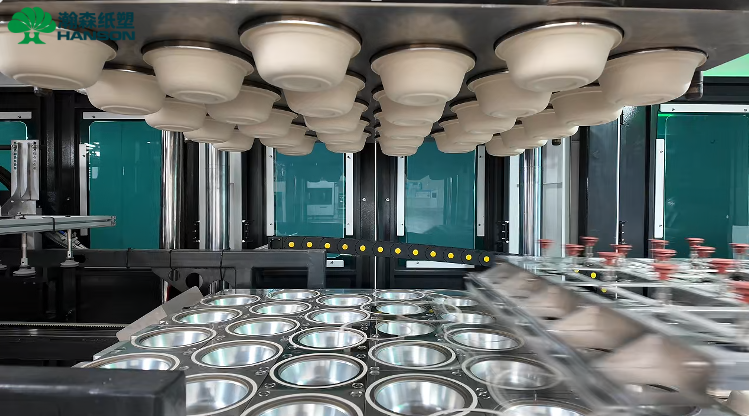
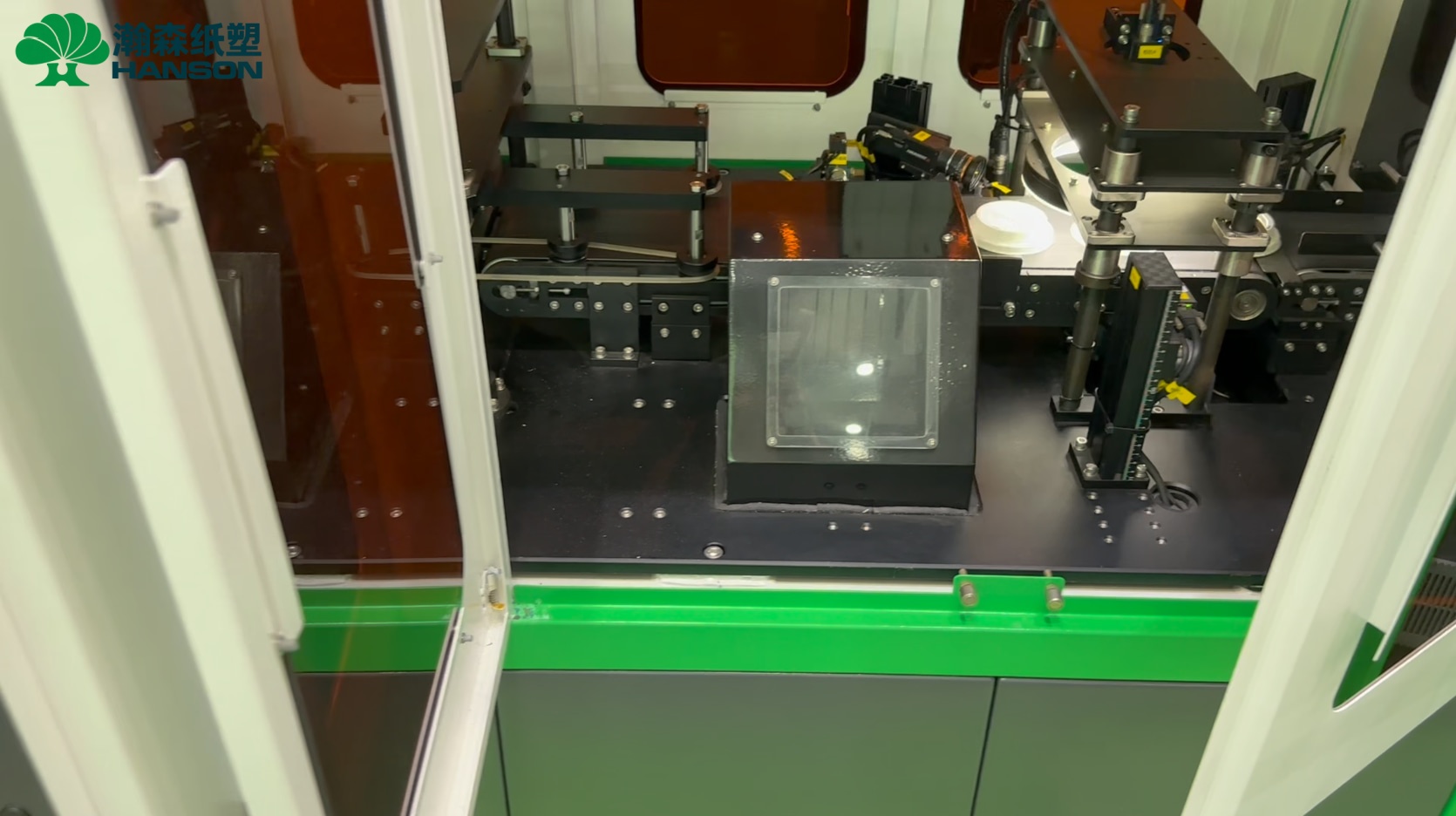
In turnkey pulp molding projects, integrating post-processing automation—such as servo-driven punch cutting and automated stacking—is essential. This not only reduces reliance on manual labor but also minimizes the risk of product deformation or contamination caused by excessive manual handling.
Stage 4: Operator Training and Production Ramp-Up
B2B industrial equipment reaches its full potential only when operated by a skilled team. For companies expanding into molded fiber from other industries (like traditional plastic packaging), the lack of experienced process technicians is a major risk factor.
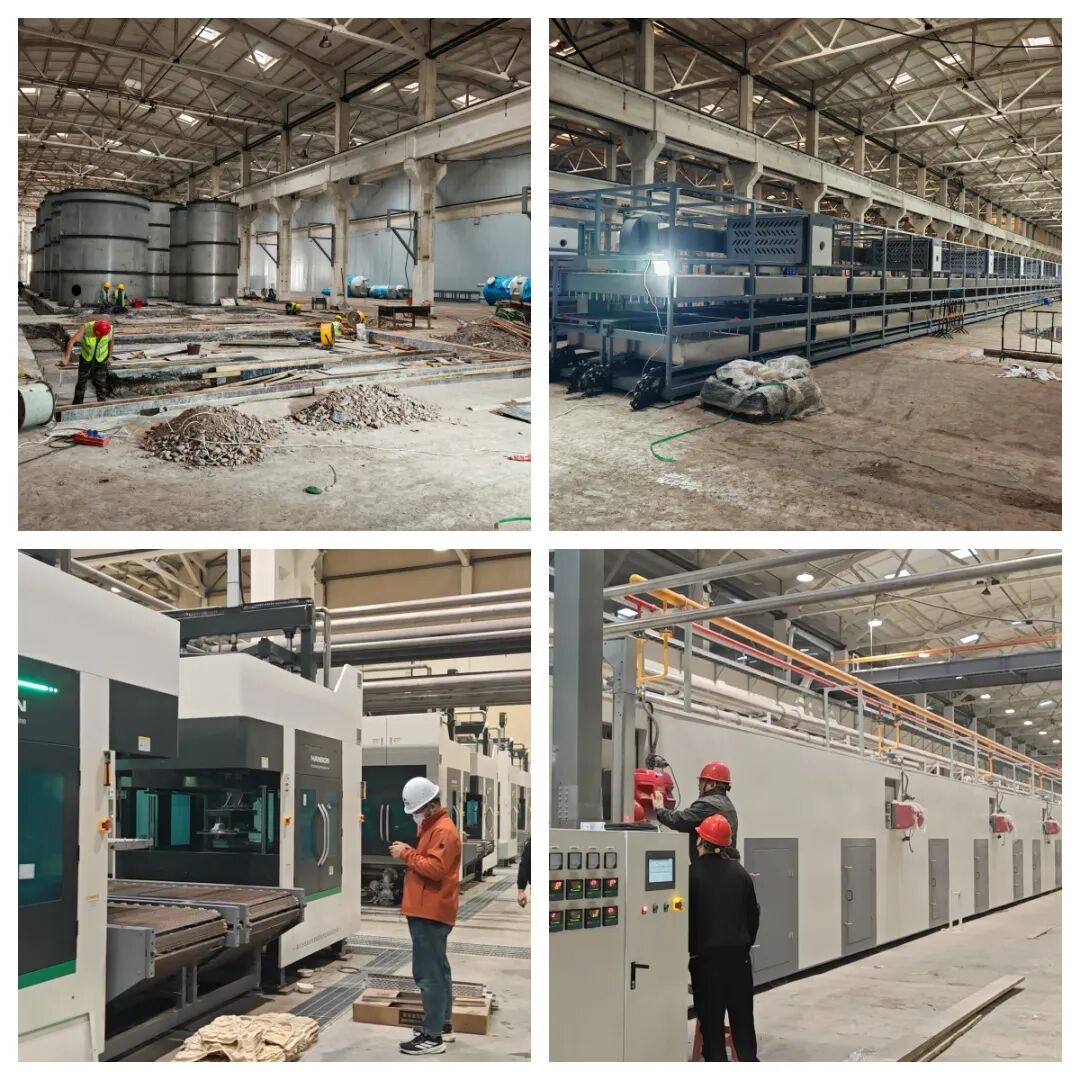
Equipment installation does not equal instant mass production. It must be followed by comprehensive production training and ramp-up support. In cases like Tonglibo—where the client expanded through five continuous order upgrades over two years—Hanson Pulp Molding didn’t just deliver the machines. By providing on-site ramp-up support and resolving real-time production pain points, Hanson Pulp Molding helped the client continuously iterate and solidify their commercial production capabilities.
FAQ
How long does it take to start mass production after equipment installation? There is no fixed timeframe for all projects. The actual ramp-up period depends on product maturity, mold accuracy, process formulation, operator experience, and overall project complexity. Installation is followed by a necessary phase of process stabilization and yield improvement.
Which process is best for consumer electronics packaging inserts? For products demanding high surface quality, tight dimensional tolerances, and complex visual designs, the wet press process (thermoformed fiber) using premium industrial molded fiber packaging equipment is generally the optimal choice.
Why does changing the mold affect actual production capacity? Different molds alter the number of cavities, product dimensions, weight, drainage efficiency, and the time required for forming and hot pressing. Consequently, the actual daily output (both in pieces and tonnage) will vary when running different products on the same machine.
Conclusion
Successfully landing a premium molded fiber insert project requires a holistic approach. From the initial equipment installation and tooling calibration to the delicate balance of production ramp-up, every stage tests the systemic manufacturing capabilities of the plant. When evaluating equipment, buyers must look beyond theoretical machine speeds and assess the supplier’s ability to deliver integrated solutions across product development, tooling, and on-site mass production support.
If you are planning a new pulp molding plant or expanding your capacity for high-end molded fiber inserts, you can share your target products, required capacity, plant conditions and automation requirements. Hanson Pulp Molding can evaluate the project from product development and plant planning to pulping, forming equipment, tooling, post-processing and production ramp-up.
WhatsApp: +86 15920604830
Email: linchuangcheng@hspulpmolding.com