As the global shift away from single-use plastics accelerates, molded fiber cup lids have become a highly sought-after packaging solution. Because they offer higher profit margins and massive market demand, many packaging manufacturers are investing in pulp molded cup lid equipment.
However, a cup lid is a precision product. It requires strict dimensional stability and a perfect seal. If you approach the equipment selection process with the same mindset used for standard molded pulp egg trays or simple food containers, your project may face severe issues such as high defect rates, leaking edges, and low actual output.
To help investors make informed decisions, here are the top four purchasing mistakes to avoid when choosing a molded fiber cup lid machine.
Mistake 1: Confusing Cup Lids with Cup Carriers
This is a critical error often made by companies new to the molded fiber industry. Because both products are associated with cups, buyers sometimes assume they can be manufactured on the same machine. In reality, the production processes and equipment configurations are fundamentally different.
-
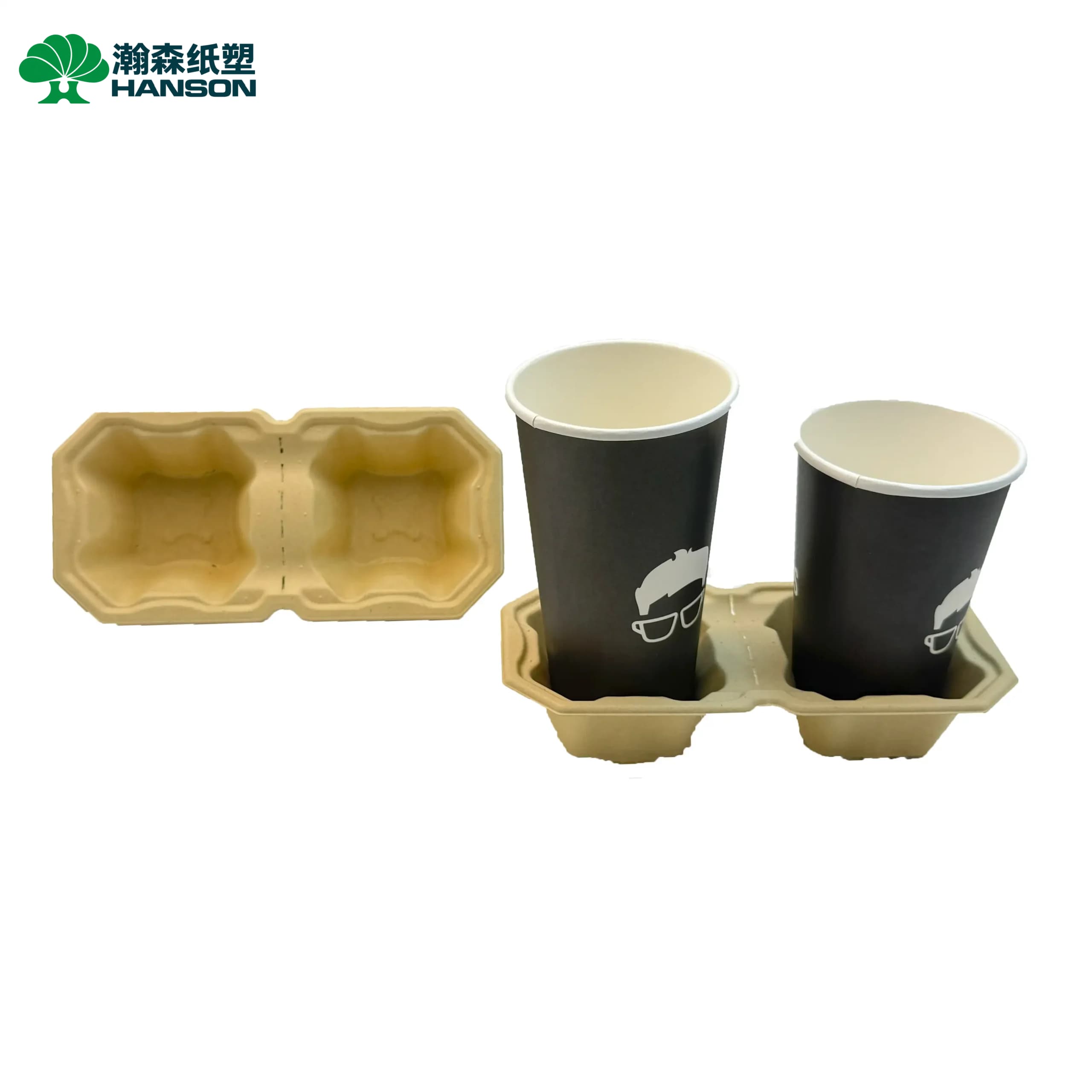
Cup Carriers (Drink Carriers): The primary function is to hold, buffer, and transport cups. These are typically produced using dry-press or semi-dry press production lines, which prioritize load-bearing strength and cost-effective high-volume output.
-
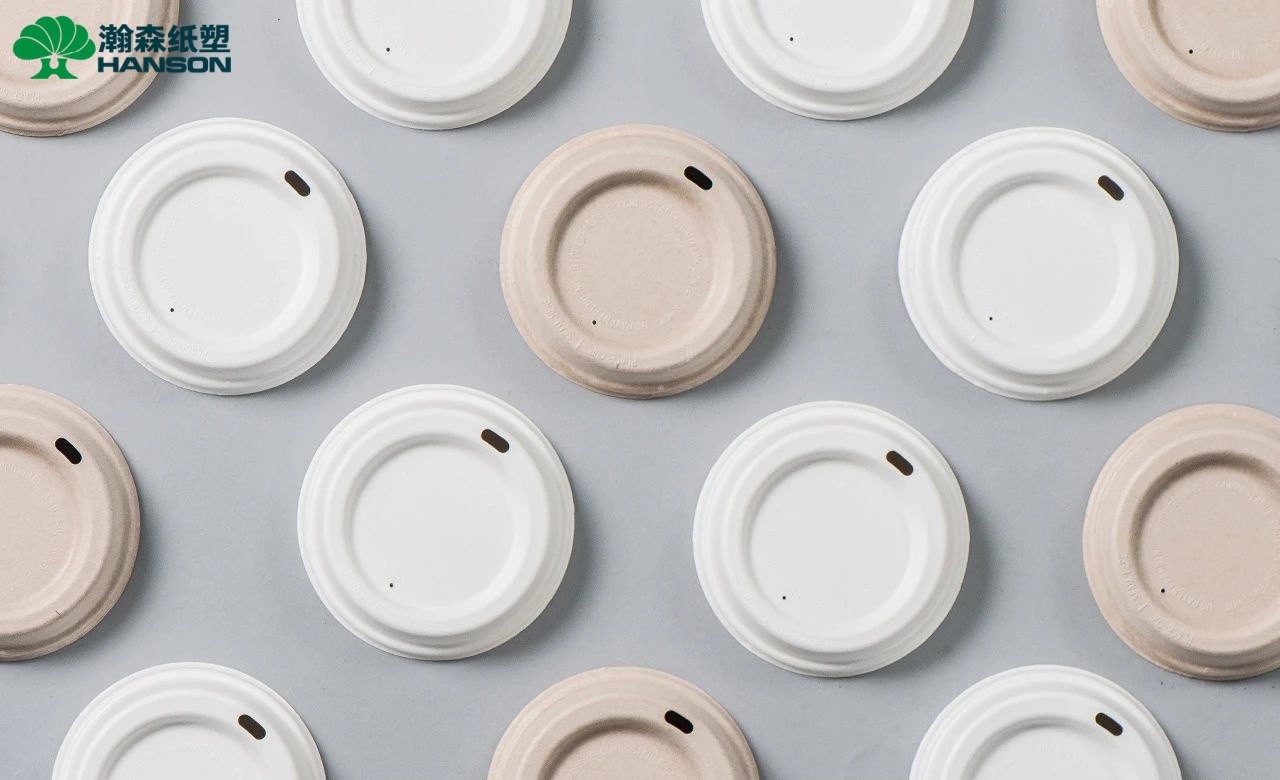
Molded Fiber Cup Lids: The primary function is to cover the cup and provide a secure, leak-proof seal. This requires exceptional dimensional accuracy for the buckle design and a smooth edge. Therefore, cup lids must be produced using high-precision wet-press thermoforming equipment, followed by dedicated trimming processes.
A cup carrier machine cannot produce cup lids, and vice versa. Equipment selection must strictly start with the specific end-product requirements.
Mistake 2: Focusing Only on Forming Speed While Ignoring Post-Processing
When evaluating a molded fiber cup lid machine, many buyers focus obsessively on the theoretical cycle time of the forming station. However, the real bottleneck in cup lid production is almost always in the post-processing stages.
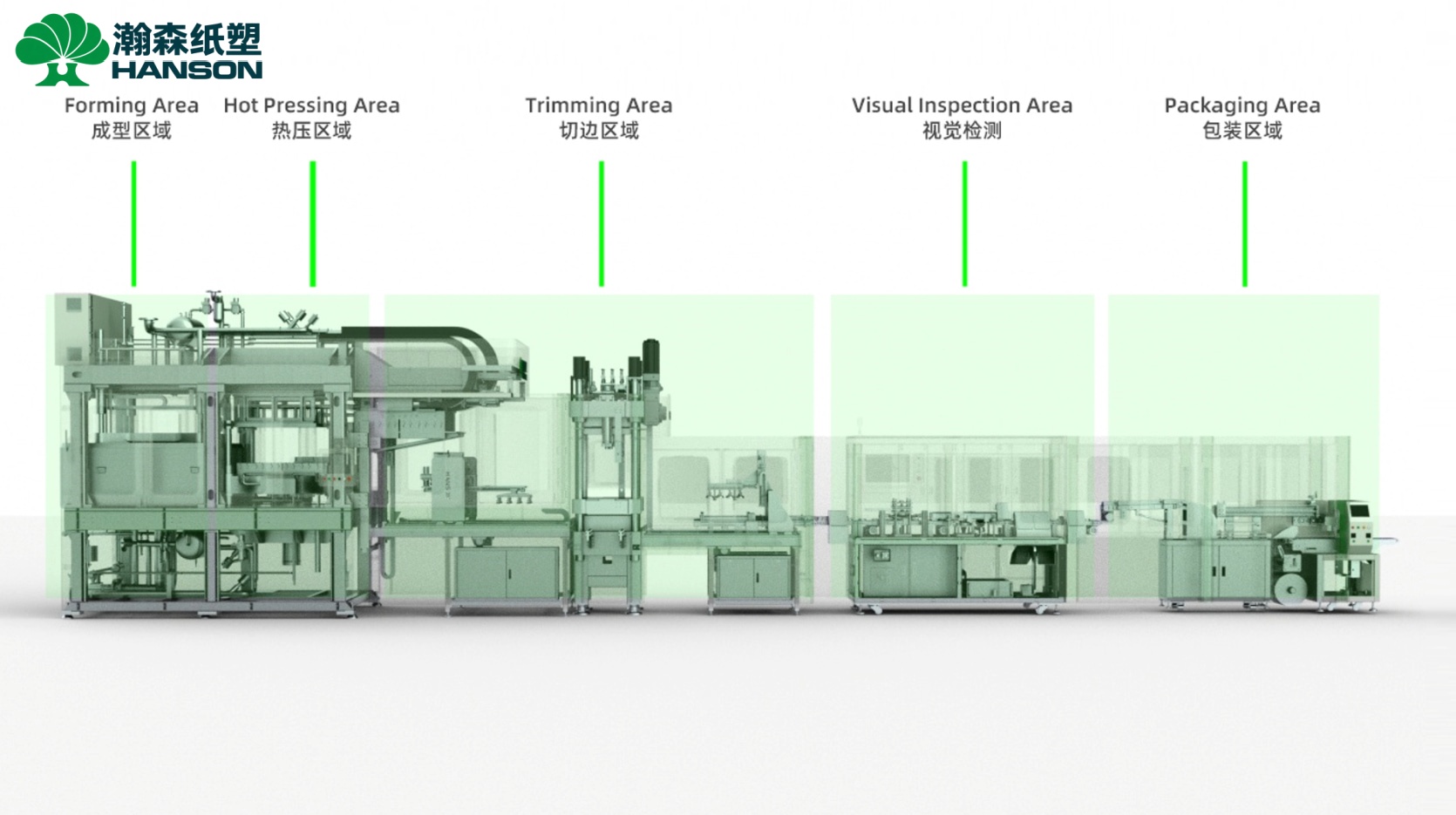
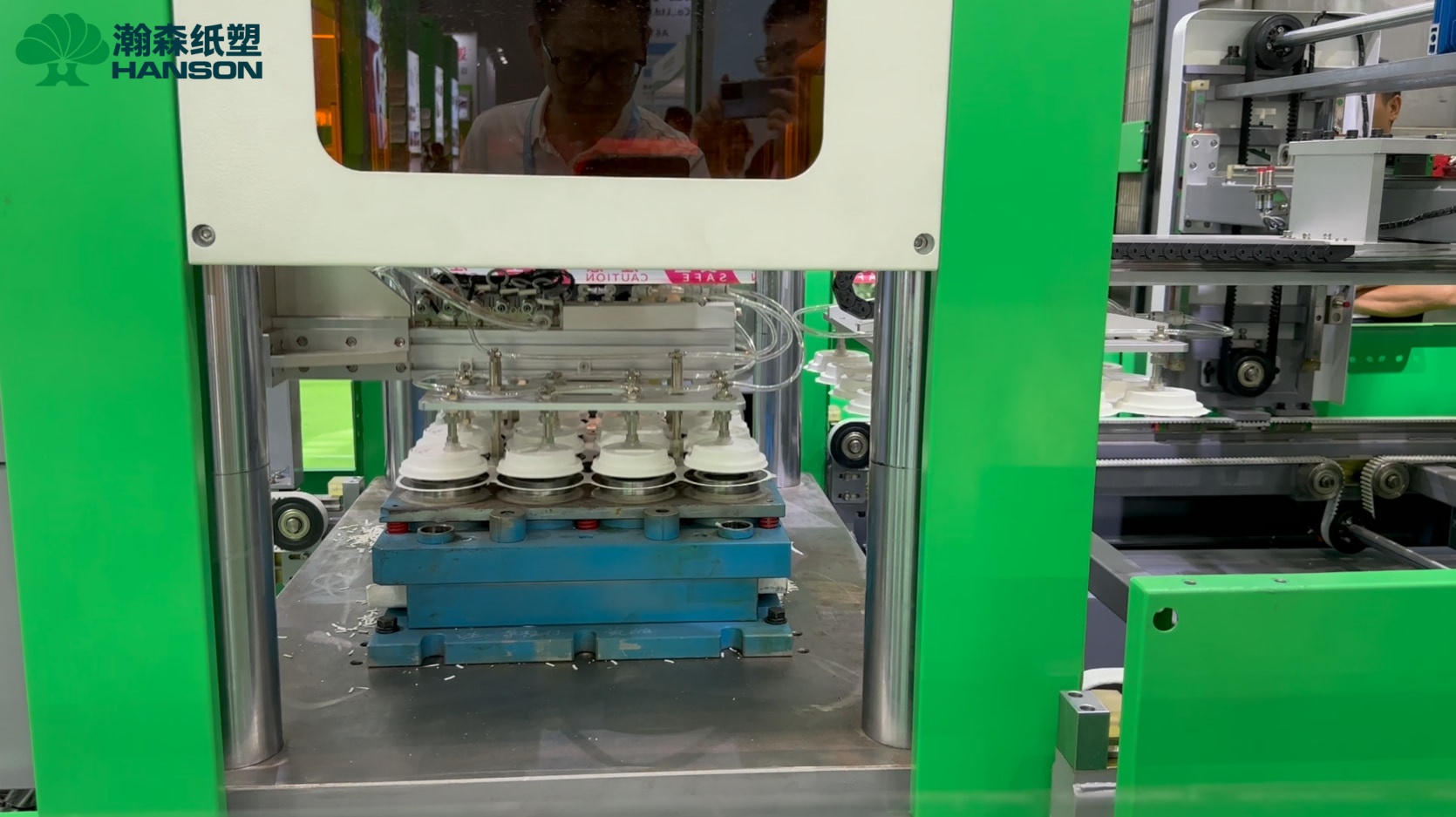
Once a cup lid is formed and hot-pressed, it must undergo precise trimming. Any burrs or uneven edges will prevent the lid from sealing correctly onto the paper cup, leading to leaks. If your forming machine is incredibly fast but the trimming station struggles with alignment, or if you rely on manual labor for defect sorting, the actual production capacity of the entire line will be severely restricted by these backend inefficiencies.
Mistake 3: Relying on Manual Labor for Inspection and Packaging
For large protective packaging items, keeping manual labor for sorting and packing might seem like a way to save on initial investment. For cup lids, this strategy is unworkable.
A cup lid is a small, high-volume item. An efficient fiber lid production line will output over 100,000 pieces per day. At this speed, manual workers simply cannot keep up with the continuous flow, nor can they reliably inspect every single lid for micro-defects. To maintain profitability and quality, a molded fiber cup lid project must integrate machine vision inspection and automatic packaging from day one.
Mistake 4: Calculating Daily Output Solely on Theoretical Cycle Time
Assuming that “theoretical cycle time × cavities = actual daily output” is one of the most misleading formulas in equipment procurement.
The true daily capacity of a molded fiber cup lid machine is influenced by multiple factors, including product weight, mold drainage, hot pressing time, trimming stability, defect rejection rates, and overall machine uptime (yield rate). Without stable tooling and seamless post-processing automation, theoretical numbers will never translate into actual warehoused inventory.
The Hanson Pulp Molding Solution: ZAKS-9595 Automatic Production Line
To address the challenges of high-volume, high-precision cup lid manufacturing, Hanson Pulp Molding offers the ZAKS-9595 molded fiber cup lid machine.
As a specialist in turnkey pulp molding solutions, Hanson Pulp Molding understands that a successful cup lid project requires more than just a forming unit. The ZAKS-9595 is designed as a fully integrated automation system:
-
Process Integration: The ZAKS-9595 seamlessly integrates forming, hot pressing, trimming, vision inspection, and packaging into a single continuous line, eliminating backend bottlenecks.
-
Servo-Driven Punch Cutting: Precision servo trimming ensures clean edges and accurate buckle dimensions, drastically reducing the risk of leaks.
-
Vision Inspection: Built-in machine vision inspection automatically identifies and rejects defective lids during high-speed production, ensuring consistent quality without relying on manual checking.
-
Verified Production Capacity: Under appropriate production conditions, the ZAKS-9595 is capable of producing approximately 100,000–120,000 cup lids per day (24H), providing a reliable foundation for commercial scale-up.
FAQ
1. How many cup lids can a molded fiber machine produce per day? Actual output depends on the specific cup lid design, mold configuration, and machine uptime. For instance, under continuous 24-hour operation and appropriate conditions, the Hanson Pulp Molding ZAKS-9595 can achieve a daily capacity of 100,000 to 120,000 pieces.
2. Why is vision inspection necessary for cup lid production? Cup lids are produced in massive quantities and require strict dimensional accuracy. Vision inspection systems can instantly detect visual defects and dimensional variations at high speeds, a task that manual labor cannot sustain for outputs exceeding 100,000 pieces a day.
3. Can I use the same machine for cup lids and cup carriers? No. Cup lids require precise wet-press forming and automated trimming to ensure a leak-proof seal. Cup carriers (drink carriers) are protective packaging items that typically use dry-press or semi-dry press technology. The processes and equipment required are entirely different.
Conclusion
Success in the molded fiber cup lid market requires looking beyond just the forming machine. By avoiding common purchasing mistakes and recognizing the necessity of integrated trimming, vision inspection, and packaging, investors can build a robust production system. Choosing a fully automated line designed specifically for cup lids ensures high yield rates, stable quality, and true commercial scalability.
If you already have a product sample, 3D drawing, or target daily capacity for your cup lid project, simply comparing basic machine specifications is not enough. Hanson Pulp Molding can help evaluate the molding process, high-precision tooling, vision inspection, and automation equipment configuration tailored to your specific sealing requirements.
WhatsApp: +86 15920604830
Email: linchuangcheng@hspulpmolding.com