
When planning a new project for molded fiber cup lids, investors often ask equipment manufacturers one primary question: “How many lids can this machine produce per day?” However, molded fiber manufacturing is not standard plastic injection molding. If you do not define the unit weight, product structure, and number of mold cavities before mass production, you cannot accurately evaluate dewatering times, hot-pressing efficiency, trimming accuracy, or the actual daily capacity.
Cup lids are relatively small but demand extremely high dimensional accuracy and functional consistency. To build a stable and efficient production line, buyers must follow a fundamental engineering logic: determine the product specifications first, then match the tooling, process, and equipment.
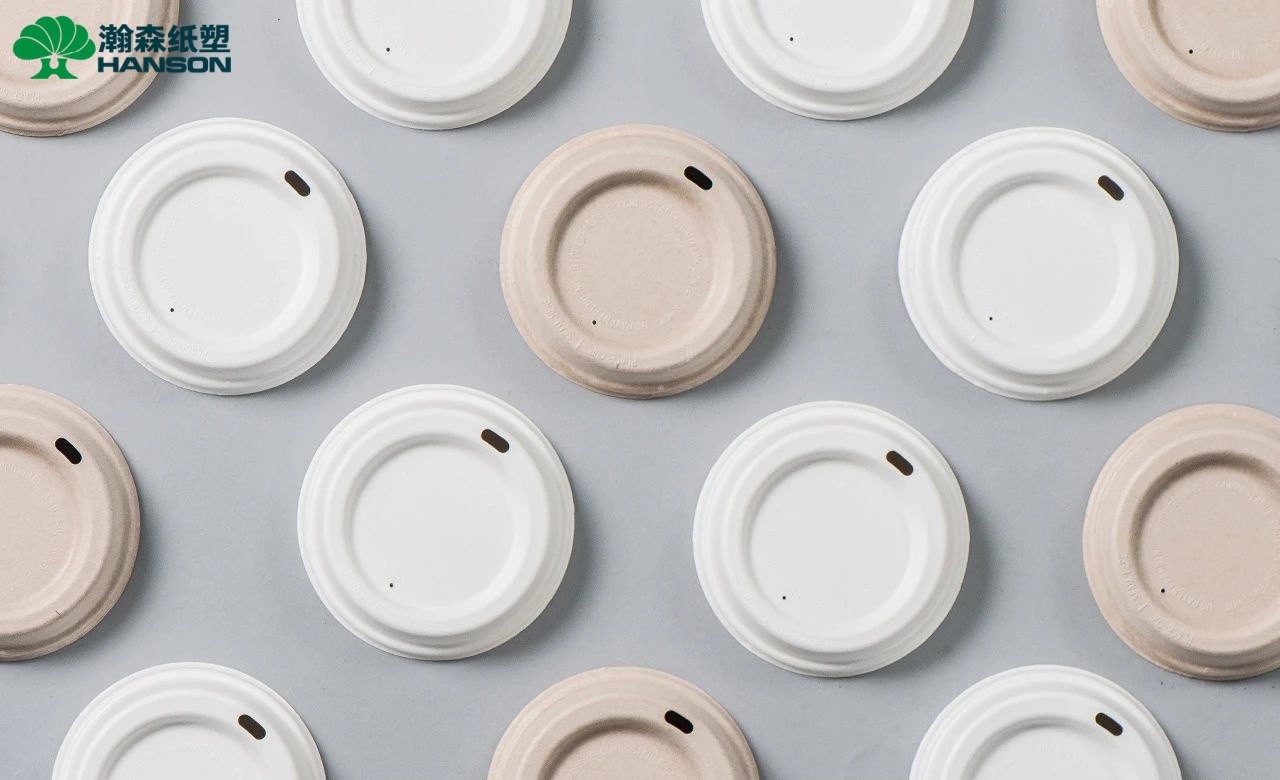
Product Weight: The Key to Dewatering, Hot Pressing, and Actual Capacity
The weight of the molded fiber cup lid determines the amount of slurry used per cycle, which directly dictates the production tempo.
The core of the pulp molding process is the removal of water from plant fibers. A heavier cup lid means the wet preform retains more moisture after forming. This requires a longer vacuum dewatering time and significantly increases the evaporation load during the hot pressing stage. If a manufacturer blindly pursues a shorter cycle time while ignoring the dewatering needs of a heavier product, it often leads to unstable wet preform transfer or incomplete drying.
Furthermore, weight variations affect slurry consistency control and fiber distribution. Therefore, even on the same molded fiber cup lid machine, producing a 4-gram lid versus a 6-gram lid will result in different actual output capacities.
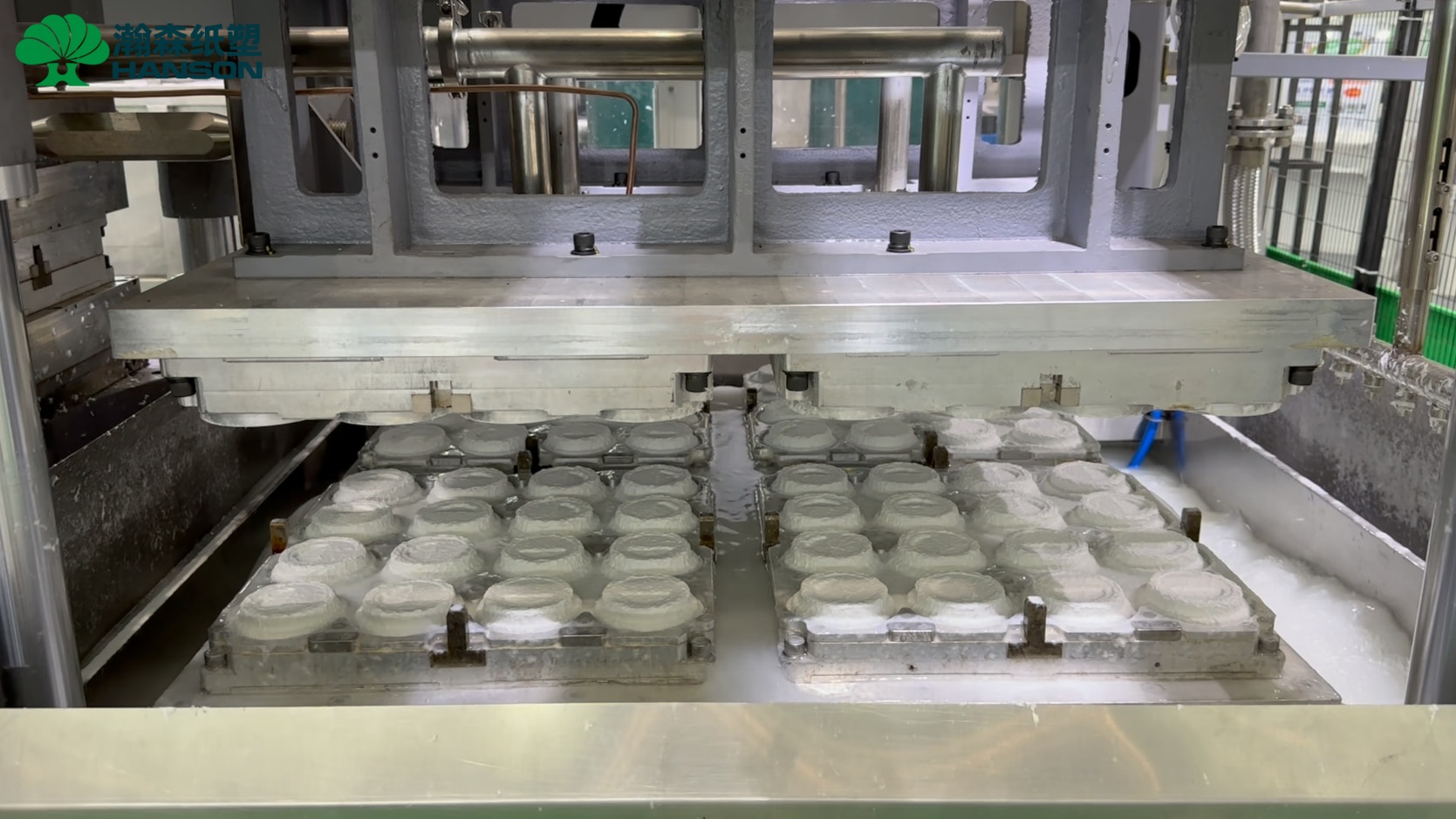
Lid Structure: Crucial for Snap Fit, Trimming, and Inspection
A cup lid is a functional sealing component, not just a simple cover. Its structural design directly determines the difficulty of the forming process and the post-processing layout.
-
Snap-on and Edge Structures: The rim of the cup lid requires exceptional dimensional stability to fit tightly onto the cup. If the structural design causes difficult demolding or has insufficient draft angles, it will complicate mold manufacturing and easily cause localized deformation during wet preform transfer and hot pressing, reducing the yield rate.
-
Trimming Process: Most molded fiber cup lids require trimming or punching after hot pressing to achieve a smooth, clean edge. Complex edge designs demand highly precise servo-driven punch cutting mechanisms.
-
Performance Adaptability: If the lid requires water and oil resistance or specialized barrier performance, the structural design must ensure uniform density. Thin or weak spots can lead to leakage and functional failure.
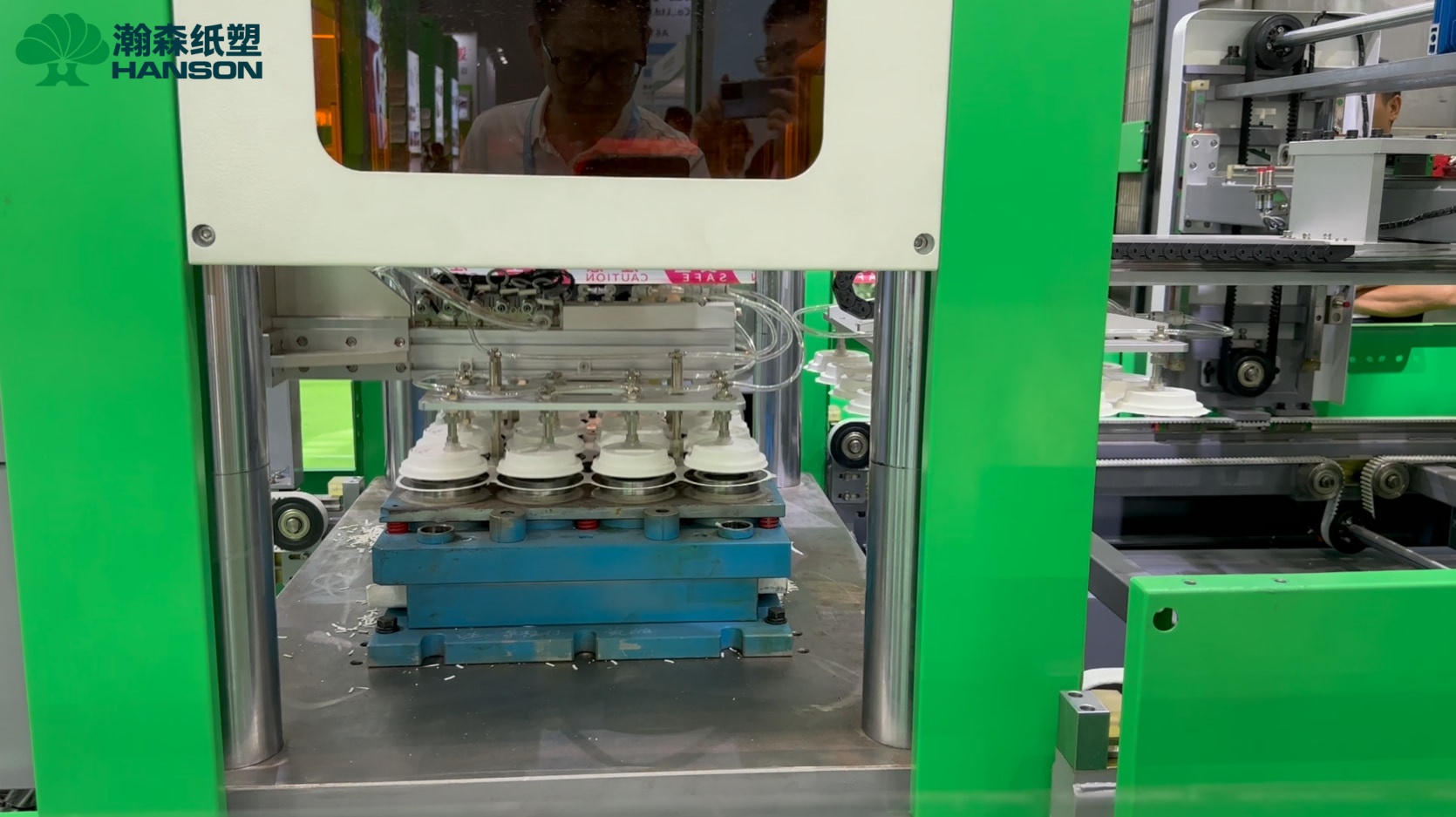
Number of Cavities: Balancing Output and Machine Stability
When calculating theoretical capacity, adding more cavities to a mold seems like the fastest way to increase output. In actual production, however, the number of cavities must perfectly align with the machine’s capabilities and platen area.
First, the size of the forming mold and its mesh design determine the drainage efficiency. If there are too many cavities packed too closely, vacuum suction may be uneven between the center and the edges, resulting in inconsistent lid thickness. Second, more cavities require the hot press mold to deliver broader and more uniform pressure and heat. Pushing beyond the machine’s maximum load or heating capacity will compromise the overall product quality. Therefore, cavity planning must be an engineered calculation based on the machine’s actual thermal and dewatering capabilities.
Why High-Volume Lids Require Fully Automated Production Lines
Unlike large industrial protective packaging, molded fiber cup lids are “high-volume, high-precision” products. Relying on manual labor for secondary processing will immediately create a severe bottleneck, paralyzing the entire plant’s efficiency.
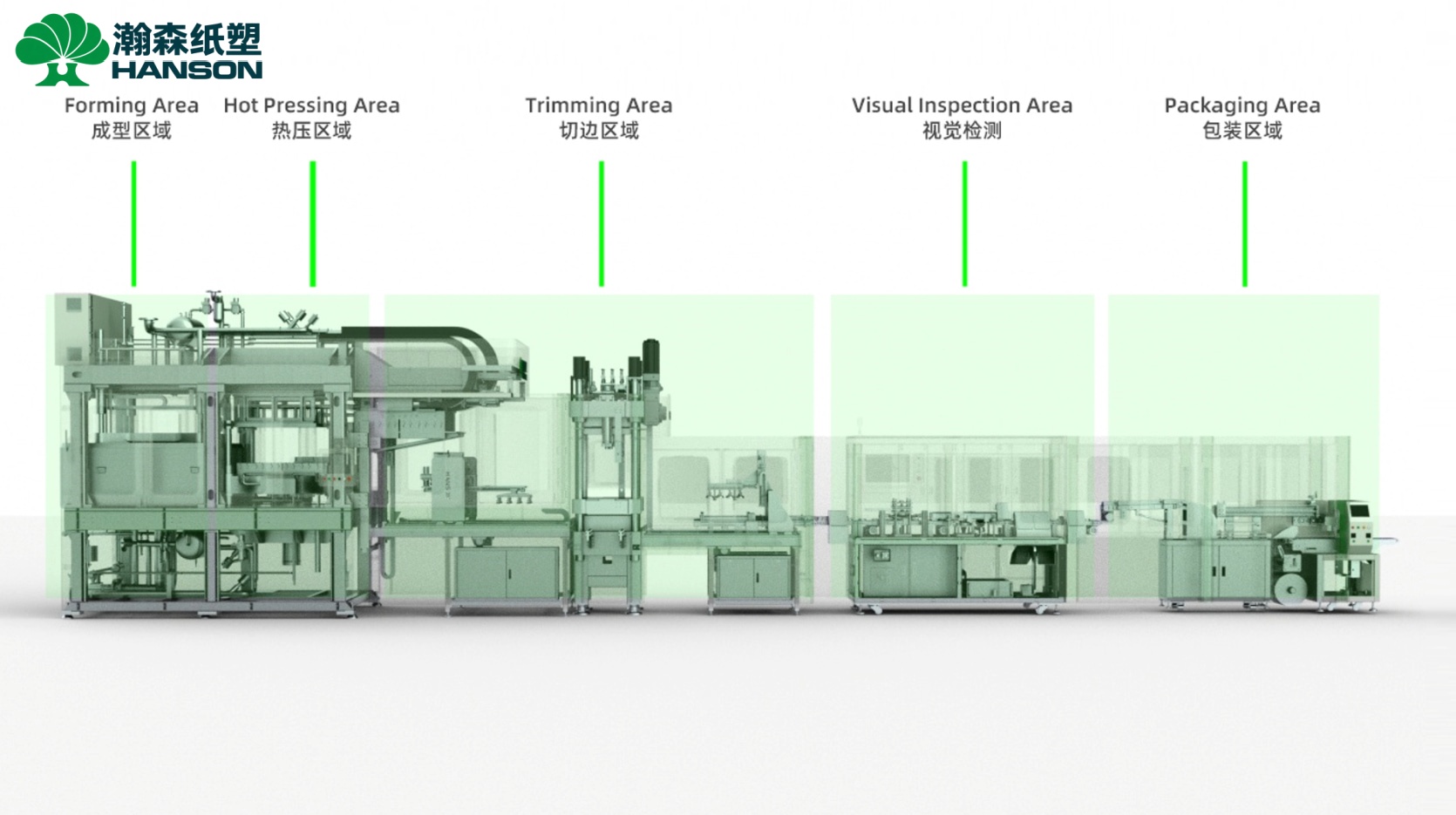
As a specialist in turnkey pulp molding solutions, Hanson Pulp Molding designed the ZAKS-9595 Molded Fiber Cup Lid Machine specifically to address these exact mass production challenges. Rather than just forming the product, this system integrates the entire backend processing logic:
-
Servo-Driven Punch Cutting: Ensures high-precision trimming, which is mandatory for the sealing performance of beverage lids.
-
Machine Vision Inspection: In high-speed commercial production, manual operators cannot spot microscopic defects or burrs on hundreds of thousands of lids. The ZAKS-9595 integrates an automated vision inspection system to identify dimensional deviations and visual flaws, guaranteeing outgoing quality.
-
Automatic Packaging: Working in sync with forming, pressing, trimming, and inspection, the system automatically stacks and packages the finished lids.
Under appropriate production conditions and with matching mold and process parameters, the ZAKS-9595 cup lid equipment can achieve a daily output of 100,000–120,000 pcs/day (24H). This seamless integration from forming to packaging is the definitive solution for high-volume, continuous automation.
FAQ
How many cup lids can a molded fiber machine produce per day?
Actual production capacity depends on the lid’s dimensions, weight, mold cavities, and the machine’s effective operating time. For instance, under appropriate production conditions, the Hanson Pulp Molding ZAKS-9595 equipment can produce up to approximately 100,000–120,000 cup lids per 24 hours.
Is the equipment used for cup lids the same as the equipment for cup carriers?
No, they are completely different. This is a common misunderstanding in pulp molding procurement. Cup lids require high precision, tight dimensional tolerances, and high levels of post-processing automation (typically handled by machines like the ZAKS-9595). Cup carriers (or drink carriers), which serve as protective/transport packaging, are usually produced using dry press or semi-dry press production lines. They employ fundamentally different forming, drying, and tooling technologies.
Why is vision inspection necessary for molded fiber cup lid production?
Because molded fiber cup lids are produced in massive volumes (often over 100,000 pieces a day) and serve as functional sealing components. Minor tears, warping, or burrs can lead to liquid leakage. Manual inspection simply cannot keep up with this volume or guarantee accuracy, making integrated machine vision inspection essential for reliable quality control.
Conclusion
Procuring a molded fiber cup lid machine requires looking far beyond a basic price sheet or theoretical cycle time. Defining the unit weight, verifying the structural sealing capability, and engineering the correct number of cavities are prerequisite steps that dictate your dewatering efficiency, hot-pressing yield, and trimming accuracy. Only by evaluating the product, tooling, and post-processing automation as a unified system can you establish a highly reliable commercial production line.
If you already have a product sample, 3D drawing, or target daily capacity for your molded fiber cup lids, these details can be used to evaluate the molding process, tooling, and equipment configuration. Hanson Pulp Molding can help you map out a complete automated production strategy around the ZAKS-9595 system.
WhatsApp: +86 15920604830 Email: linchuangcheng@hspulpmolding.com