
When investing in a molded fiber project and visiting an equipment supplier for an on-site inspection, it is easy to fall into a common trap: focusing solely on the fast empty-running speed of a single forming machine in a showroom.
However, a commercial pulp molding production line is a complex manufacturing system. It integrates raw materials, pulp preparation, forming, dewatering, hot pressing or drying, tooling, and secondary processing. The performance of one isolated machine during a ten-minute demonstration does not guarantee stable, commercial-scale production over the next five years.
As a specialist in turnkey pulp molding solutions, Hanson Pulp Molding recommends that buyers evaluate the entire system rather than just the forming unit. Here are the four core aspects you must verify during a factory inspection.
1. Verify Pulp Preparation System Matching
Many buyers focus all their attention on the forming area, neglecting the front end of the production line—the pulping system. Different molded fiber products (such as premium industrial packaging, wet-press tableware, or dry-press cup carriers) require vastly different fiber lengths, consistencies, and blending ratios.
What to check on-site:
-
Pulp Supply Stability: Observe whether the pulping system can consistently deliver the target pulp consistency during continuous operation. If the pulping capacity is insufficient, the high-speed forming machine will be forced to slow down and “wait for pulp,” rendering theoretical capacities meaningless.
-
System Scalability: If you plan to scale up, evaluate how the supplier designs the central pulping system to distribute slurry efficiently to multiple independent production lines.

2. Evaluate Actual Cycle Times and Tooling Efficiency
The “theoretical cycle time” printed on a machine’s specification sheet does not equal actual daily output. True production rhythm is governed by forming time, hot-pressing or drying time, dewatering efficiency, and mold design.
What to check on-site:
-
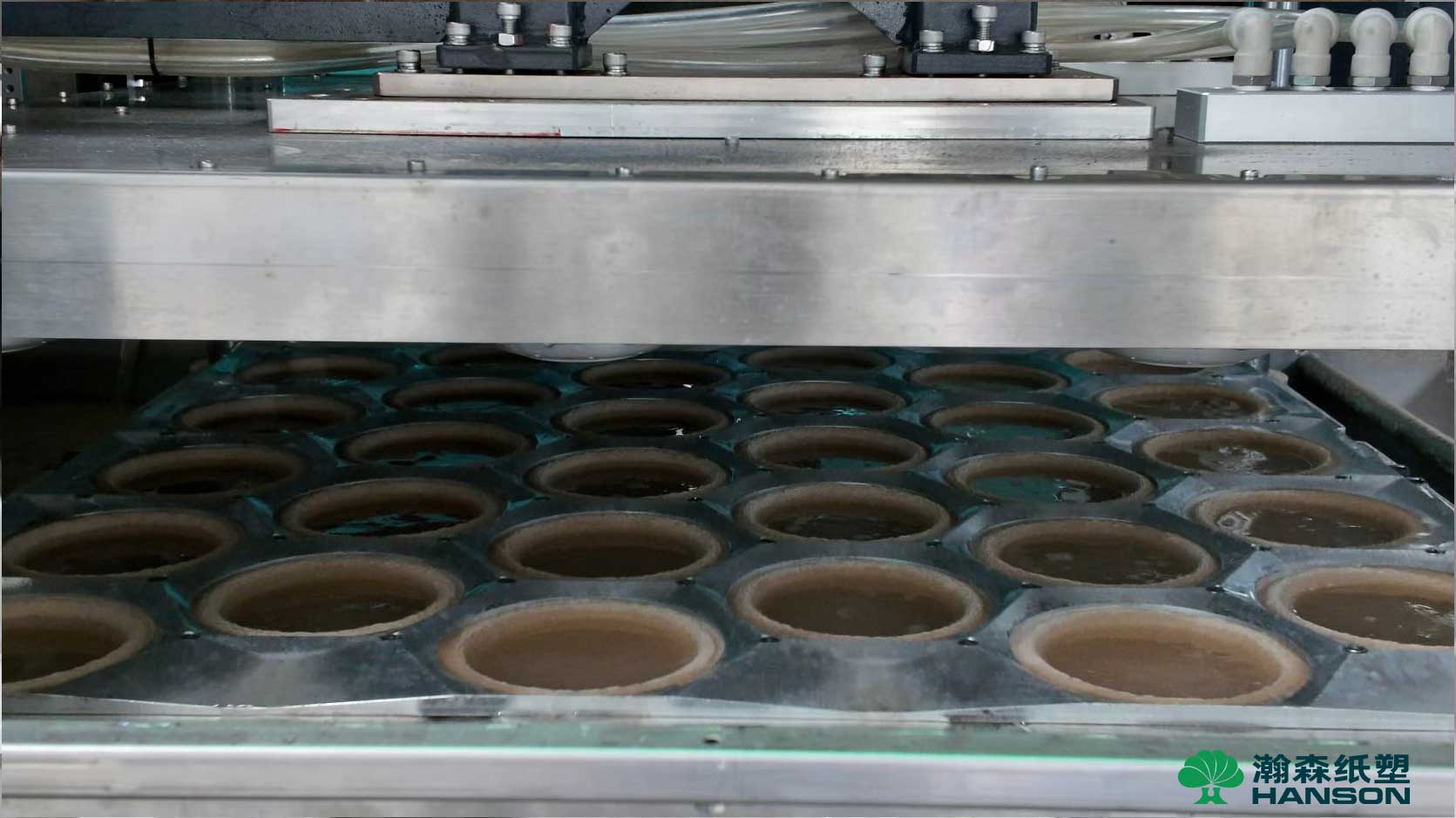
Dewatering and Drying Balance: Observe the moisture content of the wet preform before it enters the hot-press or tunnel dryer. If initial dewatering is inefficient, the wet preform carries excess water. This prolongs drying time, significantly slows down the entire line, and spikes electricity or gas consumption.
-
Transfer Stability: In wet-press processes, the transfer of the wet preform from the forming mold to the hot-press mold is a critical phase where deformation or tearing often occurs. Check the precision of the transfer mechanism (e.g., servo-driven systems or in-machine mold transfer).
-
Mold Changeover Efficiency: If your facility handles diverse product mixes and frequent changeovers, you must evaluate how difficult it is to change the tooling. Well-designed mold interfaces drastically reduce downtime, ensuring higher overall equipment effectiveness (OEE).
3. Assess Production Consistency and Mold Performance
A few perfect samples handed to you in a showroom do not prove production consistency. The real test is whether the products produced hours into a continuous run maintain strict standards.
What to check on-site:
-
Weight and Thickness Uniformity: Uneven pulp distribution or poor mold mesh design will result in significant weight and thickness variations among products formed in different cavities of the same mold.
-
Surface and Dimensional Control: For premium industrial molded fiber packaging and cup lids, dimensional stability and surface smoothness are non-negotiable. Inspect whether the hot-press station distributes temperature and pressure evenly. Inconsistent parameters lead to warpage, rough edges, and structural deformation.

4. Focus on Post-Processing Automation and Labor Costs
This is the most significant bottleneck for newly established pulp molding factories. A fast forming machine is of little value if the downstream trimming, inspection, coating, and packaging processes rely on dozens of manual workers. High manual dependency eats into profit margins and introduces human error into quality control.
What to check on-site:
-
Seamless Material Flow: Check if products require excessive manual handling after hot pressing or drying. A well-designed line seamlessly connects forming with secondary processing.
-
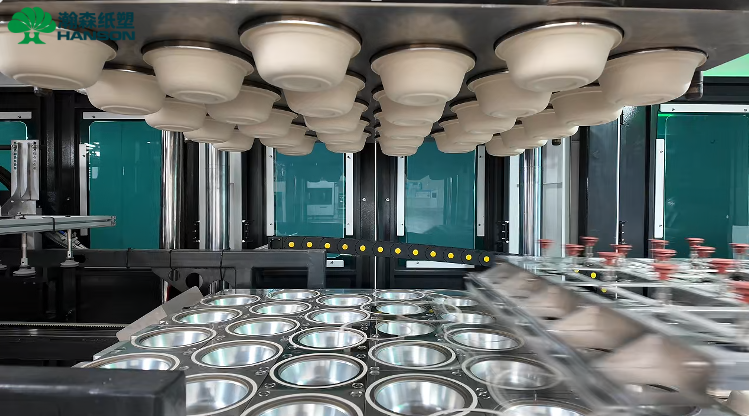
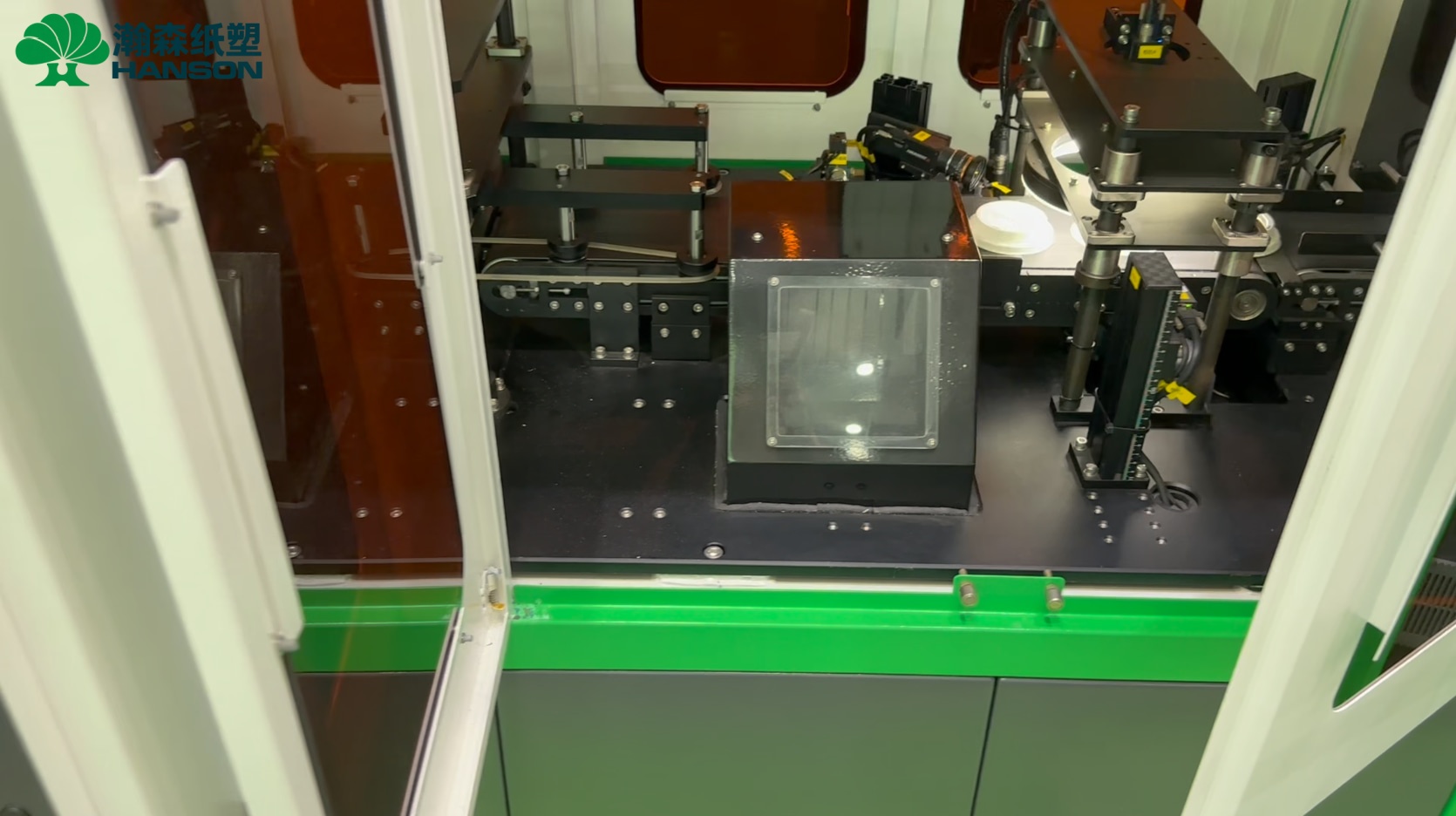
Trimming and Inspection: For precision products like molded fiber cup lids, evaluate the integration of automated servo-driven punch cutting and machine vision inspection systems to ensure clean edges and defect-free output.
-
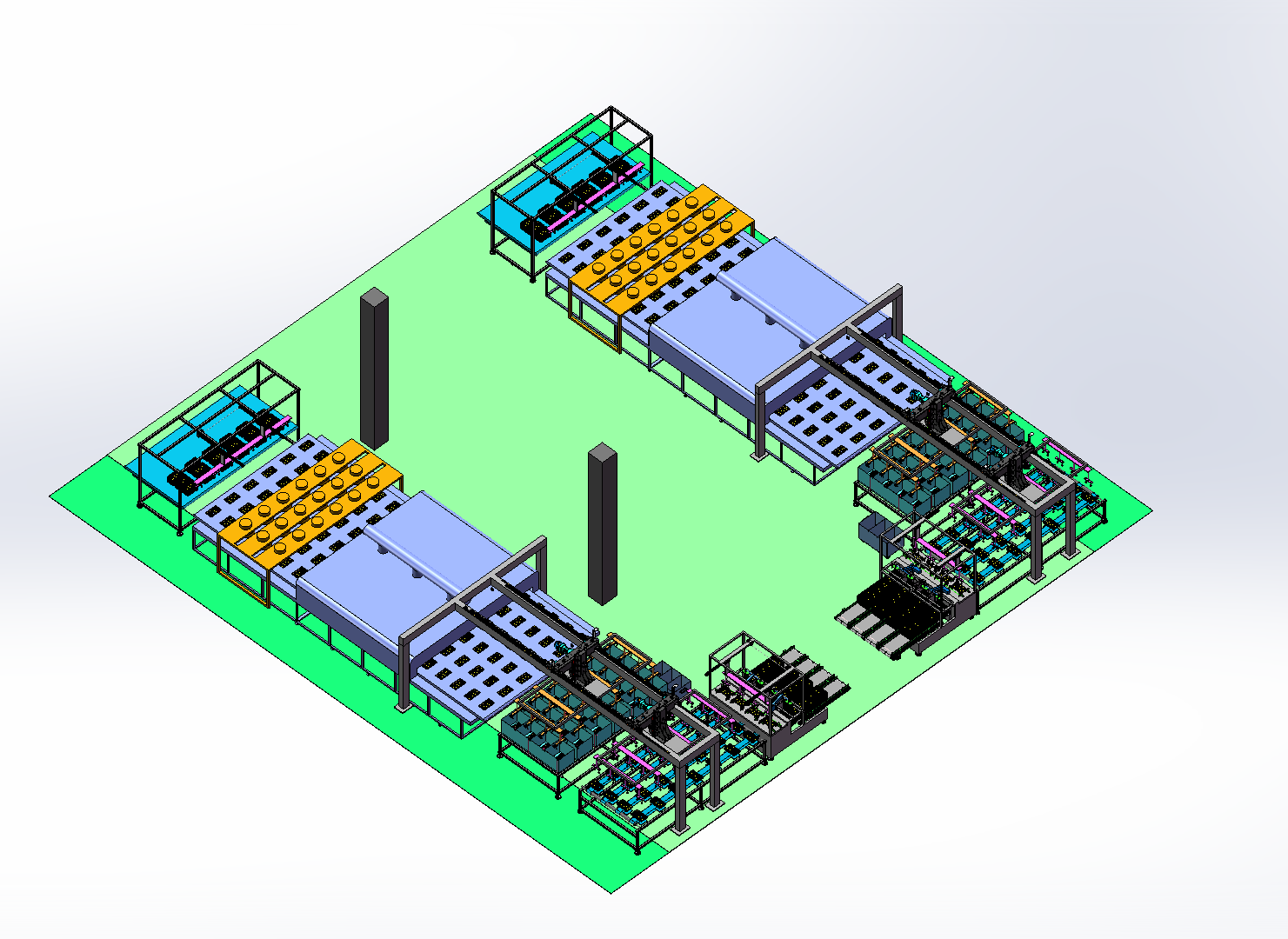
Coating and Lamination: If your products require barrier properties (water or oil resistance) or enhanced aesthetics, verify the supplier’s post-processing capabilities. For example, Hanson Pulp Molding offers advanced automation like the HXT-24 Automatic Rotary Spray Coating Line (integrating automatic loading, rotary spraying, tunnel drying, and stacking) and Molded Fiber Lamination Lines. These systems eliminate manual bottlenecks, ensuring consistent barrier performance and continuous commercial production.
Hanson Pulp Molding: Your Turnkey Pulp Molding Specialist
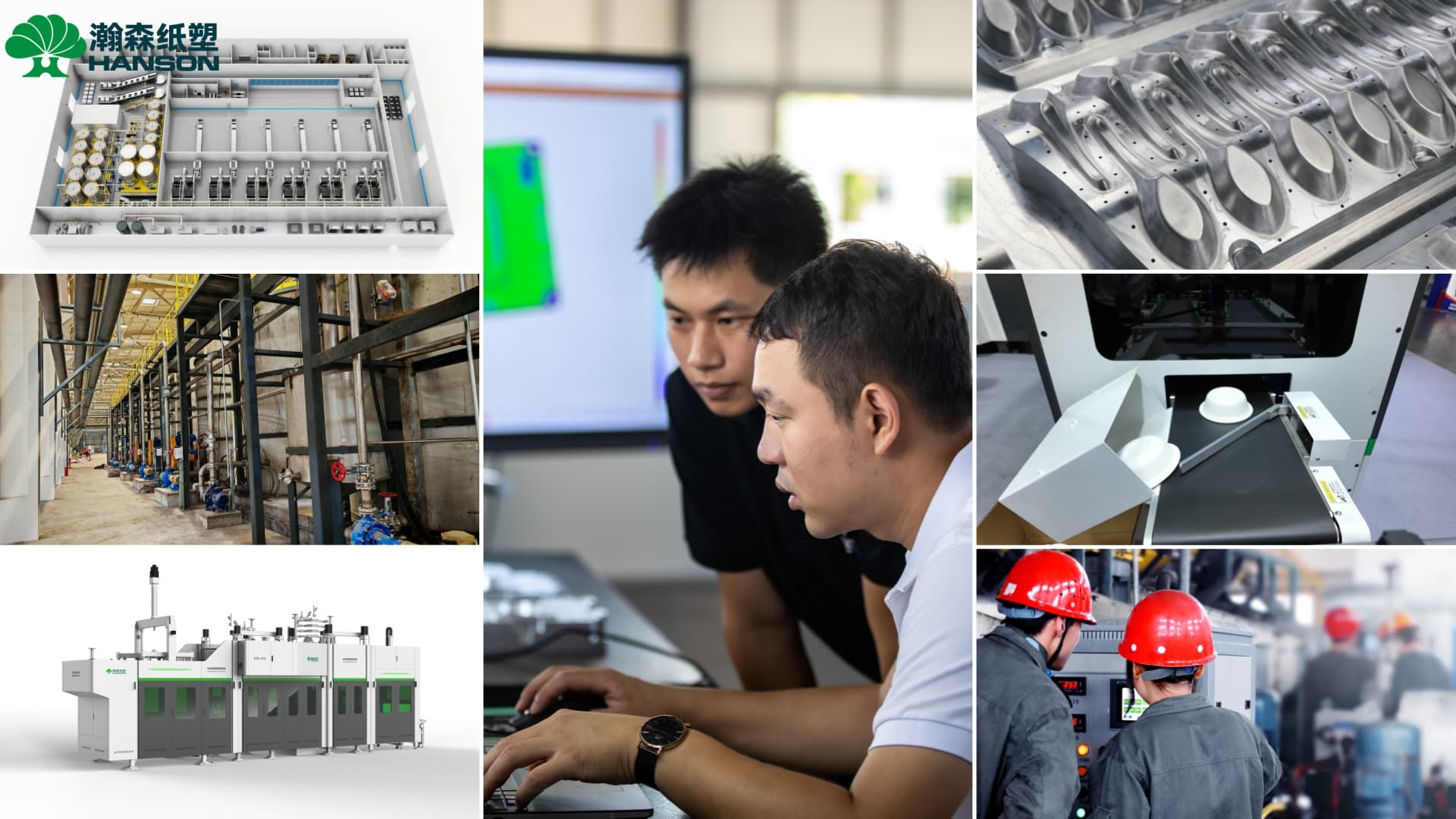
A high-performance pulp molding production line is never just a collection of machines. As a turnkey specialist in pulp molding, Hanson Pulp Molding participates from the product development and plant planning stages. We integrate intelligent pulping systems, forming equipment, tooling, post-processing automation, and production ramp-up support into a cohesive project logic. By ensuring that every stage matches seamlessly, we help clients turn packaging concepts into stable, commercial-scale realities.
FAQ
1. How do you calculate the actual capacity of a pulp molding production line? Actual capacity cannot be calculated using only the theoretical cycle time. It depends on the product weight, the number of mold cavities, dewatering efficiency, hot-pressing time, overall machine uptime, yield rate, and the speed of downstream post-processing operations.
2. Why do some fast machines result in low factory profitability? This often happens due to hidden labor and energy costs. If the forming machine is fast but post-processing (trimming, coating, stacking) is heavily manual, labor costs will skyrocket. Furthermore, poor dewatering increases the energy required for drying. Therefore, post-processing automation and energy control are vital for ROI.
3. What is the difference between inspecting a wet-press line and a dry-press line? For a wet-press line, the focus should be on the stability of the wet preform transfer and the precision of the in-mold hot pressing. For a dry-press line (often used for cup carriers or egg boxes), you should prioritize inspecting the pre-dewatering (cold pressing) efficiency, the energy consumption of the standalone drying tunnel, and the automated stacking mechanisms.
Conclusion
Purchasing a pulp molding production line is a major system-level investment. During an on-site inspection, your focus must shift from merely “watching a machine run” to “evaluating system synergy.” By rigorously verifying pulping compatibility, actual cycle times, mold consistency, and post-processing automation, you can ensure that your facility achieves efficient, stable commercial production.
If you are planning a new pulp molding plant or looking to upgrade your production lines, you can share your target products, required capacity, plant conditions, and automation requirements. Hanson Pulp Molding can evaluate the project from product development and plant planning to pulping, forming equipment, tooling, post-processing automation, and production ramp-up.
WhatsApp: +86 15920604830Email: linchuangcheng@hspulpmolding.com