When upgrading or establishing a new molded fiber facility, increasing the level of automation is often a primary goal. However, many manufacturers find that after investing in automated transfer systems or fully automated post-processing, their actual output falls short. Instead of smooth operations, they experience frequent machine stops, product deformation, and material drops.
This “automation failure” is rarely caused by the equipment alone. More often than not, the hidden bottleneck is the pulp molding tooling (mold). Adding robotic arms or automatic transfer systems is not enough; if the tooling design and process parameters do not perfectly align with the equipment’s movements, the highest level of automation will fail to deliver its intended efficiency.
Why Molded Fiber Automation Relies on Tooling Design
In pulp molding—especially in wet-press or advanced dry-press processes—the newly formed wet preform has high moisture content and limited structural strength. Transferring this wet product from the forming tool to the hot press mold is the most critical and fault-prone step in automated production.
If the mold design does not account for the rapid rhythm of automated equipment, problems arise quickly. For instance, insufficient drainage efficiency can leave the wet preform too soft, while an inadequate draft angle can increase demolding resistance. When the automated system attempts to transfer the product under these conditions, it can tear the preform or fail to position it accurately in the next station. The downtime caused by tooling incompatibility can completely negate the speed advantages of an automated machine.
Key Tooling Factors Affecting Production Stability
Evaluating whether your pulp molding tooling is suitable for specific automation configurations requires looking beyond the mold’s basic shape. Key technical dimensions include:
-
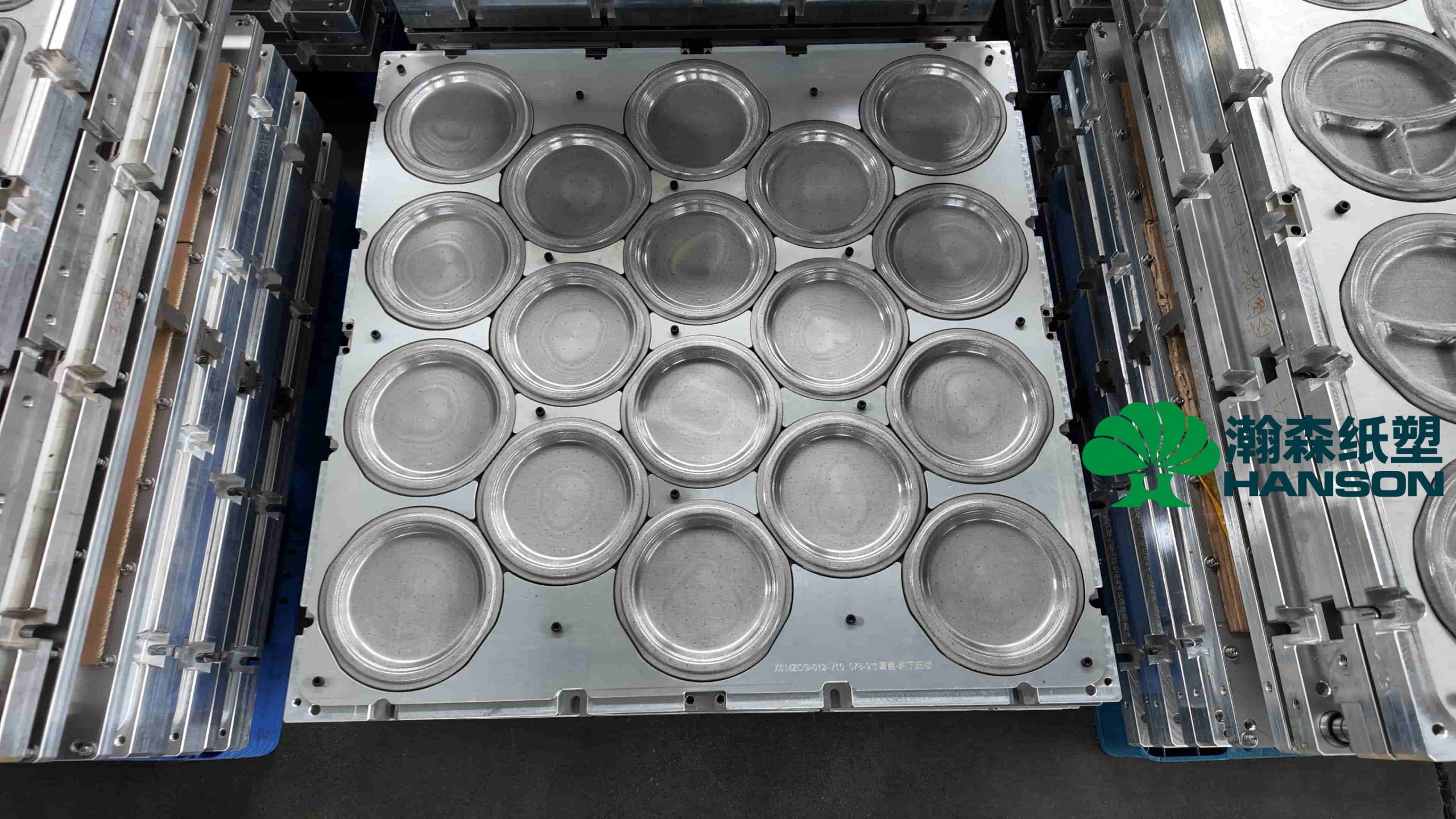
Draft Angles and Demolding Mechanisms: Continuous automated production requires seamless demolding. If the product has deep cavities or complex structures, the mold must integrate precise air-blow or mechanical ejection systems. These tooling features must perfectly sync with the machine’s timing and pneumatic control.
-
Drainage and Vacuum Distribution: The mesh layout and vacuum channels in the forming mold dictate how evenly fiber is absorbed and water is removed. Uneven dewatering creates weak spots with higher moisture content in the wet preform, which are highly susceptible to tearing during high-speed automated transfers.
-
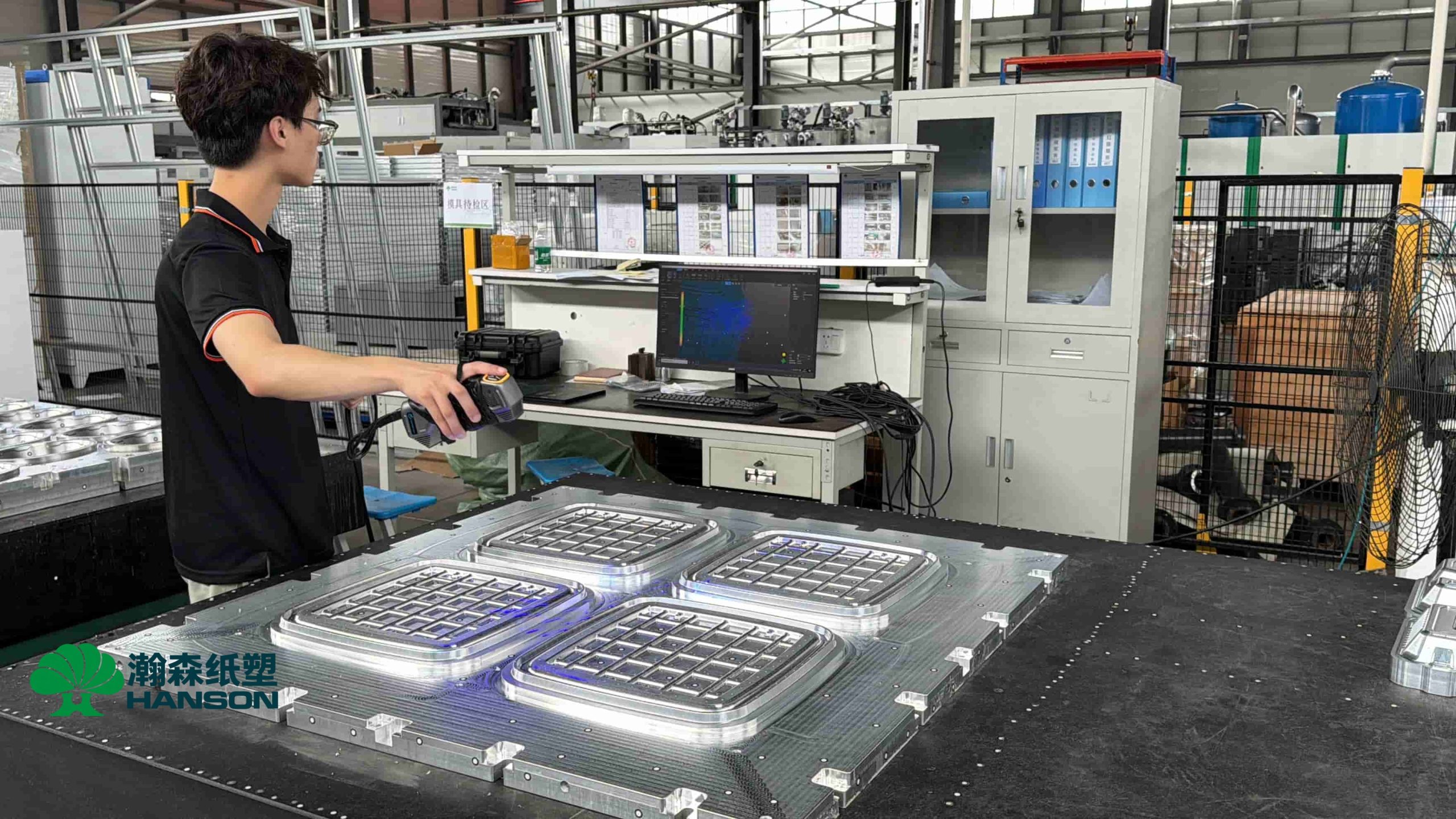
Hot Press Mold Uniformity: Automation thrives on product consistency. If the hot press tooling suffers from uneven heating or poor moisture exhaust, it will cause dimensional variations and warping in the final product.
The Link Between Tooling and Post-Processing Automation
In a turnkey pulp molding plant, minor deviations generated during the forming and pressing stages are amplified as they move down the production line.
For products like molded fiber cup lids or premium industrial packaging, factories often rely on post-processing automation, including automatic trimming, machine vision inspection, and automatic stacking. If poorly designed tooling causes even slight dimensional warping, the trimming dies will misalign, creating rough edges. Vision inspection systems will generate false rejects, and automatic stackers will jam because the products cannot nest perfectly.
Therefore, the success of post-processing automation depends entirely on the tooling’s ability to provide absolutely consistent, standardized products from the very beginning.
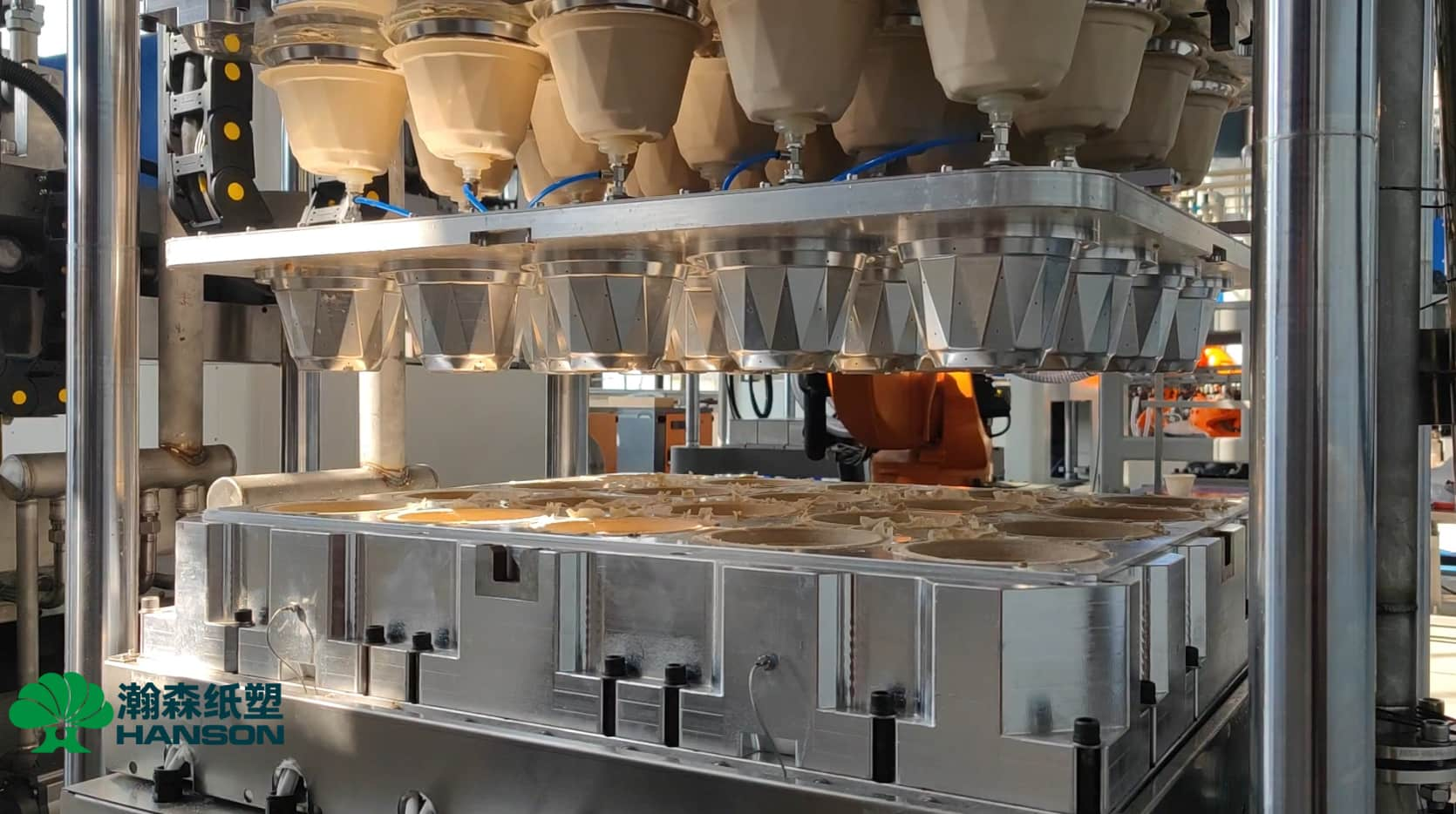
Old Mold Optimization and Turnkey Upgrades
Whether you are designing a fully automated production line from scratch or upgrading an existing facility, purchasing equipment and manufacturing tooling should never be treated as separate processes.
As a specialist in turnkey pulp molding solutions, Hanson Pulp Molding approaches tooling not as a simple accessory, but as a core component of the production system.
-
Integrating Tooling, Process, and Equipment: During the initial project phases, Hanson evaluates the product structure, weight, and precision requirements to jointly design the machine’s movement trajectory, the tooling’s drainage/exhaust systems, and the forming process. This ensures all systems work in absolute harmony.
-
Old Mold Optimization: If a customer wishes to use existing molds on new automated equipment, Hanson’s engineering team can evaluate the molds’ dimensions, interfaces, draft angles, and drainage performance. By providing necessary tooling modifications and optimizations, Hanson helps eliminate frequent jamming and low yield rates, ensuring smooth integration with new automated lines.
Conclusion
How much automation is reasonable for your pulp molding configuration? The answer is not “the higher the automation, the better,” but rather “the higher the synergy between the tooling, the equipment, and the process, the better.” Stable mass production and high yield rates can only be achieved when product design, mold manufacturing, and machine parameters are calibrated together under a unified engineering logic.
FAQ
Why does my production capacity drop when I change molds on the same machine? Actual daily capacity is not solely determined by the machine’s theoretical cycle time. It is influenced by the number of cavities, product weight, drainage efficiency, and required pressing time. If a new mold has poor drainage or causes demolding friction, the machine requires longer cycle times or frequent stops, reducing overall capacity.
Are frequent machine jams caused by the equipment or the molds? Typically, this is a failure of synergy between both. It could be unstable pneumatic control from the machine, but it is often due to inadequate draft angles in the tooling or uneven vacuum absorption, causing the wet preform to tear during transfer. Equipment and tooling must be debugged together.
Can I use my old molds directly on a new, fully automated machine? Not always without adjustments. Old molds designed for semi-automatic or manual lines may not meet the strict demolding speed and interface tolerances required by high-speed automated equipment. An engineering evaluation and tooling modification are usually necessary for stable operations.
If you are experiencing frequent machine stops, poor product consistency on your automated lines, or are planning a new, highly automated turnkey pulp molding plant, simply buying a new machine won’t solve systemic issues. If you have a 3D drawing, a product sample, or a target daily capacity, Hanson Pulp Molding can evaluate your project—from mold manufacturing and old mold optimization to equipment configuration and process validation.
WhatsApp: +86 15920604830 Email: linchuangcheng@hspulpmolding.com