
Does increasing the number of cavities (cavity) in a pulp mold automatically boost your shift output? The short answer is no. The actual production output is determined by a simple formula: Output per minute = Number of Cavities × (60 seconds / Cycle Time) × Yield Rate. Simply demanding more cavities from your mold manufacturer without analyzing equipment capacity often leads to prolonged vacuum cycles, uneven heat distribution, and ultimately, a much lower yield rate (yield rate). To make a cost-effective tooling decision, a systemic evaluation of capacity and on-site machine specifications is required.
The Myth: Why “More Cavities” Doesn’t Always Mean “Higher Output”
When customizing molded pulp tooling, many buyers try to squeeze as many products as possible onto a given platen. For instance, converting a standard 4-cavity tableware mold into a 6-cavity design by drastically reducing the spacing. While the theoretical capacity increases by 50% per stroke, the reality in mass production is different. Due to poor drainage at the edges or heat loss across an overcrowded platen, the molding cycle (Molding Cycle) might stretch from 30 seconds to 45 seconds. Ultimately, the actual output drops, while energy consumption and scrap handling costs spike.
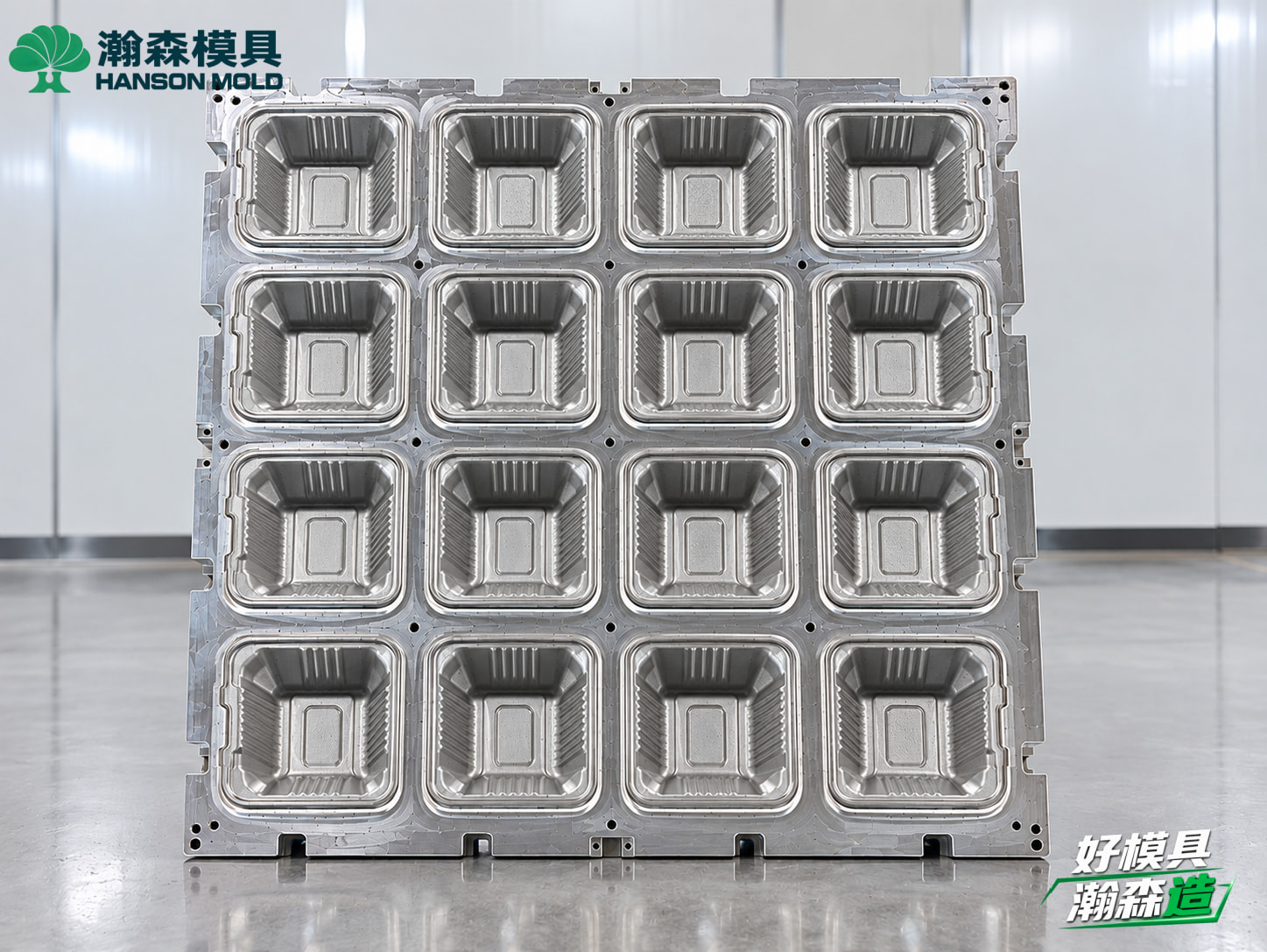
4 Key Variables to Calculate Actual Tooling Output
Before finalizing a mold design (Mold Design), comprehensively evaluate these four variables during the product development phase to ensure your investment pays off.
1. Product Grammage and Material Distribution
The product grammage (product grammage) directly impacts slurry flow dynamics during vacuum forming. A multi-cavity tool covers a wider suction area, magnifying any liquid level fluctuations or concentration discrepancies in the vat. During tooling acceptance, you might encounter a classic issue: “The products show significant weight discrepancies between positions on the mold, exceeding the specification limits. Adjustment is required.”. This is usually caused by an overly dense cavity layout or flawed vacuum channel designs that fail to balance the suction pressure evenly across the tooling.
2. Production Cycle Time Trade-offs
The production cycle (Production Cycle) is the core driver of throughput. More cavities mean more water is extracted per stroke, requiring larger vacuum flow rates. It also demands more heat to dry the increased mass of wet pulp. If your existing thermoforming machine has fixed vacuum pump limits or heater capacities, adding cavities will slow down temperature recovery and extend the dwell time. This extra time can completely negate the numerical advantage of having more cavities.
3. Equipment Platen Area Constraints
The cavity layout must perfectly match the effective molding area and mechanical limits of your on-site equipment. You must leave sufficient margins for edge-trimming or punching (punching), ensuring there are clear channels for scrap (scrap) to fall away. Furthermore, complex multi-cavity tools can be thicker. Buyers must verify the equipment’s closing height (closing height) and adjustable stroke (adjustable stroke) to ensure the machine can safely lock the mold and facilitate proper mold release (Mold Release).
4. Actual Yield Rate (The Ultimate Metric)
In mass production, a slight drop in the yield rate will eat away all the theoretical profits of a multi-cavity setup. Multi-cavity molds require extreme machining precision. If the mold clearance (Mold Clearance) varies from the center to the edge cavities, some parts will end up too thick or under-pressed. Hanson Pulp Molding relies on a team of 10 senior designers for initial layout verification, utilizing high-speed CNC machining (up to 24000 RPM) to minimize tolerances and guarantee consistent yield across every cavity.
Tooling Validation and Troubleshooting Tips
Whether you are running new molds on Hanson equipment or integrating them into non-Hanson machines, follow this checklist during trial runs:
-
Weigh Individual Cavities: Do not just check the average weight. Weigh samples from each specific cavity separately.
-
Check Mold Clearance: Use feeler gauges to measure the gap under actual working pressure, ruling out uneven clamping force issues from the machine.
-
Inspect Aesthetics: If edge products present an unclear embossed (unclear embossed) surface, immediately check if the local vacuum holes are blocked by fibers or if the heating elements in that zone have failed.
Troubleshooting Priority: Do not rush to modify the mold upon seeing defects. Follow this sequence: Slurry Concentration/Grammage → Vacuum Level/Time → Machine Adjustable Stroke/Platen Leveling → Mold Drainage Holes/Mesh. Always rely on on-site verification.
Hanson Pulp Molding’s Approach to Tooling Services
For pulp packaging plants demanding mass production stability, Hanson Pulp Molding offers end-to-end tooling expertise. We understand the process, the equipment, and the tooling synergy. With an independent tooling division and over 500 pulp molding molds manufactured to date, we manage every step from product development and full tooling service to mass production support.
Whether it is a new tooling project for non-Hanson equipment (Product Development → Full Tooling Service → Mass Production Support) or retrofitting legacy molds (Legacy Mold Optimization → Mass Production Support), we follow strict manufacturing nodes—from rough machining and stress relief to 3D scanning, drilling, mesh-wrapping, and tooling trials. Through rigorous 3D scanning, we eliminate the dimensional inaccuracies that often plague multi-cavity setups.

-
FAQ
-
Q: How should I adjust the machine if products show significant weight discrepancies between positions on the mold? A: First, check if the agitator in the vat is causing local slurry concentration spikes. Next, inspect the vacuum channels and drainage holes behind the specific cavities for blockages. If the discrepancy persists under consistent vacuum levels, the fluid dynamics of the mold layout and mesh flatness must be reassessed, followed by on-site parameter compensations.
-
Q: Does adding more cavities alter the actual Mold Clearance during production? A: The theoretical design value won’t change, but in actual thermoforming, more cavities increase the total resistance area. If your equipment’s clamping force (tonnage) isn’t strong enough to overcome this increased area, the mold won’t fully close. This results in a wider actual mold clearance, leading to oversized wall thickness or unclear embossing.
-
Q: Can I order Hanson Pulp Molding tooling for my non-Hanson forming machines? A: Yes. One of our standard business paths is “New Tooling + Non-Hanson Equipment.” We cover everything from product development to the complete tooling service and on-site mass production support. We only require your machine’s mechanical parameters—such as closing height, adjustable stroke, and platen dimensions—before initiating the design.
-
-
Avoid the multi-cavity trap and secure your mass production yield. Hanson Pulp Molding provides expert tooling layout evaluation and sampling services. For new tooling inquiries, legacy mold diagnostics, or on-site support, contact our team today to evaluate your real output potential. [International contact to be confirmed].