
When setting up a project for premium molded fiber packaging—such as smartphone inserts, wearable device packaging, or high-end cosmetic trays—many buyers immediately ask: “How fast is this industrial molded fiber packaging machine?”
However, in the realm of high-precision thermoformed fiber, judging an equipment’s capacity merely by its theoretical cycle time is a critical mistake. If you do not first define the product’s weight, structural design, and the number of mold cavities, any daily output calculation remains purely theoretical.
For premium molded fiber inserts that demand excellent surface smoothness and tight dimensional accuracy, these three product specifications directly dictate the dewatering efficiency, hot pressing load, and the ultimate tooling and equipment configuration.
1. How Product Weight Impacts Dewatering and Hot Pressing
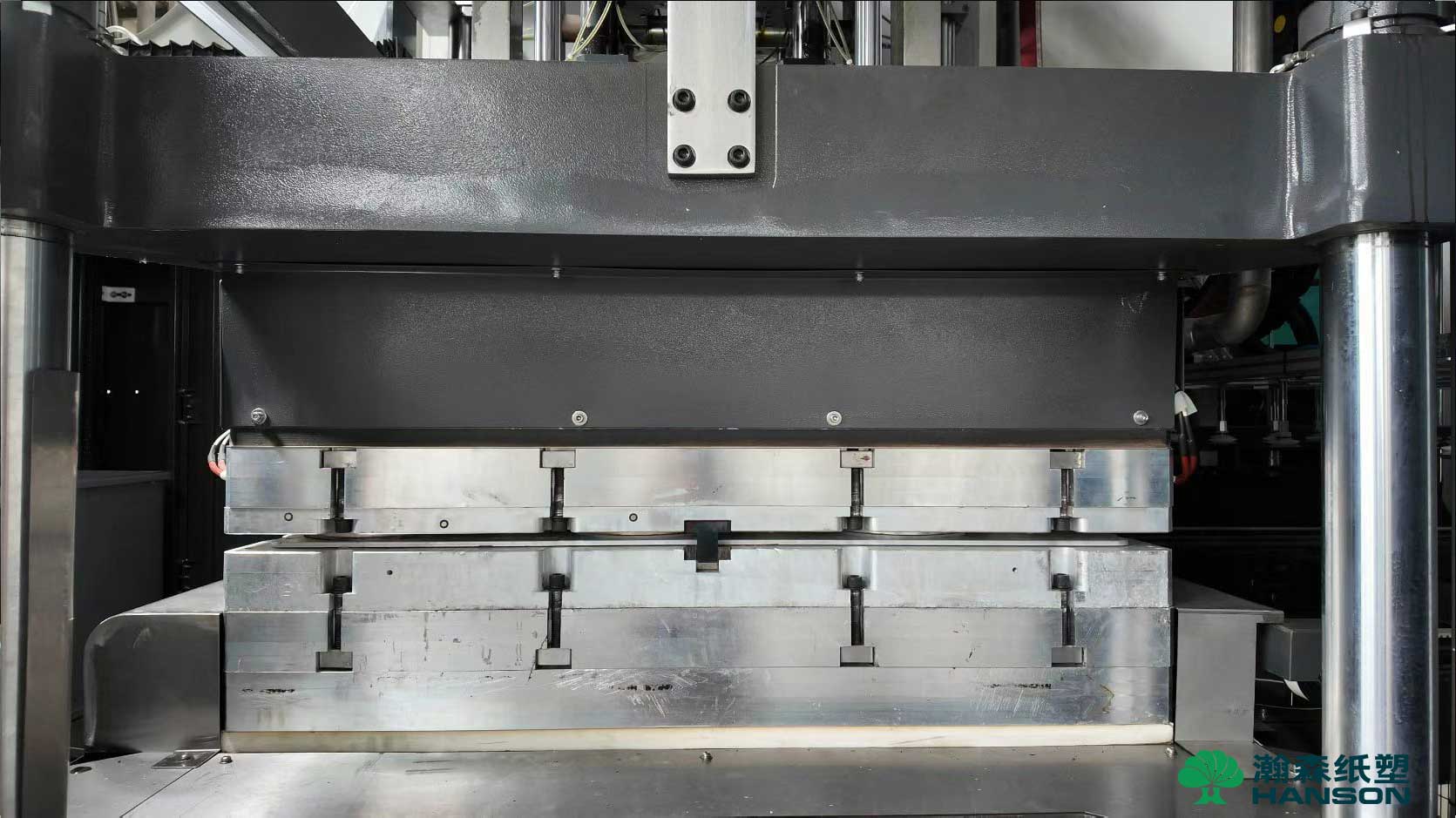
Premium industrial packaging typically utilizes a wet press (or Type 3 thermoformed fiber) process, where the wet preform is pressed and dried directly inside a heated mold.
The weight of your product fundamentally changes the dynamics of this process. A heavier molded fiber insert requires a larger volume of pulp slurry per cycle, which translates to two major production challenges:
-
Increased Dewatering Load: The forming station must apply vacuum for a longer duration to adequately extract water from a thicker layer of fibers.
-
Higher Energy Consumption and Pressing Time: The more moisture that remains in the wet preform, the more thermal energy and time are required in the hot press mold to evaporate it.
Consequently, producing a lightweight 15-gram electronics tray versus a dense 45-gram protective insert on the exact same machine will result in vastly different cycle times and actual daily capacities.
2. Why Product Structure Dictates Tooling Precision and Yield
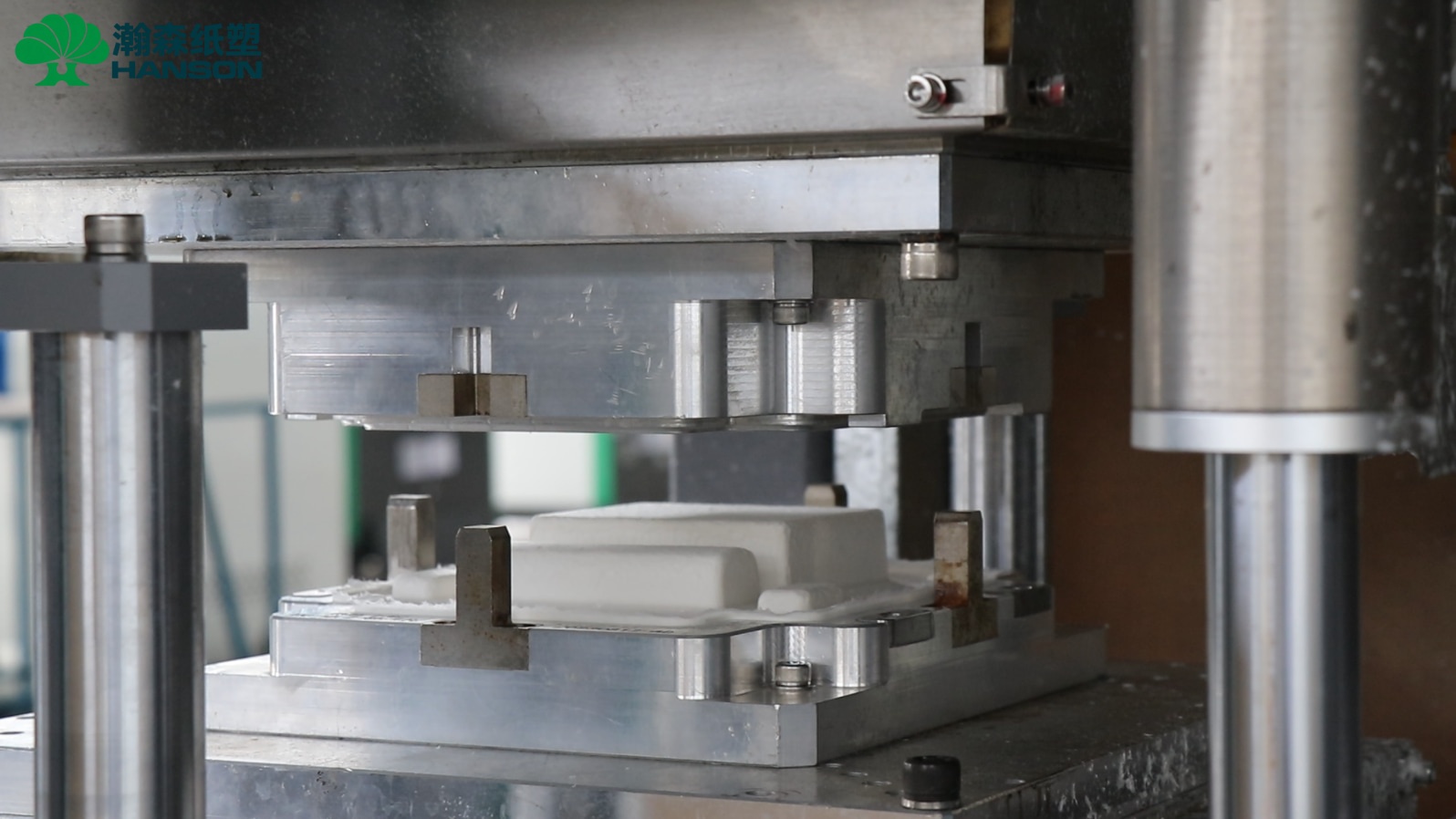
Premium molded fiber packaging is characterized by complex geometries, minimal draft angles, deep cavities, and precise positioning ribs designed to hold consumer electronics securely. These structural details put extreme demands on molded fiber tooling.
-
Draft Angles and Demolding: Products with steep vertical walls or inadequate draft angles are highly prone to tearing or warping during the mold-to-mold transfer process.
-
Slurry Distribution: Sudden variations in product depth can lead to uneven fiber accumulation during vacuum forming, resulting in weak spots or inconsistent thickness.
This is why experienced manufacturers do not rush into mass production. For innovative structures, Hanson Pulp Molding recommends conducting process validation and prototyping (using equipment like the ZAMS-6047 prototyping machine) to verify demolding feasibility and optimize the tooling design before configuring the large-scale industrial molded fiber packaging machine.
3. The Cavity Count Dilemma: Balancing Output and Consistency
It is a common misconception that simply adding more cavities to a mold will linearly increase output. In the high-precision wet press process, it is a delicate balance.
The number of cavities is limited not only by the total mold area but also by vacuum distribution and crucial steam exhaust channels during hot pressing. If cavities are packed too densely to force a higher yield, the steam generated during hot pressing cannot escape efficiently. This leads to localized wet spots, dimensional shrinkage variations, and surface blistering. For premium electronics packaging where tolerances are strict, sacrificing product consistency for a higher cavity count is unacceptable.
Configuring the Right Equipment for Premium Packaging
Because weight, structure, and cavities play such a vital role, equipment selection must be driven by the product itself. As a specialist in turnkey pulp molding solutions, Hanson Pulp Molding evaluates these specific parameters to configure the right manufacturing system.
For high-end packaging demanding strict dimensional control and surface quality, Hanson offers the ZAP-9585 industrial molded fiber packaging machine and the ZAD series:
-
Integrated Forming and Hot Pressing: The ZAP-9585 integrates forming and hot pressing, which helps maintain strict dimensional stability for complex inserts.
-
Dynamic Pulp Replenishment: For products with intricate structures and strict thickness requirements, the ZAP-9585 features dynamic pulp replenishment to optimize the forming process based on the slurry state, ensuring exceptional product consistency.
-
Co-development of Tooling and Process: Hanson aligns the equipment’s mechanical movements with advanced mold manufacturing, ensuring that drainage, vacuum, and hot pressing work seamlessly to maintain high yield rates.
Proven in Stable Commercial Production
The true test of an industrial molded fiber packaging machine is its ability to maintain consistency over years of continuous operation.
Hanson Pulp Molding has a proven track record in the premium packaging sector. For instance, in a partnership with Tonglibo—a company focused on high-end electronics manufacturing packaging—Hanson supported their continuous capacity expansion with five order upgrades over approximately two years. Similarly, another major client, Gaoyi Packaging, has made eight repeat purchases of Hanson equipment. These long-term partnerships demonstrate that matching the right machine, tooling, and process to the specific structural demands of premium products is the key to stable commercial production.
FAQ
Why is the wet press (Type 3) process necessary for smartphone packaging inserts? Smartphone and consumer electronics inserts require an extremely smooth surface, sharp structural details, and high dimensional accuracy. The wet press (thermoformed) process achieves this by pressing and drying the wet preform inside a heated, high-precision mold, resulting in a denser, cleaner finish compared to traditional dry press methods.
Why does changing the design of an insert affect production capacity, even if the footprint is the same? Even with the same footprint, a new design might introduce deeper cavities, heavier walls, or complex ribs. These changes require longer vacuum forming and hot pressing times to remove the moisture, and may necessitate adjusting the mold cavity layout to ensure proper steam exhaust, which directly alters the actual daily output.
Can I select a machine model if I don’t have a final product drawing yet? If your product structure and weight are not yet finalized, jumping straight into large-scale equipment procurement is risky. It is recommended to share your product requirements or 3D concepts first, allowing Hanson Pulp Molding to evaluate the process and mold design through prototyping before configuring the actual production line.
Conclusion
Investing in an industrial molded fiber packaging machine is about establishing a process capable of reliably manufacturing your specific product. By clearly defining the product weight, structural complexity, and mold cavity count before mass production, you can accurately predict dewatering efficiency, hot press performance, and real-world capacity. Ignoring these factors in favor of theoretical machine speeds will inevitably lead to yield issues and production bottlenecks.
CTA
If you already have a product sample, 3D drawing, product dimensions, or target daily capacity for your premium molded fiber inserts, Hanson Pulp Molding can evaluate the molding process, tooling, and equipment configuration for your project.
WhatsApp: +86 15920604830
Email: linchuangcheng@hspulpmolding.com