
In the pulp molding industry, creating a high-quality prototype of a molded fiber cup lid is only the first step. The real challenge lies in transitioning from a single sample to stable mass production—manufacturing hundreds of thousands of consistent, high-precision lids every day. Molded fiber cup lids are relatively small but require rigorous functional performance, especially dimensional stability to snap perfectly onto a cup.
If the molded fiber cup lid machine is not properly configured, you are likely to face issues such as dimensional fluctuations, edge leakage, and severe bottlenecks in post-processing. This article explores how to select the right equipment and build an automated production line capable of stable, high-volume cup lid manufacturing.
Key Challenges in Molded Fiber Cup Lid Production
The difficulties in scaling up cup lid production mainly revolve around dimensional accuracy and continuous automation capability:
-
Dimensional Stability and Fit: The core function of a cup lid is to provide a secure seal. The draft angles, snap-fit structures, and overall dimensional tolerances must be meticulously controlled. Any slight variations in moisture content during forming or uneven heat distribution in the hot press mold can compromise the fit on the cup rim.
-
Edge Quality and Trimming: The edges of a cup lid interact directly with the consumer. Raw, untrimmed edges or flash (extra material) can lead to a poor user experience and leakage. Therefore, high-precision trimming is an absolute necessity.
-
Post-Processing Bottlenecks: Cup lid machines output a high number of pieces per cycle. If secondary processes—such as trimming, defect sorting, and stacking—rely on manual labor, they will quickly bottleneck the entire production line, severely limiting the actual capacity.
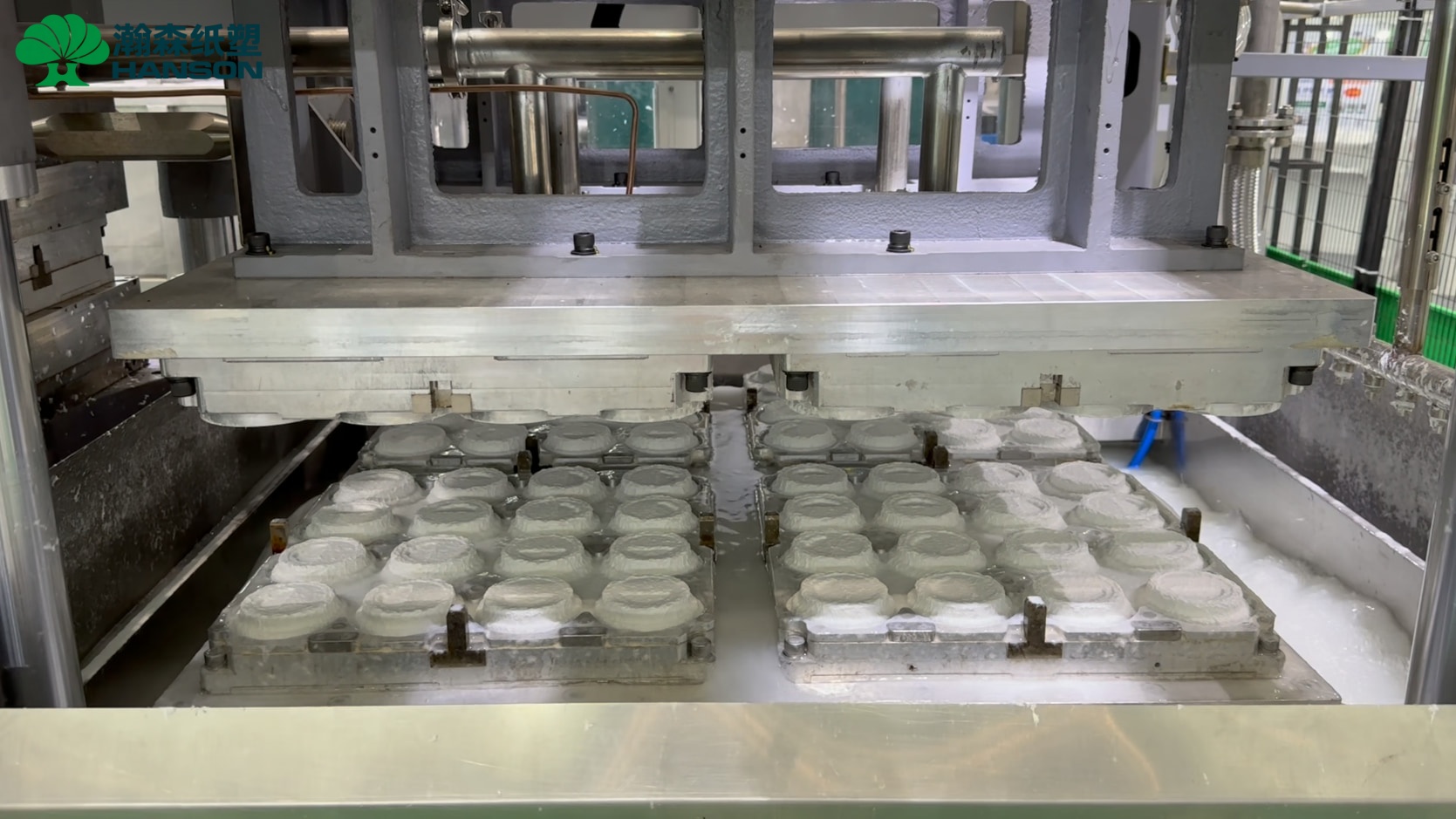
How to Configure a Molded Fiber Cup Lid Machine for Stable Mass Production
To bridge the gap between prototyping and commercial mass production, a cup lid manufacturing project must utilize a highly automated, continuous production line. When selecting equipment, buyers should focus on the integration of the following systems:
1. Synergy Between Tooling, Forming, and Hot Pressing
Molded fiber tooling is the heart of dimensional accuracy and surface quality. The forming and hot press molds must facilitate even dewatering and drying. This consistency guarantees that every lid shrinks at the same rate during the hot pressing phase, securing stable dimensions.
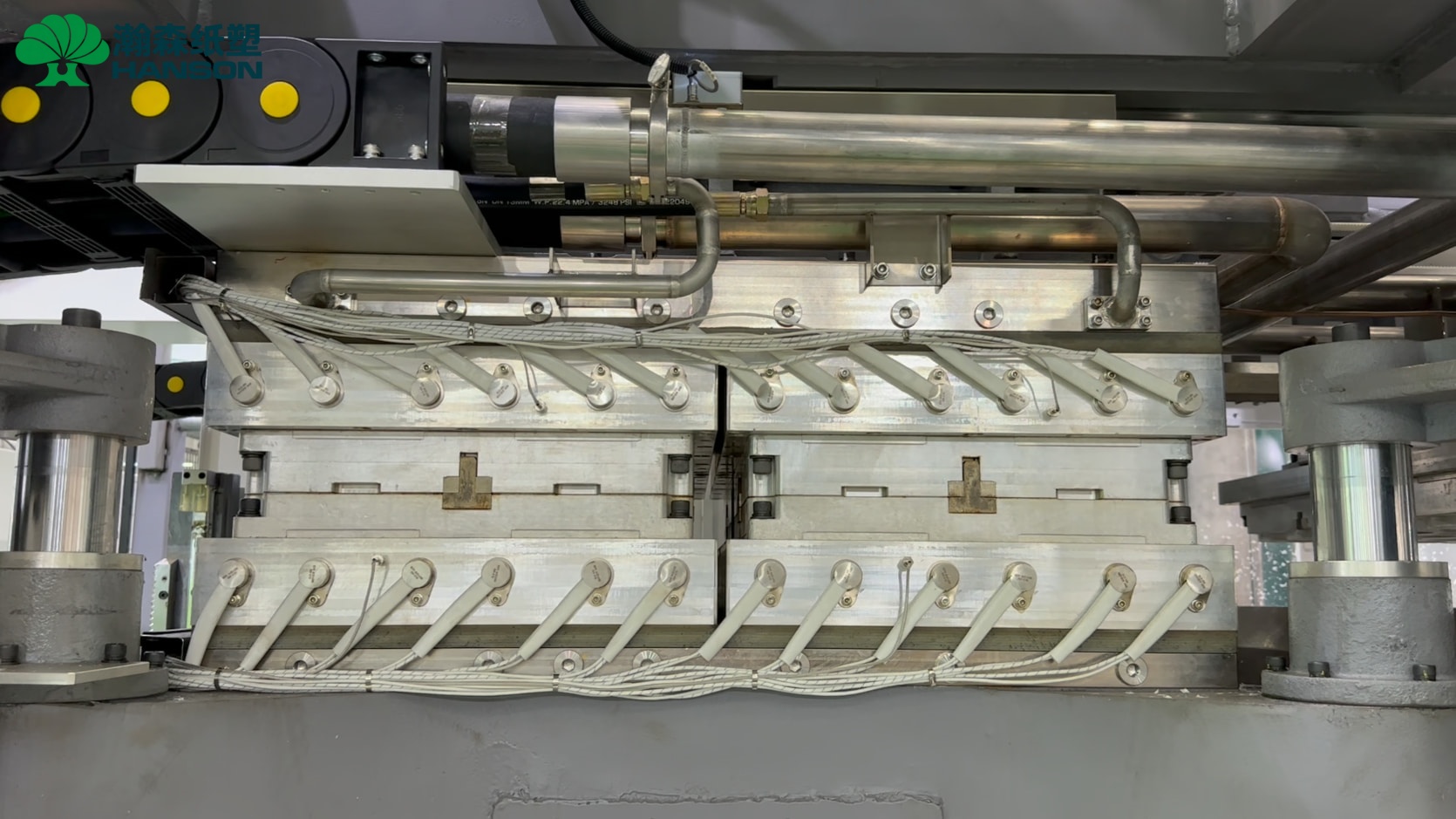
2. Servo-Driven Punch Cutting
Manual or basic mechanical trimming cannot meet the precision demands of molded fiber cup lids. Using servo-driven punch cutting allows for the accurate and high-speed removal of flash and craft edges, ensuring that the lid’s rim is smooth and perfectly shaped for a tight seal.
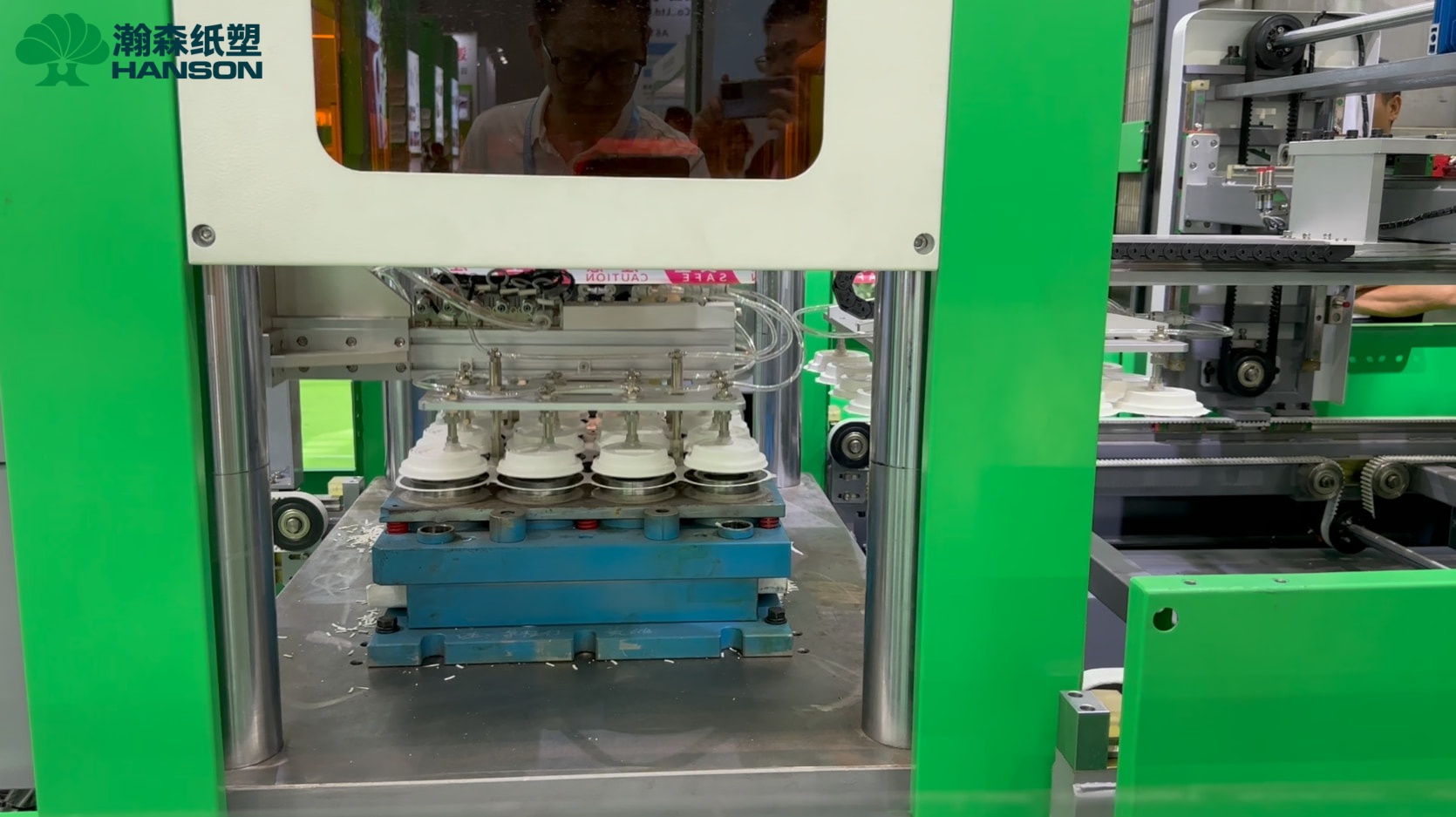
3. Machine Vision Inspection
For high-volume, small-sized products like cup lids, manual quality control is both inefficient and unreliable. Integrating machine vision inspection allows the system to identify appearance defects and dimensional deviations in real time, automatically rejecting substandard products before they reach the packaging stage.
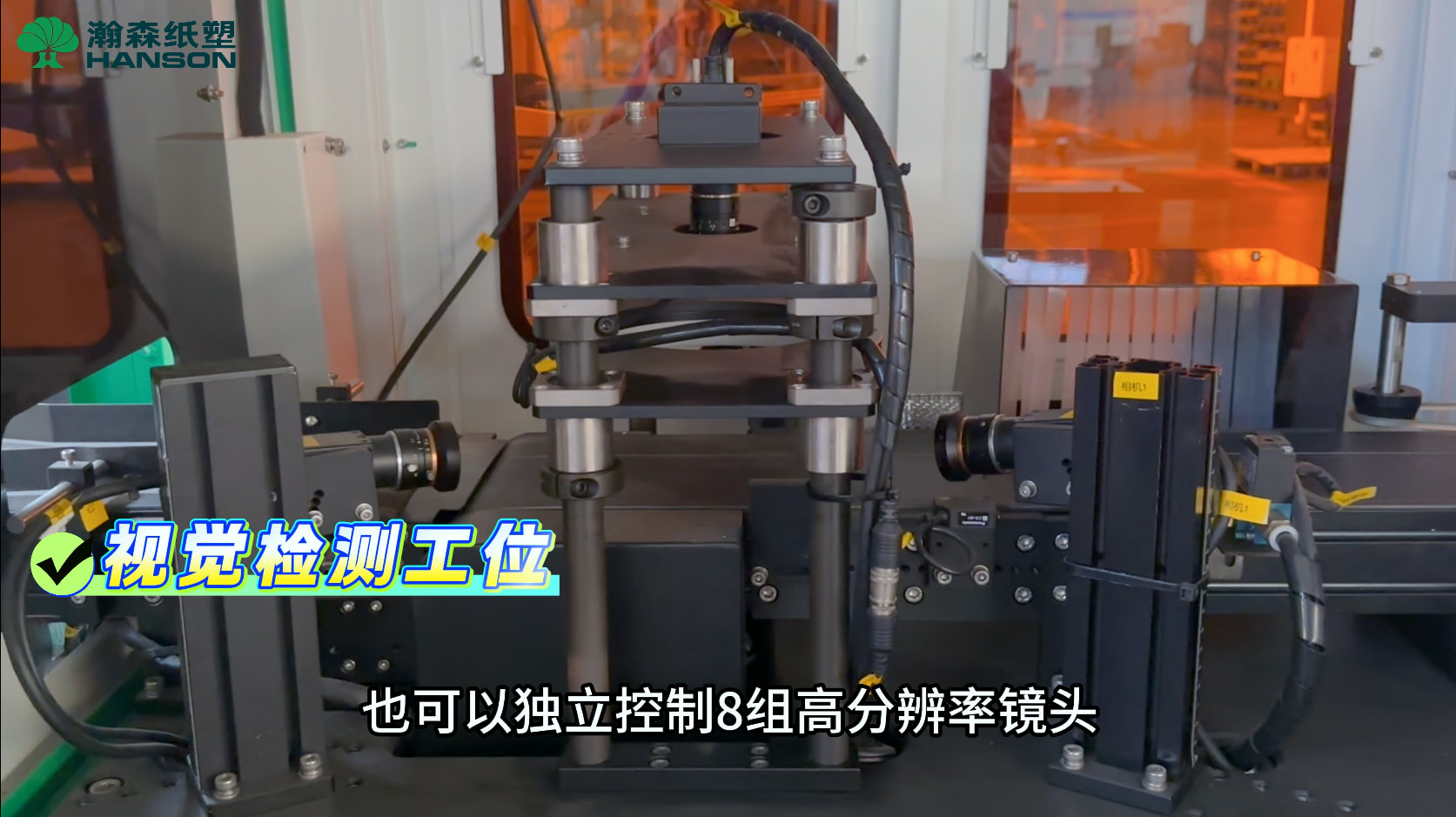
4. Integrated Automatic Packaging
A continuous production line is incomplete without automated stacking and packaging. By connecting the inspection output directly to an automatic packaging system, factories can minimize manual handling, reduce contamination risks, and maintain the high rhythm of the forming equipment.

Crucial Distinction: Cup Lids vs. Cup Carriers
A common pitfall for new investors is confusing a “Cup Lid” with a “Cup Carrier” (or cup holder). These two products require completely different manufacturing approaches:
-
Molded Fiber Cup Lids: Require extremely high precision, dimensional stability, trimming, machine vision inspection, and continuous automatic packaging.
-
Molded Fiber Cup Carriers: Primarily designed to support, stabilize, and transport multiple cups (e.g., takeaway drink carriers). These emphasize load-bearing strength and are typically produced using dry press or semi-dry press processes, where surface smoothness and micron-level precision are less critical.
Never assume that any machine with “cup” in its application can produce both. It is crucial to configure the equipment backward from the specific product geometry and process requirements.
Hanson Pulp Molding ZAKS-9595 Solution
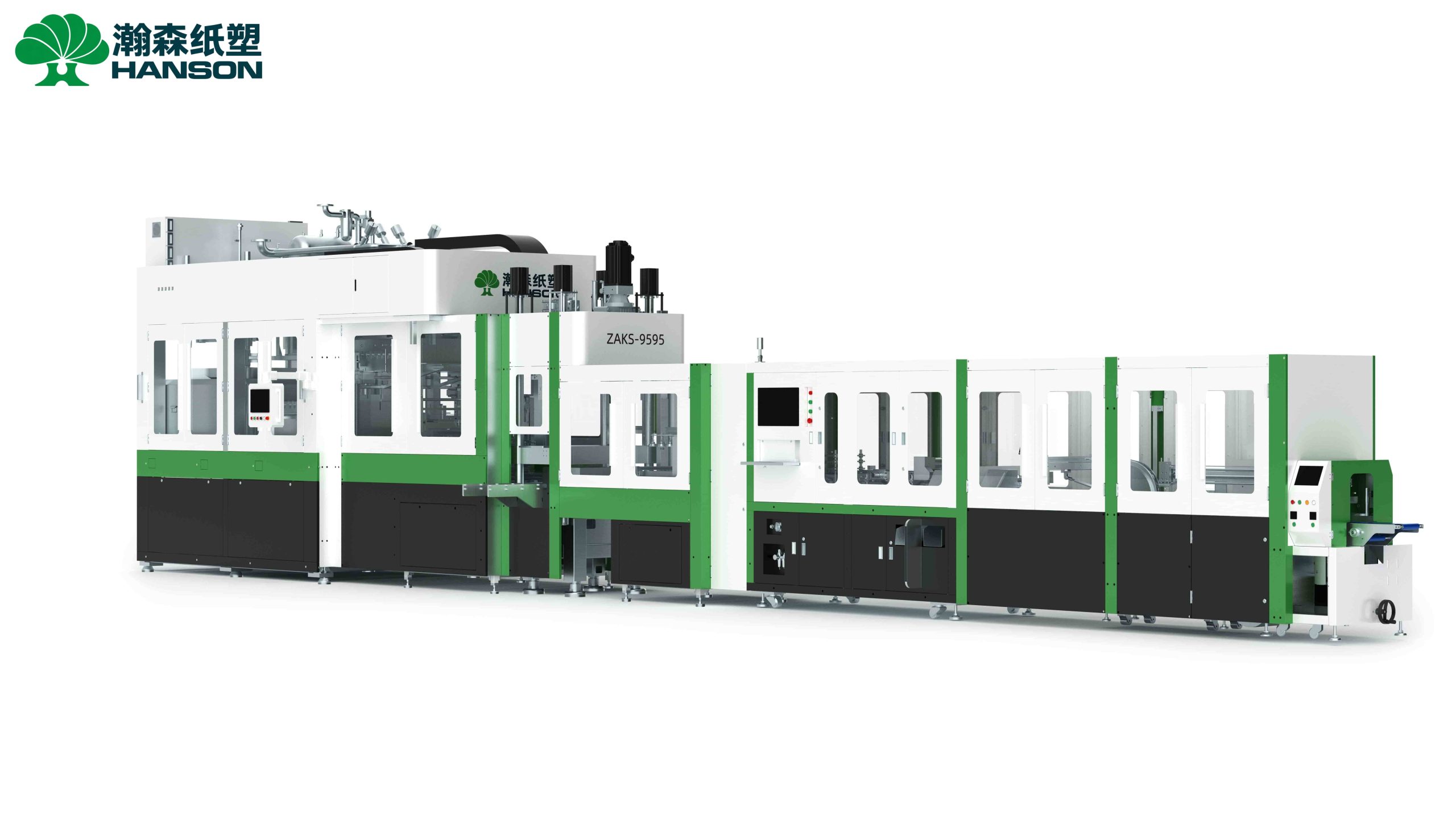
As a specialist in turnkey pulp molding solutions, Hanson Pulp Molding has engineered the ZAKS-9595 machine specifically for the highly efficient mass production of molded fiber cup lids.
The ZAKS-9595 is not just a standalone forming machine; it is a comprehensive automated line that integrates forming, hot pressing, trimming (servo-driven punch cutting), machine vision inspection, and packaging. By eliminating operational breakpoints and manual transfers, this system ensures top-tier precision. Under appropriate production conditions, the actual output of the ZAKS-9595 can reach approximately 100,000–120,000 cup lids per 24 hours.
FAQ
1. What is the daily production capacity of a molded fiber cup lid machine? Under 24-hour continuous production conditions, the Hanson Pulp Molding ZAKS-9595 can produce up to 100,000–120,000 pieces per day. Actual output will depend on the specific product dimensions, mold configuration, and the effective running time of the equipment.
2. Why is machine vision inspection necessary for cup lids? Cup lids are produced at very high speeds. Machine vision inspection acts as a rigorous quality gate, automatically detecting and rejecting products with dimensional errors or surface defects in real-time, which is far more reliable and efficient than manual sorting.
3. Can I use a standard tableware machine to produce cup lids? While theoretically possible with tooling changes, it is not recommended for mass production. Tableware machines prioritize tonnage and overall dewatering for heavier items. Cup lids require extremely high piece-counts per minute and integrated trimming and inspection systems. Dedicated machines like the ZAKS-9595 are far more effective for cup lid automation.
Conclusion
Successfully launching a molded fiber cup lid project goes beyond evaluating a machine’s theoretical cycle time. It requires a holistic assessment of how forming, servo-trimming, vision inspection, and automatic packaging function together as a unified system. When all these variables are aligned, your project can confidently scale from a promising prototype to a stable, commercially viable product.
CTA
If you already have a product sample, 3D drawing, product dimensions, or a target daily capacity for your cup lid project, Hanson Pulp Molding can help evaluate the molding process, tooling, and equipment configuration to build a fully integrated ZAKS-9595 automation line.
WhatsApp: +86 15920604830
Email: linchuangcheng@hspulpmolding.com