
When setting up a new molded fiber production line or upgrading an existing plant, many investors focus almost entirely on the theoretical cycle time or installed power of the pulp molding equipment. In doing so, they often treat the pulp molding mold (molded fiber tooling) as a standard consumable accessory.
This fragmented approach to equipment selection frequently leads to bottlenecks during mass production. In reality, the forming machine simply provides the mechanical force, vacuum, and heat. The pulp molding mold is the true core that dictates product dimensions, surface quality, dewatering efficiency, and ultimately, actual daily capacity. When balancing production capacity, precision, and automation, the equipment and tooling must be evaluated as a single, synergistic system.
How Pulp Molding Molds Impact Actual Production Capacity
The theoretical cycle time listed on a machine’s spec sheet does not equal the factory’s actual daily output. Producing different products on the same pulp molding machine can yield vastly different production volumes, largely due to mold design and process compatibility.
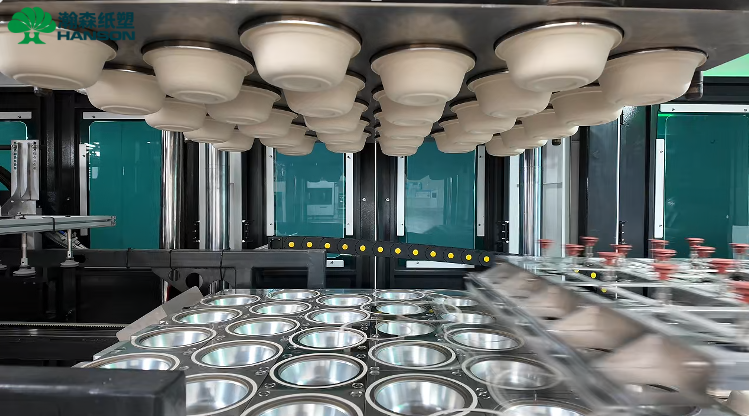
The first factor is forming and dewatering efficiency. The mesh design, drainage channels, and structural layout of the forming tool directly determine how quickly and evenly the fibers are drawn to the mold under vacuum. If the mold’s drainage is inefficient, the moisture content of the wet preform will be too high. The more water the wet preform carries into the hot pressing stage, the more thermal energy is required to evaporate it. This not only extends the hot pressing time—reducing daily output—but also significantly increases the overall energy consumption of the production line.
The second factor is the number of mold cavities. While increasing the number of cavities on a fixed platen size can technically produce more units per cycle, it is not always better. Overcrowding the cavities can disrupt pulp slurry flow, increase the load on the vacuum and heat systems, and cause edge products to form poorly or fail to demold cleanly. Therefore, true capacity evaluation must be based on a balanced mold structure tailored to the specific product weight and geometry.
Precision and Surface Quality: The Synergy Between Equipment and Tooling
Whether producing premium industrial packaging for consumer electronics or foodservice containers that require secure closures, dimensional accuracy and surface quality are critical acceptance criteria.
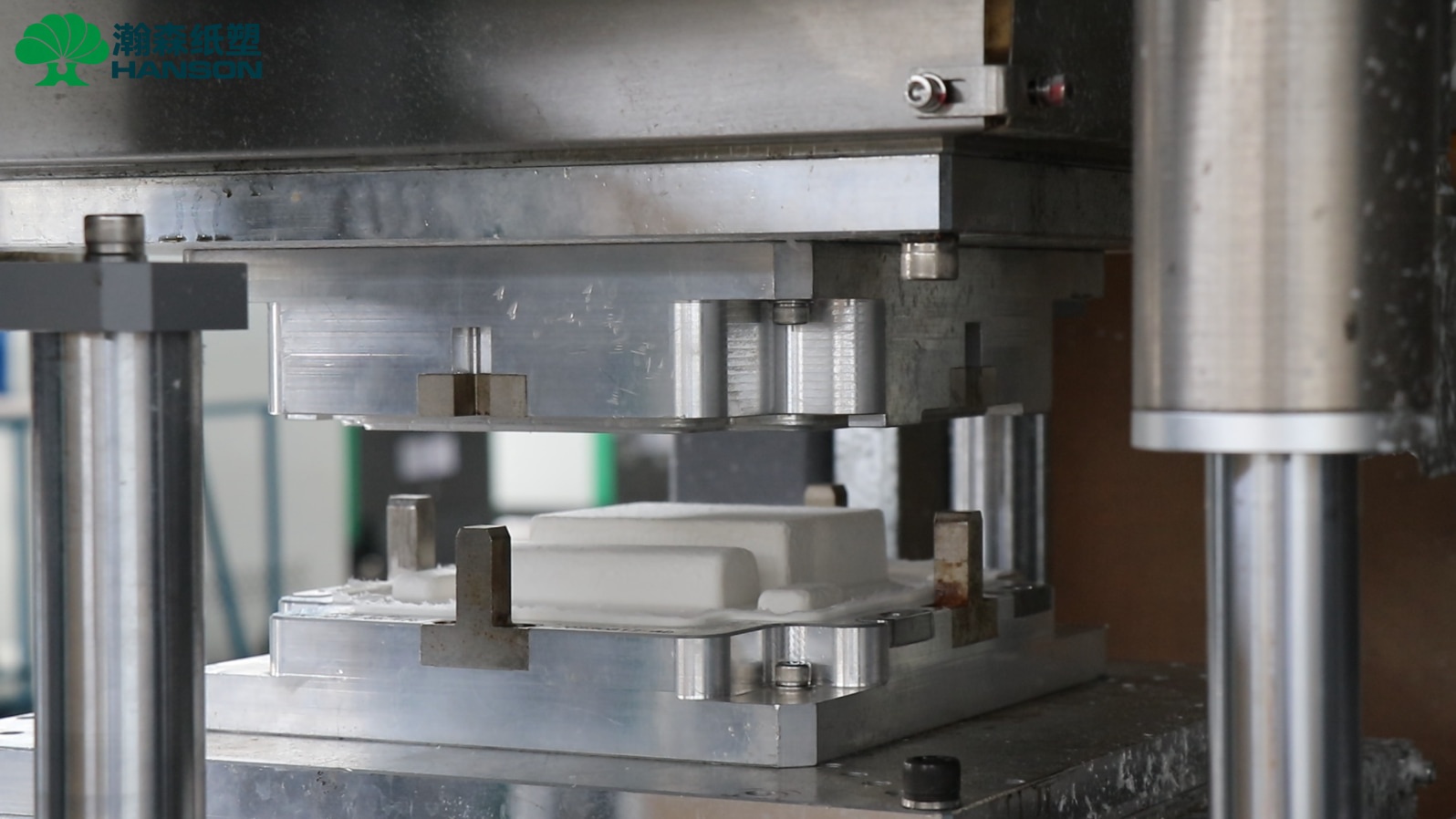
In the wet-press process (often associated with Type 3 Thermoformed Fiber), the wet preform enters the hot press mold while still retaining moisture. It is then dried and set under high temperature, high pressure, and the strict constraints of the mold. The smoothness, texture, and structural clarity of the final product depend heavily on the surface finish and machining precision of the hot press mold. If the tooling has calculation errors regarding thermal expansion, inadequate venting, or uneven force distribution, the product is highly prone to warping, deformation, or inconsistent wall thickness.
Simply increasing the pressure output of the equipment cannot compensate for fundamental design flaws in the tooling. Stable mass production of high-precision molded fiber products relies on the perfect interaction between the uniform pressure exerted by the machine and the structural integrity of the mold.
Balancing Automation: Why Post-Processing Relies on Mold Consistency
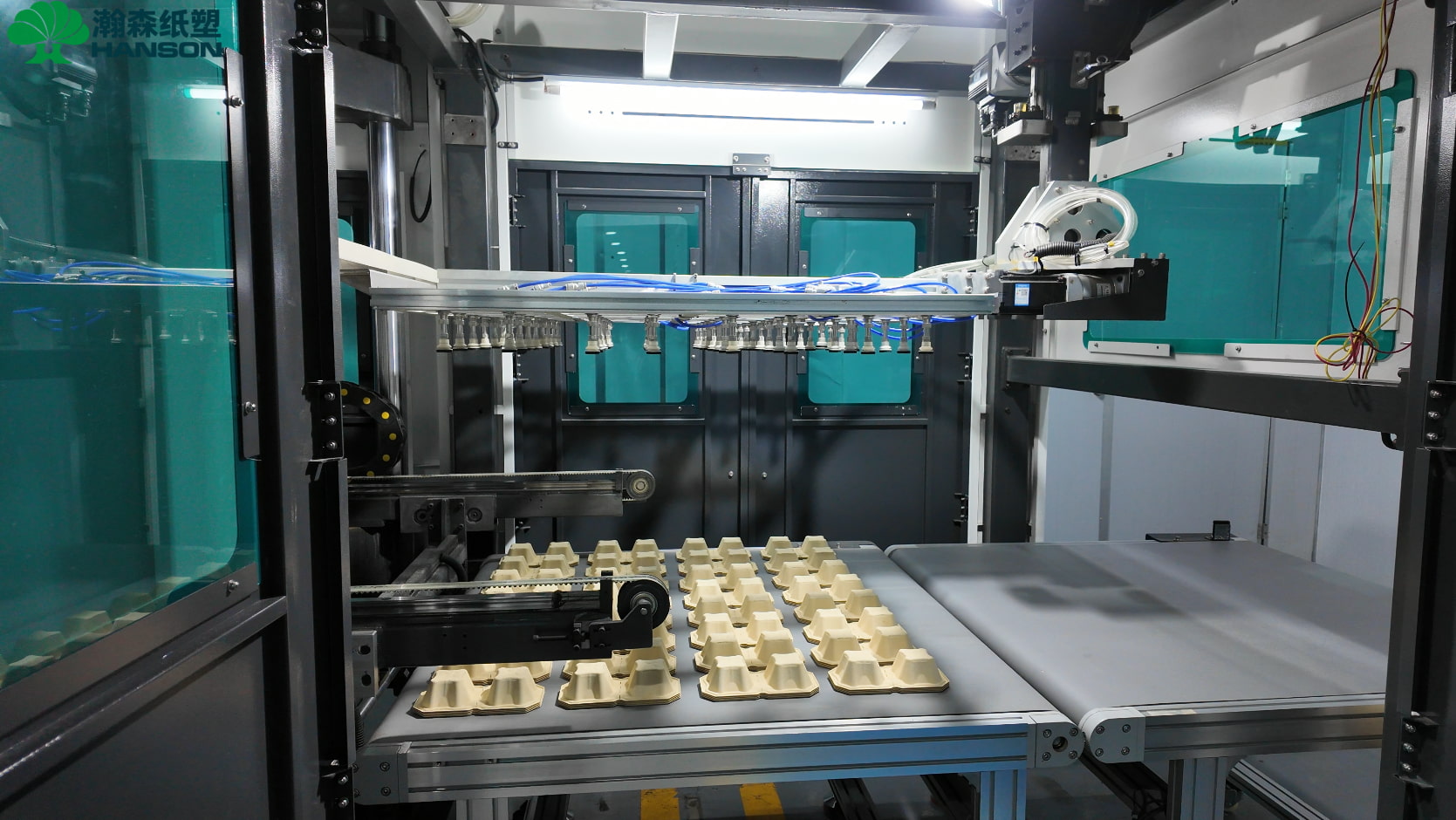
Automation is another major consideration during equipment selection. Post-processing automation—such as automatic trimming, machine vision inspection, and automatic stacking—can significantly reduce manual labor and improve continuous production flow.
However, the success of post-processing automation is highly dependent on the consistency provided by the forming molds. Take automatic trimming and stacking, for example. If there are deviations in the forming process that cause fluctuations in edge thickness, overall dimensions, or moisture content from batch to batch, the trimming station will frequently experience incomplete cuts or tearing. Similarly, dimensionally inconsistent products are prone to jamming during automatic stacking. Discussing high automation without first securing high-quality pulp molding molds often results in increased downtime and higher defect rates.
Hanson Pulp Molding: Synergizing Equipment, Tooling, and Process
Solving production challenges in the pulp molding industry requires breaking down the barriers between equipment manufacturing and mold engineering. Many so-called “machine failures” or “capacity shortfalls” are fundamentally system mismatches between machine mechanics, mold structure, pulp furnish, and hot pressing parameters.
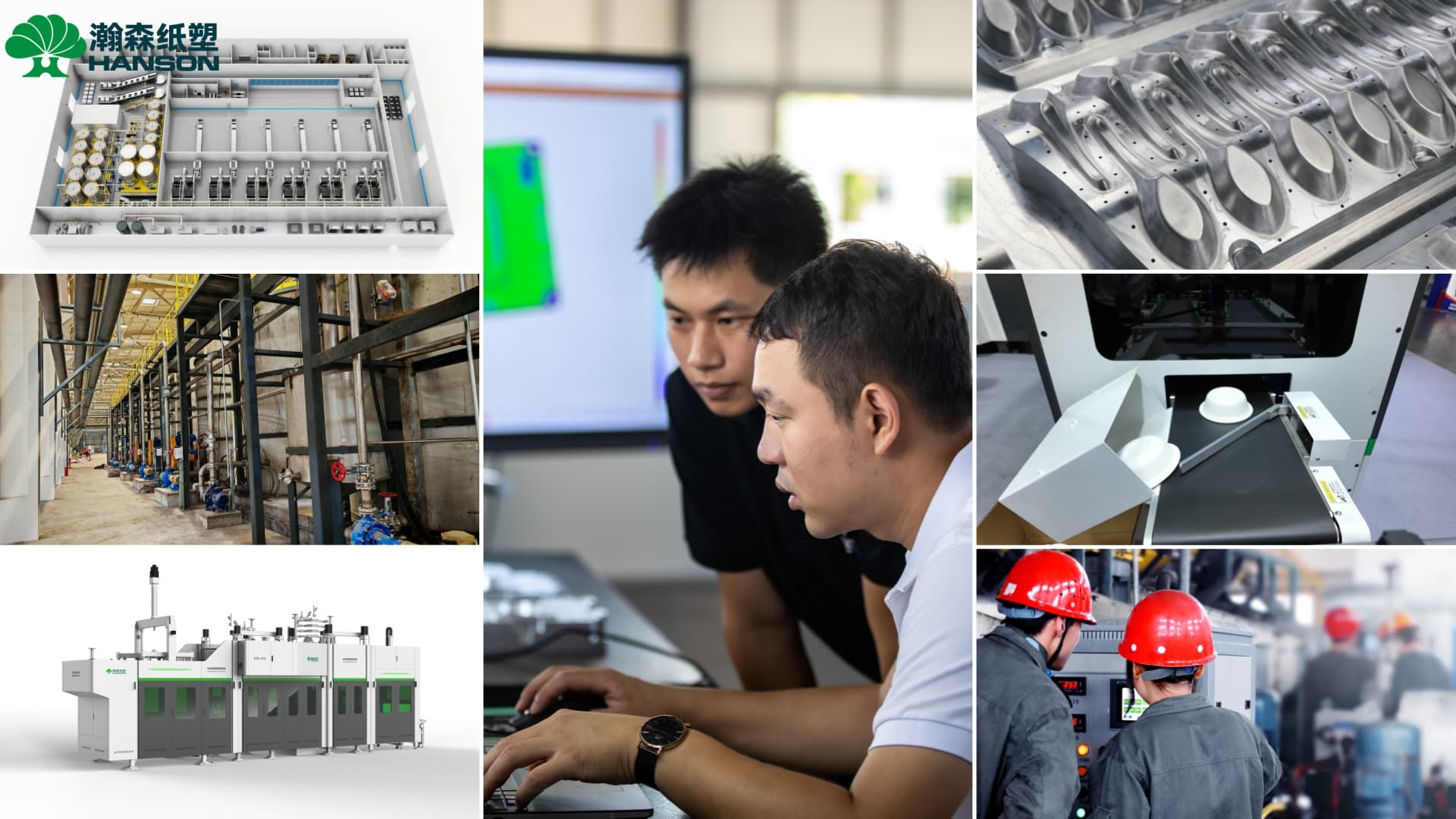
As a specialist in turnkey pulp molding solutions, Hanson Pulp Molding does not merely supply stand-alone forming equipment. Hanson integrates mold design, mold manufacturing, prototyping validation, and equipment-process joint debugging into a complete service offering. Whether developing premium high-precision packaging or optimizing an existing factory line, Hanson evaluates mold drainage, moisture venting, and machine parameters based on the specific product structure. By aligning the mold, the process, and the equipment under a unified engineering logic, Hanson helps pulp molding plants achieve efficient, stable, and scalable mass production.
FAQ
Are pulp molding molds really that important? Yes, they are critical. The mold not only defines the product’s shape but directly affects dewatering efficiency, wet preform quality, hot pressing results, surface precision, product consistency, and actual daily capacity. It should never be treated merely as a machine accessory.
Why does actual capacity change when using different molds on the same machine? Different molds alter the number of cavities, the overall product weight, the forming area, and the drainage efficiency. These variables directly impact the required forming time and hot pressing time, which in turn changes the actual daily output of the equipment.
Can I skip prototyping and directly order mass-production molds for a new product? It is not recommended. A 3D design only shows the structure; it must still be validated for molded fiber forming, drainage, draft angles, demolding, and material shrinkage. It is highly advised to conduct prototyping and process validation first to optimize the structure before investing in multi-cavity mass production molds.
Can old molds be used on new pulp molding equipment? It is possible, but it requires an engineering evaluation. You must verify the mold dimensions, mounting interfaces, drainage design, and compatibility with the new equipment’s precision and process controls. Hanson Pulp Molding can evaluate existing tooling and provide optimization or modification services based on the specific project.
Conclusion
When evaluating a pulp molding project, prioritizing machine cycle times over mold engineering is a costly mistake. The molded fiber tooling is the central element that links your raw material to the final product quality, dictating the true efficiency of your entire production line. For sustainable and stable mass production, equipment and molds must be engineered and optimized together.
If you are experiencing issues with product deformation, inconsistent surface quality, low dewatering efficiency, or tooling-equipment mismatches, comparing basic machine specs is not enough. Hanson Pulp Molding can evaluate your product structure, tooling design, and process parameters to provide a comprehensive engineering solution.
WhatsApp: +86 15920604830
Email: linchuangcheng@hspulpmolding.com