When investing in a molded fiber project, many buyers focus primarily on the specifications, speed, and price of the pulp molding machine. However, during commercial production, a perplexing issue often arises: why do two machines with nearly identical specifications deliver vastly different daily outputs, product consistencies, and yield rates?
In many cases, the root cause is not the machine itself, but the pulp molding mold (tooling). Tooling is not simply a mechanical accessory that dictates the shape of the product; it is deeply involved in forming, dewatering, hot pressing, and product transfer. Here, we outline the most common mistakes buyers make when sourcing pulp molding molds and explain why process synergy is essential.
Common Mistakes in Sourcing Pulp Molding Molds
Mistake 1: Treating the Mold as Just a “Shape Maker”
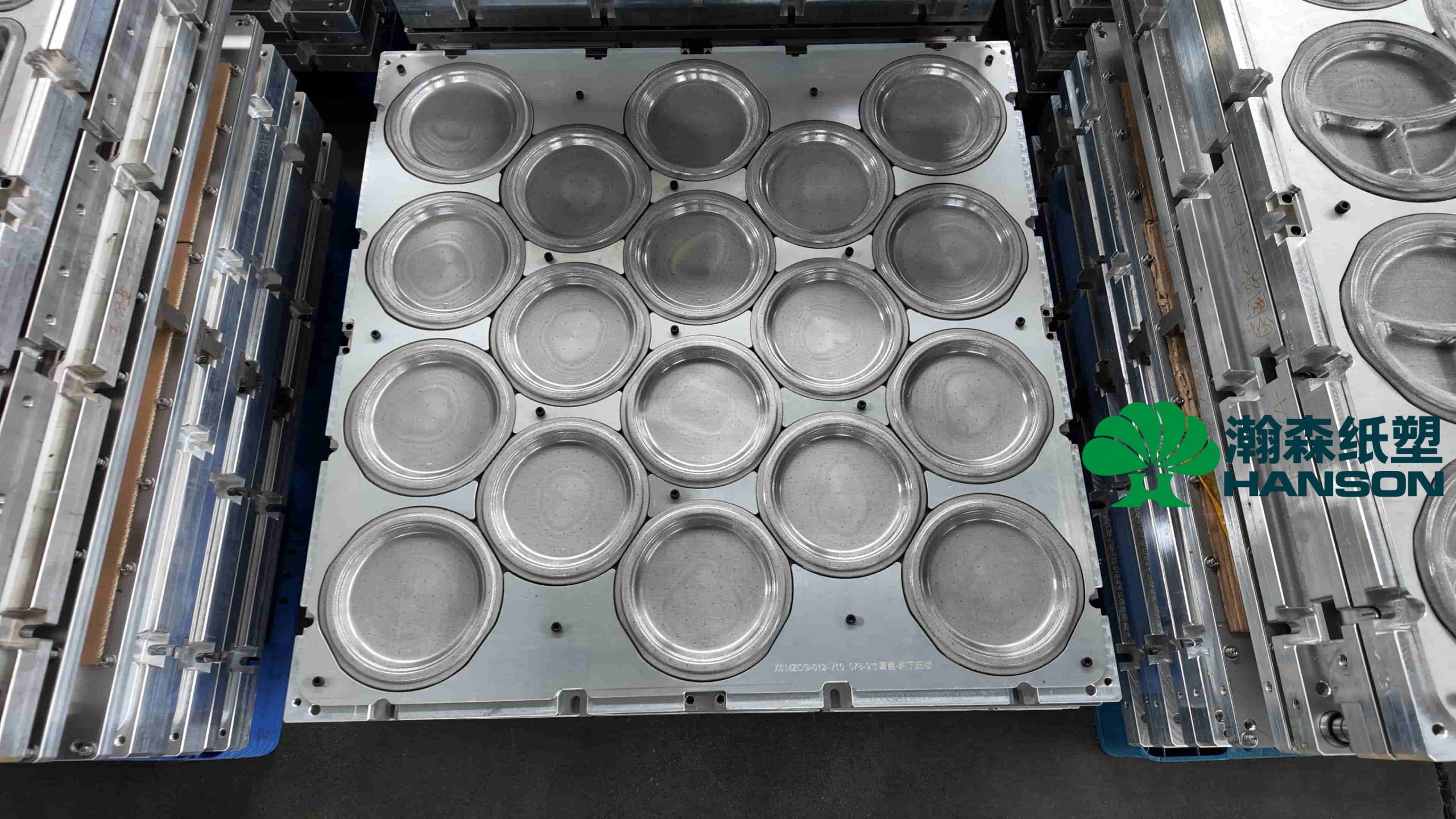
Many buyers assume that as long as the forming machine runs fast, production will be highly efficient. However, the forming tool is the core of the dewatering process. The mesh covering and the design of the drainage channels directly dictate how efficiently water is extracted when the vacuum is applied.
If the mold design restricts drainage, the wet preform will retain too much moisture. Consequently, more thermal energy and a longer pressing cycle will be required in the hot press mold or drying tunnel to remove this excess water. This not only increases energy consumption per ton but can also cause product warping and deformation.
Mistake 2: Assuming More Cavities Always Mean Higher Capacity
To maximize output, it is tempting to cram as many cavities into a mold as possible. Theoretically, with a fixed cycle time, more cavities equal a higher yield.
In reality, the number of cavities must be perfectly balanced with the product dimensions, the machine’s vacuum distribution, and the thermal load during hot pressing. If cavities are densely packed without adequate vacuum uniformity, products on the edges of the mold may end up with inconsistent thickness, weight variations, or poor dewatering. When the yield rate drops due to defects and machine downtime increases for adjustments, the actual daily output shrinks significantly.
Mistake 3: Believing That Changing Molds Equals Easy Product Switching
“One machine can make any product; you just need to change the mold.” This is a common oversimplification. While many pulp molding machines can accommodate different molds, switching products involves much more than bolting on a new tool.
Different products—varying in weight, depth, and structural complexity—require entirely different pulp consistency, vacuum duration, hot pressing temperatures, and trimming parameters. Frequent tooling changes can severely reduce the machine’s effective uptime. For stable commercial production, dedicating specific machines to specific product lines is often more economical.
Mistake 4: Disconnecting Tooling from the Overall Process
Some investors procure machines and molds from different suppliers without conducting comprehensive process validation. This disconnected approach is especially risky for premium industrial molded fiber packaging (such as smartphone inserts and consumer electronics packaging) that demands high surface quality and dimensional accuracy.
Pulp molding is a systemic process. The draft angles, thermal expansion allowances, and exhaust designs of the mold must perfectly align with the machine’s transfer mechanisms and hot-pressing parameters. Excellent product quality is the result of continuous, unified tuning of the equipment, tooling, and process.
Hanson Pulp Molding: Synergizing Equipment, Tooling, and Process
As a specialist in turnkey pulp molding solutions, Hanson Pulp Molding approaches every project with a core philosophy: the product determines the process, and the process dictates the mold and equipment configuration.
Whether you are producing wet-press tableware, premium industrial packaging, or dry-press protective packaging, Hanson Pulp Molding provides comprehensive services—from new mold development and prototyping to legacy mold optimization and production ramp-up. We understand that forming equipment, intelligent pulping systems, and post-processing automation must work in synergy with the tooling. By conducting rigorous joint debugging of the equipment and molds before delivery, we help clients navigate the complexities of molded fiber production and achieve stable commercial production.
FAQ
Does changing the mold on the same machine affect production capacity? Yes. Different molds change the number of cavities, product weight, and drainage efficiency. This directly impacts forming time, hot-pressing time, and transfer stability. Consequently, the actual daily output of the same machine will vary depending on the specific product and mold configuration.
Can I use my old molds on a new pulp molding machine? It is possible, but it requires careful evaluation. The dimensions, mounting interfaces, drainage design, and thermal compatibility of the old molds must be assessed against the new machine’s mechanisms. Optimization or modifications are often necessary to ensure seamless integration.
Should I immediately order commercial molds for a new product? For new materials, unique structures, or companies entering the molded fiber industry for the first time, it is not recommended to jump straight into large-scale commercial tooling. Hanson Pulp Molding advises starting with product structural design, prototyping, and process validation to confirm surface finish and dewatering performance before investing in mass production molds. This significantly reduces project risks.
Conclusion
In molded fiber manufacturing, the mold is the critical carrier of your process technology, not just a block of metal that gives a product its shape. Avoiding the pitfalls of focusing solely on machine parameters or the number of cavities requires a holistic view of dewatering, transfer, hot pressing, and process consistency. Integrating these elements is the only reliable path to building a stable, high-yield production line.
If you are dealing with product deformation, poor dewatering efficiency, inconsistent dimensions, or unstable yield rates, merely comparing machine specifications will not solve the problem. If you already have a product sample, 3D drawing, or existing mold parameters, Hanson Pulp Molding can evaluate the molding process, tooling, and equipment configuration for your project to ensure optimal synergy.
WhatsApp: +86 15920604830 Email: linchuangcheng@hspulpmolding.com