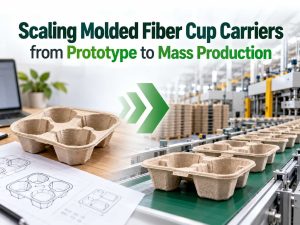
For applications such as 3C electronics, wearables, and high-end cosmetics, packaging does more than protect the product during transport. It serves as a direct reflection of brand positioning and the out-of-box experience. To meet these strict requirements, premium packaging inserts are typically manufactured using a high-precision wet press (thermoformed) process.
When procuring and accepting a premium molded fiber packaging machine, evaluating whether the machine can run smoothly or measuring its theoretical cycle time is insufficient. The true benchmark of equipment quality lies in its forming consistency, hot pressing control, and seamless tooling synergy during mass production. For buyers establishing a premium packaging line, the following key performance indicators (KPIs) should be prioritized during machine acceptance testing.
Surface Finish and Dimensional Tolerance
The fundamental difference between premium industrial packaging and traditional protective packaging is the extreme requirement for surface quality and tight dimensional tolerances. A molded fiber insert for a smartphone must fit perfectly into the outer box. Any warping, shrinkage, or uneven thickness will lead to assembly failure.
During equipment acceptance, multiple samples from continuous production cycles should be verified for:
-
Surface Smoothness: The surface of the hot-pressed product should be smooth, dense, and free of rough fibers, flashing, or unevenly dried areas.
-
Wall Thickness Consistency: Consistent wall thickness across stress points and edges directly reflects the equipment’s ability to control vacuum suction and slurry distribution.
-
Deep Cavity and Draft Angle Performance: Inspect complex geometries and deep cavities for any tearing or uneven dewatering. This tests the machine’s precision during wet preform transfer and hot pressing.
Forming Consistency and Process Control
Machine parameters recorded during short-run or dry-cycle operations do not accurately represent real-world mass production. Acceptance testing must evaluate the forming consistency of the equipment over extended continuous runs.
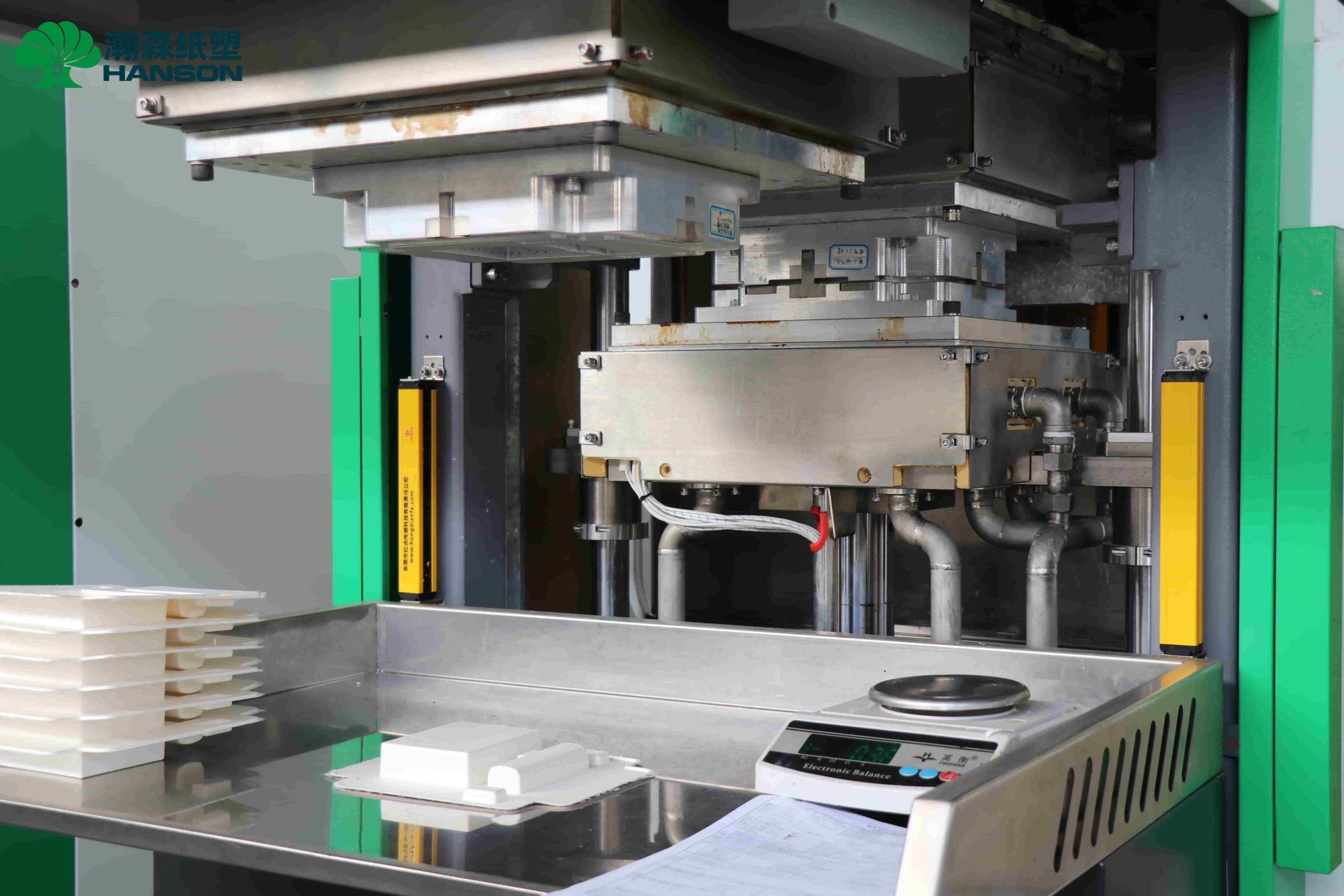
When minor fluctuations occur in pulp consistency or mold mesh conditions, high-end equipment should have the capability to intervene via process control systems. For example, the Hanson Pulp Molding ZAP-9585 premium industrial packaging machine is equipped with dynamic pulp replenishment technology. This feature allows for targeted process optimization based on the actual slurry conditions during forming, significantly reducing weight variations and maintaining a high yield rate across large production batches.
Tooling Synergy and Wet Preform Transfer
Many issues encountered during commercial production—such as difficult demolding or product deformation—are not standalone machine failures, but rather a lack of synergy between the equipment, the process, and the tooling. The mold dictates not only the shape but also the dewatering efficiency, heat transfer, and final product consistency.
Machine and tooling should not be evaluated separately during acceptance:
-
Transfer Stability: If the wet preform shifts even slightly while transferring from the forming mold to the hot press mold, the subsequent pressing phase will destroy the product.
-
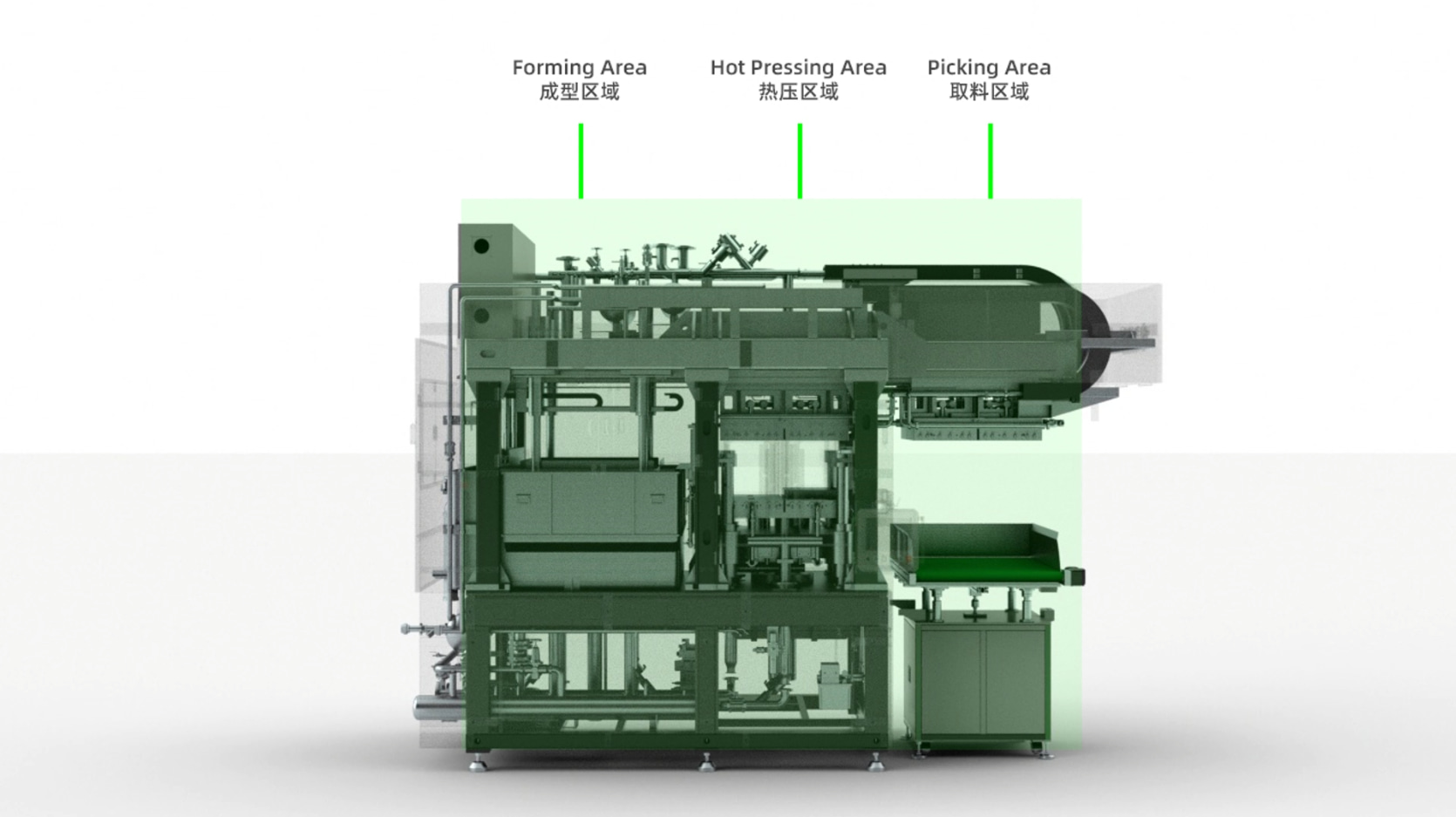
Temperature Control and Moisture Extraction: Observe whether the hot press stations maintain stable pressure and temperature. The mold’s venting channels must efficiently expel steam to prevent blistering or structural deformation.
-
The Hanson Pulp Molding Approach: As a turnkey specialist in pulp molding, Hanson Pulp Molding manufactures advanced equipment (such as the ZAP-9585 and ZAD series) alongside precision mold manufacturing. By aligning the forming and hot pressing parameters directly with mold engineering, the risk of equipment-tooling mismatch is eliminated at the source.
Post-Processing Automation and Actual Output
Theoretical cycle time does not equal actual daily production capacity. Acceptance tests must evaluate how the equipment integrates with post-processing steps such as trimming, inspection, and stacking.
For high-precision molded fiber inserts, products typically require servo-driven punch cutting or machine vision inspection immediately after hot pressing. If the main forming machine is exceptionally fast but produces inconsistent dimensions that cause the automatic trimming system to jam or fail, the overall production line efficiency will plummet. Full-load continuous testing is essential to confirm actual commercial output and operational costs.
FAQ
1. Why shouldn’t I solely rely on cycle time when evaluating premium molded fiber equipment? Cycle time only measures machine movement speed. For high-precision inserts, the forming and hot pressing durations must satisfy strict process requirements. Artificially shortening the hot pressing time to improve cycle speed often leads to moisture retention, subsequent warping, and a high defect rate.
2. Why do consumer electronics inserts frequently suffer from dimensional deformation? Deformation is typically caused by uneven forming, insufficient hot pressing temperature or pressure, poor mold ventilation, or uncontrolled drying shrinkage. This highlights that machine parameters alone cannot guarantee product quality; it requires the precise synergy of equipment, tooling, and process control.
3. Should a new premium packaging project immediately invest in mass production equipment? If the product structural design, material formula, or process route has not been fully verified, it is highly recommended to start with prototyping and process validation. Hanson Pulp Molding supports the entire lifecycle from product development and prototyping to commercial equipment configuration, minimizing investment risks.
Conclusion
Acceptance criteria for premium molded fiber packaging machines are fundamentally tests of mass production viability and product consistency. The success of a project is not determined by the maximum speed listed on a nameplate, but by the comprehensive system capabilities across forming, hot pressing, tooling integration, and precise process control.
If you already have a product sample, 3D drawing, dimensional requirements, or target daily capacity, Hanson Pulp Molding can evaluate the molding process, tooling, and equipment configuration for your specific premium packaging project.
WhatsApp: +86 15920604830Email: linchuangcheng@hspulpmolding.com