When investors and packaging manufacturers plan to start a molded fiber project for protective packaging, the first question is usually, “How much does an egg tray machine cost?”
However, in the dry press molded fiber industry, where large-scale production and cost efficiency are essential, equipment configurations are rarely one-size-fits-all. Before discussing equipment prices, you must first define the terminal product. Specifically, confirming the product weight, structural design, and number of mold cavities is a mandatory step. These three variables directly dictate the forming efficiency, drying energy consumption, mold design, and the actual daily capacity of your entire production line.
How Product Weight Impacts Drying and Energy
The fundamental challenge in molded fiber manufacturing is efficiently removing massive amounts of water from plant fibers. The single-piece weight of an egg tray or industrial protective packaging determines how much pulp slurry is consumed per cycle and, consequently, the absolute moisture content retained in the wet preform.
Heavier and thicker products carry more water into the subsequent processing stages. If you rely entirely on the thermal energy of the drying tunnel to evaporate this water, your energy consumption (natural gas or electricity) will soar. Furthermore, a heavy drying load can bottleneck the entire line, forcing the forming machine to slow down.
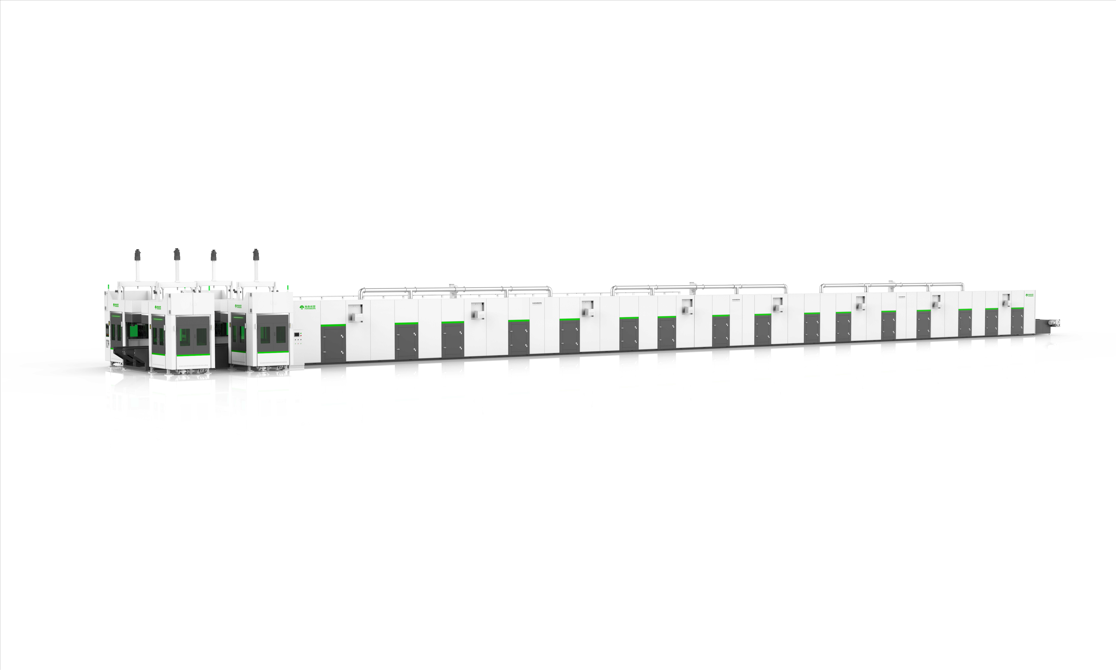
To address this, the Hanson Pulp Molding automatic dry-press production line integrates a specific cold pressing (pre-dewatering) station between the forming and drying stages. By applying mechanical pressure via servo-driven systems at room temperature, excess water is squeezed out before the product enters the oven. This significantly reduces the thermal drying load, minimizes product deformation during heat exposure, and increases overall line uptime.
Product Structure and Mold Design
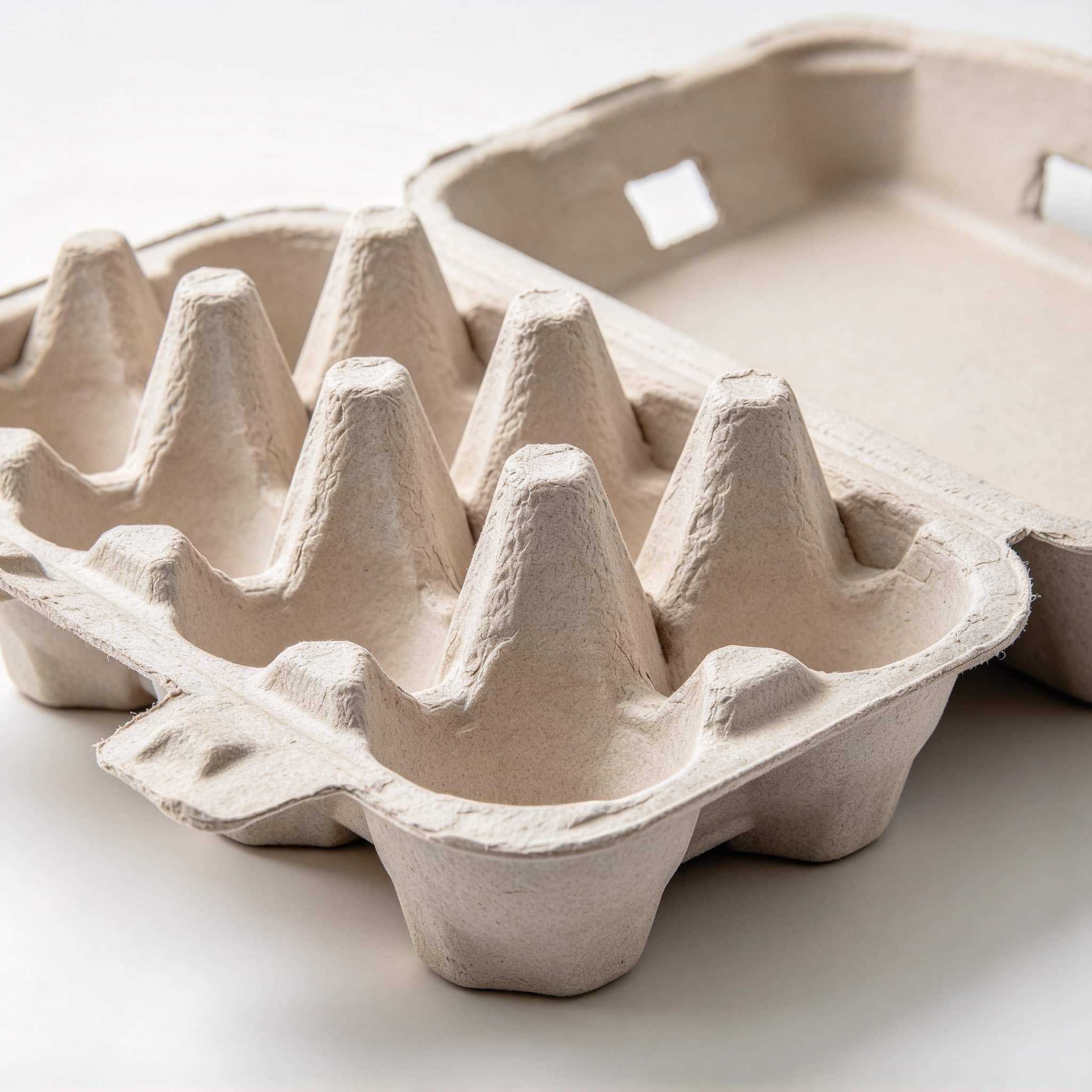
Egg trays, cup carriers, and protective inserts often feature deep drafts (significant height differences) and complex buffering ribs. The structural design of the product dictates how evenly the pulp slurry adheres to the mold surface and how effectively the vacuum removes the water.
If the draft angle is poorly designed or the cavity is too deep, the wet preform is highly susceptible to tearing or cracking during the transfer from the forming mold to the transfer tool. Additionally, complex cavities tend to trap residual pulp on the wire mesh. A highly efficient dry press line relies on full-servo transfer mechanisms for smooth handling and utilizes high-pressure mold washing systems. This combination ensures stable demolding of complex structures while extending the maintenance cycle of the tooling.
Mold Cavities vs. Actual Production Capacity
Many buyers calculate their expected output using a simple formula: Number of cavities per mold × Theoretical cycles per hour. Driven by capacity anxiety, there is a common tendency to cram as many cavities as possible onto a single mold platen.
However, increasing mold cavities has strict engineering boundaries. More cavities require a larger volume of slurry per cycle, demanding a highly stable pulp preparation and internal circulation system to ensure uniform product weight across the platen. More importantly, the hundreds of wet preforms produced per minute by the forming station must be seamlessly processed by the cold press, drying tunnel, hot press, and automatic stacking stations. If the drying oven cannot keep up with the volume, having more cavities on the forming machine will not translate into a higher actual daily capacity.
Configuring the Complete Dry Press Production Line
Equipment selection can only begin once the product weight, structure, and cavities are clearly defined. An efficient egg tray production line is not just a standalone forming machine; it is a synchronized system encompassing pulping, forming, pre-dewatering, drying, hot pressing, and stacking.
As a specialist in turnkey pulp molding solutions, Hanson Pulp Molding evaluates dry-press protective packaging projects based on the specific requirements of the terminal product. By analyzing product weight, draft depth, and target capacity, Hanson provides a perfectly synchronized turnkey plant configuration, ensuring that the frontend pulping, mid-stage forming and dewatering, and backend drying and stacking operate in complete harmony.
FAQ
Can the same machine be used for egg trays and high-end smartphone packaging? Typically, no. Egg trays and protective packaging focus on mass production and cost control, utilizing a dry-press process (forming, independent drying, then hot pressing). High-end electronics packaging requires a wet-press process (drying and pressing simultaneously inside heated molds) to achieve superior surface smoothness and dimensional accuracy. The equipment structures and energy distributions are entirely different.
Why is a hot pressing station included in an egg tray dry press line? While the drying tunnel removes the majority of the moisture, the natural drying process can cause slight warping or shrinkage in the molded fiber. Adding a hot pressing station after drying helps reshape and finalize the product’s dimensions, ensuring flatter surfaces and better nesting, which is crucial for automatic stacking and transportation.
How is the actual capacity of an egg tray machine calculated? Theoretical cycle time alone cannot determine output. Actual daily capacity must be calculated by evaluating the single product weight, the number of mold cavities, the synchronized speed of the cold pressing and drying stages, the hot pressing time, and the overall equipment effectiveness (yield rate and uptime).
Conclusion
Purchasing equipment is never the first step of a molded fiber project; defining the product is. By thoroughly determining the product weight, structural drafts, and the optimal number of mold cavities before mass production, you lay the groundwork for configuring the most efficient pre-dewatering, drying, and pulping systems. This holistic approach is the key to maintaining cost and efficiency advantages in long-term commercial production.
If you already have product samples, 3D drawings, or a target daily capacity for your egg trays, cup carriers, or protective packaging, Hanson Pulp Molding can help evaluate the most suitable pulping, molding, drying, and pressing configuration for your project.
WhatsApp: +86 15920604830
Email: linchuangcheng@hspulpmolding.com