The demand for molded fiber cup lids is surging as global markets shift toward sustainable packaging. However, manufacturing molded fiber cup lids involves a much higher technical barrier than producing standard protective packaging. A cup lid’s primary function is to seal tightly against a cup rim, requiring flawless surface quality, strict dimensional stability, and consistent mass production.
A highly efficient production line must not only handle forming and hot pressing but also seamlessly integrate trimming, defect inspection, and packaging. Before investing in a molded fiber cup lid machine, buyers should carefully evaluate the following five essential conditions.
1. Evaluate Actual Daily Output (Pieces, Not Tonnage)
When selecting a cup lid machine, production capacity should be measured in pieces per day, rather than the tonnage metrics typically used for molded fiber tableware. Cup lids are lightweight products manufactured in massive volumes, making actual daily piece output the most accurate indicator of commercial viability.
Theoretical cycle time alone does not equal daily output. True production capacity depends on mold cavity count, hot pressing duration, trimming speed, and overall equipment uptime. Hanson Pulp Molding, a specialist in turnkey pulp molding solutions, offers the ZAKS-9595 molded fiber cup lid machine. Under appropriate production conditions, this equipment can reach a capacity of 100,000–120,000 pcs/day (24H), effectively meeting the high-throughput demands of cup lid manufacturing.

2. Mold Precision and Dimensional Stability
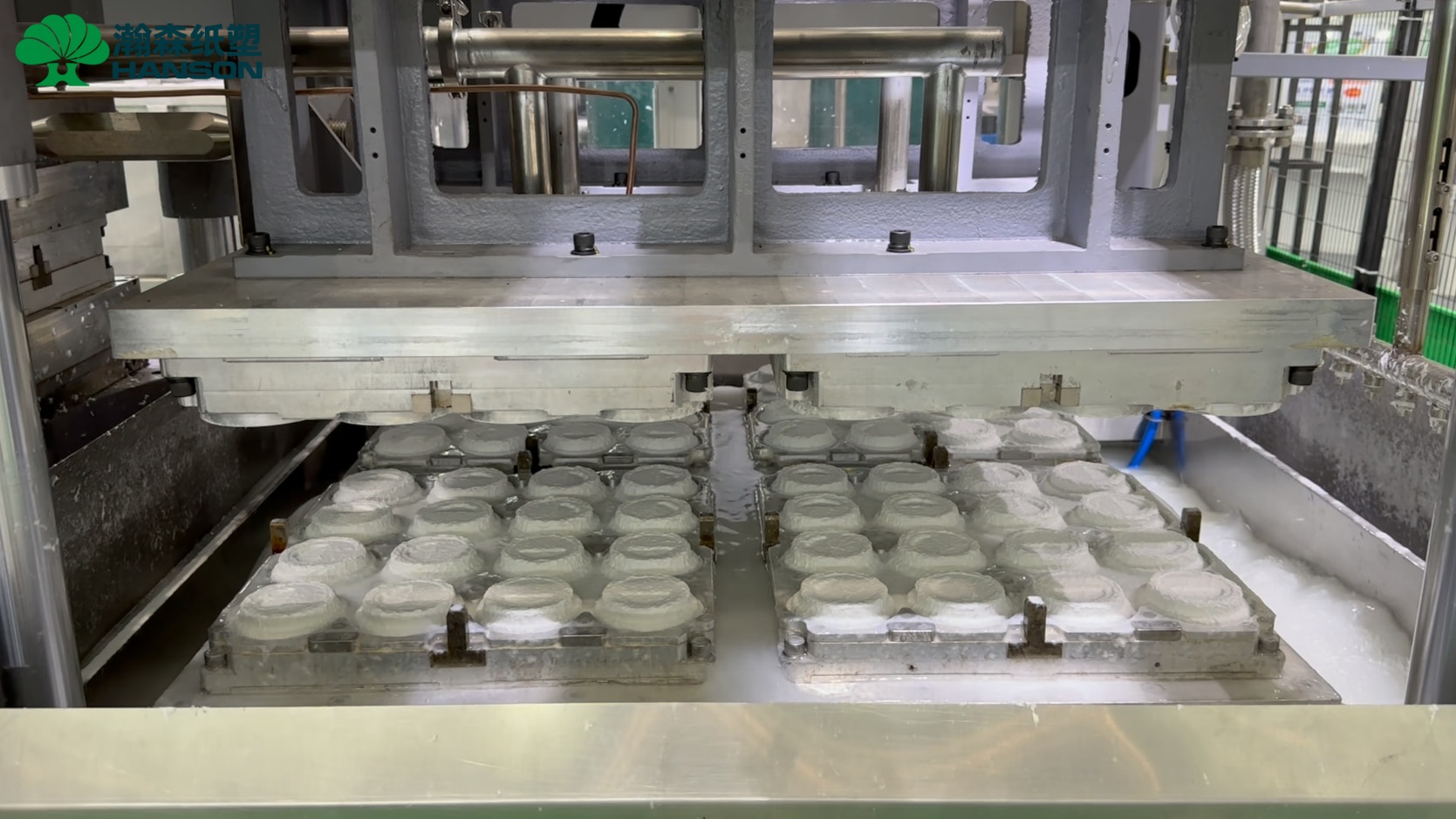
A cup lid must snap securely onto varying cup materials; even a slight dimensional deviation can lead to leaks and product failure. Achieving this level of precision depends on the machine’s mechanical rigidity, but more importantly, on the molded fiber tooling and the hot pressing process.
During the wet-press thermoforming process, moisture rapidly evaporates under heat and pressure, causing fiber shrinkage. The mold’s drainage design, uniform temperature distribution, and precise pressure control dictate the final dimensional stability of the lid. Therefore, buyers should verify whether the equipment manufacturer possesses deep expertise in synchronized mold and process development.
3. Trimming Technology: The Role of Servo Punching
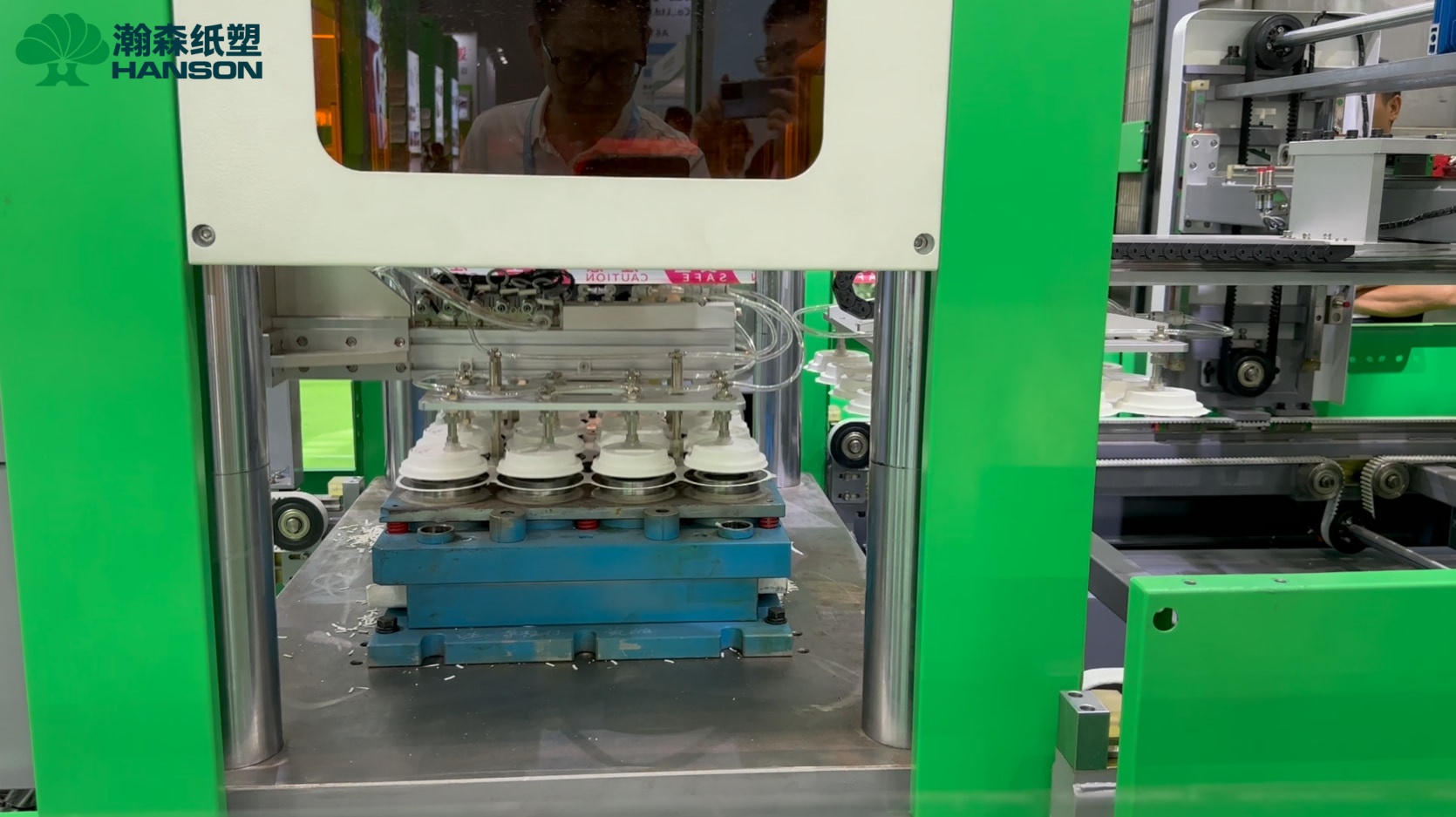
After forming and hot pressing, almost all molded fiber cup lids retain a manufacturing edge or flashing. A rough or uneven edge not only ruins the consumer experience but also compromises the seal.
This makes integrated trimming a critical requirement. Servo-driven punch cutting is currently the standard for high-precision cup lid production. Servo systems provide exact positional and pressure control, ensuring clean, smooth edges on every piece. Furthermore, the trimming station must operate in perfect synchronization with the forming cycle to prevent bottlenecks that could slow down the entire line.
4. Machine Vision Inspection in Mass Production
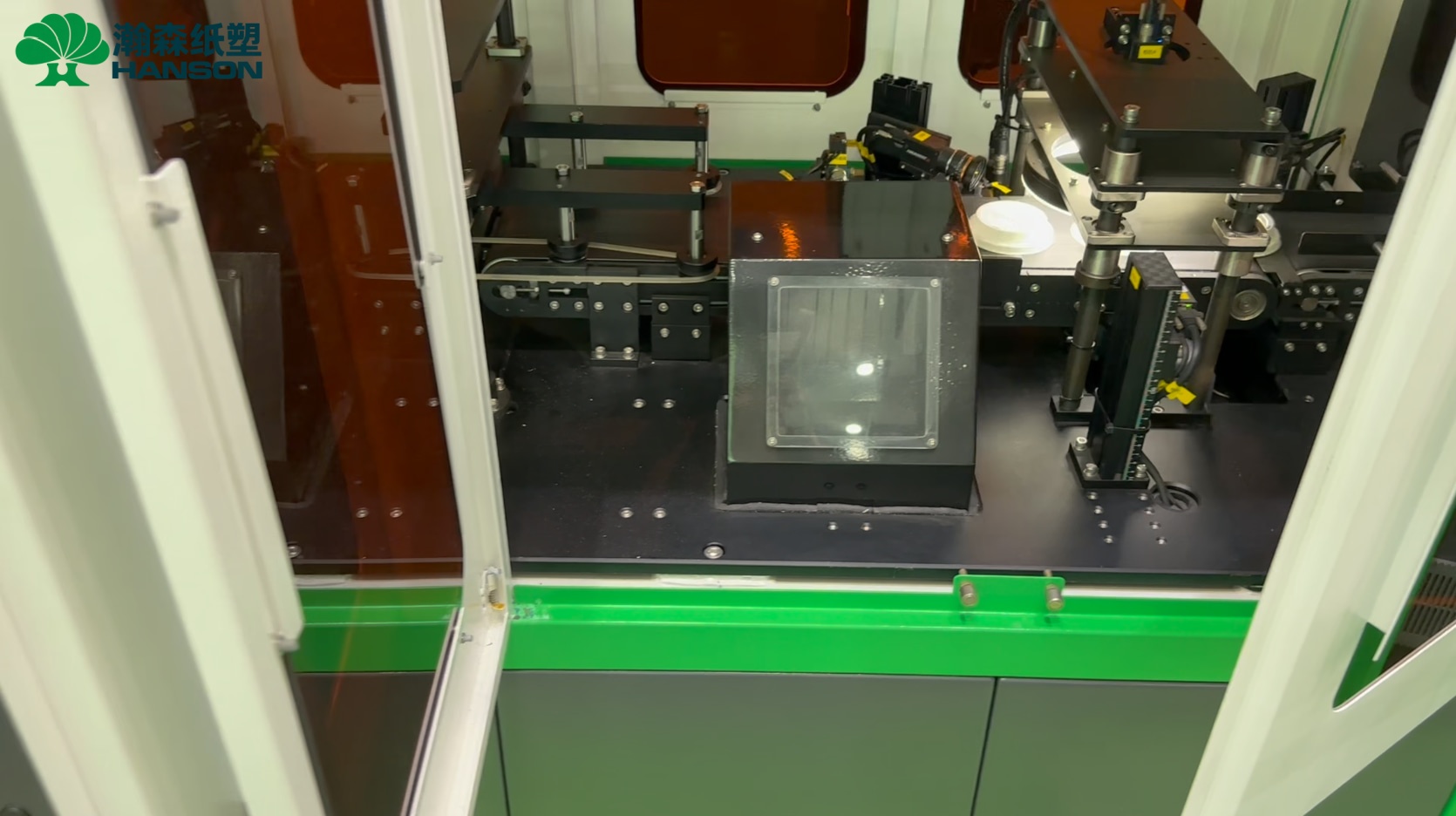
When a single machine outputs over 100,000 cup lids daily, relying on manual quality control is both cost-prohibitive and prone to error. Minor tears, dark spots, or slight trimming defects can result in entire batches being rejected by end clients.
A state-of-the-art automatic molded fiber cup lid production line must incorporate machine vision inspection. By utilizing high-resolution cameras and advanced algorithms post-trimming, the system can instantly identify cosmetic flaws and dimensional anomalies, automatically rejecting unqualified products. This ensures a consistently high yield rate before the lids reach the packaging stage.
5. End-to-End Automation: From Forming to Packaging
The profitability of cup lid manufacturing relies heavily on scale and labor optimization. If the front-end forming is ultra-fast but the back-end requires dozens of workers for collection, inspection, and bagging, the overall economic advantage is lost.
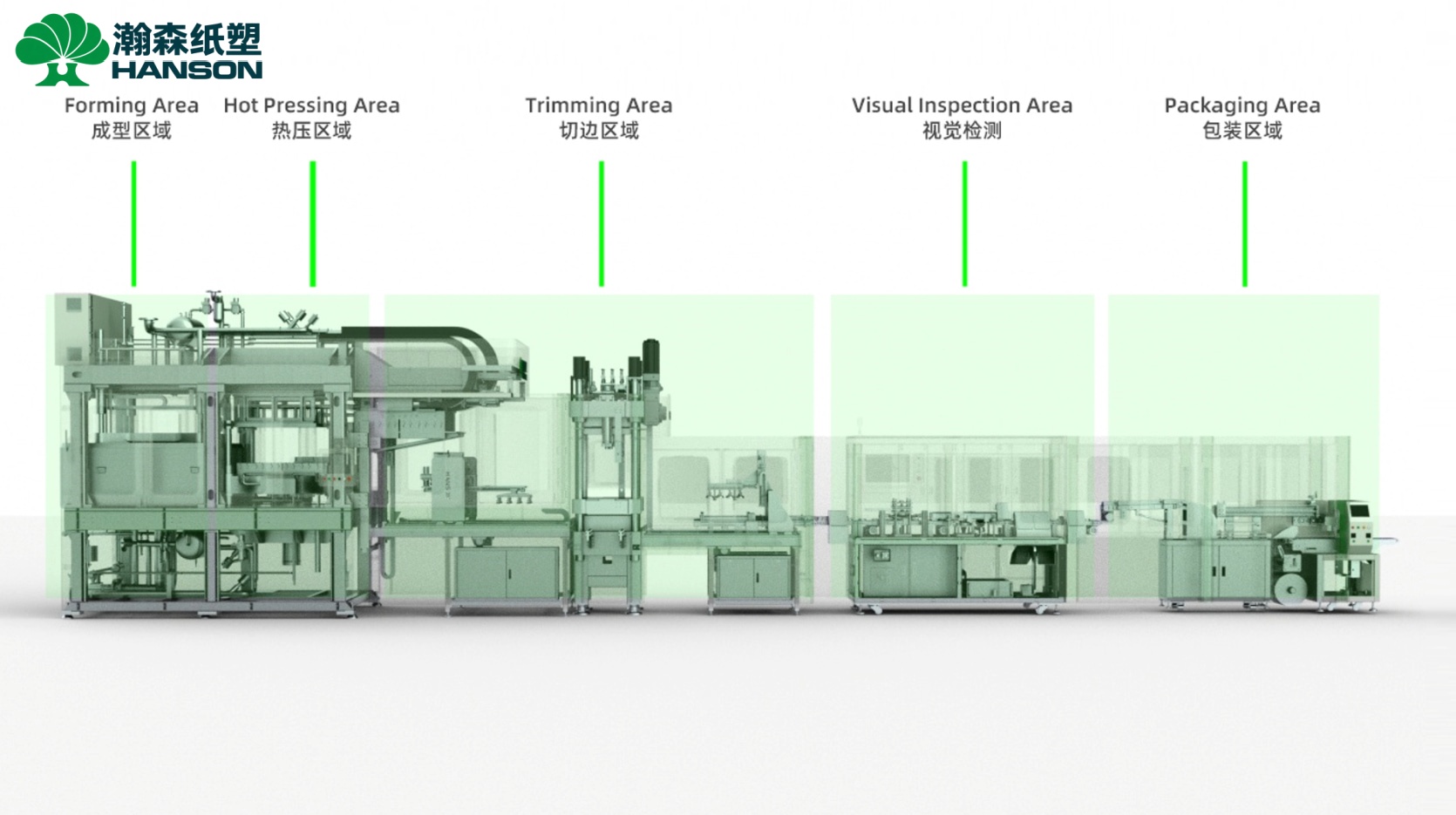
When assessing a machine, look for a complete process loop. The Hanson Pulp Molding ZAKS-9595 achieves seamless end-to-end automation, integrating forming, hot pressing, trimming, vision inspection, and packaging. This continuous flow minimizes manual intervention, lowers the risk of secondary contamination, and establishes a truly stable mass production system.
FAQ
1. Is a molded fiber cup lid machine the same as a cup carrier machine? No, they are completely different. A cup lid requires high surface quality, precise dimensions, servo trimming, and vision inspection, necessitating a specialized wet-press automated line like the ZAKS-9595. A cup carrier (or drink carrier) is designed for load-bearing and cushioning, typically produced using dry-press or semi-dry press production lines. The equipment and processes cannot be mixed.
2. How many cup lids can one machine produce per day? Actual capacity varies based on lid size, weight, mold configuration, and operating rhythm. For instance, the Hanson Pulp Molding ZAKS-9595 has a standard capacity of up to 100,000–120,000 pcs/day (24H) under appropriate production conditions.
3. Why is machine vision inspection necessary for cup lids? Due to the massive production volume and strict sealing requirements, manual inspection is inadequate. Vision inspection automatically intercepts defects like spots, tears, and dimensional errors at high speeds, guaranteeing product quality and preventing defective lids from entering the final automated packaging stage.
Conclusion
Purchasing a molded fiber cup lid machine goes far beyond comparing basic mechanical specs. It requires evaluating how well the system handles dimensional stability, precise trimming, automated defect detection, and final packaging. Only when forming and post-processing automation work in perfect harmony can a manufacturer consistently deliver high-quality lids while keeping operational costs under control.
If you already have a cup lid product 3D drawing, a physical sample, or a target daily capacity, these details can be used to evaluate the molding process, mold configuration, and equipment setup. Hanson Pulp Molding can assess your project from forming and servo trimming to vision inspection and automatic packaging.
WhatsApp: +86 15920604830
Email: linchuangcheng@hspulpmolding.com