The shift towards sustainable foodservice packaging has driven massive demand for molded fiber cup lids. However, for investors and packaging manufacturers evaluating a molded fiber cup lid machine, the procurement process is highly complex.
Many buyers make the mistake of evaluating a cup lid project using the same criteria as standard tableware or protective packaging, focusing solely on theoretical cycle times. In reality, producing a reliable, leak-proof cup lid requires a delicate balance of dimensional precision, continuous capacity, and post-processing automation.
Molded Fiber Cup Lids vs. Cup Carriers: A Critical Distinction
Before diving into equipment specifications, it is essential to clarify a common industry confusion: cup lids and cup carriers are entirely different products requiring entirely different production routes.
A cup carrier (or drink carrier) is designed for load-bearing and cushioning. It is typically produced using an automatic dry-press pulp molding production line, where slight dimensional tolerances do not affect its primary function.
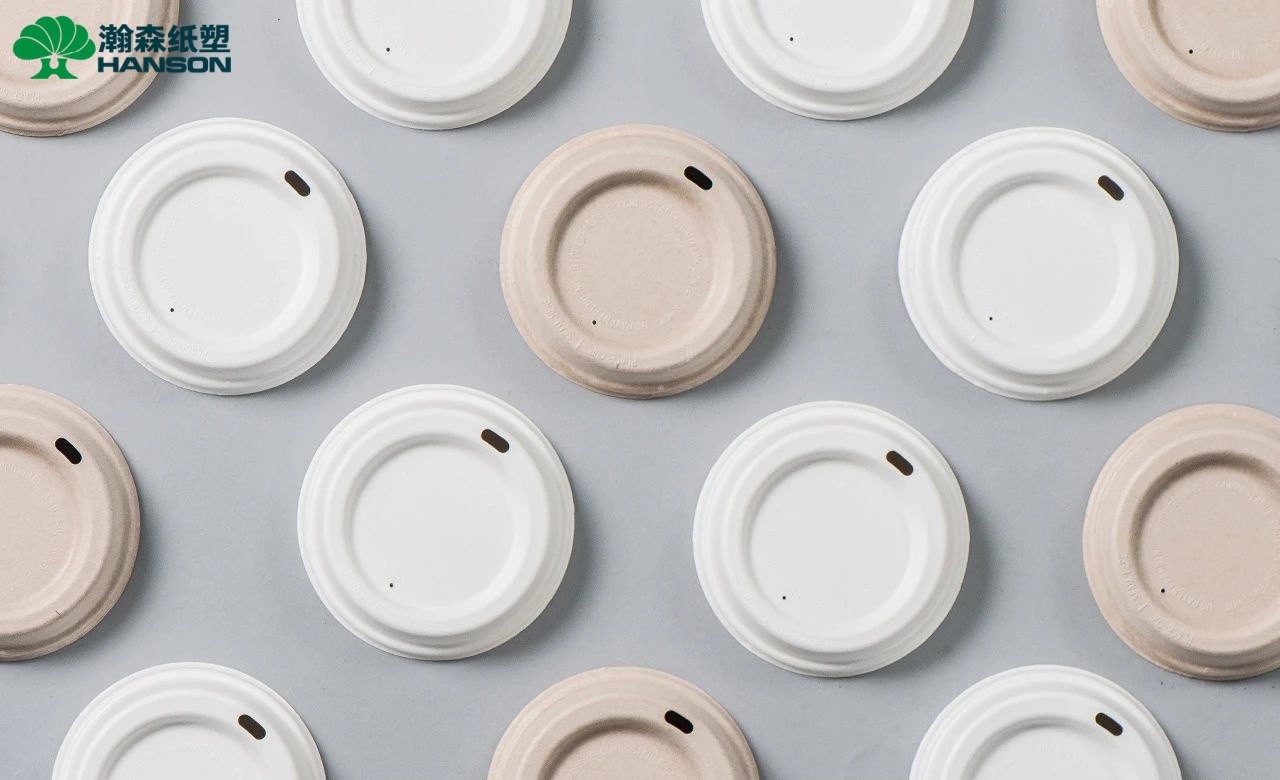
Conversely, a molded fiber cup lid must securely snap onto a paper cup to prevent spills. This requires exceptional dimensional stability, a tight sealing mechanism, and a perfectly smooth edge. Producing cup lids demands a specialized wet-press thermoforming process integrated with high-precision trimming—a system entirely distinct from cup carrier manufacturing.
Precision First: Why Cup Lids Require High Dimensional Stability
The most critical performance metric for any cup lid is its ability to prevent leaks. This makes dimensional accuracy the lifeblood of cup lid production.
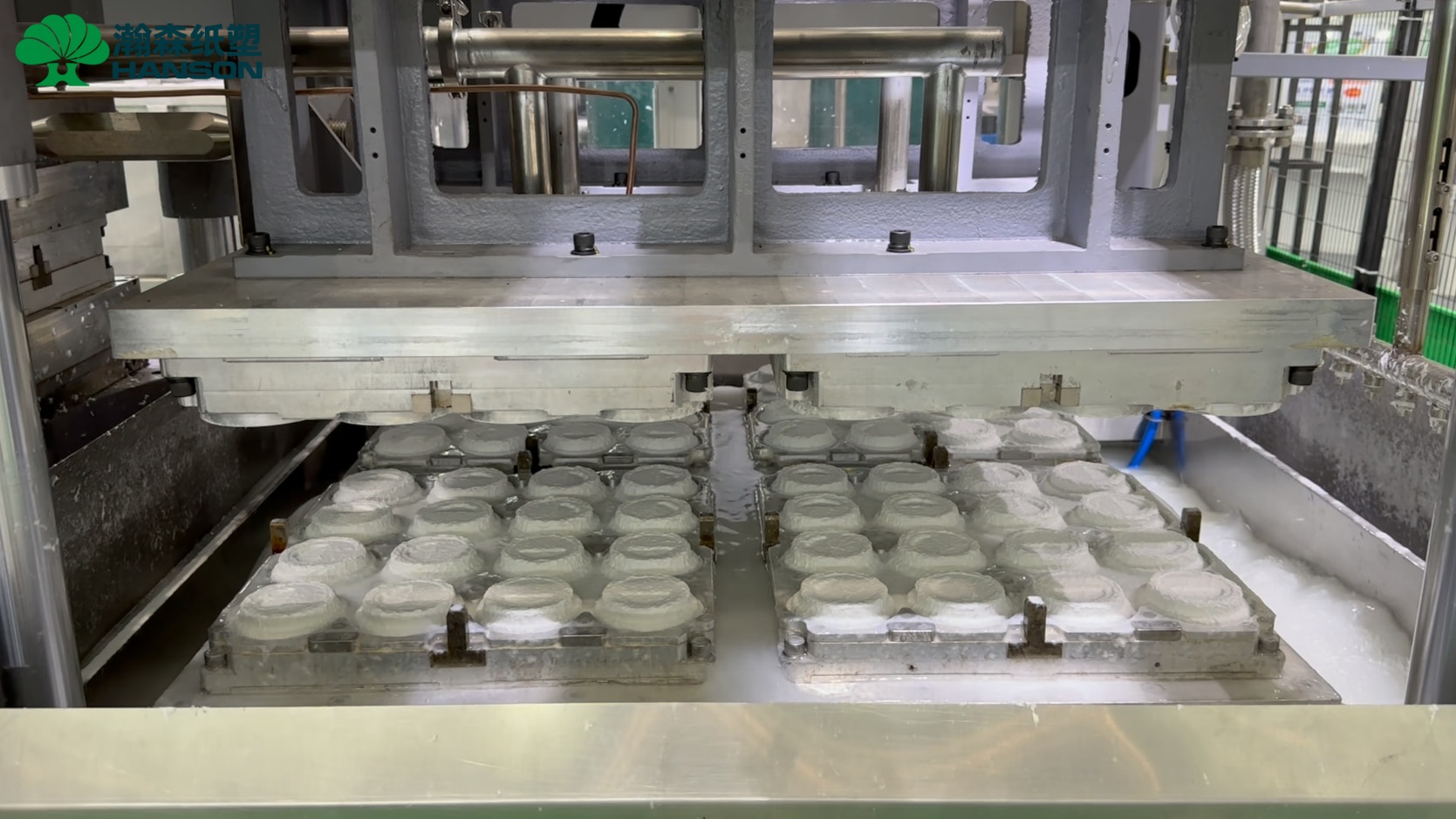
During the forming and hot-pressing stages, the wet preform undergoes rapid dewatering and drying. If the hot press mold temperature is uneven, or if the press pressure is inconsistent, the resulting cup lid will suffer from micro-warping. Even a tolerance deviation of a fraction of a millimeter can compromise the snap-fit mechanism.
Therefore, a capable pulp molded cup lid machine must offer superior mold manufacturing quality and precise process control to ensure absolute product consistency across millions of units.
The Capacity Formula: Forming Speed vs. Actual Output
When evaluating a paper cup lid making machine, buyers frequently ask: “What is the daily output?” However, relying solely on theoretical forming speed is a trap.
In cup lid production, the actual daily capacity is dictated by the slowest bottleneck in the line. Even if your forming station operates at top speed, the overall output will plummet if the subsequent stages—such as trimming and quality inspection—cannot keep pace. High-capacity cup lid manufacturing is not just about molding fast; it is about maintaining a continuous, uninterrupted flow through every stage of production.
Automation: Integrating Trimming, Vision Inspection, and Packaging
For high-volume, small-sized items like cup lids, manual intervention is not an option. Relying on manual labor for material transfer, trimming, or inspection significantly increases operating costs and the risk of defective products entering the market.
A modern fiber lid production line must heavily integrate post-processing automation:
-
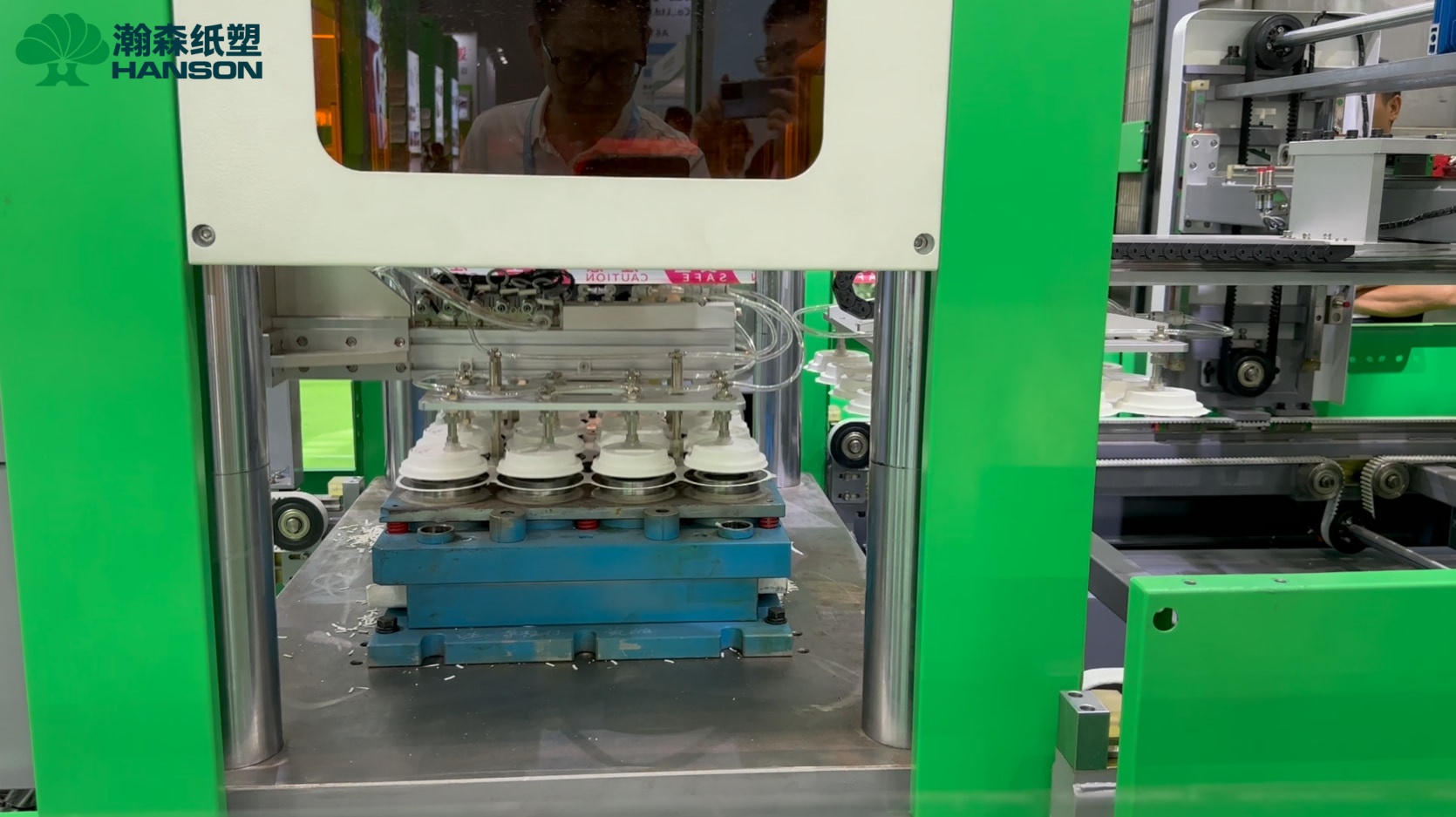
Servo Die Cutting (Trimming): Provides precise, clean cuts to ensure the lid’s edge is perfectly smooth, which is critical for lip comfort and sealing.
-
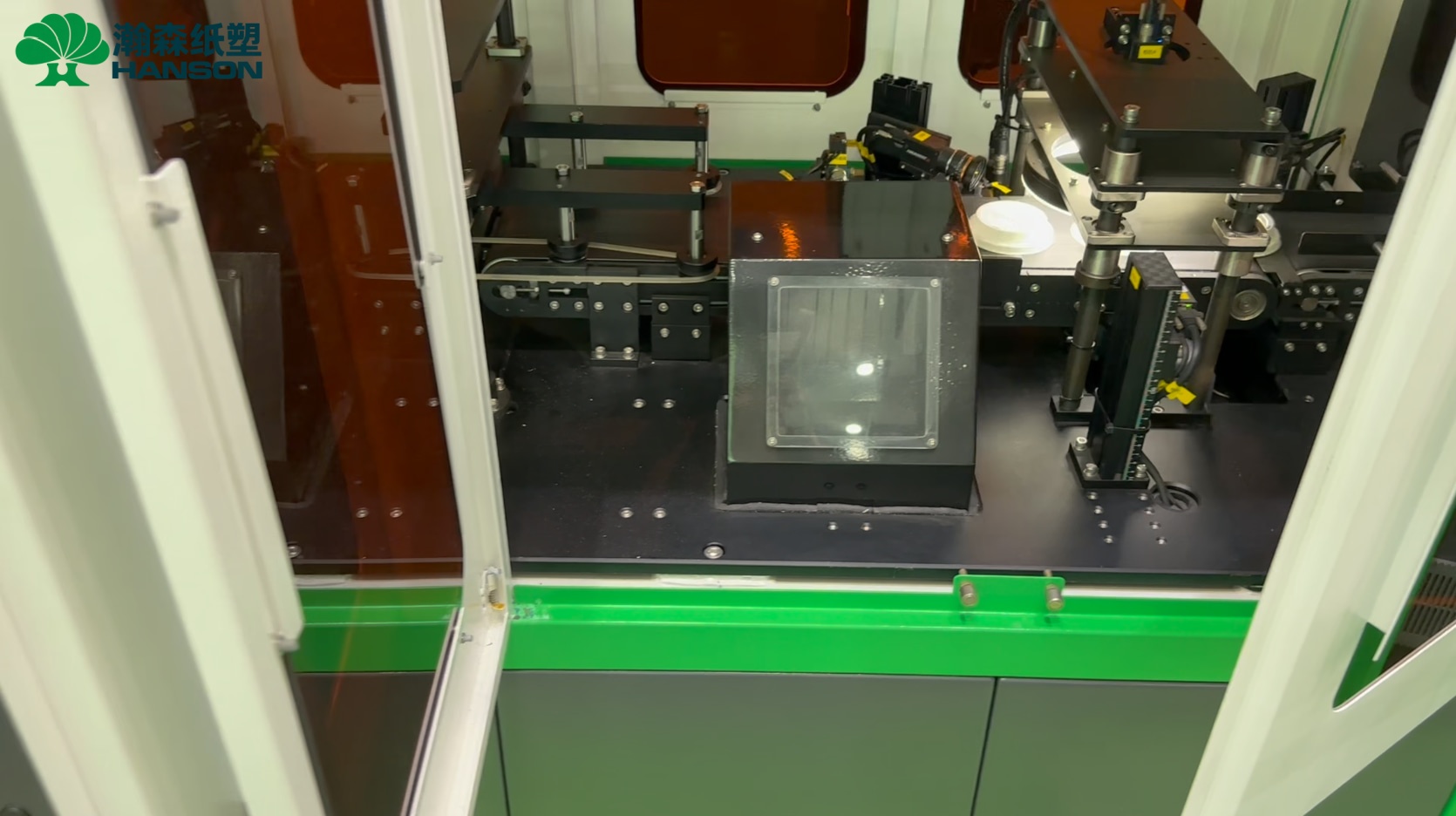
Machine Vision Inspection: Automatically scans each lid for defects such as rough edges, tears, or dimensional inaccuracies, rejecting substandard products instantly.
-
Automatic Packaging: Approved lids are automatically stacked and packaged, allowing for stable commercial production.

Hanson Pulp Molding ZAKS-9595: A Turnkey Solution for Cup Lids
To address the stringent requirements for precision, capacity, and automation in cup lid manufacturing, Hanson Pulp Molding offers the ZAKS-9595 Molded Fiber Cup Lid Machine.
Designed specifically for high-efficiency lid production, the ZAKS-9595 features a 950 × 950 mm mold platen. Under appropriate production conditions, this specialized equipment can achieve a daily production capacity of up to approximately 100,000–120,000 cup lids per 24 hours.
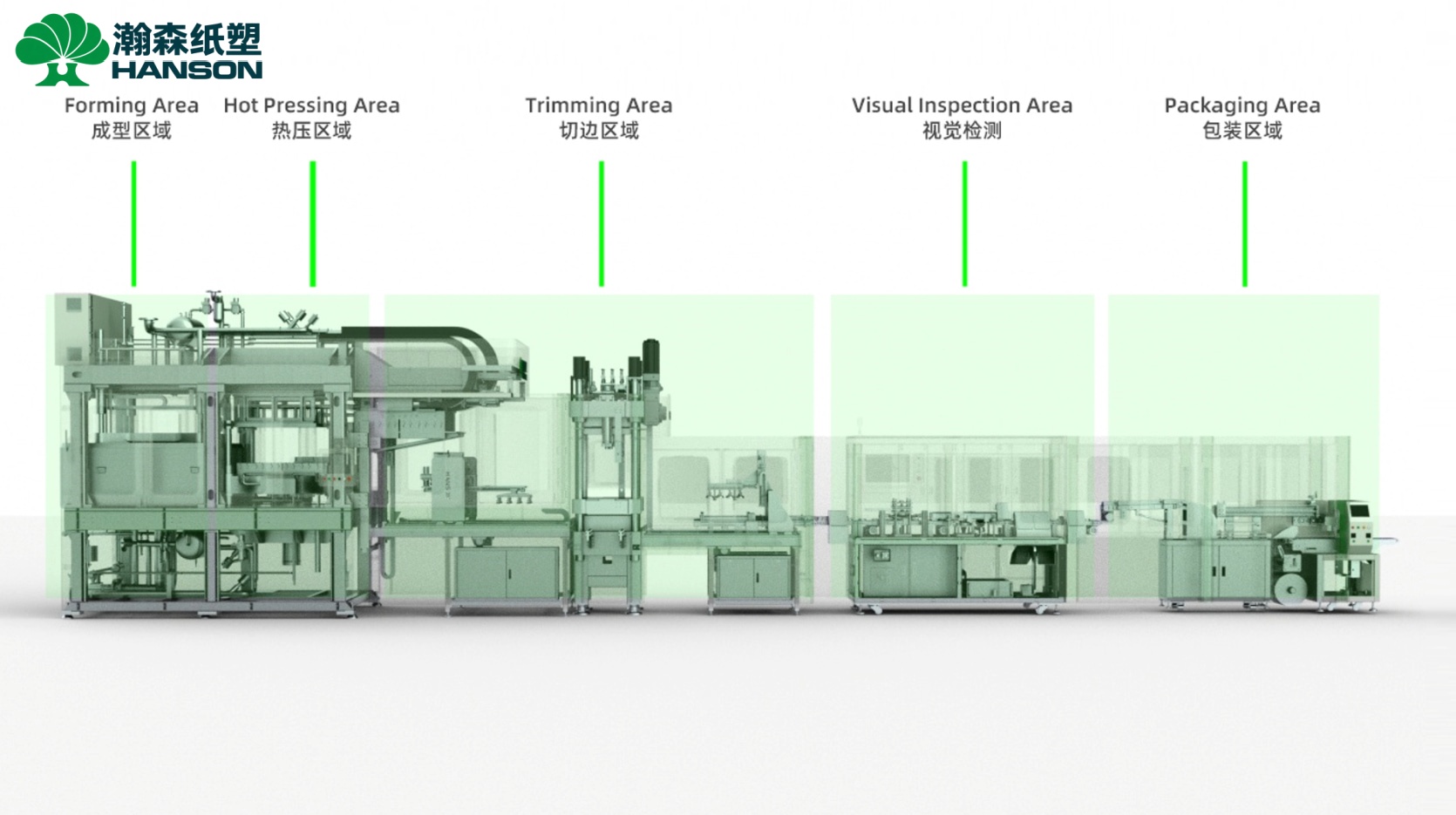
More importantly, as a specialist in turnkey pulp molding solutions, Hanson Pulp Molding engineered the ZAKS-9595 to eliminate production bottlenecks. The system seamlessly integrates forming, hot pressing, servo-driven trimming, machine vision inspection, and automatic packaging into a single continuous workflow. By automating the most labor-intensive and error-prone stages, the ZAKS-9595 ensures that high capacity never comes at the expense of sealing precision or product quality.
FAQ
Can I use the same machine to produce cup lids and cup carriers? No, this is not recommended. Cup lids require a specialized thermoforming process with integrated servo trimming and vision inspection to guarantee sealing precision (e.g., ZAKS-9595). Cup carriers, used for holding multiple cups, focus on cushioning and are typically produced on a dry-press or semi-dry press production line.
What is the actual production capacity of a molded fiber cup lid machine? Using the Hanson Pulp Molding ZAKS-9595 as a benchmark, the standard capacity can reach approximately 100,000–120,000 pcs/day (24H). However, actual output depends on the specific cup lid dimensions, product weight, mold configuration, and stable operating hours.
Why is machine vision inspection necessary for cup lid production? Cup lids are mass-produced food-contact items where a tiny defect can cause a hot beverage to spill. In a high-speed production environment outputting over a hundred thousand units daily, manual visual checks are impossible. Machine vision inspection automatically identifies and removes defective lids, ensuring product consistency and protecting your brand’s reputation.
Conclusion
Successfully launching a molded fiber cup lid project requires moving beyond basic cycle times and prioritizing a holistic manufacturing approach. By balancing precise hot pressing, high-speed servo trimming, and automated vision inspection, manufacturers can achieve scalable, leak-proof production. The key to long-term profitability lies in choosing a fully integrated production line that aligns capacity with uncompromising quality.
If you already have a cup lid 3D drawing, product dimensions, or a target daily capacity, Hanson Pulp Molding can help you evaluate the appropriate tooling, trimming configuration, and automation setup for your project.
WhatsApp: +86 15920604830 Email: linchuangcheng@hspulpmolding.com