When planning a new production line for premium industrial molded fiber packaging—such as smartphone inserts, headphone trays, and high-end cosmetic packaging—investors often focus heavily on one metric: the theoretical cycle time of the forming machine.
While cycle time is an important engineering parameter, using it as the sole basis for calculating actual daily capacity is a risky oversight. Producing premium molded fiber inserts with high surface smoothness and tight dimensional tolerances requires a high-precision wet press process. In this environment, true factory output is dictated by the seamless synchronization of the pulping system, the forming and hot pressing equipment, mold efficiency, and post-processing automation.
The Misconception of Cycle Time in High-End Packaging
Unlike traditional dry press protective packaging, which prioritizes basic cushioning and high-volume output, premium molded fiber packaging requires the wet preform to be dried and shaped directly within a heated mold. This wet press (thermoformed fiber) process results in a dense, smooth, and precisely dimensioned product.
However, because the product is dried inside the mold, the production rhythm is highly sensitive to variations in moisture and material distribution. If any upstream or downstream process is out of sync, the core equipment will experience increased downtime, lower yield rates, and reduced actual capacity.
Three Pillars of Actual Production Capacity
To understand why a holistic approach is necessary, it is critical to break down how each stage of the production line impacts the final output.
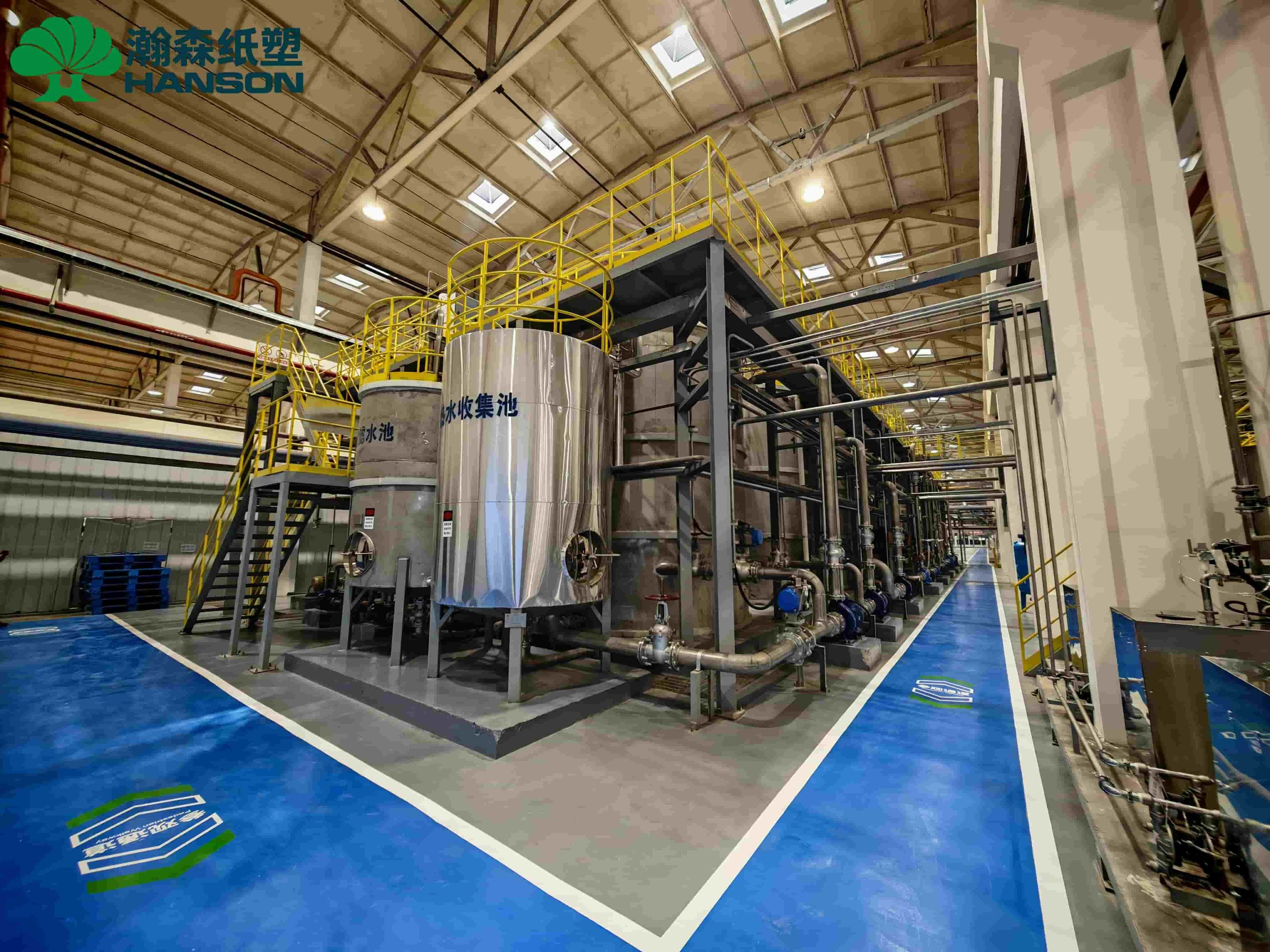
1. Intelligent Pulping System: The Foundation of Yield Rate
For high-end molded fiber inserts, product weight consistency is paramount. If the pulping system delivers slurry with fluctuating consistency (concentration), the forming molds will pick up uneven amounts of fiber.
Uneven weight directly disrupts the hot pressing stage. Thicker or wetter areas require longer pressing times to dry completely. If the machine runs on a fixed, fast cycle time, these areas will suffer from blistering, warping, or poor surface finish. Therefore, an intelligent pulping system that ensures precise furnish preparation is the prerequisite for keeping the forming machine running at full, stable capacity.
2. Forming and Hot Pressing: Precision Meets Efficiency
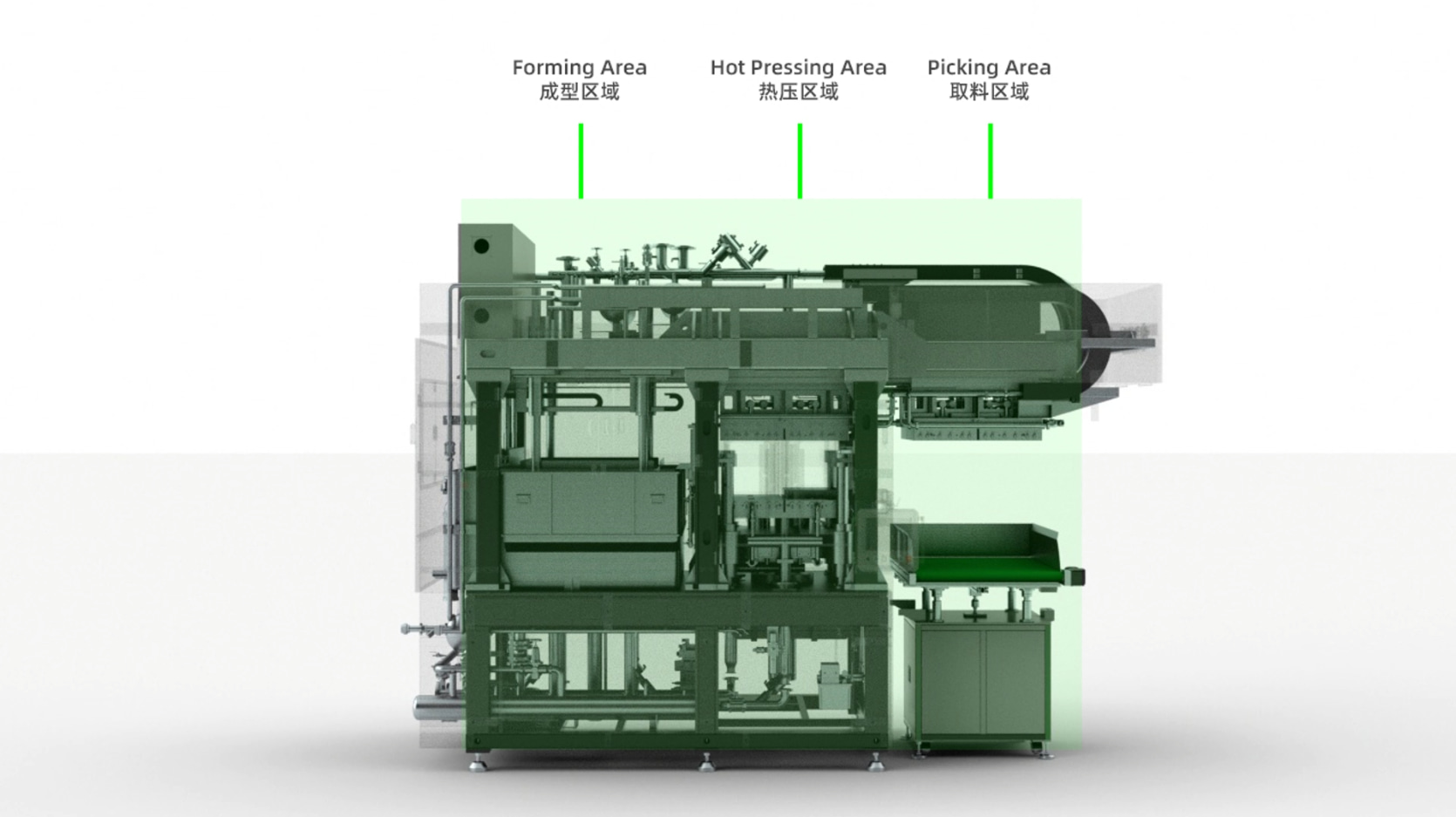
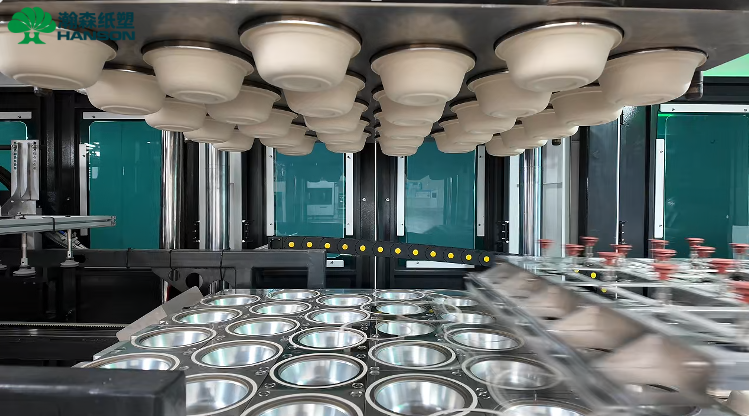
The core forming equipment must be perfectly matched with its tooling. The Hanson Pulp Molding ZAP-9585 industrial molded fiber packaging machine integrates forming and hot pressing, utilizing dynamic pulp replenishment to optimize the forming process for complex product geometries.
Equally important is molded fiber tooling. The mold does much more than dictate the shape; its mesh design and drainage efficiency determine how much water is removed before the wet preform enters the hot press. High moisture content forces the hot press mold to expend more time and thermal energy evaporating water, stretching the cycle time. True production efficiency is achieved only when the equipment and the molds are developed together.
3. Post-Processing Automation: The Final Output Bottleneck
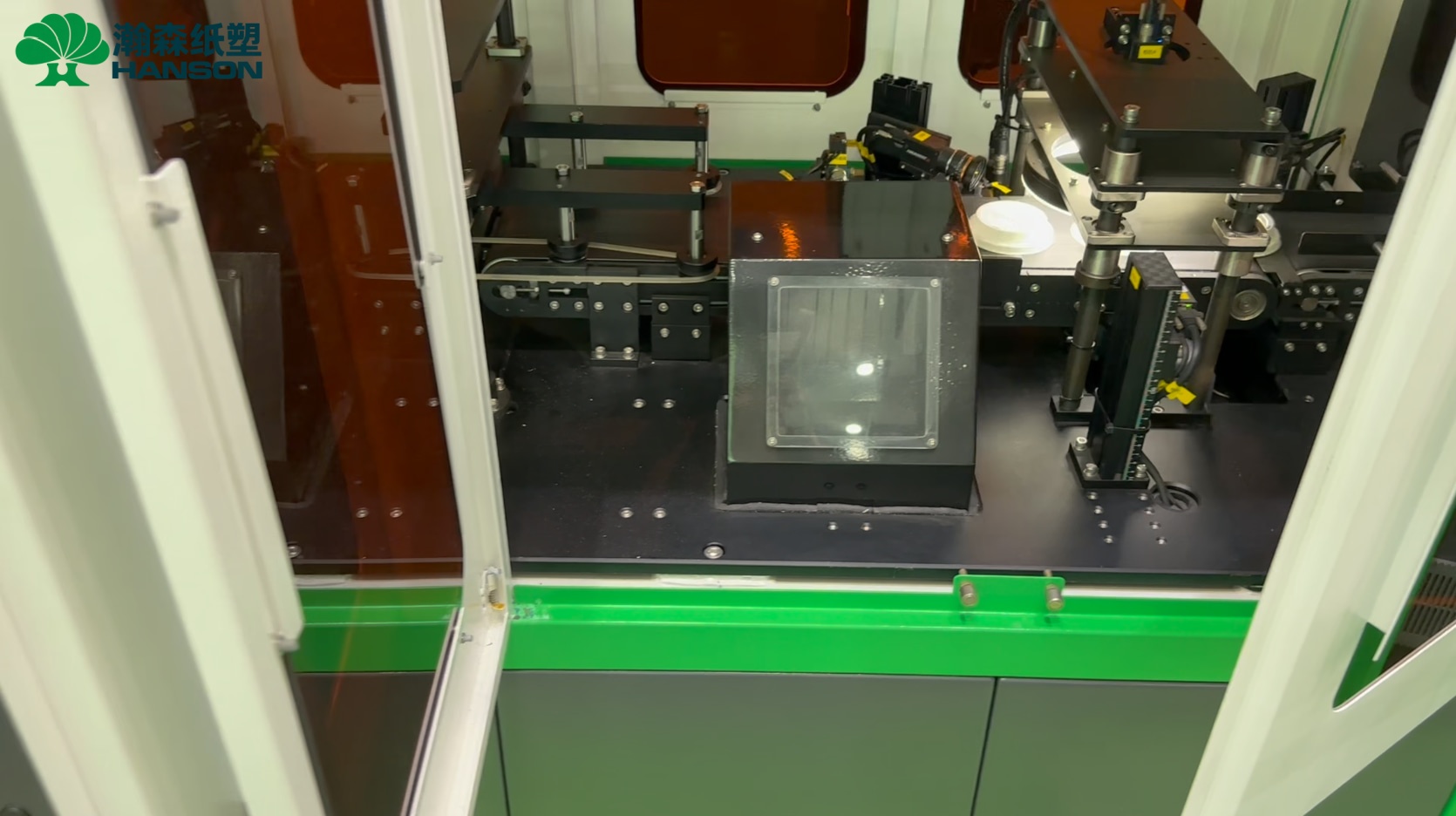
Premium industrial packaging typically requires highly accurate trimming (servo punch cutting), vision inspection for surface defects, and careful stacking. If the core forming equipment operates at high speed but the trimming and inspection are handled manually or by inadequate secondary machinery, products will bottleneck on the factory floor. The actual throughput of the entire plant is ultimately limited by its slowest post-processing stage.

Project Case Studies: Scaling Up Premium Molded Fiber Production
In industrial B2B manufacturing, the reliability of equipment is proven through continuous, large-scale commercial production rather than just theoretical specifications.
In the collaboration between Hanson Pulp Molding and Gaoyi Packaging, the client faced a rapid surge in business and an urgent need to expand its high-end packaging capacity. Gaoyi Packaging has accumulated 8 repeat purchases over time. This ongoing partnership demonstrates a critical purchasing logic: evaluating a supplier is not just about the initial quote or the machine’s speed on a test run. It is about whether the equipment can maintain high uptime and product consistency during continuous, high-volume operations, reliably supporting the client’s long-term expansion.

Similarly, in the Xibao project—which focused on premium industrial packaging for international markets—the primary demands were surface smoothness, strict dimensional tolerances, and batch-to-batch consistency. Success in such projects proves that integrating the pulping consistency, mold precision, and forming control is far more critical than merely attempting to run a machine faster.
The Value of a Turnkey Pulp Molding Expert
Building a premium molded fiber packaging line is not about buying isolated pieces of machinery; it is about establishing a cohesive manufacturing system.
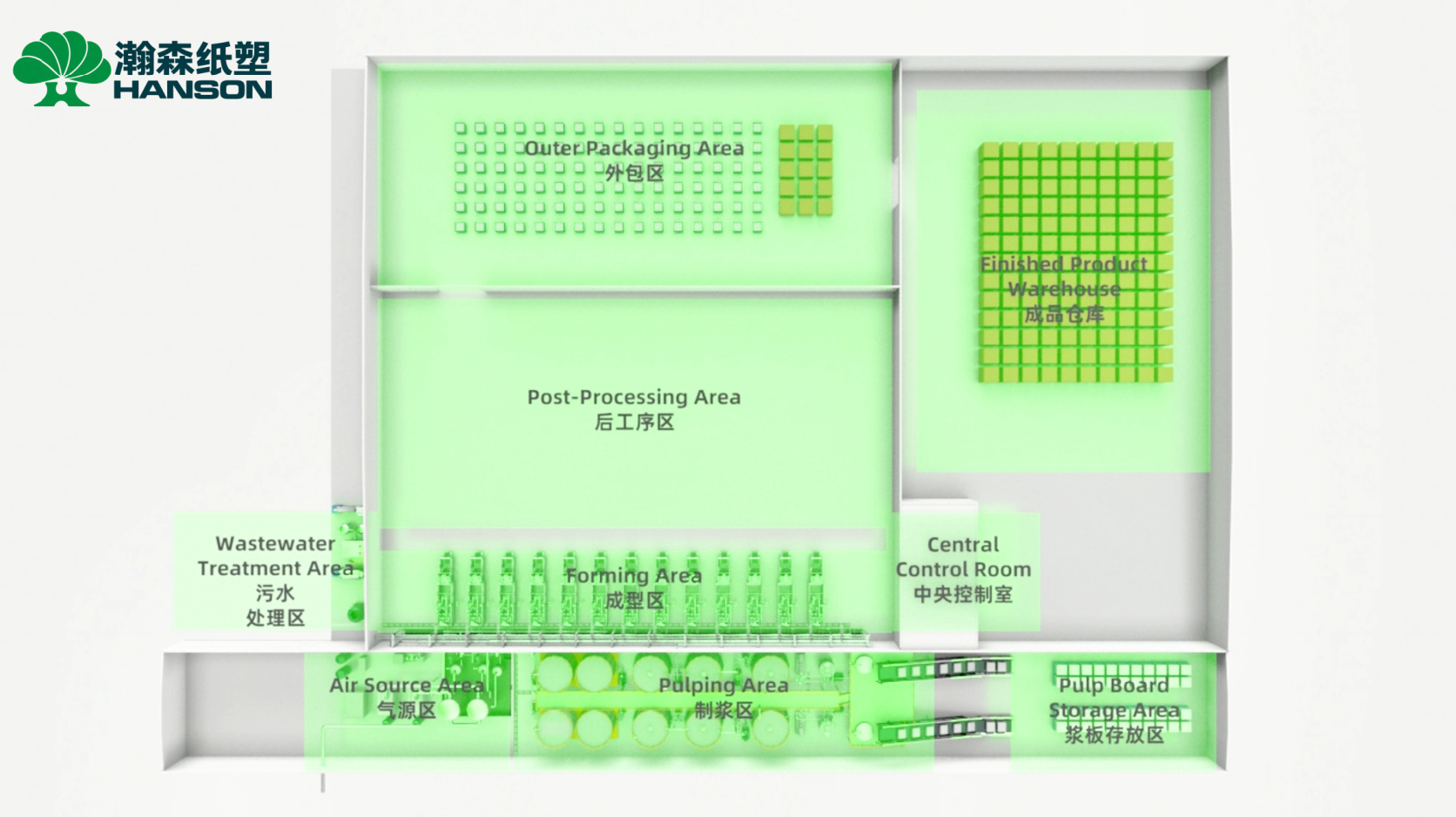
As a pulp molding turnkey expert, Hanson Pulp Molding approaches projects starting from the final product. Through our 6+1 turnkey service system, we engage in product development and process validation early on. Based on the product’s structural complexity and target capacity, we systematically configure the pulping system, forming equipment like the ZAP-9585, precision molds, and post-processing automation. This holistic plant planning ensures that all interfaces work smoothly, minimizing ramp-up time and maximizing stable commercial production.
FAQ
Does having more mold cavities automatically increase production capacity? Not necessarily. While more cavities theoretically yield more products per cycle, increasing the mold area places higher demands on drainage, vacuum distribution, and temperature uniformity during hot pressing. If adding cavities leads to uneven drying or a lower yield rate, the actual daily output of qualified products may decrease. Cavity layout must be carefully matched to the product’s geometry and the machine’s pressing capabilities.
Why is the wet press process preferred for smartphone and electronics inserts? Consumer electronics packaging requires excellent surface smoothness, sharp structural details, and strict dimensional stability to ensure a premium unboxing experience and precise device fit. The wet press (thermoformed fiber) process cures the wet preform directly inside a heated mold under pressure, achieving these exact material properties far better than traditional dry press methods.
Should I purchase equipment based solely on my 3D product design? It is not recommended. For new premium packaging structures, it is best to start with product prototyping and process validation (using equipment like the Hanson ZAMS-6047). Testing verifies draft angles, drainage efficiency, and material shrinkage. Once the process is stable, you can confidently proceed with configuring the large-scale industrial molded fiber packaging machine and complete plant layout.
Conclusion
Capacity planning for premium industrial molded fiber packaging is a comprehensive engineering calculation that spans from the pulper to the final trimming station. The actual output of a facility is a result of flawless system integration, not just the isolated speed of a forming machine. As demonstrated by the 8 repeat purchases from Gaoyi Packaging, investing in a stable, fully integrated production system ensures that theoretical capacity translates into sustainable, high-quality commercial production.
If you already have a product sample, 3D drawing, or target daily capacity for your high-end electronics packaging, these details can be used to evaluate the molding process, mold configuration, and equipment setup. Hanson Pulp Molding can provide a comprehensive assessment covering everything from intelligent pulping to the ZAP-9585 forming systems and post-processing automation.
WhatsApp: +86 15920604830 Email: linchuangcheng@hspulpmolding.com