
How to Troubleshoot Mold Dehydration When Pulp Molding Cycle Time is Too Long
If your molding cycle time remains stubbornly high, the root cause usually lies in the pulp suction and dehydration stages. Slow dehydration leaves excessive moisture in the wet-blank, forcing machine operators to artificially extend the cycle time to prevent the product from tearing during transfer.
However, resolving this requires a systemic engineering approach rather than guesswork. Do not immediately assume the tooling needs replacement. Instead, troubleshoot by prioritizing the equipment’s vacuum infrastructure, the mold’s mesh condition, and the slurry properties. Always rely on rigorous on-site verification to adjust the equipment effectively.
1. Evaluate the Equipment: Is the Vacuum System Sufficient?
The speed of the dehydration process is intrinsically linked to the negative pressure provided by your forming machine. If the equipment cannot draw water efficiently, even the most advanced tooling design will fail to shorten the production cycle.
-
Vacuum Pipeline and Pressure Loss: Begin by inspecting the lower vacuum main pipe, the hot vacuum separator, and the vacuum stabilization tank. For older production lines, check if your vacuum pump (such as a permanent magnet variable frequency oil-free screw vacuum pump) has suffered wear, resulting in a diminished pumping speed. Any minor leaks in the air, oil, or vacuum pipelines will severely reduce the pressure differential required during pulp suction.
-
Cycle Coordination: Analyze the automatic forming cycle of the equipment. The timing of the pulp suction must synchronize perfectly with the opening and closing mechanism of the vacuum valve. Sluggish cylinder or valve actions introduce unnecessary delays, needlessly inflating the overall cycle time.
2. Diagnose the Tooling: Mesh Condition and Drainage Structure
Once the hardware vacuum is verified, turn your attention to the mold. During our extensive on-site operations, Hanson Pulp Molding engineers frequently observe that older tooling, especially running on non-Hanson equipment, suffers a massive drop in dehydration performance over time.
-
Mesh Blockage and Mold Clearance: If the mesh side of the tooling is clogged with fine fibers or chemical additives like AKD emulsion, dehydration resistance skyrockets. Additionally, continuous thermal cycling can alter the mold clearance. Implement a rigorous, high-pressure mold cleaning routine to maintain optimal open area.
-
Drainage Hole Distribution: If products show significant weight discrepancies between positions on the mold cavity, or display uneven moisture distribution, it strongly indicates poor CNC drainage hole layout or obstructed internal water channels. This results in localized soft spots on the wet-blank.
-
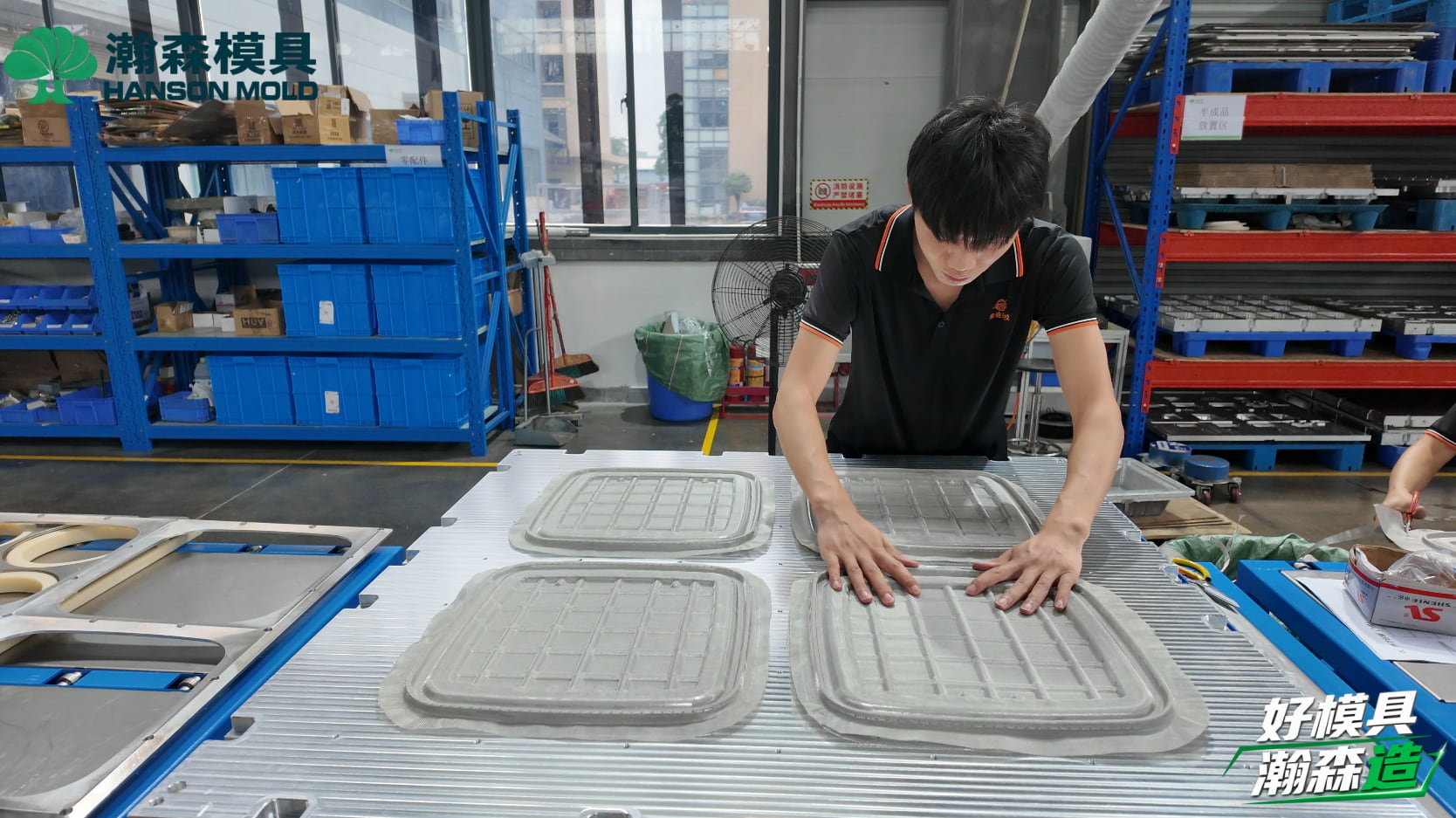
Tooling Optimization Services: Hanson Pulp Molding understands processes, equipment, and most importantly, tooling. Operating an independent tooling division, we have manufactured 500 pulp molding molds to date. For underperforming legacy molds, we provide a complete optimization pathway: from comprehensive 3D scanning, re-drilling, and cleaning, to re-meshing, assembly, and on-site mass production support, physically unlocking your mold’s drainage potential.
3. Assess the Slurry and Process Conditions: Is the Material “Too Sticky”?
Dehydration efficiency is heavily influenced by the properties of the raw material. Tooling engineers must cross-check the slurry conditions before making drastic hardware adjustments.
-
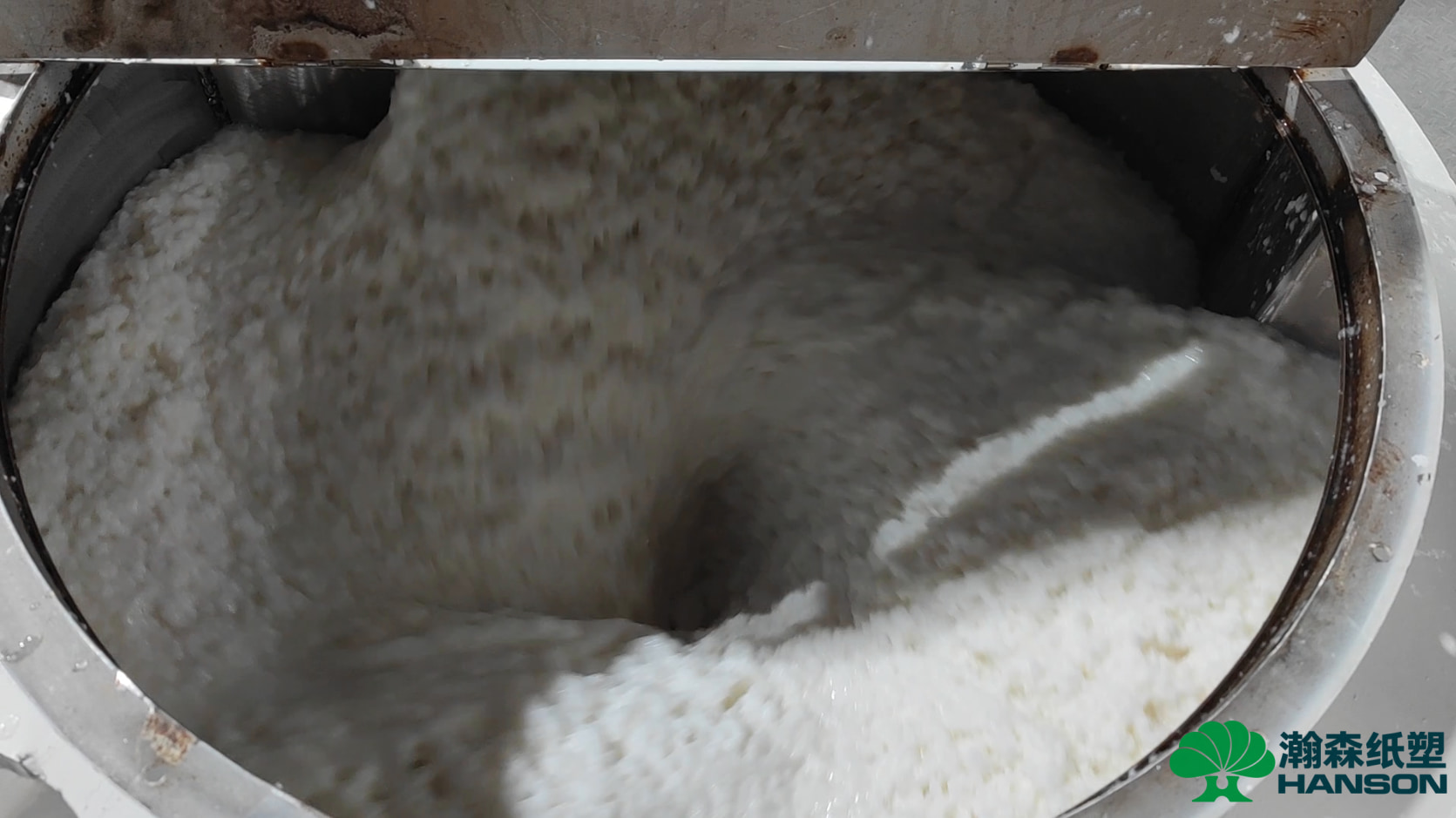
Concentration and Beating Degree: A slurry concentration that is too high, or an excessive beating degree (where fibers are cut too short, severely reducing freeness), makes it extremely difficult for the vacuum to extract water. This leaves the wet-blank with a moisture content far exceeding the standard 60-80% range, compelling operators to lengthen the suction time just to give the wet preform enough structural integrity to eject.
-
Temperature and Additives: Lower slurry temperatures in winter increase water viscosity, impeding drainage. Concurrently, excessive use of wet-strength or sizing additives can alter the surface tension of the fibers. Conduct controlled field trials with adjusted slurry formulations to observe their direct impact on the molding beat.
4. Cease Blind Adjustments and Follow the Data
When struggling with long production cycles, refrain from blindly cranking up the vacuum pressure or forcing a shorter suction time, as this will only crash your product yield rate. Methodically inspect pipeline integrity, verify slurry drainage rates, and redesign stubborn structural defects on old molds. All optimization efforts must be grounded in verified on-site dehydration metrics.
FAQ
-
Q1: What problems arise if the wet-blank moisture content is too high? A1: An excessively high moisture content not only prolongs the forming cycle but also compromises structural integrity, leading to deformation and edge-dropping during turnover machine transfer. Furthermore, it significantly spikes energy consumption during the hot press molding stage and frequently causes surface blistering and unclear embossed details.
-
Q2: How should we handle a clogged mold mesh slowing down dehydration? A2: Minor build-ups can be managed with ultrasonic baths or high-pressure water jets. However, if the mesh is heavily encrusted with hardened resin, or exhibits wire damage, it requires professional refurbishment. This involves 3D inspection, rigorous cleaning, replacing the stainless steel mesh layer, and conducting a trial assembly.
-
Q3: Why does the same mold yield different cycle times across different machines? A3: Cycle times depend on process compatibility. Different molding machines operate with varying forming hydraulic station pressures, vacuum pipeline diameters, and actual vacuum pump capacities. Achieving minimum cycle time demands synchronizing the specific mold’s drainage characteristics with the precise vacuum beat of the equipment it’s mounted on.
Are prolonged cycle times and poor wet-blank dehydration restricting your production capacity? Contact Hanson Pulp Molding for expert old-mold evaluation and on-site mass production support to eliminate bottlenecks. [+86 159 2060 4830]