
When molded fiber packaging requires enhanced water, oil, or gas barrier properties, lamination is often the preferred post-processing solution. However, once the decision to laminate is made, a critical question arises for buyers: How do you choose the right pulp molding laminating machine manufacturer?
Procuring lamination equipment is not just about comparing hardware prices; it is about investing in a reliable process solution. To ensure long-term stability and high yield rates, buyers should evaluate potential suppliers based on three core technical capabilities.
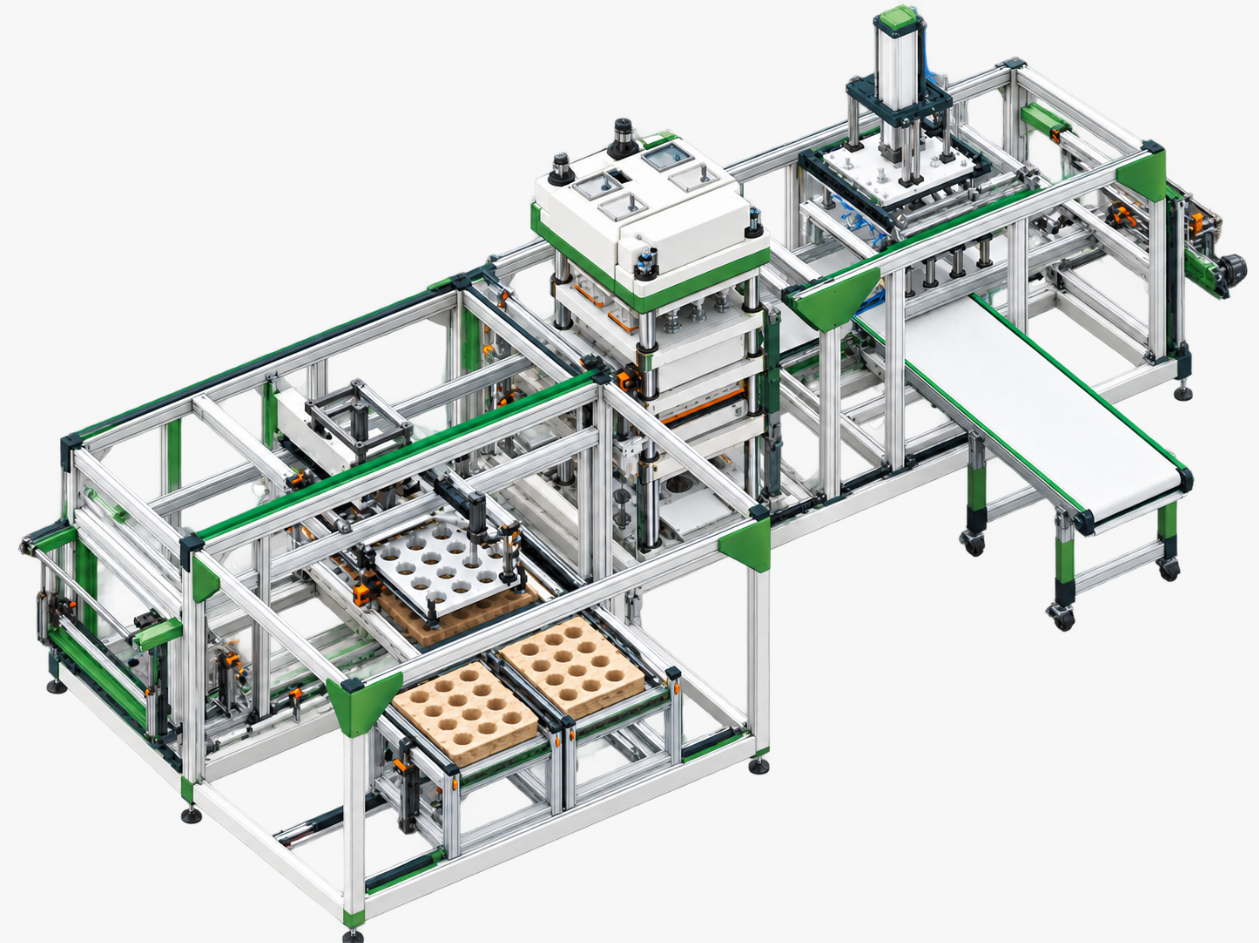
1. Evaluate Equipment Structure and Motion Control
The core of lamination involves heat and pressure. The underlying mechanical structure of the machine directly determines the quality of the lamination and the long-term reliability of the equipment.
When reviewing a molded pulp laminating machine, pay close attention to its motion control logic. Leading equipment, such as the automatic pulp molding laminating line developed by Hanson Pulp Molding, utilizes a fully servo-controlled system with a PLC and HMI interface. The heated mold platen operates using a straightforward vertical up-and-down motion without complex lateral movements. This streamlined mechanical structure reduces complexity and minimizes potential failure points.
Furthermore, incorporating a servo linkage mechanism ensures that pressure is distributed evenly. For machines with a large mold platen size, such as 1100 × 1100 mm, maintaining strict platen parallelism is crucial for achieving bubble-free, flat lamination across every cavity.
2. Assess Process and Material Compatibility
Different packaging applications demand different film materials and structural designs. A reliable manufacturer must provide equipment that is versatile enough to handle diverse process requirements.
First, consider film compatibility. Whether the packaging requires standard protection or advanced environmental compliance, the machine should adapt. Hanson Pulp Molding’s laminating machines are confirmed to be compatible with a wide range of films, including PE, PET, PLA, PBAT, PP, and EVOH. The electric heating system allows for precise temperature adjustments tailored to the melting points of these specific materials.
Second, assess product dimension limits. The equipment must accommodate both current products and future developments. For instance, Hanson’s equipment can process products with a maximum height of 80 mm, providing sufficient clearance for deep-cavity food containers or specialized industrial packaging.
3. Review Post-Press Automation Integration
To remain competitive, modern molded fiber facilities must reduce manual labor and optimize overall line efficiency. Therefore, a manufacturer’s ability to integrate lamination with other post-press automated steps is vital.
Running a standalone laminating machine often means manual transfers to a separate trimming station, causing bottlenecks. When selecting a supplier, look for their ability to deliver a seamless automated line. A typical continuous process should seamlessly integrate: Film unwinding → Lamination → Trimming → Product stacking.
Hanson Pulp Molding configures its lines to handle both lamination and trimming efficiently. Both the lamination and trimming stations are servo-driven, with the trimming station providing up to 80 tons of force for clean, precise edge cutting. This integrated approach eliminates manual transfer times and ensures continuous production.
A Note on Capacity: While equipment specifications often list a theoretical lamination cycle—such as 15 seconds per mold—actual daily capacity is strictly product-dependent. It varies based on product dimensions, mold layout, and the specific film used. Avoid relying on fixed daily output estimates without first analyzing your specific product.
Conclusion
Choosing a pulp molding laminating machine manufacturer means selecting a partner who understands the intricacies of the equipment, the material science of films, and the logic of automation.
If you are evaluating lamination for a molded pulp product, send Hanson Pulp Molding your product photos, dimensions, film requirements, and target performance. Our team can help evaluate the process feasibility and recommend the most suitable equipment configuration.