
Features
Why Choose HANSON?
Our Own Mold Division, Design to Production
We run an independent mold division covering product development, mold design, manufacturing and testing. Because we build our own tooling, we control what decides your product range, how fast a new item reaches market, and how steadily you hold tolerances. We also optimize existing molds and retrofit equipment you already run, so a line that has lost its edge returns to spec without being replaced.
Complete Lines, Not Single Machines
Our portfolio covers tableware lines, industrial packaging equipment, cup lid lines and sampling lines, plus downstream automation for trimming, inspection, stacking and packing. Every station is engineered to the one after it, so the line reaches rated output instead of bottlenecking at the press or dryer. Start with one forming unit and expand into a full line as demand grows.
Turnkey Delivery With On-Site Support
We take a project from feasibility analysis and raw-material verification through layout, installation, commissioning and operator training. For turnkey projects we can place engineers on site and support ramp-up for up to six months — the period when most new plants either stabilize or stall. Ten service locations and 24/7 response keep that support running after warranty ends.
Proven at Scale, Certified for Regulated Markets
Our equipment runs in more than 20 markets, with roughly 150 units shipped a year and about half going to export customers across Europe, the Middle East, Southeast Asia and South America. Our forming equipment holds CE certification under the EU Machinery Directive, and 50 patents protect our structures, processes and automation systems. We serve listed companies, state-owned enterprises and leading packaging manufacturers.
We Have The Best Solutions for Your Business
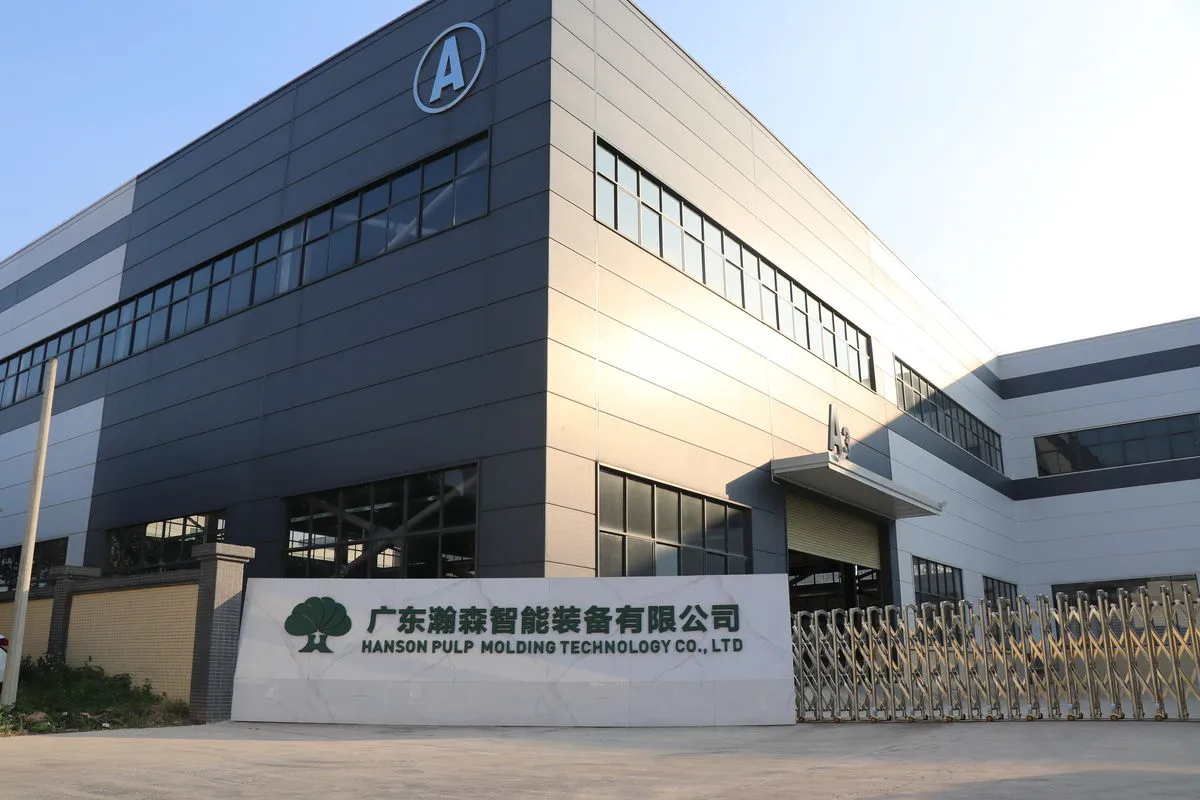
HANSON was founded in 2022 in Dongguan, Guangdong Province, China. Our 50,000 square meter facility employs more than 200 people, including a 50-engineer R&D team, and ships around 150 units a year to customers in more than 20 markets worldwide. We manufacture complete tableware production lines, premium industrial packaging equipment, plant-fiber cup lid lines and sampling lines, turning bagasse, bamboo fiber and recycled paper into tableware, egg trays, cup lids, cup carriers and protective packaging. What sets us apart is our independent mold division: with product development, mold design, manufacturing and testing all in house, we control the factor that decides how wide your product range goes and how reliably you hold tolerances. We deliver projects end to end, from feasibility analysis and factory layout to installation, commissioning and operator training, backed by 10 service locations and engineers who can stay on site through your ramp-up. Our equipment is CE certified and protected by 50 patents. Send us your product list and output target, and we will recommend the configuration that fits.
The short version
A pulp molding machine manufacturer should demonstrate three capabilities: in house tooling, proven commissioning support and available spare parts. Ask for references from plants running your product type and question them about commissioning, not about the equipment. A supplier who can show real measurement data from shipped molds is worth more than one with a glossy catalogue.
What Separates a Real Pulp Molding Machine Manufacturer
The first test is whether the company builds the equipment or assembles it from purchased components. Building means engineering the frame, the vacuum system, the press and the control system as one machine with known behavior. Assembling means combining subassemblies from different sources and hoping they integrate. Both business models exist in this industry, and the difference shows up during commissioning when something does not behave as expected.
The second test is tooling. Molded fiber products are defined by their molds, and a manufacturer without an in house mold shop depends on subcontractors for every design change and every problem. That dependency slows down first article development, complicates troubleshooting and leaves you exposed when the tooling supplier's priorities change. Visit the mold shop or ask for evidence of one.
The third test is process knowledge. Machines are mechanical, but molded fiber is a process. A manufacturer who understands freeness, drainage behavior and press recipes can help you solve a quality problem in a day. One who only knows the machine will ask you to check your fiber and your operators. Ask how their engineers approach a new product, and listen for whether the answer is about process or about specification.
| Capability | What to ask for | What a weak answer sounds like |
| In house tooling | Visit the mold shop; ask for dimensional reports from shipped tools | "Our partner makes the molds" |
| Commissioning depth | How long stabilization typically takes, and what is measured | "A few days and it is running" |
| Process knowledge | Walk through how they would develop your part | Specification recitation with no process detail |
| Spare parts | Delivery lead times for common wear items | "We will arrange it when needed" |
How to Verify Claims From a Pulp Molding Machine Manufacturer
Request references from plants running the product you intend to make, and call them. Ask three questions: how long did stabilization take, how responsive was support during the first six months, and how quickly do spare parts arrive. Those answers predict your experience far better than any presentation.
Ask for measurement data rather than specifications. A dimensional report from a mold they delivered shows cavity to cavity repeatability, and that number is the truest indicator of tooling quality available. A manufacturer who hesitates to share real data is telling you something.
Check certifications and audit history if your product is food contact or requires compostability certification. Ask which customer plants passed which audits with this supplier's equipment and tooling. That record tells you whether the process is stable enough to produce samples that pass on first submission.
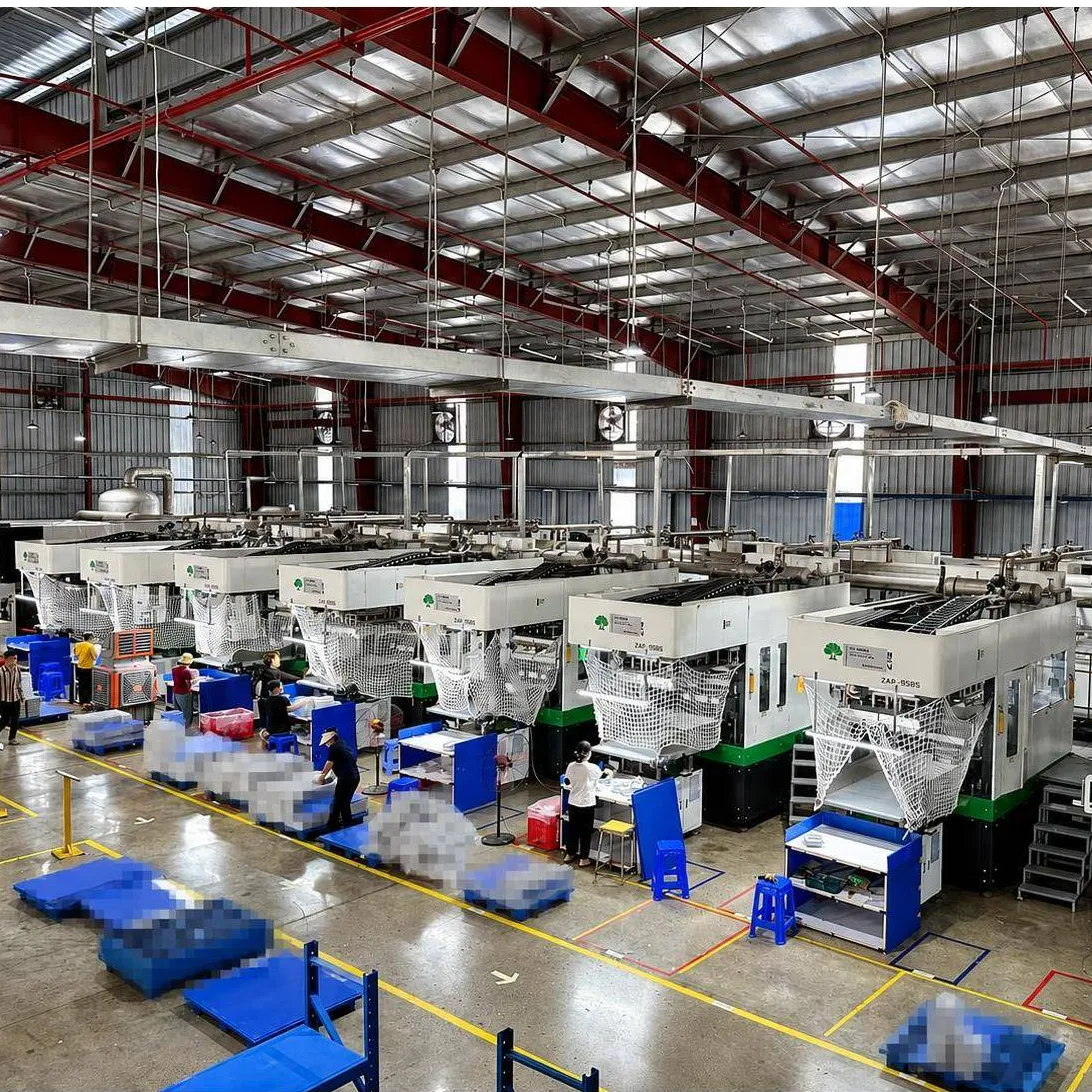
Verify the factory physically if the order is significant. Watch a machine run, look at the mold shop, and talk to the engineers who will support you. The factory overview and the mold and tooling program show the kind of capability worth inspecting.
Commercial Terms That Protect the Buyer
Define acceptance criteria in the contract rather than accepting vague language about performance. The machine should be accepted against a written test protocol: specified output on a named product, dimensional tolerances on first article samples, and utility consumption within a stated range. Without that, a dispute becomes a discussion about expectations.
Specify what commissioning includes. How many engineer days on site, what training is provided, where it happens and who pays travel. A supplier who sends one technician for three days is offering a handover, not commissioning, and the difference will cost you months of learning on your own.
Agree the spare parts list before shipment, not after. Common wear items such as meshes, seals, vacuum components and cutting dies should be identified with their lead times, and a starter kit should travel with the machine. Waiting six weeks for a wear item that costs a fraction of that in lost production is a bad trade.
Clarify tooling ownership and drawing access. You should own the drawings for molds you paid for, and you should be able to have them remade elsewhere if necessary. This protects you in a way that no clause about goodwill ever will.
Comparing Manufacturers Beyond Price
Machine price differences between suppliers are usually smaller than the operational differences that follow. A machine that runs five percent more efficiently, or a mold that lasts twice as long, changes lifetime cost more than a negotiated discount ever will. Build a comparison sheet that puts capital cost beside utility consumption, mold cost per thousand pieces, expected mold life and support terms.
Be cautious with suppliers who quote a headline output figure without asking about your product. Output depends on product geometry, cavity count and cycle time, and any supplier who quotes a number before understanding your part is either guessing or planning to explain the gap later.
Consider the supplier's product range as evidence of experience. A manufacturer that builds equipment for tableware, industrial packaging and egg trays has solved problems across different tolerance requirements, which usually means better engineering judgment when your application is unusual. Browse the industrial packaging range and the tableware machinery range to see how a supplier's experience maps to your product.
Working With a Manufacturer After Installation
The relationship that matters starts the day the machine runs. Plants that stay in contact with their supplier, share operating data and involve them in new product development get better support than plants that only call when something breaks. Treat the supplier as part of your engineering capability rather than as a vendor.
Use the supplier for new product development. When you want to add a product, the manufacturer who built your machine and understands your process can often predict tooling requirements and process settings before the first trial. That shortens development from months to weeks and reduces the number of iterations.
Keep documentation flowing both ways. Share your measurement data with the supplier when a problem appears, and expect them to share process recommendations in return. Modern remote diagnostics make this exchange fast, and it converts a week of email into an hour of diagnosis. Our project services team operates this way with plants after commissioning.
What the First Six Months With Your Chosen Supplier Look Like
The reputation of a pulp molding machine manufacturer is really established in the six months after installation, when real fiber, real operators and real customers meet the equipment for the first time. A supplier who remains engaged through that period, answering process questions and helping adjust recipes as you learn your own plant, is worth far more than one who disappears once the acceptance form is signed.
Expect to need support during ramp up. Freeness targets shift as your fiber deliveries change, press recipes need adjustment for new molds, and operators encounter situations the manual does not cover. Measure your supplier by response time during those months rather than by the polish of the initial presentation, because response time is what you will actually experience.
Ask, before you buy, how the pulp molding machine manufacturer handles technical questions after warranty. Is there a named engineer who knows your plant, is there remote access to operating data, and what is the typical response window? Get the answer in writing. The plant that runs smoothly in year three is usually the one whose buyer asked these questions in year one, and the difference shows up in output and in how calmly the team handles the inevitable problems.
Final Thoughts
A pulp molding machine manufacturer is really selling three things: tooling, process knowledge and support. The machine itself is the easiest part to compare and the least predictive of your outcome. Verify references, demand real measurement data, define acceptance criteria in writing and protect your tooling ownership. Buyers who do that get plants that run; buyers who shop on price alone usually find out why it was lower.
Share your product range and volume targets with a pulp molding machine manufacturer who will show you references from plants running comparable products.
We include our commissioning scope and spare parts list upfront so you can shortlist a pulp molding machine manufacturer on equal terms.
Compare Us With Your Shortlist
Featured Products
Collection about HANSON




User Reviews
What users say about HANSON
Frequently Asked Question
Do you have any question?
In house mold design and manufacturing, a reference plant that can be visited, process engineers who can adjust settings on your fiber, and documented commissioning. A trader can source a machine; it cannot develop a product with you.
Ask for the name and location of a running plant using the same model, request a mold trial on your product, and speak to a customer who installed three or more years ago. Claims that cannot be checked against those sources should be discounted.
A clear scope list, defined acceptance criteria tied to a trial run, spare parts commitments, warranty terms covering molds as well as the machine, and a payment schedule that keeps a meaningful share against successful commissioning.
Compare tooling capability, commissioning duration, response time for spare parts, and whether they will support a product change two years from now. Those factors usually decide whether the plant is profitable, and none of them appear in a quotation.