
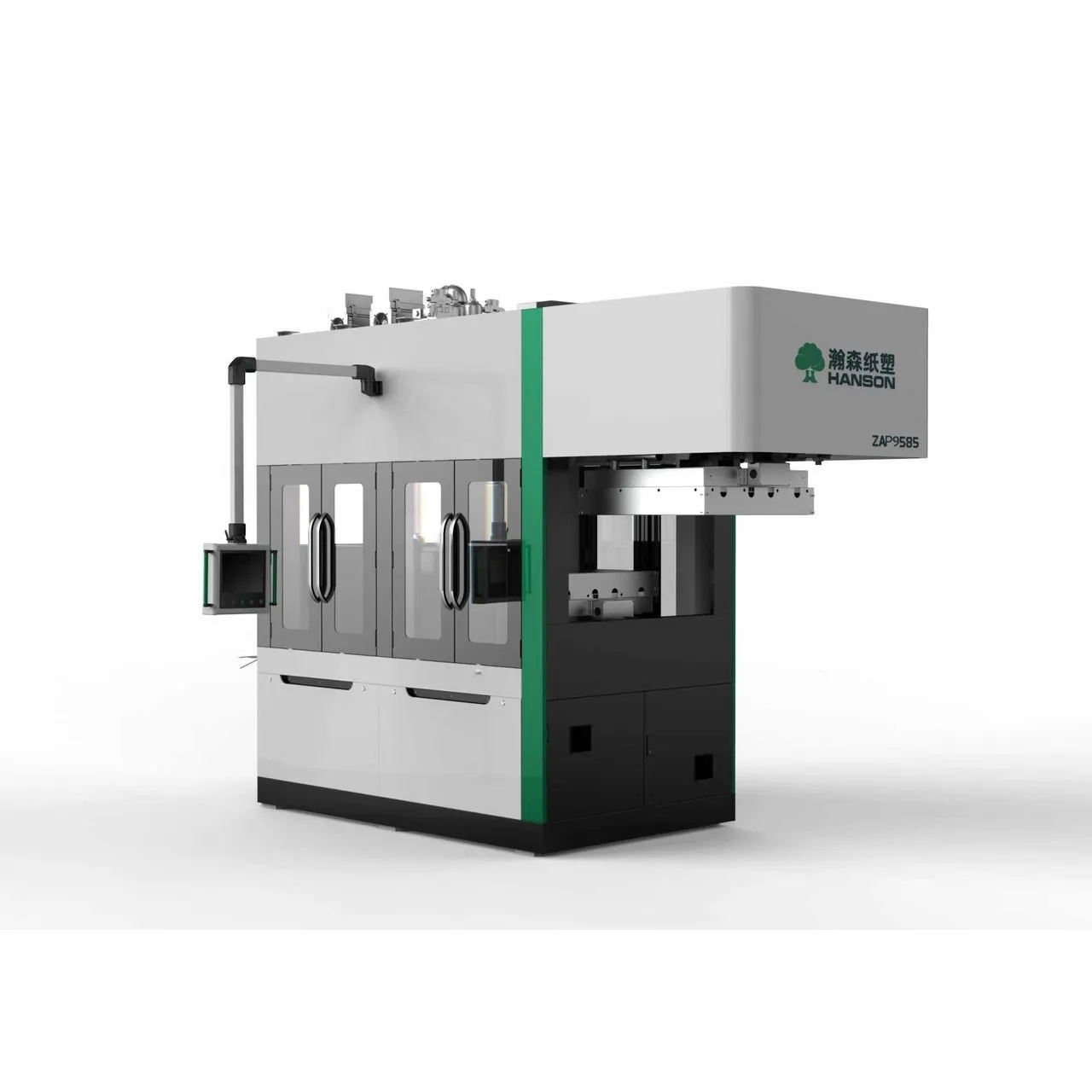
Features
Why Choose HANSON?
Our Own Mold Division, Design to Production
We run an independent mold division covering product development, mold design, manufacturing and testing. Because we build our own tooling, we control what decides your product range, how fast a new item reaches market, and how steadily you hold tolerances. We also optimize existing molds and retrofit equipment you already run, so a line that has lost its edge returns to spec without being replaced.
Complete Lines, Not Single Machines
Our portfolio covers tableware lines, industrial packaging equipment, cup lid lines and sampling lines, plus downstream automation for trimming, inspection, stacking and packing. Every station is engineered to the one after it, so the line reaches rated output instead of bottlenecking at the press or dryer. Start with one forming unit and expand into a full line as demand grows.
Turnkey Delivery With On-Site Support
We take a project from feasibility analysis and raw-material verification through layout, installation, commissioning and operator training. For turnkey projects we can place engineers on site and support ramp-up for up to six months — the period when most new plants either stabilize or stall. Ten service locations and 24/7 response keep that support running after warranty ends.
Proven at Scale, Certified for Regulated Markets
Our equipment runs in more than 20 markets, with roughly 150 units shipped a year and about half going to export customers across Europe, the Middle East, Southeast Asia and South America. Our forming equipment holds CE certification under the EU Machinery Directive, and 50 patents protect our structures, processes and automation systems. We serve listed companies, state-owned enterprises and leading packaging manufacturers.
We Have The Best Solutions for Your Business
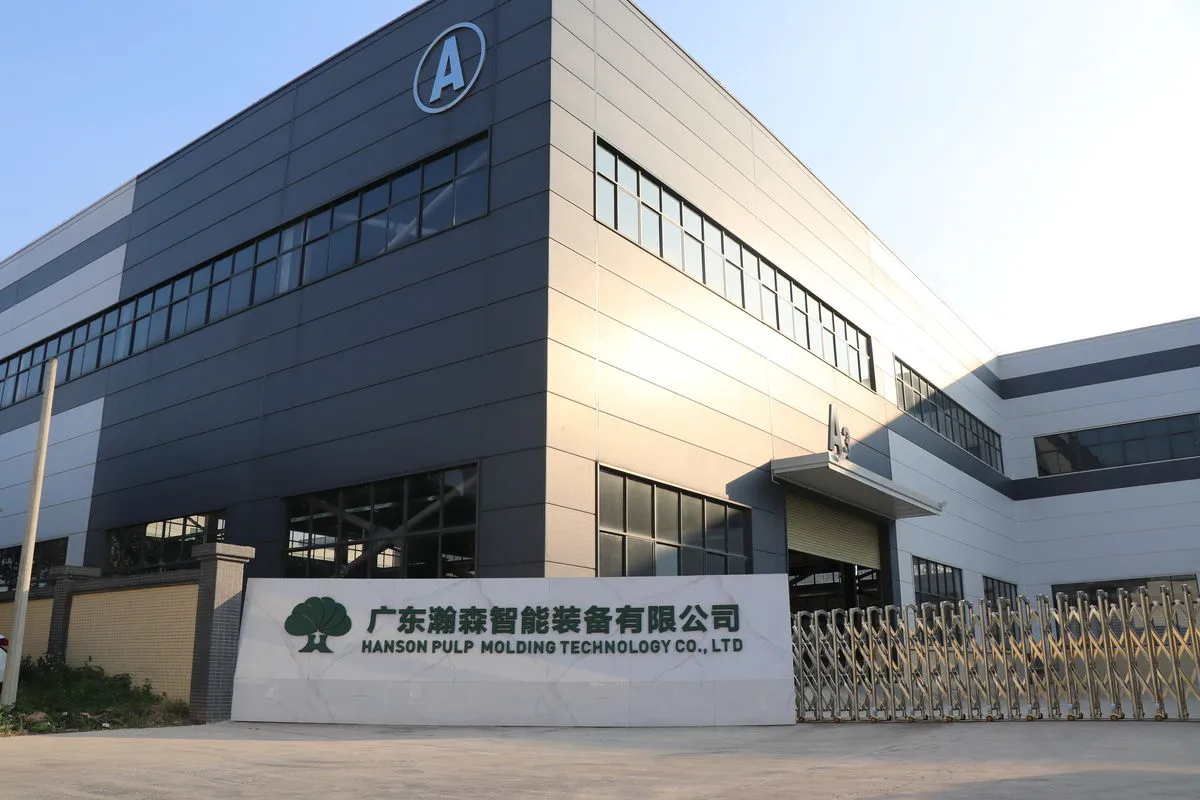
HANSON was founded in 2022 in Dongguan, Guangdong Province, China. Our 50,000 square meter facility employs more than 200 people, including a 50-engineer R&D team, and ships around 150 units a year to customers in more than 20 markets worldwide. We manufacture complete tableware production lines, premium industrial packaging equipment, plant-fiber cup lid lines and sampling lines, turning bagasse, bamboo fiber and recycled paper into tableware, egg trays, cup lids, cup carriers and protective packaging. What sets us apart is our independent mold division: with product development, mold design, manufacturing and testing all in house, we control the factor that decides how wide your product range goes and how reliably you hold tolerances. We deliver projects end to end, from feasibility analysis and factory layout to installation, commissioning and operator training, backed by 10 service locations and engineers who can stay on site through your ramp-up. Our equipment is CE certified and protected by 50 patents. Send us your product list and output target, and we will recommend the configuration that fits.
The short version
Pulp molding machine price is driven by forming capacity, automation level, station count, tooling and support scope. The purchase price is only part of the total cost; fiber, drying energy, molds and labor decide lifetime economics. Always request a utility consumption table and a tooling list alongside the offer.
Compare offers on identical assumptions or you are comparing nothing.
The Five Variables Behind Pulp Molding Machine Price
Forming capacity comes first. A machine with one forming head and a machine with four forming heads are different products built for different businesses, and the difference in price reflects the number of molds, vacuum capacity and structural strength required. Capacity is not a feature you can add later by software update; it is baked into the frame and the vacuum system.
Automation level comes second. Manual transfer and stacking on a small line costs far less than automated handling, robotic transfer and automatic packaging. Where labor rates are high and volumes are large, automation justifies itself quickly. Where runs are short and products change often, flexible manual handling can be the better economic choice.
Station count comes third. A basic configuration covering pulping, forming and pressing is one product. Adding an integrated dryer, automated trimming, a coating unit or a vision inspection station changes the scope substantially. Ask for a station by station breakdown of the offer so you know what is included and what is not.
Tooling comes fourth. Molds are often quoted separately from the machine, and the tooling package can represent a significant share of project cost. A single cavity trial mold, a multi cavity production mold and a full mold library for a product family are very different purchases. Make sure you are comparing the same tooling scope.
Commissioning support comes fifth and is routinely underestimated. A supplier who sends one technician for three days and one who commits to several weeks of on site stabilization with operator training are offering different products. The second costs more and is usually worth more, because the plant reaches stable production months earlier.
| Price driver | What raises it | What to verify in the offer |
| Forming capacity | More heads, larger vacuum system | Sustained output on your product |
| Automation | Automatic transfer, stacking, packaging | Labor per shift assumed in the payback |
| Station count | Integrated dryer, coater, inspection | Full scope list, not a summary line |
| Tooling | Cavity count, number of molds | Tooling list with cavity counts and materials |
| Support scope | Engineer days, training location | Written commissioning scope |
Why Two Offers Differ for the Same Machine Model
It is common to receive offers for what looks like the same machine at different prices, and the gap is almost always explainable. One supplier may quote a bare machine and exclude tooling, installation and freight. Another may include a dryer or an automated trimmer that the first treats as an option. A third may quote a smaller vacuum system or a lighter frame that cannot be expanded later.
Build a comparison table with identical line items before you judge any price. List the machine, each process station, the dryer, tooling with cavity counts, spare parts, freight, installation and commissioning days. When the offers are presented on the same grid, the differences become visible and the conversation becomes about capability rather than about a number.
Be careful with unusually low offers. Someone is paying for the difference, and it is usually the buyer through reduced frame strength, lower grade vacuum components, thinner structural steel or a commissioning scope that leaves the plant to figure things out. Ask what has been left out, and require a written answer.
Lifetime Cost That the Purchase Price Hides
Purchase price is a single event; running cost is monthly and permanent. Fiber is usually the largest recurring line, followed by drying and pressing energy, then mold replacement, additives and labor. A machine that consumes more energy per piece than a competitor costs more than the purchase price difference within a few years of operation.
Drying is the energy item buyers underestimate most, because it does not appear on any quotation sheet and only shows up on the power bill. Ask for a utility consumption table with the offer: connected load, average running load, water consumption and compressed air demand. Suppliers who can provide that data have measured their machines, and suppliers who cannot are guessing.
Mold life belongs in the model too. A mold that survives a long campaign costs less per thousand pieces than a cheaper mold that needs frequent replacement, and the difference compounds because mold changes also consume production time. Ask for expected cycle counts and mesh material specifications before comparing tooling prices.
Rejection rate is the last hidden cost and often the largest. A plant running at ninety five percent good parts loses five percent of fiber, energy and labor every shift. On a thin margin product that loss can exceed the entire profit. Process stability is therefore a financial variable, not only a quality one, and it should influence how much you invest in control systems and operator training.
How to Evaluate Value Instead of Price
Model cost per thousand pieces produced, not cost per machine. That figure combines fiber consumption, energy, mold amortization, labor and rejection rate, and it is the number that decides whether your business works. Two machines with different purchase prices will rank differently once that calculation is done, and usually the more efficient machine wins.
Weight the support scope heavily. A supplier who helps you reach stable production two months earlier has effectively given you two months of output. Put a value on that before you accept a lower price with a thinner commissioning commitment.
Consider the expansion path. A machine that can be expanded by adding forming heads is worth a premium over one that must be replaced to grow. Ask the supplier to price the expansion step as part of the original offer, so you can compare the total cost of reaching your three year target rather than the cost of the first configuration. The project services overview explains how expansion planning is normally handled.
What a Complete Offer Should Contain
A complete offer should state the configuration station by station, the sustained output on a named product with the cavity count used, the utility consumption table, the tooling list with cavity counts and materials, the commissioning scope with engineer days and training location, the spare parts list with lead times, and the warranty terms that are actually documented rather than implied.
It should also include the acceptance test protocol. How will both parties confirm the machine performs as promised? Which product, which output, which dimensional tolerances, measured over what period? A supplier confident in the equipment will welcome that specification; one who resists it is telling you something about the gap between the offer and reality.
Finally, ask what is not included. Installation labor, foundations, utilities connections, freight and import duties may all sit outside the quoted scope, and discovering that after signing turns a considered comparison into an unpleasant surprise. A written exclusion list is worth as much as the inclusion list.
Getting a Meaningful Quote
The quality of the offer depends on the quality of your brief. Suppliers can only quote accurately against a defined product, a defined volume and a defined market. Tell them the products you plan to make, the annual volumes, the largest and thickest part, your available power and floor space, and your target markets if food contact or compostability requirements apply.
Include your fiber plan. Whether you will run waste paper, bagasse, bamboo or a blend affects refining load, cycle time and tooling design, and a supplier quoting without that information is guessing at the process.
State your timeline and your stage. A buyer specifying a first line for a new plant needs a different conversation from a plant adding capacity to relieve a bottleneck. Both are valid, and both produce better offers when the supplier understands which one they are answering. Browse the equipment ranges through the tableware machinery collection and the industrial packaging collection to see how configurations differ before you write your brief.
Financing and Payment Terms Around Pulp Molding Machine Price
The commercial structure of a pulp molding machine price negotiation matters as much as the total. Payment tied to milestones, design approval, shipment, installation and acceptance, keeps the project moving and gives both parties a reason to reach each stage on schedule. A structure that concentrates payment early shifts risk onto the buyer without improving the supplier's performance.
Financing options shape the effective pulp molding machine price for many buyers. Equipment financing, leasing and export credit facilities all change the timing of cash outflows without altering the underlying price, and comparing them on total cost rather than on monthly payment is essential. Ask your supplier whether they work with financing partners who understand equipment purchases in your market, because a lender unfamiliar with this industry will price the risk higher.
Keep currency and freight arrangements explicit. Whether the price is quoted in one currency with freight separate, or delivered duty paid, changes the total substantially, and exchange rate movement between quotation and payment can be significant on a purchase of this size. Write the currency, the Incoterms and the validity period into the offer. A thoroughly documented commercial structure removes most of the disputes that otherwise surround pulp molding machine price negotiations, and it lets both sides focus on what the plant will produce rather than on what was agreed.
Final Thoughts
Pulp molding machine price is a function of configuration, and configuration should follow your product and volume. Compare offers on identical assumptions, demand a utility consumption table, put a value on commissioning support and model cost per thousand pieces rather than cost per machine. Buyers who do that work once, before signing, spend far less time renegotiating their mistakes later.
Send us your product list, target volumes and available utilities, and we will prepare a pulp molding machine price breakdown with a station by station scope and tooling list.
Every pulp molding machine price quotation includes the acceptance test protocol so you can compare suppliers on identical terms.
Request a Detailed Quotation
Featured Products
Collection about HANSON




User Reviews
What users say about HANSON
Frequently Asked Question
Do you have any question?
Because the model name usually describes the forming unit only. One offer may include drying, trimming, automation and molds; the other may stop at the forming machine. Comparing the two on model name alone is the most common buying mistake.
Automation level and tooling. Adding automatic transfer, drying capacity or inspection raises capital cost significantly, while each additional product mold is a separate investment that is often larger than buyers expect.
Foundation and civil works, utility connections, installation labor, raw material at start up, operator training, spare parts stock and the ramp-up period before the line reaches rated output. These are frequently underestimated.
Calculate cost per thousand finished pieces including fiber, energy, labor, consumables and expected rejection rate, then add the revenue timing of when the line actually reaches full output. The cheapest quote rarely wins on that measure.